

The Trendy Shower Feature That Has People Conflicted (& A Better Solution)

When a new shower trend takes over social media, it's easy to daydream about integrating it in our homes. But if there is one area in which you should be extra careful about adopting hot design innovations, it's the shower. The constant humidity and intensive daily wear mean showers must perform exceptionally well and be as easy to clean as possible, so that they don't deteriorate as fast and frequent sanitization doesn't become a nightmare. One such expensive shower trend you should think twice before hopping on are shower niches.
These recessed pockets integrated into your shower wall allow you to store toiletries and shower utensils without taking up extra space. They became a popular feature in modern showers as a way to reduce the visual clutter of messy, protruding shelves, and to make shower structures as clean-lined as possible, in line with the tenets of contemporary interior design. Recently, however, designers are growing tired of the look. At the same time, homeowners are discovering the unique problems that come with this installation, particularly leaks, leading to mold growth and rot inside the stud wall, and difficulty of cleaning from all those awkward corners.
Emerging as an alternative is the shower ledge, a half-height wall installed along one of the structural shower walls, creating a long, seamless shelf. It's sleek, doesn't break up visual lines of the shower tile as glaringly, and is easier to clean. Because they don't require cutting into the wall and have less corners, and thus, less grout or caulk lines, there are fewer chances of water seepage and mold growth.
The problem with shower niches
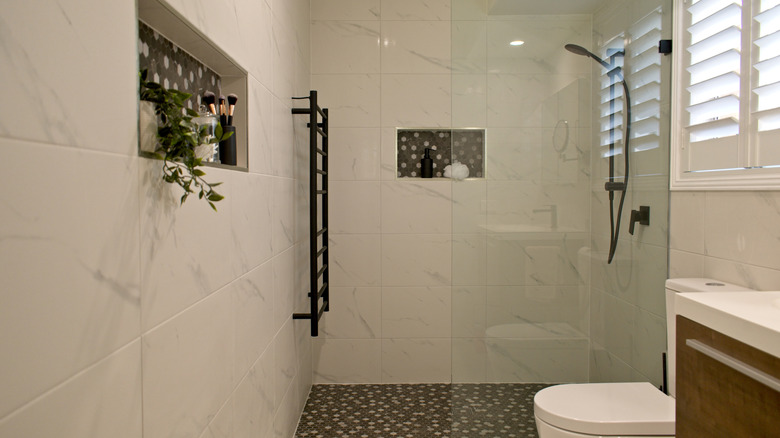
One of the reasons why shower niches have gone from chic to cheap is simply that, in interior design, you can effectively have too much of a good thing. They became overused, which is typically the first step to becoming dated. Well-installed niches are still considered tasteful, but one thing that ubiquity also provokes is an avalanche of poor installations that give details like these a bad rap.
Niches are complex structures requiring a high level of skill and extensive communication between every tradespeople to guarantee a positive result. Otherwise, this trendy shower feature will create an eyesore in the bathroom and serious structural problems related to water seepage into the stud wall. Anyone who's ever dealt with construction, knows this is easier said than done, meaning high-end shower nooks may also mean increased labor and material costs.
Improper waterproofing is one of the main issues with niches, on a functional level. Grout and caulk are not enough to prevent leaks, no matter how adequately they're applied. Niches need a waterproofing membrane, with bond breakers reinforcing the corners. And, even then, if the niche isn't slightly slanted (a process that begins when framing the wall), pooling water may still lead to infiltrations.
Aesthetically, awkwardly cut tiles, contrasting edge trim, and garish accent tiles make your niche look unattractive. Plus, it's important to do the math so the niche starts at a point where a row of wall tiles ends, and then miter cut the edges of the corner tiles so they meet at a 45-degree angle, instead of needing a trim to conceal the unsightly gaps.
Why shower ledges are a great alternative
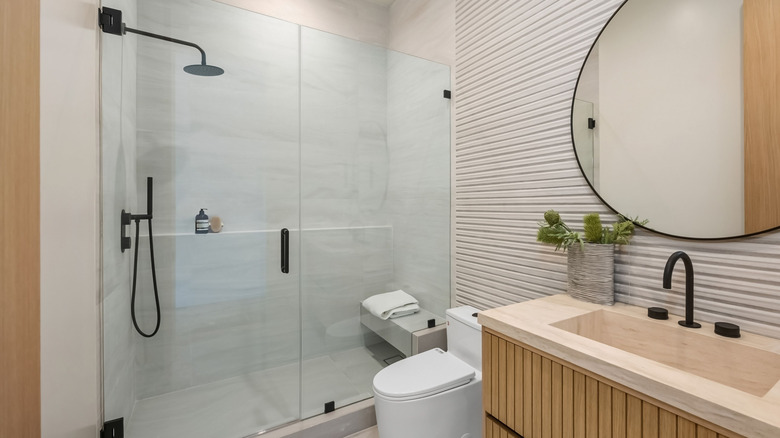
Overall, shower ledges offer an easier installation process, which consequently results in lower costs and less likelihood of errors that lead to damage, poor performance, and unappealing design. Because they don't involve messing with the structural integrity of your home, they're also a more appropriate project for a minimally invasive bathroom remodel. They're typically framed with wood, covered with cement board and waterproofed with the same techniques mentioned above, though waterproof foam boards can replace the wood. They should also have a slight slope to avoid water and soap pooling.
Ledges are typically about 47 inches tall and 3 ½ to 4 inches deep. However, like niches, you should also be careful to end them an height that doesn't require cutting any of the tiles. Since you only have one edge to consider, the tiling process is much simpler. And, even if you opt out of the miter joints in order to save money, a single line of trim is far easier to digest than the four needed for niches, just make sure it doesn't interfere with the water drainage. Similarly, instead of the crammed box feel of niches, ledges offer an open, airier look, that doesn't limit the amount or the height of the product bottles you need to store. Their only disadvantage is taking up floor space, so they may not be the best choice for small bathrooms.