

12 Ways To Make Glass Shower Doors Shine With No Streaks In Sight

The problem with glass is that, while it's undeniably beautiful when clean, it's frustratingly difficult to keep it that way. The see-through surface tends not only to highlight, but magnify every single smudge, streak, and soapy smear. The worst part? If you don't know how to clean it properly, it can often end up looking worse than before you decided to try.
If all of this sounds familiar, stop pulling your hair out and clogging your shower drain. There are plenty of ways to restore a streak-free finish to your glass shower doors, some of which are easier than you might think. For example, simply adopting weekly bathroom cleaning habits can help you stay on top of streaks, in addition to ditching a regular tea towel for a microfiber cloth (or two). So, too, can using a bottle of distilled water to give your doors a final rinse. If your bathroom is the beneficiary of bright sunshine, then adjusting the time at which you clean your shower doors can also make a difference on your streak-free success rate.
If you're tired of spending a fortune on different glass products and have come to wonder whether it's actually your technique, then welcome; this guide is for you. We'll cover 13 helpful ways to restore your glass shower doors' sleek, streak-free shine, from useful swaps to techniques that are time-honored, tested, and touted by professionals.
Use a vinegar, cornstarch, and water solution
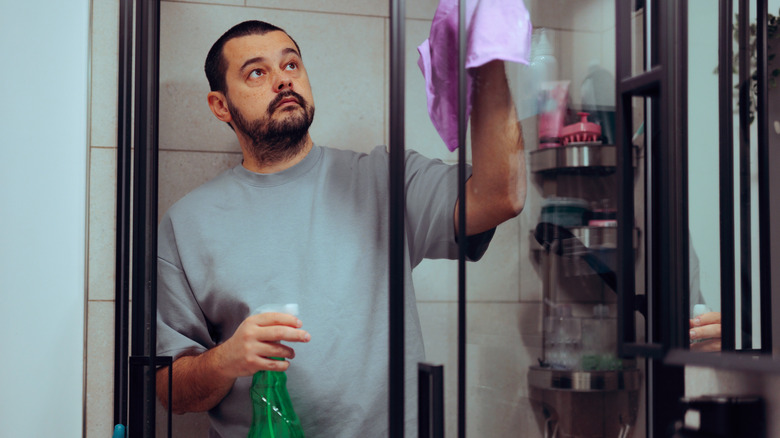
If you've ever mixed cornstarch with water to thicken soup or gravy, then you may be wondering what on earth it's doing listed on a guide to cleaning glass shower doors. Surely it'd only make those annoying streaks worse, right? Well, if used in isolation, it just might. The trick, in this case, is to add 1 tablespoon of the starchy stuff to ¼ cup of white vinegar and 1 quart of warm water.
The reason cornstarch works is the fine, powdery texture is a gentle abrasive, helping to scour away the grime, soap, and mineral deposits that so often lead to streaks. When mixed with the acetic acid in vinegar, which helps dissolve said grime, it can be incredibly effective. You can either spray the mixture on or sponge it over your doors. Either way, let it sit for a few moments, scrub it with a soft cloth, and buff it to a streak-free shine.
Dry with two microfiber cloths to ensure a clean finish
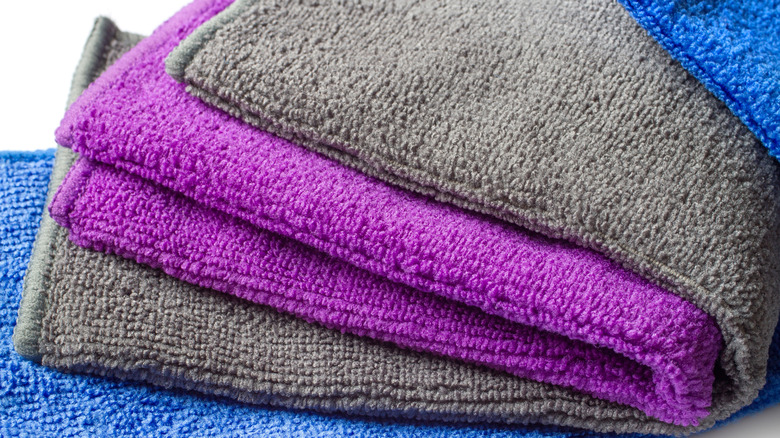
Even if you have the ultimate homemade glass-cleaning recipe, you're likely to end up with an annoying streaky finish if you use the wrong cloth to dry your glass doors. It's one of the most common mistakes people make when cleaning glass, and yet it can be easily avoided. The key is to use a couple of microfiber cloths, which — being lint-free and highly absorbent — are far superior to regular cloth or paper towels.
Once you finish cleaning, dampen one of the cloths and use it to help lift the remaining soil from the glass. When that's done, grab a second, dry cloth and use it to absorb the remaining moisture and buff the glass. You should notice your glass is left with neither streaks nor tiny pieces of left-behind lint. Provided you wash them alone on a cool setting with nothing but mild detergent, you should find your microfiber cloths are just as effective when the time comes to reuse them.
Use a squeegee to immediately remove rinse water
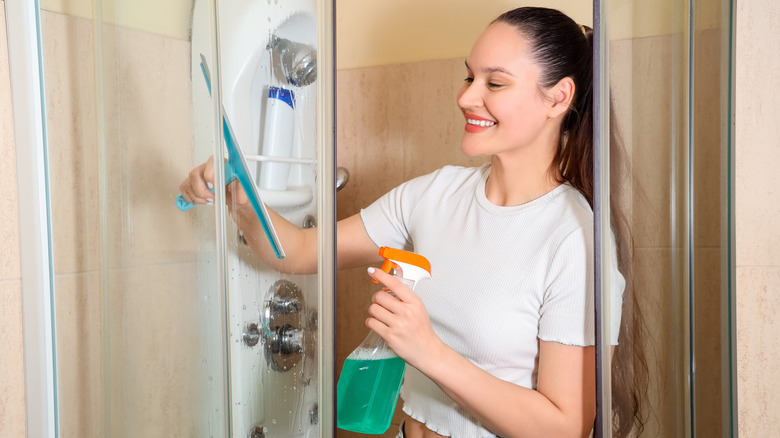
One of the main reasons glass shower doors are so often left with streaks — even after cleaning — is that they aren't dried quickly enough. If water is allowed to sit instead of being quickly removed after cleaning, it can dry in strange, irregular patterns, leading to obvious, unsightly, and deeply frustrating streaks. The problem is it's not always easy to completely dry glass surfaces, especially if you're using an old rag or a towel that's long since lost its best absorbency.
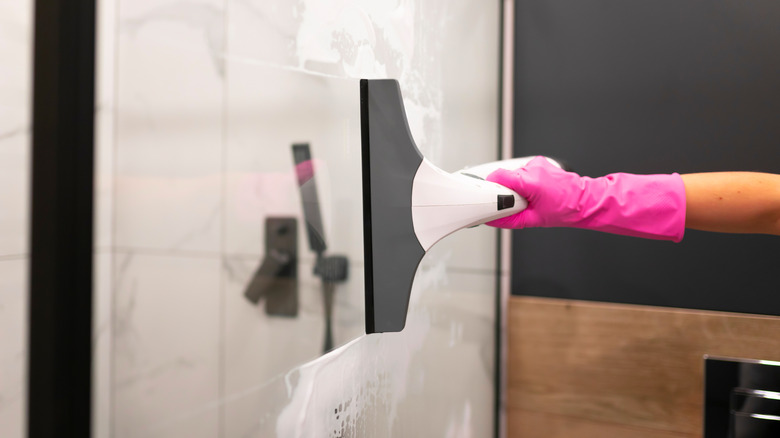
Instead, you should use a squeegee. By running it methodically from the top to the bottom of your shower door, you can remove as much water as possible before it has the chance to dry and settle. Many professionals agree that using a squeegee is one of the best tricks to help keep shower doors and other glass surfaces clean. It's more eco-friendly, for one — especially compared to several bunches of paper towels or newspaper. It also leaves precisely zero lint behind. Keep a couple of microfiber cloths handy to wipe away any water spots or haze, and you might be amazed at the difference a couple of simple tools can make for your doors.
Soak the glass with lemon juice, vinegar, and warm water before cleaning
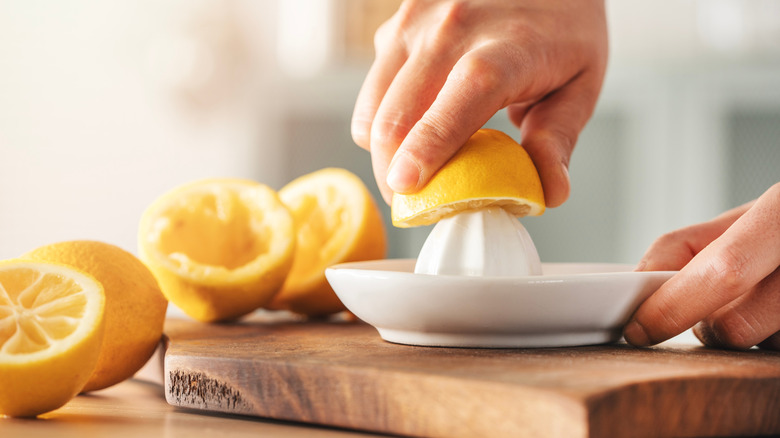
Sometimes, we need look no further than Mother Nature to find an answer to our most annoying household cleaning conundrums. It probably comes as no surprise that one of the most effective natural cleaning agents for glass is lemon juice. Working in partnership with warm water and vinegar, it helps dissolve problematic streaks caused by grime, soap, and minerals. If allowed to soak, it makes removing these from your shower doors' surface much easier than diving straight in with a sponge.
To use it, mix together equal parts white vinegar and fresh lemon juice in a bowl, then add enough warm water so you can spray the entire surface. The warmth of the water helps speed up the reaction between the acetic acid (vinegar), the citric acid (lemon juice), and the grime on your doors. If allowed to soak for up to an hour, you should find your doors become incredibly easy to clean with nothing but a squeegee and a couple of clean, soft cloths.
Use distilled water when cleaning to eliminate mineral deposits
This may seem like overkill, but if you truly want to eliminate streaks from your glass shower doors, you should know unfiltered water is one of the most common culprits for their existence. Undistilled water contains a host of hard minerals that settle and dry on glass, leading to those annoying streaks and cloudy spots.
This isn't to say you absolutely have to use distilled water for every element of your cleaning schedule. For the initial clean of your shower doors, tap water is fine. However, once you lift the grime and soap scum from the glass and you're ready to give the screen a final rinse, using distilled water eliminates the risk of further coating your doors with streak-prone minerals. You may also find that, if you live in an area with soft water (water with a relatively low mineral content), rinsing with tap water and using a squeegee and microfiber cloths are enough to do away with unsightly streaks. However, if the water in your area is considered hard (that is, full of minerals), then a bottle of distilled water might just be the ingredient your shower door cleaning recipe has been missing.
Dish soap, vinegar, and water is a surprisingly powerful combination against streaky glass
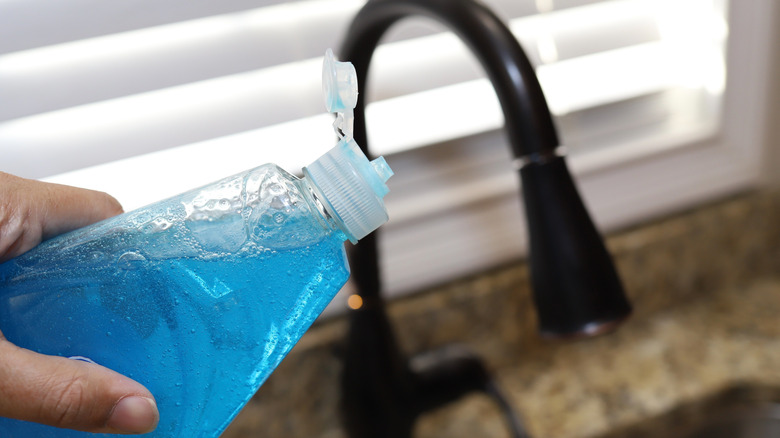
We know by now that using vinegar is one of the most effective glass shower cleaning hacks. Its acetic acid often proves just the ticket for dissolving the grime and mineral deposits that cause streaky doors. But did you know that humble dish soap — the kind you have languishing in the cupboard beneath your kitchen sink — can further enhance this effect? Don't forget: Dish soap is designed to cut through grease. When it's added to vinegar, it's hard to imagine many shower door stains withstanding such a violent attack on their existence.
Now, dish soap and vinegar alone aren't necessarily enough to do the trick. Like your dirty dinner dishes, greasy stains and deposits on your shower door are much easier to break down and remove when doused with warm water, which makes some hot H2O key to making this method work. So, mix 2 cups of warm water with ¼ cup of white vinegar and ½ teaspoon of dish soap, add some to your trusty spray bottle, and apply it to your doors. Leave the mixture to soak for a few minutes, then scrub away those insufferable streaks with a damp, soft cloth.
Wipe your shower door weekly to keep on top of streaks
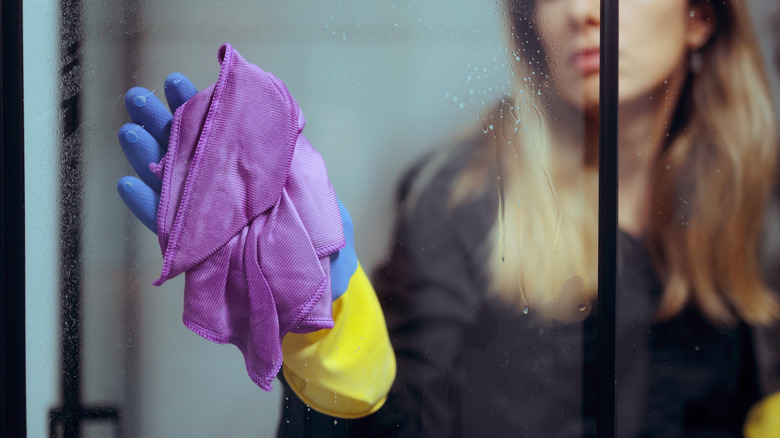
It's one thing knowing how to remove clouds and streaks from shower doors. Keeping them from coming back is quite another. Fortunately, it's easy to keep minerals, soap scum, and other grime from building up by simply giving your shower doors a weekly wipe.
In reality, your shower door is one of the things in your bathroom you should be cleaning daily. However, even just making a point to do it weekly can make a big difference on how much maintenance your glass doors need in the long-term. You don't necessarily need to use powerful cleaning agents, such as vinegar or lemon juice. Provided you're working on a surface that's already reasonably clean, a wipe with a damp microfiber cloth using warm water, followed by a thorough squeegee and a final buff with a second dry cloth, should be enough to keep streaks from sullying the doors of your beautiful bathroom.
Avoid evaporation streaks by cleaning away from direct sunlight
If your bathroom receives lots of direct sunlight, you may need to close the blinds or wait for the sun to climb or dip out of view before cleaning your shower doors. Unfortunately, if the sun is shining warm and bright on your shower door, it doesn't matter how quick you are; at least some of the water or cleaning solution you use is likely to evaporate. When it does, the resultant lines and streaks can leave your doors looking worse than they did before you started.
In shaded conditions, however, this isn't much of a problem. With the blinds closed, or with the sun no longer shining through the window, you have ample time to clean, rinse, and dry your shower doors. More importantly, you have full control over how they dry. If you use a squeegee and microfiber cloths, you're much more likely to be left with crystal-clear shower doors.
Always scrub gently with a soft cloth, regardless of how dirty your door is
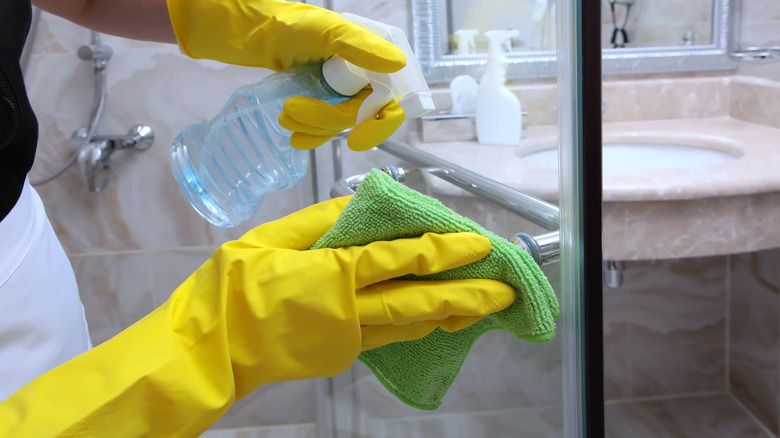
It doesn't matter how dirty your glass shower doors are; the worst thing you can do to is bully the problem with abrasive pads and aggressive concentrations of elbow grease. Doing so is likely to make your dirty door worse in the long run, and it certainly makes it more difficult to manage. Any imperfections you create with more abrasive methods start to catch minerals and soap scum, leading to even more streaks. What's more, those scratches and imperfections can catch the light, making them even more noticeable — even when your shower door is clean.
This is why it's so important to choose the right tools (soft microfiber cloths and squeegees) and cleaning solutions. If you use a solution such as vinegar, lemon juice, and water to break down the grime on your door first, you should find even the softest cloth is every bit as effective as a rough sponge — yet it does precisely zero damage to your glass.
Rinse your door thoroughly before drying
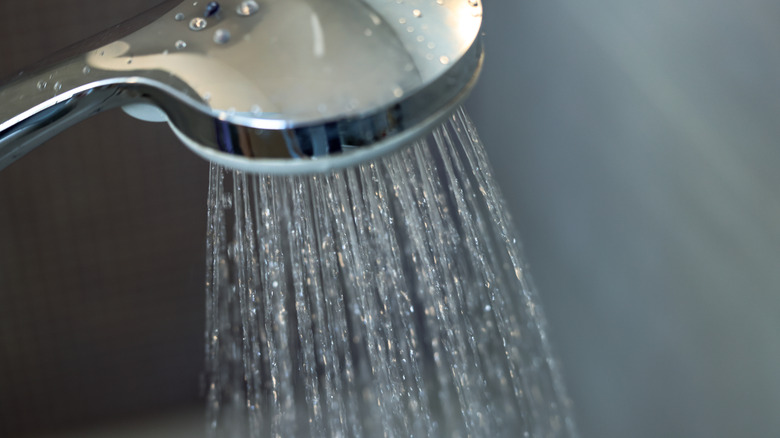
This might sound obvious, but it's amazing how many people skip straight from cleaning their door to wiping it dry. Especially if your shower door was filthy to start with, giving it a rinse (ideally with warm, distilled water) is crucial to ensuring a streak-free finish. It's important for two reasons. The first is clean water helps rinse away the soap and mineral deposits that made you clean your shower door in the first place. The second is chemicals or cupboard staples, such as vinegar, can leave streaks on your doors if allowed to dry on the surface. So, whether you're using good old-fashioned elbow grease and a soft cloth, or employing a more no-nonsense approach with lemon juice or vinegar, make sure you give it a good rinse first before buffing the surface dry.
Use hydrogen peroxide to keep your glass surface free of streaks and mold
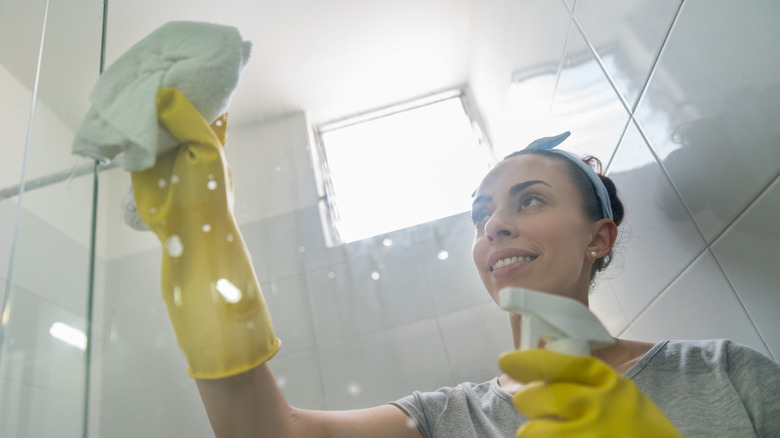
First, while hydrogen peroxide can free your shower doors of both streaks and mold, you should only use it as a temporary solution for the latter until you can address the underlying ventilation issues causing it. However, if you need a solution to kill these two proverbial birds in the meantime, then hydrogen peroxide is sure to do the trick.
The peroxide works to oxidize the grime it comes into contact with (along with any mold). It also evaporates very cleanly, thus reducing the potential for "drying" streaks. To add it to your shower-door cleaning regimen, simply add some to your trusty spray bottle. Give the affected area a decent dousing, allow it a few minutes to work its way in and break down any grease, grime, minerals, and mold, then scrub the surface with a soft microfiber cloth. Give the surface a rinse with warm water, squeegee it clear of excess moisture, then give it a final microfiber buff.
Focus on small sections of glass to ensure you clean as thoroughly as possible
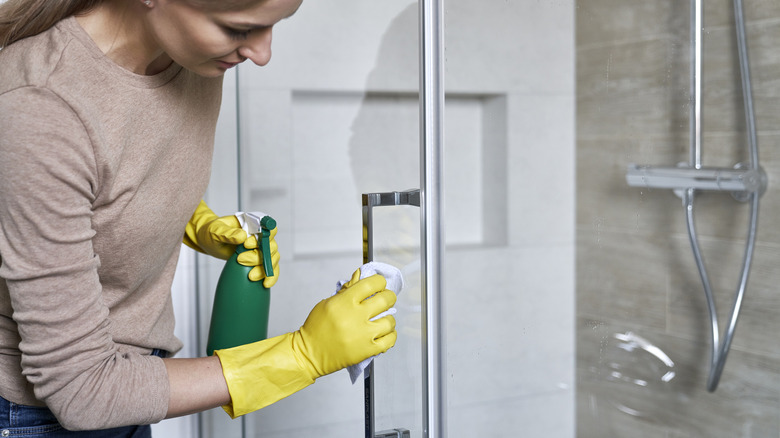
One of the easiest-to-follow tips for making your bathroom cleaner is to work one section at a time. That's nowhere more true than on your shower door. You can follow any of the above methods; the key is to laser your focus on a small section of your door and ensure it's cleaned and beautifully buffed before moving on. Doing it this way breaks the job down and lets you ensure each section is completely clean and clear of streaks. Just be sure to work from the top down to avoid accidentally sullying the sections you've already cleaned.
This method is especially effective if your room is warm or you're unable to avoid cleaning your shower door when the sun's shining through your bathroom window. If you tried to clean the entire door at once, you might find the cleaning solution and water evaporates before you have a chance to rinse and buff them away, which would inevitably lead to streaks.