

HVAC Tips To Know For Negative Degree Weather
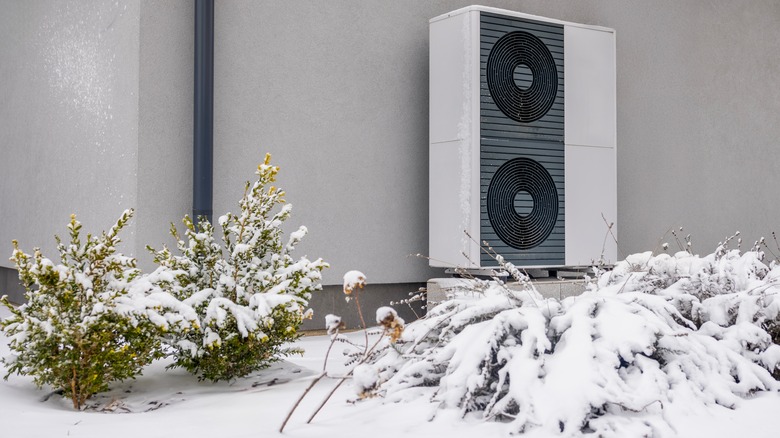
Months with extreme temperatures are when people need their HVAC systems the most, and yet those are also the times when those same systems are most likely to fail them. Cold weather and snow have a negative impact on your furnace; you will likely need your heating system to work around the clock while simultaneously firing on all cylinders to bring those cold temperatures up. Heating a home at 50 degrees Fahrenheit does not take the same operating power as doing so for one at -5 degrees Fahrenheit, resulting in eye-watering energy bills and possible system overload.
A good portion of American states experience sub zero temperatures every winter at least once. They start earlier and happen most frequently in northern states like North Dakota, Montana, and, of course, Alaska, but impact the likes of New York, Pennsylvania, Illinois, and Indiana almost every winter, too. An intelligent, strategic use of the HVAC system is fundamental to survive winter in these states. This starts, but doesn't end, with correct installation, particularly choosing the right size and type of equipment for your home. It also includes properly insulating, sealing, and sizing the ductwork, as well as regular maintenance — such as yearly professional check ups, filter changes, and keeping the outside unit clear.
Provided your heating system is appropriate for your home and in good shape, you'll want to use the correct thermostat settings to keep it from overworking and potentially breaking. Set it for a stabilized temperature throughout the day and avoid peaks of excessively high-temperature. Finally, complement your HVAC's hard work with a ceiling fan that pushes warm air down, and with extra insulation of windows and doors through weatherstripping and thermal drapery.
Proper HVAC installation
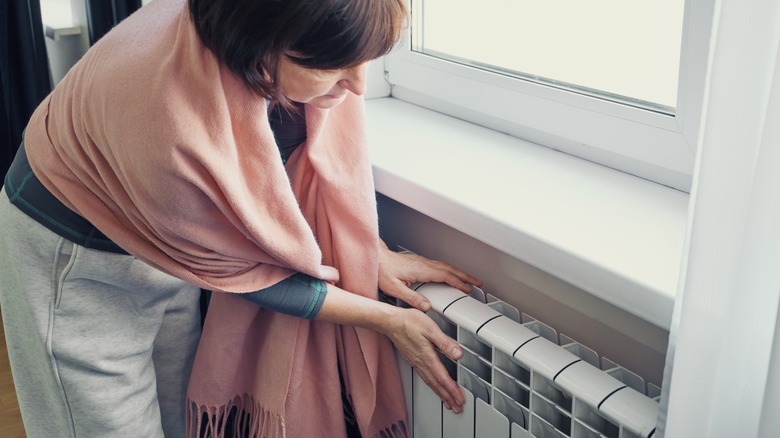
Before you've even installed your heating system, you should choose the model carefully. Furnaces beat heat pumps in their ability to generate heat. Gas furnaces produce hotter heat (up to 170 degrees Fahrenheit), but can be wasteful, as not all of the energy produced by the fuel is effectively turned into heat. Electrical furnaces are more efficient, but typically only go up to 120 degrees Fahrenheit. Gas can be significantly cheaper than electricity in some states, too, which may also impact your decision.
Size also matters. An excessively large furnace will warm your house faster, yes, but, as a consequence, it will turn off faster and more frequently, too. Known as short cycling, this stop-start phenomenon puts excessive strain on the furnace ignitor, heat exchanger, and motor. An undersized unit, on the other hand, forces the system to run for too long and too intensely, also leading to premature deterioration of the components. Both will naturally send your heating bill through the roof.
While states with extremely cold weather benefit from a larger furnace, you should still take your home's square footage into consideration when choosing. Furnace heating capacity is measured in British Thermal Units (BTUs), so states in climate zone 5 should multiply each square foot by 50 to 60 BTUs to assess the total heating capacity of their unit. If your home has high ceilings, plenty of windows, or a lack of direct sunlight, go for the higher end of that range. Your ductwork should be optimized, too. Both undersized and oversized vents hinder heat distribution, either by not having enough space for heat to flow, or by having so much space, the heat gets lost. Vents placed in awkward corners or behind doors, and faulty duct sealing will also reduce the efficiency of your heater.
Proper HVAC maintenance and use
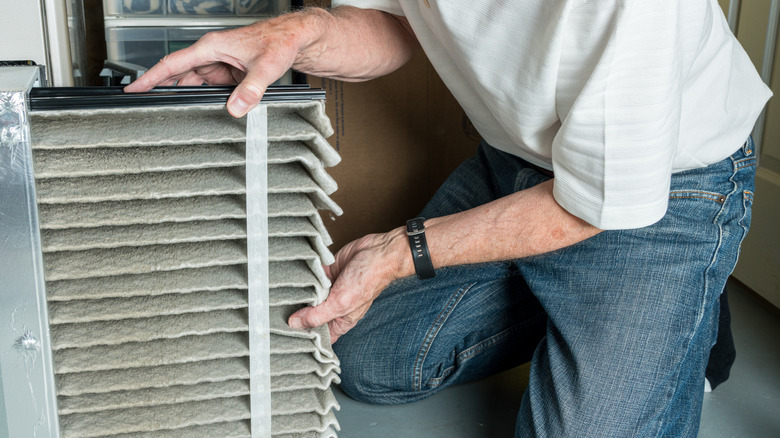
After installation, maintenance is key. Schedule a professional visit before the cold weather starts and change your furnace filter at least quarterly to eliminate dust or pet hair. Test your thermostat to ensure the unit is turning on and off as commanded, and use a portable sensor to compare the temperatures registered. Use a tissue or your hand to confirm air is flowing correctly from the registers. If you have a humidifier as part of your heating system, you should also follow the recommended maintenance tips that keep it clean and working well all winter long, such as replacing the pad and cleaning the cabinet to prevent mold and mildew growth.
As for optimal thermostat settings for energy efficiency and uniform heating, the U.S. Department of Energy recommends sticking as close to outside temperatures as possible, to prevent your HVAC system from straining and heat from escaping. In extremely cold weather, however, the lowest you can go is about 70 degrees Fahrenheit, even when you're out of the house, so that the furnace doesn't have to push too hard to drastically increase the temperature when you come back. But you also shouldn't set your thermostat much warmer than that, seeing as the intense cold outside will prevent your unit from realistically reaching higher temperatures. You'll be overworking it, risking damage and sky-rocketing energy bills, for nothing.
Finally, don't force your furnace to do all the work when you could be making its job easier with simple adjustments around your home. Invest in tightly insulated windows with double or triple glazing and vinyl, wood, or fiberglass framing. Reinforcing your windows and doors with weatherstripping and caulking is fundamental to prevent heat loss. Thermal curtains and ceiling fans that push warm air down help, too.