

Reasons For Those Stubborn Black Stains In The Toilet

We may receive a commission on purchases made from links.
If you have ever gone on a vacation for a couple of weeks only to come back to a black stained toilet, you're not the only one. You could be thinking that these nasty stains are the result of neglecting your bathroom for too long, but it might not even be your fault. Black stains can form for many reasons, and they can simply be a result of how your toilet operates. However, trying to clean them without knowing the hidden cause behind them might lead to a bigger hygiene problem.
Because many people close every window, turn off ventilation fans, and switch off all lights when leaving a place for a while, they unintentionally create the perfect damp and dark environment for bacteria and mold to thrive. This is especially true if you have a toilet that you don't use frequently, such as a guest bathroom. In these conditions, microorganisms can easily multiply on the surface of your toilet bowl, tank, or under the rim and create a dark, slimy film.
However, this isn't the only cause of black stains; they can also be caused by your water itself. When you have hard water running through your plumbing system, excess minerals can accumulate on surfaces, causing gray, dark brown, or black stains. The stains can even a combination of all these factors.
Mold buildup due to excess moisture
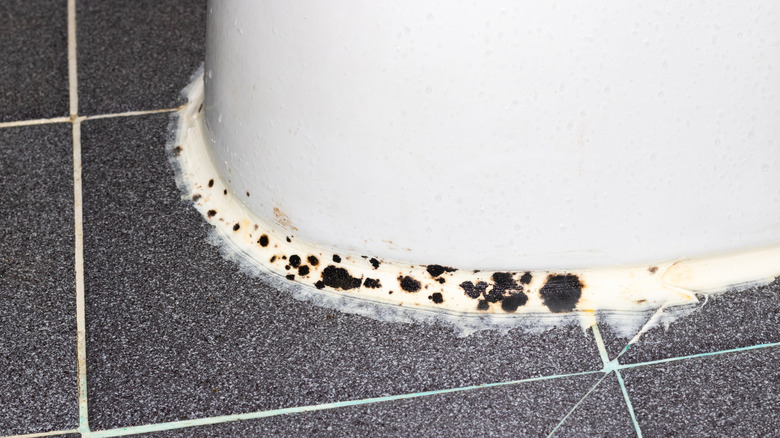
Fungal growth is one of the first contributors you should consider when assessing black stains in your toilet. This happens because of how the toilet's flushing system works. When you flush, water rushes from the tank to an internal cavity inside the rim and comes out through the jets — but the internal plumbing is still one of the unexpected places where mold may be lurking. When stagnant water sits inside the bowl or rim cavity, mold and mildew can appear in as little as 24 hours and multiply rapidly, forming a slimy substance called a biofilm, which can be black in color. The mold and associated biofilm tend to grow inside the rim and along the waterline.
To get rid of black stains caused by mold or mildew, you'll need to treat the toilet with an antifungal solution. While it might be tempting, bleach is usually not the best option for killing mold and mildew, and it may damage your pipes. Instead, try distilled white vinegar for an easy and affordable option. Pour a generous amount of vinegar into the overflow tube in the tank and leave it for at least an hour or overnight to loosen up the mold growth. You can then scrub off visible stains with a toilet brush and flush until clean.
Sometimes mold can also grow on rubber materials around your toilet, like on the tank-to-bowl gasket or base sealant. Rubber is a material that easily hosts mold due to its moisture-retaining properties. If you notice dark mold stains on rubber parts of your plumbing, you might want to replace the rubber in your bathroom with a non-rubber material like silicone or vinyl (PVC).
Bacterial overgrowth as a result of infrequent cleaning
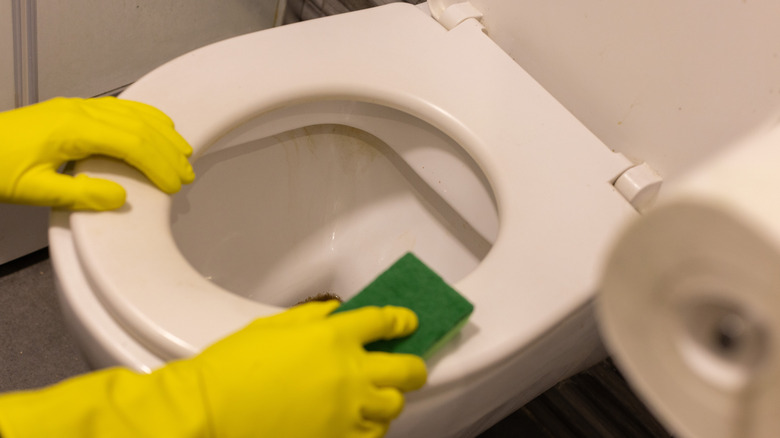
Sometimes, when you leave your toilet without proper cleaning for a while, bacteria can spread inside the toilet bowl. One such type of bacteria is called Serratia marcescens. These bacteria feed on organic matter and phosphorus deposits and form a biofilm similar to that of mold. These bacteria are usually pink in color, but they can also cause reddish-brown or black stains, depending on other pollutants inside the toilet. Aside from unsightly stains, this type of bacteria can also cause UTIs, pneumonia, and other infections in people with weak immunity. That's why addressing it immediately is essential.
Other types of bacteria may also create black stains and other problems. Sulfur bacteria, for example, feed on dissolved sulfur, while iron bacteria depend on iron or manganese. When they grow out of control, these bacteria can form a dark slimy substance inside your toilet. A musty, sewage-like, or rotten-egg-like odor can also be a result of unchecked iron or sulfur bacteria.
Sulfur bacteria, iron bacteria, Serratia marcescens, and other slime-forming bacteria are difficult to eradicate completely, but keeping up with regular cleaning will lessen the concern for dark stains or illness. You should clean your toilet about once every week, but give it an extra cleaning any time you notice a slimy film forming. Use a bleach-based cleaner to soak the bowl for up to 20 minutes. This will reduce Serratia marcescens, but a more thorough shock chlorination might be necessary for excessive iron bacteria or sulfur bacteria, which typically form in the well or water pipes.
Mineral deposits forming stubborn scaling
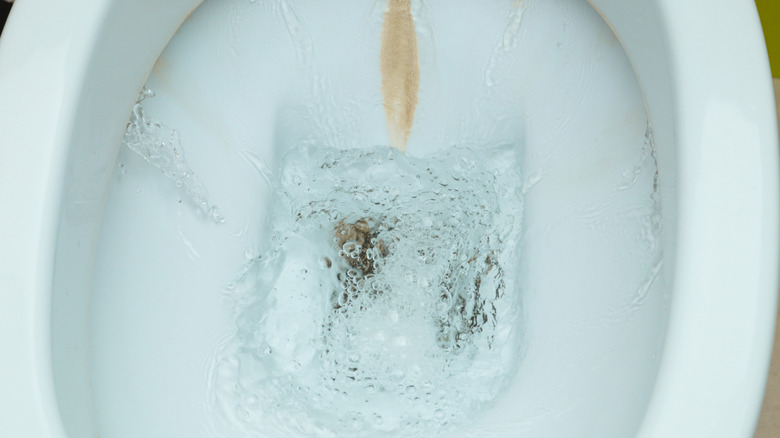
If you live in a place that uses groundwater, there is a good chance that you have hard water, which means the water has a high dissolved mineral content. Minerals like iron and manganese can be especially concerning in your plumbing system, and not just because they feed certain bacteria. When your water has a high amount of these minerals, they can collect and form mineral deposits inside the tank, rim jets, bowl, and more. Brown or black stains can then form on rough surfaces created by the mineral buildup.
These stains are different from the mold and bacteria mentioned previously, but mineral-feeding microbes can exacerbate the problem. If your dark stains are forming beneath the water line in the bowl, you most likely have a mineral problem, rather than a mold or bacteria problem. Mineral stains also won't go away with regular cleaning, and may seem like they're getting worse over time.
Fortunately, there are many hacks that remove hard water stains. For relatively mild buildup, an abrasive homemade cleaner such as a paste made of baking soda, borax, or cream of tartar will help to scrub off the discolored mineral scaling. For more stubborn buildup, you can use a pumice stone like the Pumie Toilet Bowl Ring Remover from Home Depot to scrape away at buildup. However, don't over-scrub, or you will end up scratching the finish of your toilet. Acidic cleaners are usually more effective for iron rust stains than they are for dark manganese stains.