

The Unique Vintage Find That Makes A Perfect Bird Feeder
We may receive a commission on purchases made from links.
There's a certain kind of nostalgic charm that comes from putting a coin into a vintage gumball machine. They used to stand beside the door of a diner, ready to eat pennies and spit out a perfectly round ball of gum in return. Thanks to changes in the U.S. mint, pennies are disappearing. And even though most gumball machines now take quarters, the oldest models seem to be disappearing from everyday existence. For those who want keep the nostalgia alive, there's an alternative use for the coin-operated gumball dispenser. Turn it into a budget-friendly DIY bird feeder for your garden that'll keep birds flocking to your yard year-round.
This DIY piece starts with a retro gumball machine, many of which have ended up in second-hand establishments. You'll likely find one if you look at a thrift store or auction house. Additionally, keep in mind that many of them don't have a tray at the bottom. In the machine's original incarnation, the tray on the bottom kept the gumball from rolling out of the machine and onto the floor. In the machine's new incarnation, the tray will be a place to catch the birdseed you'll store inside the machine where the gumballs used to be. So look for one with a tray. Finally, if you want to dress it up, you might want to add a coat of Rust-Oleum Hunter Green Spray Paint to make the cutest DIY bird feeder once it's done.
Outfitting your garden with a gumball bird feeder
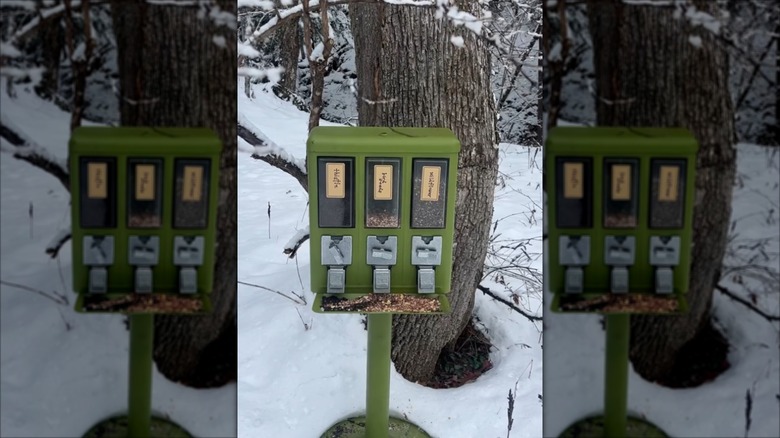
These vintage machines come in many styles, and that's what makes decorating your garden with them so much fun! Practically speaking, the models that have three dispensers that sit on top of a single leg are among the most useful. The three sections can be filled with different kinds of birdseed, giving your songbird pals more feeding options to choose from in their birdie restaurant. And on a related note, you'll want to check the feeder regularly to see if it needs refills. The compartments will likely empty quicker than you'd expect, leaving you with hungry birdies. So be kind and fill 'er up often.
On the other hand, bubble-shaped dispensers are usually singles, meaning you have one dispenser that serves only one kind of candy or gum — or bird seed in this case. These also include metal parts that can be painted. While they don't hold as much birdseed, there's an argument for using them. Their bubble shape is different from most things you'll find in nature. This causes them to visually stand out more, making them a logical item to use as a focal point in the garden or backyard. They'd play a similar role in the garden as a non-plant decorative feature, like a sculpture, would. And they'd keep your feathered friends fed and in the yard, which is an added bonus.
Other things to consider
Many gumball machines stand on legs. If you find one without a stand, you can still turn it into a DIY garden ornament, but you'll have to give it something else to stand on. A tall plant stand becomes a logical base for your legless candy machine. Something like an ONBRILL HDPS Potting Bench would work. It'd hold more than one gumball machine bird feeder. And if the feeder also lacks a tray, it's easy enough with this set-up to place a metal tray underneath the feeders to catch the birdseed that's dispensed. And because there's a shelf on the bottom of garden storage units like that, you'll have a place to store bird seed refills. Just put the seed in tins to keep the squirrels and other rodents from commandeering your stash.
Additionally, you'll want to regularly check the insides of the feeders to ensure that there is no moisture trapped inside. This eventually happens as the weather fluctuates, leaving your bird feeder full of condensation. This leads to mold forming in the bird seed, and mold makes birds sick. Cleaning and drying the feeder thoroughly at least once a month mitigates this issue.
Finally, for those candy machines that stand on a leg and a base, staying upright could be a problem. It might be worth your time to load the base down with heavy rocks. When the wind kicks up hard, such measures may be the only thing that keeps birdies from being separated from their food and you from having to clean bird seed out of your rock garden.