

13 Organization Errors You're Making With Your Corner Cabinets
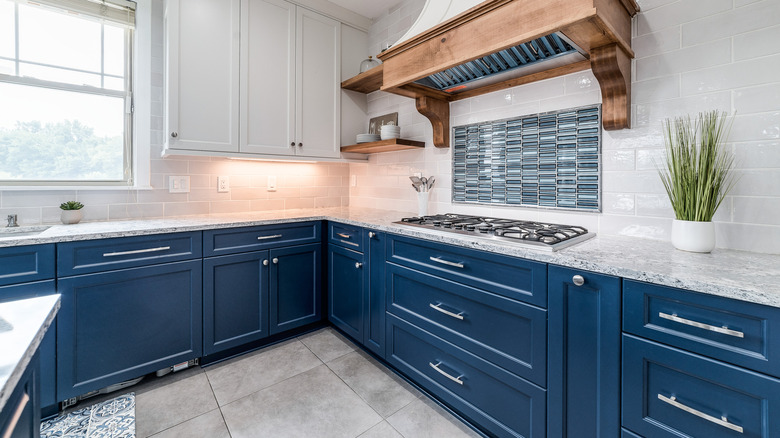
So your new kitchen has a corner cabinet. For some, the kitchen corner cabinet is the epitome of storage efficiency, helping make the most out of leftover space. For others, a corner cabinet can appear awkward, especially if you're unfamiliar with the best ways to maximize its potential. This is especially true when small organizational errors sneak their way into your corner cabinet's storage.
While there are many corner cabinet organization errors that regular cabinets share — such as overstoring clutter or not measuring before buying new features — some are more dire when it comes to this uniquely-shaped cabinet. For example, while lighting may not be much of a concern with a typical cabinet, in a deeper (and thus darker) feature like a corner cabinet, it can make the difference between easy organization and forgotten clutter. As a result, if you're looking for the best ways to organize your kitchen's blind corner cabinet versus a regular cabinet, familiarizing yourself with the common mistakes people make when doing so is just as important as learning how to properly make use of this storage area.
Not considering the type of corner cabinet you have
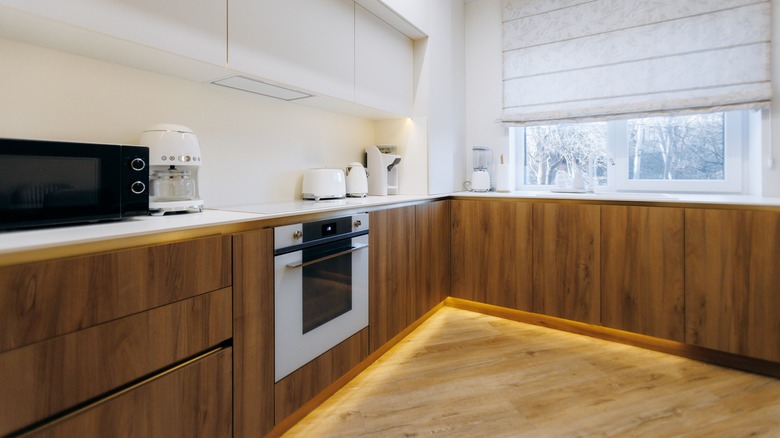
Knowing how to use your kitchen's style of cabinets is just as important as choosing the right kitchen cabinet style for your space. As a result, one organizational error to avoid is not considering your corner cabinet's key elements. One example of this is if you have a corner cabinet with a glass panel front — this may not be the best place to store items you'd prefer hidden. Instead, it may be better to use this for visually appealing elements, allowing this versatile cabinet to pull double duty in your kitchen.
Using it as a catch-all location
If you have a full kitchen, a blind corner cabinet can seem like the perfect place to store those odds and ends. However, using your corner cabinet as a catch-all location can minimize its efficiency in your kitchen, as well as create more hassle for you down the road when it's time to find an item haphazardly stored here. When organizing your kitchen, before tossing a tool or pan into your corner cabinet, consider if it has a better home elsewhere.
Focusing solely on the available horizontal space
With deeper cabinets, it's important to take advantage of the vertical space as well. One of the best ways to take advantage of that feature is by using stackable storage units. There is an endless variety of stackable storage options, from open-front baskets that make accessing your items easy to space-savvy bins that maximize storage potential. This gives you the freedom to customize your corner cabinets to fit the organizational vision you're looking to bring to reality. For smaller corner cabinets, you can even choose a single-tiered organizer or other installable structures.
Forgetting to invest in organizers designed for corner cabinets
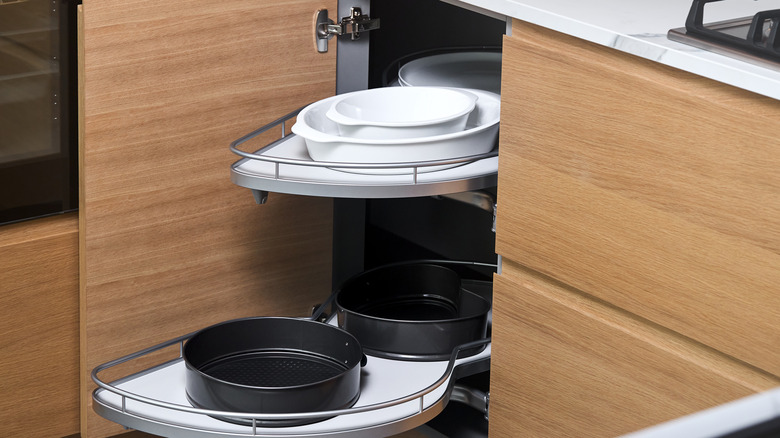
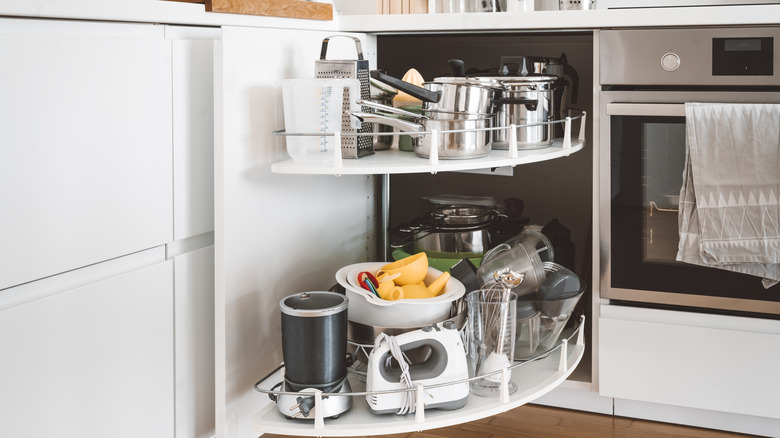
Speaking of installable structures, another top organizational error you may be making with your corner cabinets is forgetting to invest in organizational aids. Investing in new or thrifted add-ons can be a game-changer in making the most out of your space. For example, tiered units can help you take advantage of that prime vertical space. Or, if accessibility is a priority when organizing your corner cabinet, you can opt for non-static storage options instead, such as lazy Susans or pull-out shelves.
Not utilizing the deeper space
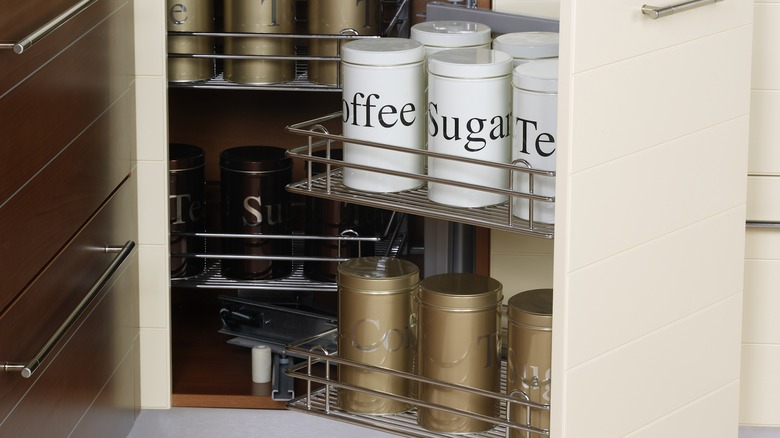
For those not familiar with corner cabinets, those dark recesses toward the back of your cabinet can be daunting. However, when it comes to storage solutions in the kitchen, that's prime real estate you won't want to miss out on. Fortunately, if accessing and making the most of the deep space within your corner cabinet is challenging, many of the other organization tips on this list can help. For example, pull-out shelving can make any items stored at the back of your cabinet more accessible.
Storing everyday essentials toward the back
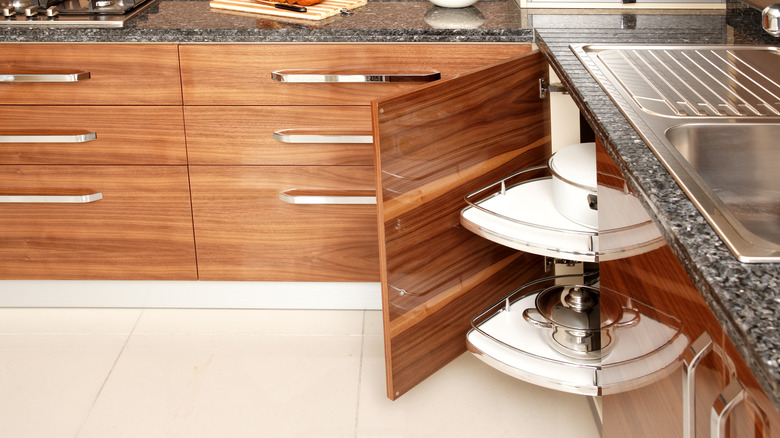
After learning about utilizing the deep space within your cabinet, it can seem counterproductive to avoid storing everyday essentials in that area. However, while it is important to maximize all parts of your corner cabinet, it's also important to prioritize your ease of access. After all, if you can't readily reach an item, you're less likely to use it, leading to unused clutter building up. Instead, use that deeper space for less frequently used items in your kitchen, like large bakeware, while daily essentials like cleaning supplies or food are stored at the front.
Overstoring clutter
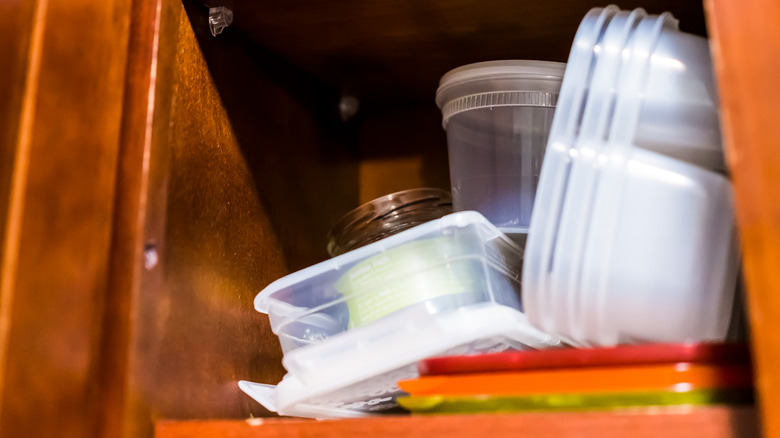
On the topic of clutter, over-storing items that no longer serve their purpose is one of the biggest organizational errors you can make with your corner cabinets. In fact, overstoring clutter is actually one of the most common storage mistakes in all areas of your home. As a result, before organizing your cabinet space, schedule some time to go through the items you plan on storing there. Chances are, there are at least a few items you can part with, either by finding a new home elsewhere in your home or by donating and discarding as appropriate.
Not considering item heights
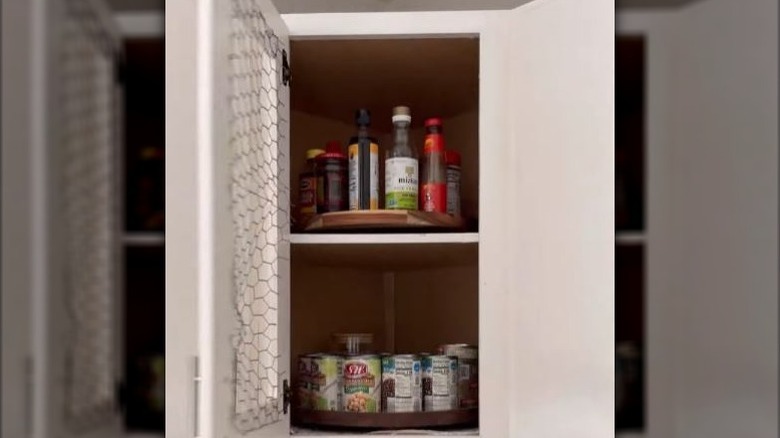
Have you ever gone to grab an item from your cabinet just to knock other supplies over while reaching for it? Or perhaps there've been times you couldn't see what you were looking for because of the large items at the front. When organizing your cabinet's contents, it can be easy to get caught up in the grouping. However, while you're grouping items by purpose and usage, it's also important to consider size. By placing larger items in the back, you can make it easier to quickly survey your corner cabinet and see everything at once.
Storing bulky items here
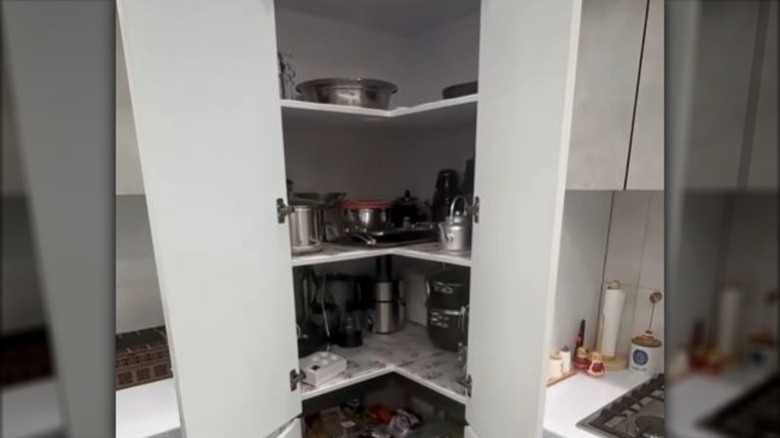
Have you ever tried wrangling an oversized cooking appliance (hello, slow cooker) from a cabinet? If so, such a task only becomes more of a hassle when a corner cabinet is introduced. Because of this, you'll likely want to save those heavier or larger items for a different part of your kitchen. This is especially true as some bulky items may take a toll on any shelving within your cabinet, leading to warping or even overall failure. When thinking about what items to store in your corner cabinet, consider opting for smaller or lighter items.
Organizing without a vision
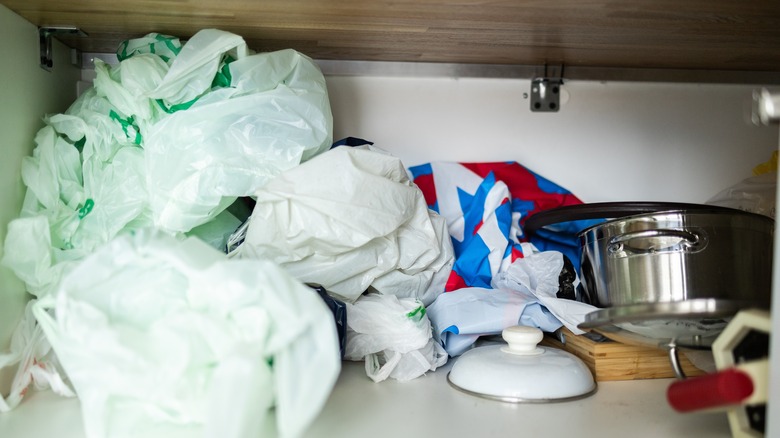
In its own way, organizing your kitchen cabinet space is like creating art — which means you need a vision. In fact, by mapping out how you want to use your corner cabinet, you can prevent other common organization errors, such as the added storage room becoming a cluttered catch-all. Before adding anything to your corner cabinet, even an organizer, consider what purpose you want this cabinet to serve. For example, is this going to store food over serve- or bakeware? Then you may want a rotating organizer over a static option to optimize your cabinet's functionality.
Not measuring before investing in organizers
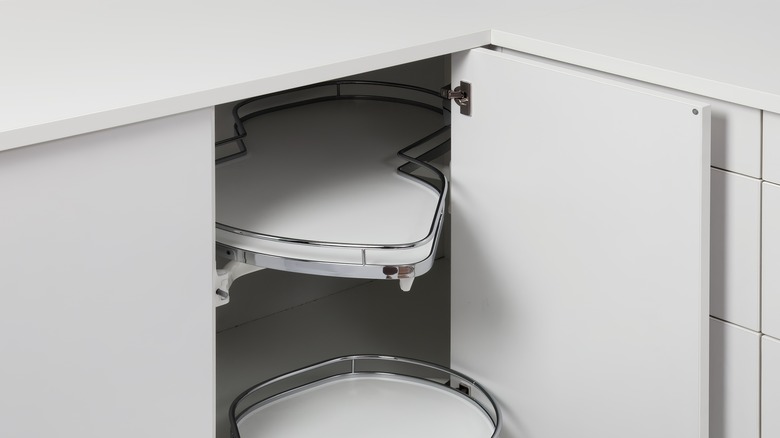
Purchasing stackable storage or even corner cabinet organizers can be one of the best ways to get your cabinet in order. However, if you don't take the time to measure your space before investing, you may find yourself with storage features that just don't fit in your corner cabinet. As a result, measure your cabinet space before you hit the stores. You'll want to know the dimensions for the opening and any shelving or storage units already in your cabinet, as well as the overall amount of space available.
Skipping out on lighting
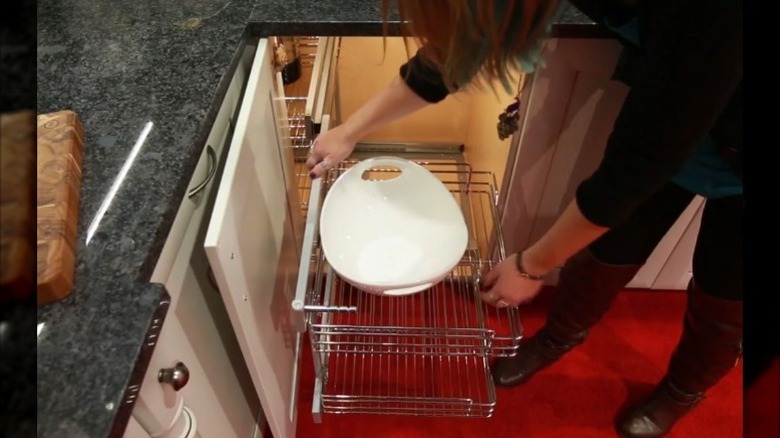
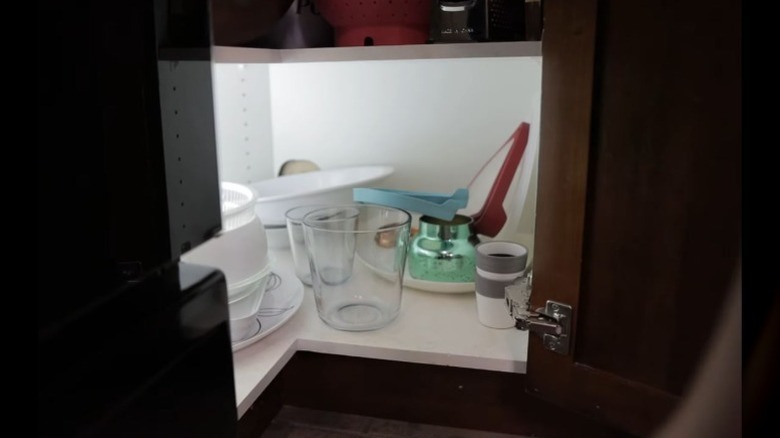
Lighting is the unsung hero of organization. While it may not appear to play nearly as large a role as trendy labels or decorative storage bins, having the right lighting for your space can lend to better organization, thanks to helping you see what you actually have stored in your counter cabinet. That means no more smaller items forgotten or lost in the dark abyss of the cabinet's deep space. If professionally installed lighting options are out of your budget, consider more cost-effective battery-powered adhesive lighting that can easily be installed on your own.