

The Best Advice We've Heard From Joanna Gaines' Masterclasses

We may receive a commission on purchases made from links.
Piecing together Joanna Gaines' best design advice from her years on the show "Fixer Upper," as well as her social media posts, can be a great strategy for learning how to revamp your home. However, if you prefer to learn in a more classroom-like setting, your best bet is to become an expert with Joanna Gaines' home design class. In 2024, she partnered with MasterClass, an online learning platform that lets the public watch short lectures from those at the top of their fields.
Gaines offered her fans a sort of "Design 101" course to teach how to make the most of your home. "I'm really excited about how this class turned out, and I can't wait to bring you into my creative process, including how I approach the design and styling of my own home as well as some of my favorite projects from over the years," she wrote on her Magnolia blog. "Whether you tune in for inspiration or for guidance on creating a space you love, my hope is that through this class you're more equipped than ever to create a meaningful home." From how to select paint colors to curate a room to embracing a house's original features, this is the best advice from the course!
Use a three-word concept as a touch point in design
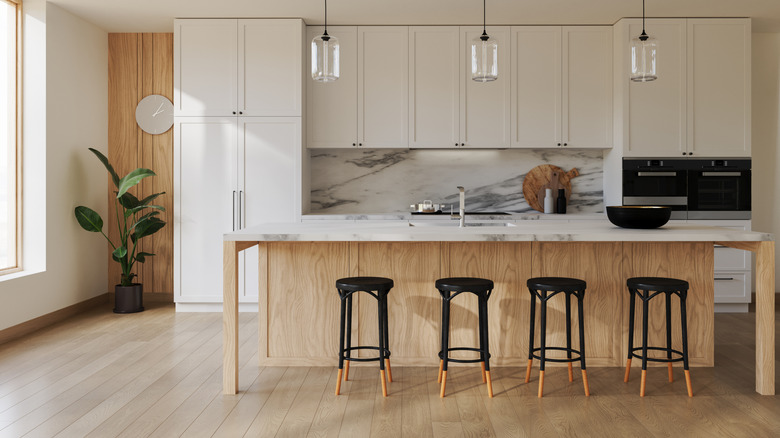
To start, she introduced the three-word concept Gaines swears by when designing a room. You need to set your intention for a space before you can begin. "These words can describe how they want the space to feel, or how they want it to function, or the style they're hoping to achieve," she said in her MasterClass. "What I love about this approach is that it takes people's eyes off other spaces they've seen or want to emulate, and it focuses their attention on their own needs, wants, and wishes."
For example, in your kitchen, you might think "bright, gather, family." From here, you'll know that you want to create an open, airy space that makes hosting easier. This could look like walls painted in Silos White, which is warm-toned, but still light. That way, your kitchen would appear open without feeling sterile, which cooler shades of white might do. These words might also lead you to include simple barstool seating along your island, so there are more places for your family to sit while gathering — instead of just the kitchen table.
Pick paint colors with your three words

This three-word concept is also how Gaines chooses the perfect wall color every time. She went on to explain that these words guide how she shops for colors. "If I'm working on a space that I've said I want to feel tucked away or moody, then I know I should be looking for richer, darker tones," she said in her MasterClass. "If my words were light or airy or peaceful, then I'll probably focus on lighter or more neutral hues."
She is clear that this method is meant to help you, not make things harder. Choosing a paint color can be difficult! Gains is aware that trends are constantly changing, and the perfect color for your kitchen, bathroom, or living room really just comes down to taste. There isn't a wrong answer. "It's not rocket science, but it does help to quickly cut through the massive volume of color options out there," she said. However, if you've narrowed it down to three shades of tan, you'll have to rely on more old-school methods. In this situation, gather swatches or even take a few samples to paint on the wall. Then observe them throughout the day in different kinds of light to see which really stands out.
You know your taste best
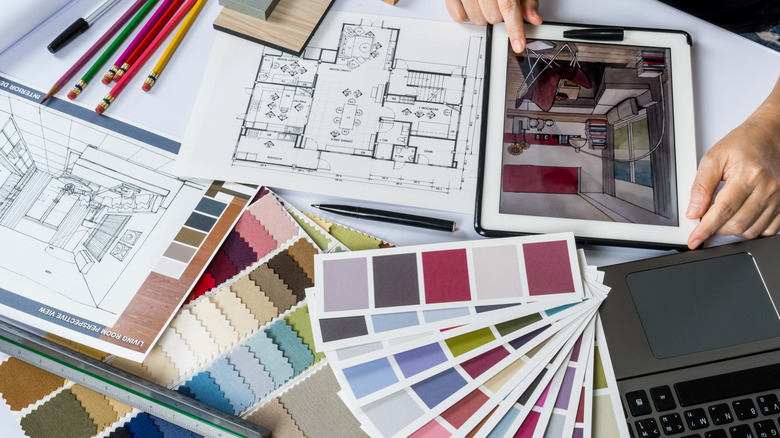
Gaines takes the time to address the absolute glut of advice on the design market! Sometimes, the advice is even contradictory, too. In fact, there are popular home design choices HGTV stars just can't agree on. No matter how many design shows you watch or social media accounts you follow, Gaines makes it clear that, at the end of the day, you know your taste best. "If there's one lesson I want people to take away, it's this: You are the expert of your story, your family, and your rhythms," she said in her MasterClass. "As long as you design with those things in mind, you will create something really beautiful and really unique."
It's hard to avoid getting lost in the noise sometimes. However, don't worry too much about getting things wrong. In her course, Gaines is clear that if you choose colors you like, furniture you find comfortable, and decorations that bring you joy, you really have created the perfect space. It only has to make sense to you for you to do it.
Use architectural heroes to add character to your home
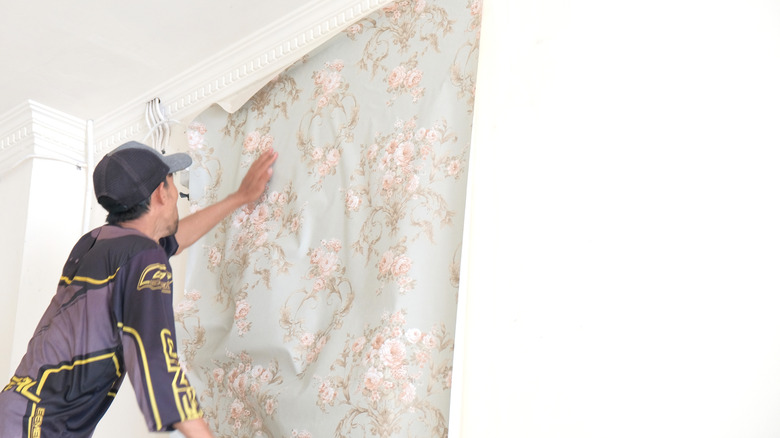
If you live in a new build, you might feel a little left out, as they don't tend to have the same architectural features as the older properties being restored on "Fixer Upper." She understands this, mentioning they are missing things that "feel like it's been there for 50 years," in her MasterClass. However, Gaines shares her top tips for adding character to your new build within the course to counteract any FOMO.
She calls these features architectural heroes, and they are easy enough to add. "This is where I think it just gets fun and creative," she said. "The hero can be the texture on the wall, it could be a pattern on wallpaper. You could have an old hutch from your grandmother, a piece of art that speaks to you. One great hero can really tell a great story in a space." Following this advice, it's totally possible to add real charm to a room without needing a demo day at all. For example, adding Magnolia Home Wildflower Black and White Peel and Stick Wallpaper to an accent wall or below wainscotting (which is also easy enough to DIY).
Use vintage pieces to display keepsakes
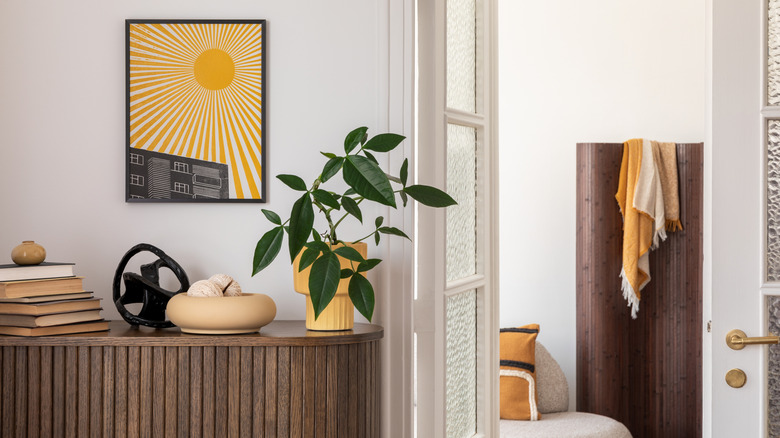
Gaines is all about adding character to your home. While she doesn't shy away from collaborating with big box stores like Target, she is also known for her love of shopping vintage and repurposing older items to create a charmed look in the homes she renovates, including her own. "What is one thing in your space that tells your story? I'll go first," she shared on Instagram. "So I have this vintage bowl that I love to keep some of my favorite moments and memories in." Included are two of her sons' first signed home run balls, as well as other family memories. This bowl is an extension of adding "heroes" to your home, and is a great way to add real depth.
If you want to add this kind of value to your space, try shopping at local resale stores and flea markets, instead of buying new — at least for a few display pieces. There are a few vintage brands that are always worth buying at thrift stores, like Culver Canella, McCoy Pottery, and Bordallo Pinheiro — all of which have incredible staying power in terms of both their quirky style and financial worth.
Start with a feeling, not scale and proportion

The sequence of events when styling a space can be overwhelming, but Gaines teaches you where to start in her MasterClass. "I never think about, 'Okay, how many sofas, chairs?' That's not first in my mind," she said in the trailer, per YouTube. "How do I want this space to work? What are the areas where I really want to create this place where people can gather and be together?" Keeping this in mind first will help you stay focused as you walk through the rest of the design process, as you can always refer back to your original feelings when deciding if a sofa or color palette really works.
Gaines uses this method because of her personal success with it, as well as how it's helped clients. "Instead of asking about scale and proportion or inspiration spaces, I simply asked her to describe how she wanted the space to feel," she told People. "I didn't know that would become the first question I'd ask every client after that. Feeling speaks to story, and storytelling is the heartbeat of my approach to design." From here, you're ready to begin making purchases and installations.
Don't focus on expensive, focus on authentic

When renovating your entire home, or even just swapping a few things out in your living room refresh, you might be tempted to associate a high cost with success. In the trailer for her MasterClass, this is something that Gaines explicitly warns against. "What I see a lot of times is people will spend a lot of money, and they think, 'It's gonna make me feel happier.' And it rarely works," she said, per YouTube.
Instead of buying the most expensive couch, go for the one that you think will feel the most comfortable after a long day of work. Instead of purchasing everything new, scour local resale shops for pieces with patina and a real story that you find interesting. While there are certainly ways to budget and fund a home renovation, Gaines' tip is to know that you don't need to overspend to create a home you'll love coming back to every day.
You probably already own your best design pieces
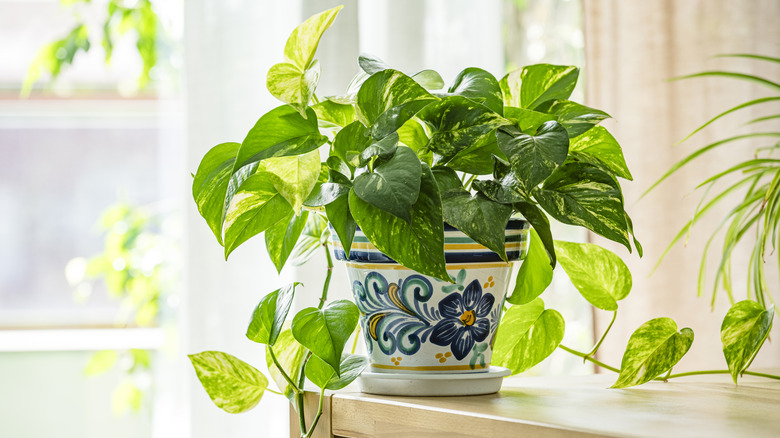
You might not even need to visit a single shop to create your dream home! According to Gaines' MasterClass, sometimes the best solution is to just repurpose and rearrange things you already have in your house. "It doesn't have to break the bank," she said in the trailer, per YouTube. "It's stuff you already have. You just have to highlight it a little more and be proud of it. And then look, all of a sudden you've got story instead of stuff."
There are a few Gaines-approved tips for adding warmth and character to your space in this way. First, look at your favorite plants. What kind of pots do you use? Do they fit the three-word concept you have for the room? If not, they might need to be repainted or swapped to stay in a different room. The same goes for family photos or art prints you've been meaning to frame and hang for ages. Finally getting these up can really pull a space together and make it seem more "you."
Design for you, not for others
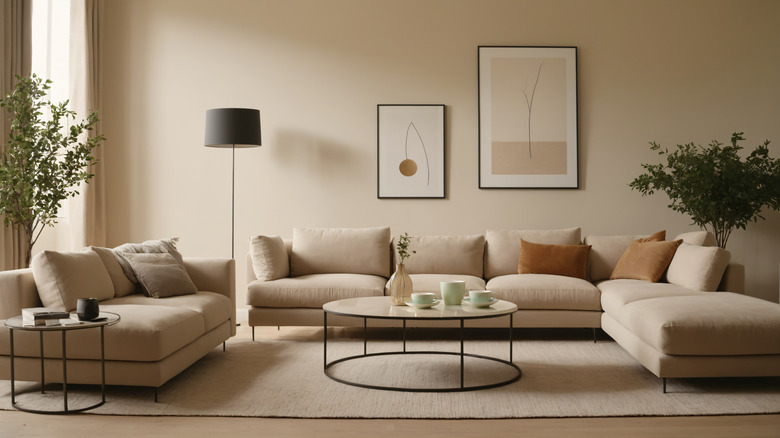
If you're worried about what your mother-in-law or Instagram followers might think about how you redesign your living room, don't be. One of the best pieces of advice from Gaines is that your home needs to be just for you. Don't worry about others' preferences; stick with what matters to those who actually live in the house. "One of the biggest mistakes [people make when decorating their homes] is designing for other people, rather than designing for themselves," she shared during her Masterclass. "We don't need rooms that just sit and are pretty. We really want our spaces to feel interactive, we want them to feel down to earth, we want them to be livable."
This might mean embracing colors and fabrics you genuinely love, even if they're not "in" right now. It also might mean choosing a sofa that can handle movie nights and muddy paws, instead of one that just photographs well, or skipping a formal dining room setup if your family mostly eats at the kitchen island, anyway. You know best what works for your home, so keep that front and center.
Think about the room's real purpose

What do you want to happen in each room of your house? What memories will be created there, and how can your design choices support them? These are the questions Gaines suggests you ask yourself as you create. "Every space is an opportunity to make [your home] work for you and your family," she said in her MasterClass. "That's the intention and the thought I want to put on the front end, that will help lead me through the design and choices I make for the space." To follow Gaines' philosophy, pay attention to how you actually use your space day to day, then let those habits guide your decision
As an example, she paints a clear picture of what she wants her living room to look like on Christmas morning. "I just imagine all the life that's happening in that moment," she said. "Everything's centered around the fireplace and the Christmas tree. We've got wrapping paper everywhere, the kids are on the couch, and then after gifts we're playing games on the coffee table. So you imagine that, and then you build towards that. So, function has to be first." In this case, that could mean arranging the room to make big family gatherings possible, and finding a coffee table to support the vision.
Allow rooms to grow and change, based on your life
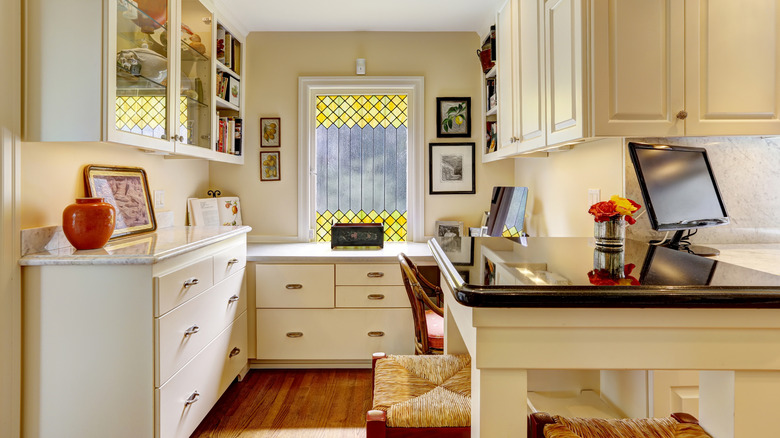
Your needs for a space are never going to be static, and that's okay. As your children grow, you get a new WFH job, or you become injured and need a more accessible home, your property will need tweaks to function at its best. Gaines is no stranger to life's changing seasons, and points this out to her viewers. "Then I realized, I can't get any work done off the kitchen. The kids were coming in and out needing food," she told viewers of her MasterClass about a place she intended to be an office. "So I took that and made it more of this little sitting space, which was like a little mini living room."
So remember, if a space isn't working the way you hoped, or it's no longer meeting your needs, you're allowed to change it. To make this easier for yourself, if you know changes are on the horizon, build in flexibility from the beginning. Choosing furniture that isn't locked into a single purpose, like a loveseat that fits in more than one room of your house, or choosing moveable shelving instead of built-ins, like the Casual Home 3-Shelf Folding Stackable Bookcase.
Look deeper into older homes
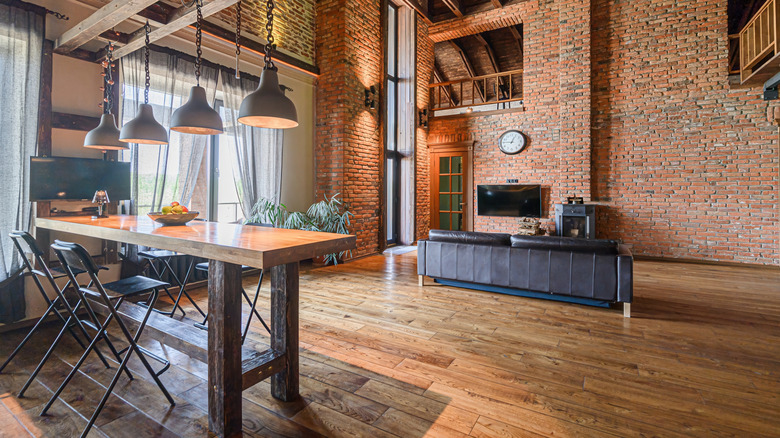
If you want a home with authentic character, it's possible you're already living in one ... and the previous owners just renovated over it. In recent years, stripped-back minimalism has been very much in style. Think white walls, gray LVP flooring, and beige couches. Yet, as things shift to once again favor the bold and intricate, you might not always have to start from scratch. There are so many features that might have been covered up! In her MasterClass, Gaines lists wooden flooring that's been carpeted over and brick or shiplap behind modern walls as things to be aware of.
There are a few signs of a previous renovation (especially a DIY one) to look out for. Check for things like uneven floor heights or baseboards that don't quite meet the ground. You can also look for oddly placed vents or outlets, as well as uneven caulking. These are all signs that something might be covered up. The age of your house is another tell. There are so many outdated home styles we should be bringing back for their charm, like Queen Annes, Dutch Colonial Revivals, and American Craftsman Bungalows. If you live in one of these, chances are it has some good bones, even if its inside is quite modern.
Pretend that you've never seen your space before
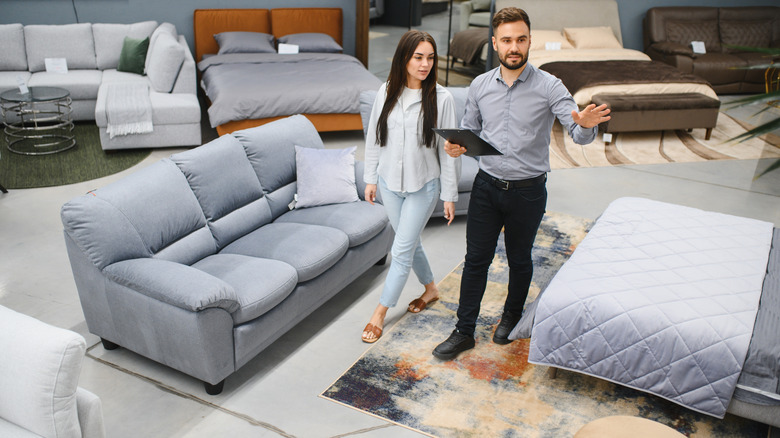
As you are making plans for your space, Gaines encourages her students to try viewing their canvas through someone else's eyes if they are struggling to see where improvements need to be made. She calls this practice taking inventory of a space. She recommends using this technique because channeling someone else helps you identify things you don't like or aren't working for you, both in function and style.
But don't just pretend to be your sibling or a random guest in your home. Instead, step into Jo's shoes. That is, pretend you are a designer! If you were hosting your own HGTV show, what would immediately jump out as something that doesn't quite work? For example, do you have to awkwardly walk around furniture, or does the current layout guide you naturally from one area to another? Are there enough varied heights (low, mid, and tall), or does everything sit at the same level? If you're still having trouble spotting these things, try looking at a photo or video of your room for another fresh perspective.
Only choose items you actually like and will use every day

Don't invest in pieces you won't use! You're not going to sit on that couch if it's too rigid. You won't hang that art, or enjoy looking at it if you do, if it's too boring. Gaines isn't a big fan of including items, especially furniture, in a room that are just there to look nice instead of serving a purpose. In her MasterClass, she encourages her students to select things you can actually enjoy having in your home, instead of putting them there "just because."
Before buying anything, think back to your three words. Does this item support them, getting you closer to your dream room? Or do you just like it because it looks a bit like a magazine? Of course, you should purchase couches, chairs, rugs, and more that you think are beautiful, but Gaines reminds us that they should be functional too. Overall, remember to avoid "special occasion" furniture. If you're saving it for guests, it's probably not the right piece for your most lived-in spaces.