

How To Transform A Brick Exterior Into A Sleek, Modern Facade With A Genius DIY
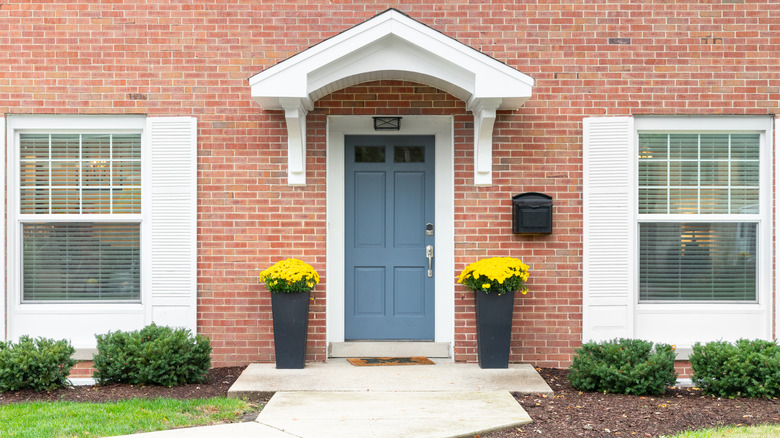
Brick is a timeless material. Since as early as 7,000 B.C., people have been using hardened clay to construct their homes, businesses, tombs, and places of worship. However, not everyone likes the look of a brick exterior. Bright red brick, in particular, can often feel of its time or a bit too bold for modern tastes, leaving homeowners wondering how to refresh outdated exterior brick without painting.
While a fresh coat of paint is an easy way to tamp down the look of your brick exterior, it's not always the best choice. Brick can have long-term, beneficial effects on home resale value, and slapping a coat of paint over it is a permanent change that's incredibly difficult to reverse. Additionally, brick is porous. This means that sealing it up with a layer of paint can trap moisture within the material, leading to mold, mildew, and deterioration over time.
So, what options are left, then? If you're not a fan of your home's exterior but you don't want to tank your resale value, consider making a less permanent change by installing some cladding over the brick. The final result will be a smooth, modern facade that you can paint to your heart's content — and if you decide down the line that it's time to bring back the brick, all you have to do is remove a few screws.
How to install cladding over a brick exterior
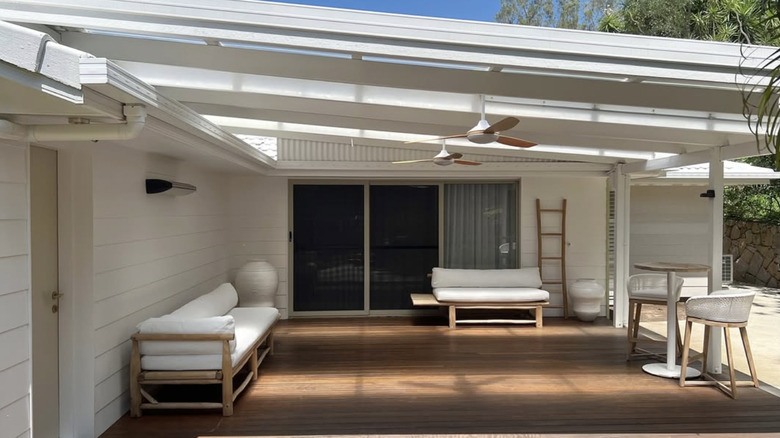
While this DIY might seem as simple as smacking on some cladding with a few masonry screws, there are a few considerations you have to make to ensure the structural integrity of the installation. Most importantly, the brick needs to be able to breathe. This means you have to use some battens to create a bit of a gap between the brick surface and the cladding boards. Thankfully, this step is pretty easy — all you need to do is install a few narrow vertical boards along your brick wall, as well as some corner stops where walls meet and additional stops around windows. You'll also want to add some PVC cavity vent strips — these will prevent bugs and small animals from setting up shop in the gap between the brick and the cladding while still allowing airflow.
After this, the hard part is over. All you need to do is fasten the planks to the battens. There are different types of house siding to consider, but if you're looking for something particularly weather-resistant, fiber cement siding, also referred to as "HardiePlank," is a great pick. This material does have a fairly high price tag, however, and a more budget-friendly option would be either vinyl or aluminum.
After you've finished your DIY, this setup should last for decades without much maintenance. You can repaint the siding whenever you're in the mood for a new exterior color, and if you decide it's time to go back to the basics, it should be fairly easy to remove your cladding piece by piece to reveal the brick.