

How To Get Scale Right In Your Home's Custom Mural
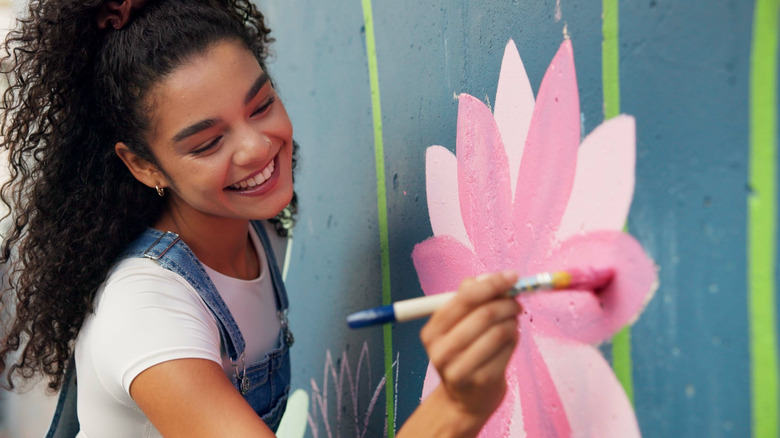
As homeowners look for artistic yet comforting decor options, custom murals have gained attention. A custom mural can even help increase your home's value, if it's done right. There are two different types of custom murals: custom wallpaper and paintings. Generally, you will decide on a scale for custom wallpaper using a design tool on the company website. It should arrive ready to apply. However, if you're an artsy person, you may consider painting your own wall mural instead of hiring an artist. This method is a great option if you have the vision and time. Plus, it can help you save some money. That being said, there's a reason mural artists charge so much. Scaling up a design for a mural takes time, effort, and skill. But that doesn't mean it can't be done! In fact, there are tools that can help, including sketching out the design on paper first and using a grid or projection to get it on the wall.
When designing a custom mural, there are two things to consider regarding scale. First, the scale of the entire mural in relation to the space. This is how the art will look in your space, and how the elements of the design will work together. Second, scaling the design to fit on the wall as intended. This is how the final design will actually be applied to the wall, and the size of each element at the final application. It is important to consider both types of scale when planning and applying a custom mural. By defining the intent behind the design and planning precise measurements, you can master the art of scaling, no matter how big or small your mural becomes.
Choosing the scale of the mural itself
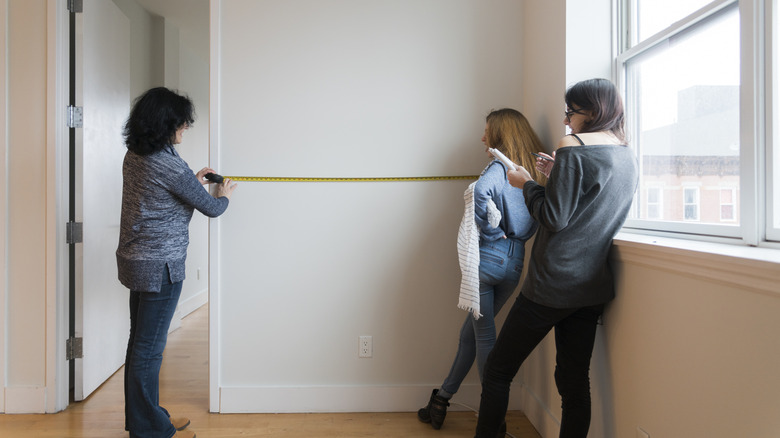
The scale of the design is more than just deciding how much space the mural is going to take up. It's about how each element of the mural works with the space. Essentially, this is where you decide how much wall space the mural will take up and how big each element of the mural will be. Start by defining the goal of the mural. Do you want to make a statement or make the space feel bigger? If the intent is to be bold and abstract, you may want to make a statement with a large-scale piece that takes up a singular dedicated space, like a bold kitchen backsplash that's unique to you. Bold pieces generally focus on a single element like a plant, animal, or person. Then the size of that single element is scaled up to fit the designated space. For abstract designs, scale is rather subjective. But you still want to make sure that the mural doesn't overpower the space. These designs are best for large open spaces.
On the other hand, if you want to create space and harmony, a landscape design may be better suited for the space. Doodle art can also work. These options usually open up a smaller space by using negative or white space. Find a balance between white space and the design. There is no perfect ratio for white space, but the goal is generally to give each element enough space to breathe without crowding. For example, if you are painting a single large item, leave significant room between the focal point and the edges of the walls. For designs that are meant to create space, use perspective to extend the space into the design.
Scaling your design for the perfect fit
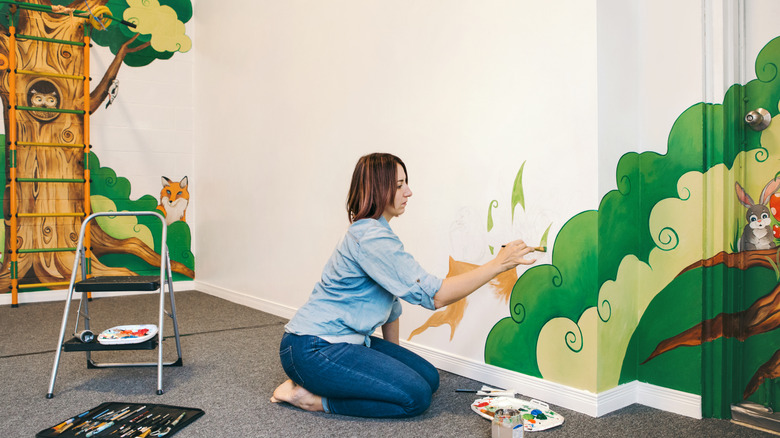
Once you have decided on the scale of the mural itself, there's one thing left to do to make sure those choices translate to the final design: scale the design to the wall. Custom wallpaper is usually ordered to fit your space, so all you need to do is make sure you have accurate measurements before ordering and follow the installation instructions once it arrives. However, if you are painting your mural, you may face challenges with making sure each element ends up proportional as you scale up. It's a good idea to sketch the design on paper first. Not only will it help you visualize the final design, but it can also help you get every detail perfect. Make sure your sketch is the same dimensions as the mural.
From there, you can either freehand your drawing or use a grid or projection to get your design on the wall. Freehanding is only recommended for more abstract designs that don't need precise measurements to look natural. A grid is a much more precise method for scaling up a design, but it is much more time-consuming. Add a grid to the paper or digital design. This will show you what parts of the design fit into each grid sector. Then, measure out a grid on the wall with the same dimensions but on a larger scale. Using the design as a reference, paint the mural by grid quadrant. Alternatively, you can use a projector to cast the design directly to the wall with precision scaling. This method is less time-consuming, but it can cost more if you don't have a projector on hand.