

How To Choose The Best Type Of Silicone Caulk To Use During Your Next Tile Project

Caulk deserves a place in every DIYer's supply kit. Whether you're filling gaps in your baseboard trim, sealing a door frame to keep pests out, or trying more unconventional ways to use caulk around the home, many home improvement projects will depend on this versatile, spreadable material to create a finished result. But not all caulk is created equal, especially when it comes to tile projects. Latex caulk, also known as acrylic-latex caulk, is suitable for some tile applications, like securing loose tiles. It offers some water resistance, but it isn't intended for frequently wet areas like shower surrounds. If you're tiling in an area that's prone to frequent splashes, temperature changes, or sunlight exposure, you'll definitely want to consider using a silicone-based caulk instead.
Silicone caulk, sometimes called silicone sealant, is highly durable. There are different formulations of silicone caulk, each with its own unique advantages. The proper type of silicone caulk for your project will depend on the area of use and the user's experience in applying caulk, especially if you plan to DIY your tile job.
Siliconized acrylic latex is like a happy medium between pure silicone and ordinary latex caulk. It's waterproof enough for shower surrounds and other wet areas and withstands temperature changes. Pure silicone caulk is typically the most waterproof and most durable, making it a great option for tile showers and other high-moisture areas. It's also often UV resistant and antimicrobial. However, it can be more expensive, and some beginners may find it difficult to work with. Of course, there are other factors to consider when choosing a silicone-based caulk for your tile project, including the caulk's flexibility, curing method, and finished appearance. Proper application also matters to get the most out of your chosen silicone sealant.
Acetoxy vs. neutral-cure silicone application and curing
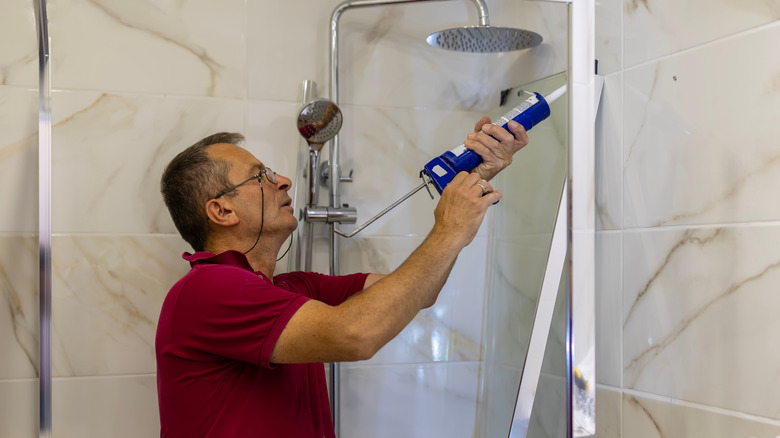
You might also hear about neutral-cure silicone and acetoxy silicone. Both of these silicone types will cure when exposed to air. Acetoxy silicone is excellent for completing a tile project in wet areas, especially the corners of a shower. How to Handyman on YouTube explains, "We can get this particular [silicone type] in a number of different colors to match the grout. You'll often find if you've got a grout color, there'll be a chart somewhere in the hardware store that shows the different colors that match." Acetoxy silicone also dries quickly, often in as little as 24 hours. However, it employs acetic acid in the curing process, which releases a vinegar-like smell, which some users may find temporarily unpleasant. This type of silicone can also damage certain materials like natural stone and metal, but it's appropriate for glazed ceramic and glass tiles.
Neutral-cure silicone is safe if you're renovating your bathroom with a natural stone-tiled shower, but it can be more expensive and dries more slowly. Because it takes longer to become tacky, some beginners might find neutral-cure silicone easier to work with. This kind of silicone releases alcohol as it dries, making it practically odorless. For outdoor kitchens or other exterior tiling jobs, neutral-cure silicone offers better weather resistance than acetoxy silicone.
Modulus and durability in the final results
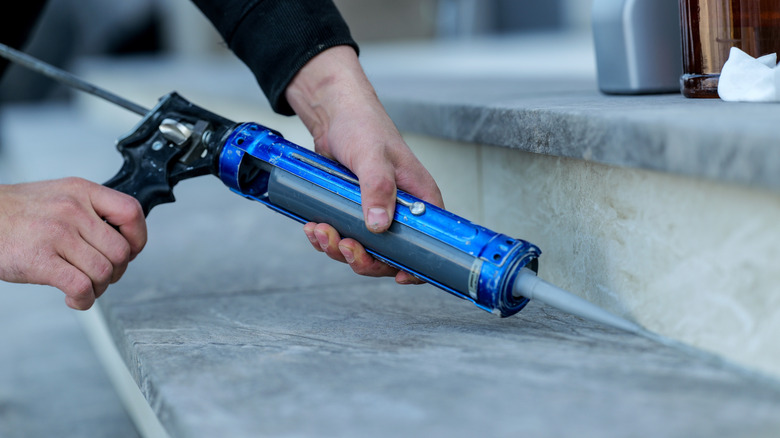
When choosing between these types of silicone caulk for your tiling project, it's important to assess the material's modulus rating too. "Modulus" refers to the caulk's ability to flex, expand, and contract when cured. Low-modulus caulk is more flexible, and this makes it suitable for extreme fluctuating temperatures, usually around windows and doors or outdoors. A silicone caulk with a low modulus rating can work for tiling jobs, but it usually isn't super necessary, unless you're using it in a very niche application, such as caulking around a tiled outdoor kitchen.
When using silicone caulk in indoor tiling jobs, a high modulus is usually preferable. "A high-modulus silicone is one that is a little bit more rigid," explains How To Handyman on YouTube. "That's best for working in wet areas, around showers, around baths, and those sorts of things." Temperatures may fluctuate in an indoor bathroom, but they're usually not so extreme that sealant flexibility is a concern. Vertical joints in a tile shower will be better supported by the rigidity of a high-modulus silicone caulk, even if the caulk may crack eventually. Most high-modulus silicones will be acetoxy silicones.
In summary, a high-modulus acetoxy silicone caulk will often be the best choice for most waterproof interior tiling jobs, such as a shower where vertical seams or a wet tile floor may become a problem. However, you must check that it's compatible with your specific tile and other materials. A low-modulus neutral-cure silicone may work around the edges of some tile jobs, such as the seal between a bathtub and tile floor, but it isn't ideal for tile that requires sturdy structure.