

Should You Use This Popular Rug Material In The Mudroom? Here's What We Know
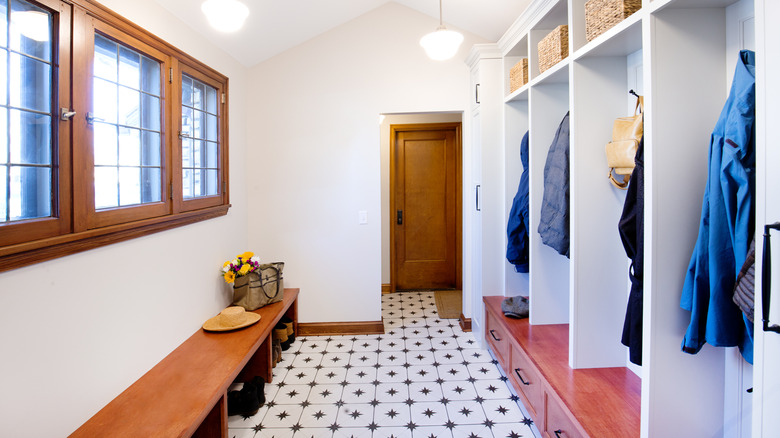
By definition, mudrooms tend to be the muckiest room in the house. Often used as a repository for dirty shoes and messy gear from outdoor, sports, or gym activities, these practical entry rooms encounter a lot of foot traffic and act as a first line of defense — taking in all the dirt and grime that would otherwise get tracked into your lovely clean home. Your mudroom can feel like an extension of the outdoors, but it should also embody the style, sophistication, and flare of your interior decor. A sturdy rug is a style-boosting mudroom upgrade that won't take too much space, but it's crucial to equip this room with a high-power rug that can work double-duty at catching all the grossness your shoes can carry indoors. For that reason, a jute rug is usually not the best option, even though it may seem practical at first.
Jute is a type of plant that, for centuries, has been a commercially popular material for rugs and mats. The affordable, sustainable, natural material might stylistically seem to make sense in your mudroom, which acts as a conduit between the outdoor elements and indoors. However, because they often lack traction on the backside of the rug, jute rugs can slip and slide on mudroom floors, even damaging hardwood over time. Jute rugs also have a tendency to shed tiny fibers, which can leave a bit of a mess underneath. Most importantly, dirt and mud get mashed into the heavy weave easily, and once it does, it's extremely difficult to get out. While jute rugs are popular additions for all kinds of rooms — from dining rooms and bedrooms to home offices — they're not a wise choice for mudrooms.
Jute rugs get soiled and ruined easily
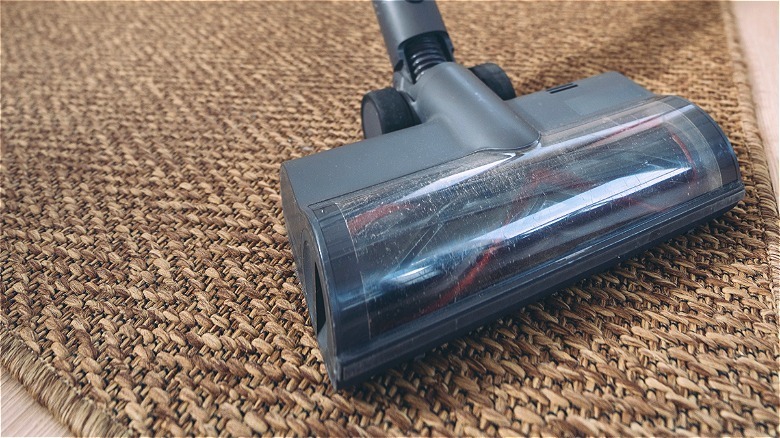
If you're tempted to add a jute rug to your mudroom, be warned that the material won't hold up well to heavy traffic or wear and tear. The natural, eco-friendly fiber of a jute rug is one of its major selling points, but also why it breaks all the typical rules for how to wash a rug yourself. Firstly, you can't vacuum a jute rug with a roller brush or other aggressive attachments. Despite their durable appearance, jute fibers can easily be loosened and frayed by brushes, so you're limited to suction-only when vacuuming. Most other rugs can handle an occasional spot clean — or even a full-on soak — but jute rugs should be kept as dry as possible at all times. Jute fibers will readily soak up moisture, but they don't dry out easily. Getting a jute rug wet can lead to discoloration, swelling, and weakened or damaged fibers. In some cases, the rug can even start to mold, mildew, or rot. This clearly makes them a poor choice for mudrooms, and it's also why you might want to avoid the jute bathroom rug trend.
For a reliable mudroom rug without all the fuss, consider a more traditional rug style made with synthetic fibers. Modern materials like polyester, polypropylene, and nylon are stain-resistant and easy to clean, since the fibers won't readily absorb mud and moisture. If you're insistent on natural fibers, wool rugs are more expensive and more sensitive to moisture, but they are very durable and can last a lifetime with proper care. Putting an outdoor welcome mat outside the door to your mudroom can also help to take the brunt of the heavy-duty, super-wet stuff before coming indoors.