

Sick Of Traditional Hedges? This Alternative Creates Privacy And Attracts Birds
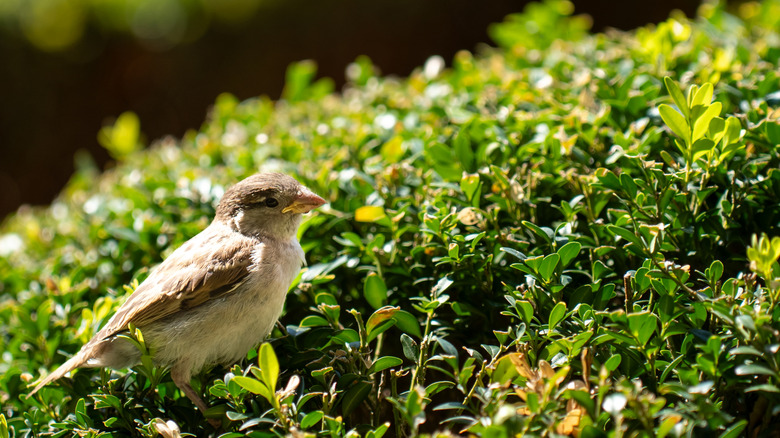
Let's face it – formal hedges can be boring, and you know that a big wall of boxwood can be a bit unnatural looking. Plus, those monoculture plantings can be a nightmare when it comes to pests and disease. If you'd rather use that space to feed and shelter kingbirds, catbirds, and robins there's an alternative to the hedge. A mixed hedgerow goes beyond creating privacy and marking the boundaries of your land. This landscaping feature is an excellent way to attract birds to your garden. In fact, these vertical stretches of nature can support biodiversity in developed areas.
Formal hedges typically include a single species, while mixed hedgerows are made up of a combination of different trees, shrubs, and perennials. They can serve as living fences that attract birds and pollinators to your yard while providing privacy or blocking out unwanted views. In the British Isles, traditional mixed species hedgerows have been around for thousands of years and were grown to separate fields and mark property boundaries. However, the full importance of hedgerows in providing wildlife habitat wasn't realized until they started to be destroyed. These days, gardeners are embracing these borders once again. In addition to bringing wildlife to your property, these dense plantings can stop erosion, prevent rainwater runoff, and serve as a windbreak.
Mixed hedgerows provide bird and pollinator friendly privacy
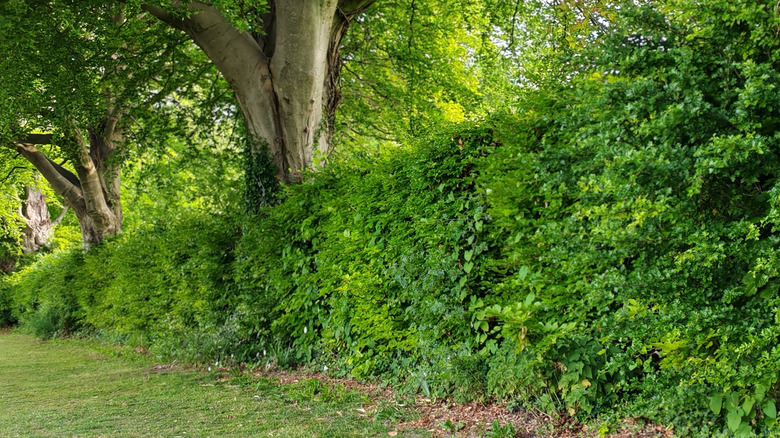
Mixed hedgerows can provide our feathered friends with food such as berries, seeds, and insects. But they use them in other ways as well. The dense branches of the vegetation provide habitat for nesting, perching, and shelter. Birds and other wildlife also use the borders as corridors to travel safely from place to place. On large properties, you could see a more diverse bird population because the varied hedgerow heights are ideal for perching.
If you would like to grow a mixed hedgerow around your yard or garden, plan to include at least 12 different species. There are numerous shrubs that will attract birds that you can incorporate into your privacy screen, such as viburnums, sumac, and Eastern ninebark. You can also consider small trees like dogwoods, hazelnuts, and hawthorns, as well as brambles. But be sure to choose species that have similar growing requirements for sun, soil, and water. When you plant the various species together, ignore the recommended spacing instructions and instead arrange them 12 to 18 inches apart to form dense growth. You can grow a hedgerow to create privacy and attract birds that's just 30 inches in width, but 6 feet wide is even better. Those with larger properties can allow these privacy screens to grow up to 50 feet wide.