

Here's How Often You Should Be Cleaning The Bottom Of Your Oven
We may receive a commission on purchases made from links.
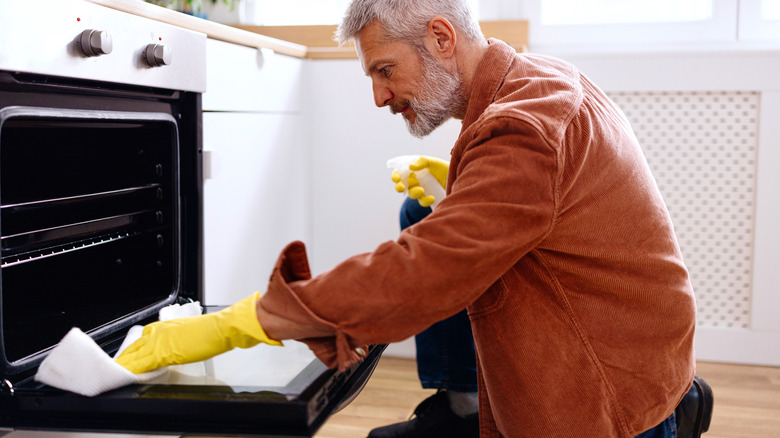
Your kitchen is the heart of the home — it's where food is made, of course, but also memories. From baking holiday cookies with your children or cooking a Valentine's Day dinner with your partner, these are moments that stick in the mind. While you might have established weekly cleaning habits for a cleaner kitchen, you've probably left part of a crucial appliance forgotten. Cleaning the bottom of your oven, though often overlooked, is most critical for preventing smoke, kitchen fires, and unappealing flavors in your food. Even more, keeping all parts of your oven clean helps it run more efficiently and extends the life of your appliance. Commit to a scrubbing at least four times a year, with some flexibility depending on how often you use it and how messy of a cook you are.
From overflowing casseroles or dripping fruit pies, the bottom of your oven can become downright disgusting. If you don't clean it regularly, the buildup can become a serious hazard that can damage your heating elements. The frequency that you should clean your oven depends on your cooking habits, though seasonal deep cleans are a good rule of thumb. For ovens that see heavy use, like daily cooking, cleaning the bottom of the oven every three weeks is appropriate. For standard-use ovens operated three to four times a week, set a reminder to clean it every three months. An oven used only occasionally to bake cookies could be okay with a cleaning every six months. Professional ovens should be cleaned daily, but that's not really relevant to most home settings.
How to clean the bottom of your oven
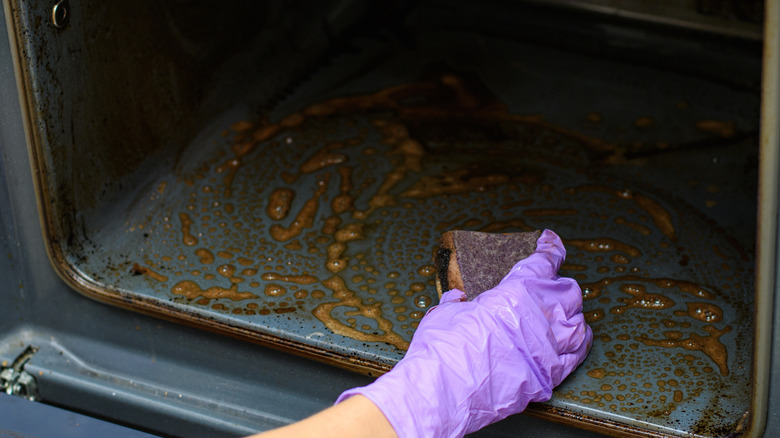
While it's true that you should be cleaning the bottom of your oven based on how frequently you use it, there are some situations when you should clean it immediately for safety reasons. If your oven smokes during preheating, before you've even put food in, it's likely dripping in grease. If you don't take care of it quickly, this grease can ignite and cause a fire. Also, a lingering burned or acrid smell when the oven is turned off or while it's heating up points to the presence of carbonized food debris. It will taint anything you cook in the oven with a bitter, smoky taste. Finally, if the bottom looks cloudy, has black crusty patches, or has visible pools of grease, it's a fire hazard and needs to be cleaned immediately.
When considering how you really should be cleaning your oven, it's important to clean spills as soon as you see them. This helps prevent stubborn, burnt-on buildup. For stuck-on messes, there are a few effective methods to try. Commercial cleaners, such as Easy-Off Oven Cleaner, can dissolve grease in minutes. The best way to clean your oven naturally involves turning a few kitchen staples into a powerful cleaning paste. Mix a ½ cup of baking soda with a few tablespoons of water until it's the consistency of pancake batter. Coat the bottom of the oven with the paste, avoiding the heating elements. Let this mixture sit for at least 12 hours to break down any carbonized food, then spray the dried paste with white vinegar. Finally, wipe the paste and mess away with a damp cloth. For truly stubborn residue, use a silicone or plastic scraper to gently lift it off the porcelain finish without scratching.