

No More Concrete: Why Tree Stump Rounds Are The Superior Garden Path Material
We may receive a commission on purchases made from links.
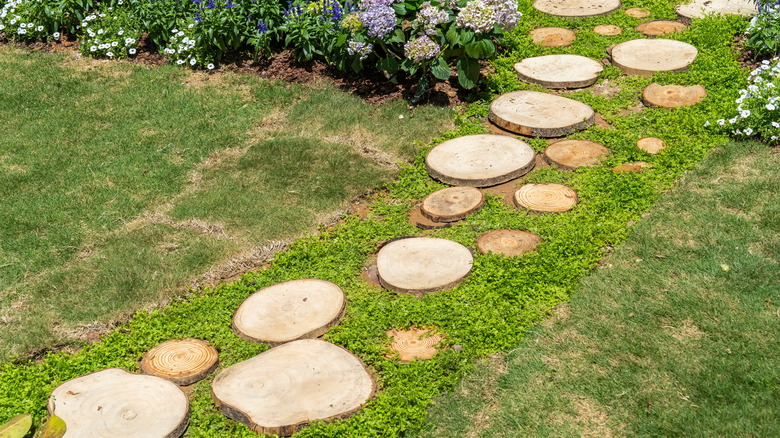
There's a special whimsy to a garden path, and no shortage of materials to choose from for the charming feature. The project can be as daunting as it is exciting as you sift through the options. If you're back and forth between concrete or wood from one of your trees to create rounds for the path, go with the natural material. Not only will a path made from tree stump rounds bring vintage farmhouse garden vibes, but it's also more comfortable to walk on in hot weather. When you repurpose wood and avoid concrete, you're also saving money, avoiding waste, and letting water soak into the ground instead of becoming runoff.
Concrete can get hotter than 100 degrees Fahrenheit in summer, rendering your path unusable for walking your dog or stepping out barefoot. In contrast, wood lets some heat pass through rather than absorbing it, so it will stay cooler and reduce the danger of burning your feet. Log rounds also outshine concrete in eco-friendliness and permeability. Rainwater can flow around them and soak into the ground, which keeps erosion in check and stops polluted water from ending up in streams.
Hand-cut wood rounds top concrete in most cases, but there are some disadvantages. If you're in a very damp climate, there's a greater chance of the wood rounds rotting and mildew developing. A DIY garden path is an affordable way to add natural beauty, but it's not entirely free; you may need to buy products like Pentacryl Green Wood Stabilizer and SEAL-ONCE Marine Wood Sealer so it will last as long as possible.
How to prepare the perfect path with natural wood
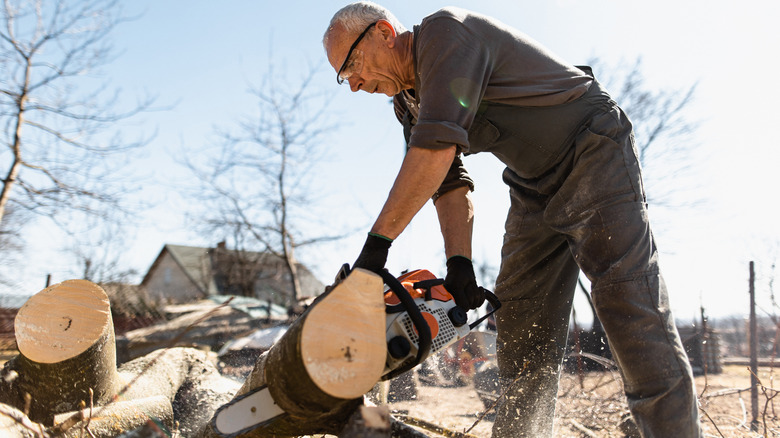
Once you've decided to turn a fallen tree or an old tree stump into a useful landscaping feature, you'll need to gather supplies, including stabilizer and sealant, a chainsaw or hand saw, as well as gloves and goggles to keep yourself safe while cutting.
First, consider how you want your garden path to wind before you start, so you can have an idea of how many tree rounds to cut. The path should be the easiest way through the garden, and the best ones accommodate at least two people walking or rolling side by side. Are there particular plants or features you want to draw visitors' focus toward? The design of your path is your opportunity to do just that. While you're thinking ahead, research the wood you're working with to gauge its ability to resist rot. Species like black locust and yew hold up much better than pine, which might need to be replaced sooner. You're also in luck if you have bald cypress, black walnut, white oak, or eastern or western red cedar.
Now take your saw, slice the tree or stump into rounds of your desired thickness, and treat them with the stabilizer and sealer. Before laying them on the ground, some gardeners put in a thin layer of sand or gravel to keep water from pooling underneath the wood. Depending on the wood and your preparations, the path can last for two years or many more.