

14 Ways To Give 80s Home Decor A Modern Upgrade
We may receive a commission on purchases made from links.
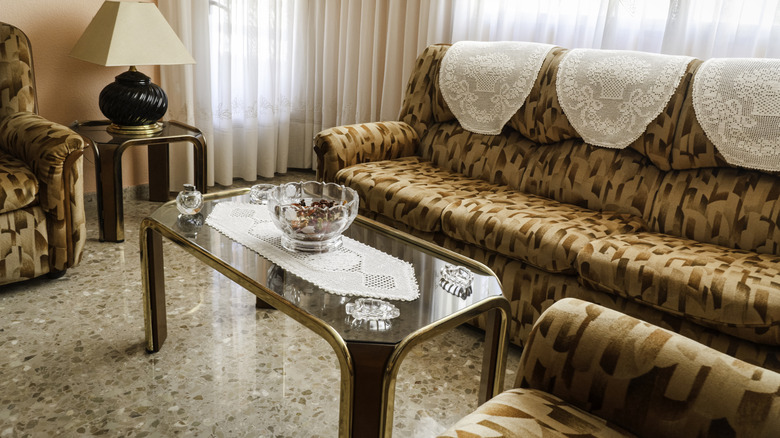
The home decor and interior design stylings of the 1980s have made a big comeback over the last few years. It's easy to see why. Minimalism, mid-century modern, and hygge all dominated design in the 2010s. That meant very clean lines, lots of neutrals, and carefully curated decor that was never overpowering. The return of '80s style represented the exact opposite of those designs. Pastel colors, curvy furniture, lucite, and other maximalist designs flourished in this era. After so many years of quiet decor, it's no wonder that many of these '80s home decor trends were begging for a comeback.
Retro trends, like '80s home decor, can be fun to incorporate into your home's design, but too much of a good thing rarely ends well. Committing the whole room to that '80s vibe will have it looking like a time capsule. It can also look too matchy-matchy. In the long run, it will also be harder to incorporate new trends and styles you like. The key here is to be strategic in layering your designs in order to give '80s-inspired designs and shades of neon a contemporary twist. Here are 14 ways to give '80s home decor a modern upgrade.
Choose a neutral base
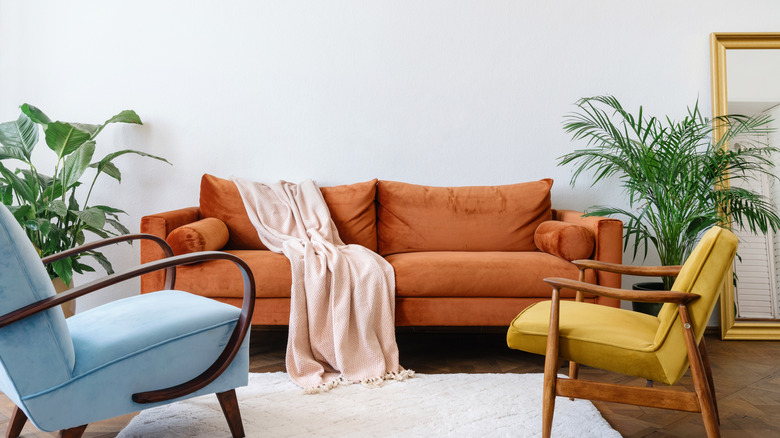
Trends from the '80s can feel extremely loud if they're not layered into a home's design. Too many colors and shapes can easily overpower a room and make it feel less inviting. The key to '80s design is to start with neutrals. You want to pay homage by incorporating elements of '80s style by mixing them with modern designs. Bringing in those brash designs with a more muted base (even if the paint color is contemporary), will prevent the space from looking dated. It also allows you to pick some very bold designs, like an accent wall or Memphis design-styled furniture.
Before you start introducing more '80s decor, decide how you want to ground it with neutrals or muted colors. If you want brightly-colored walls, then your sofa and other decor should be neutral and a little more muted. This will keep the design focus on the walls. On the other hand, brighter furniture and decor needs a neutral paint color on the walls so the effect isn't overwhelming. It will also allow the furnishings to pop and make the effect more pronounced. This option can also be easier to style over time, as you can easily swap decor in and out as your tastes change. Think about which direction fits your style and build from there.
Accentuate the room with Memphis Design furniture
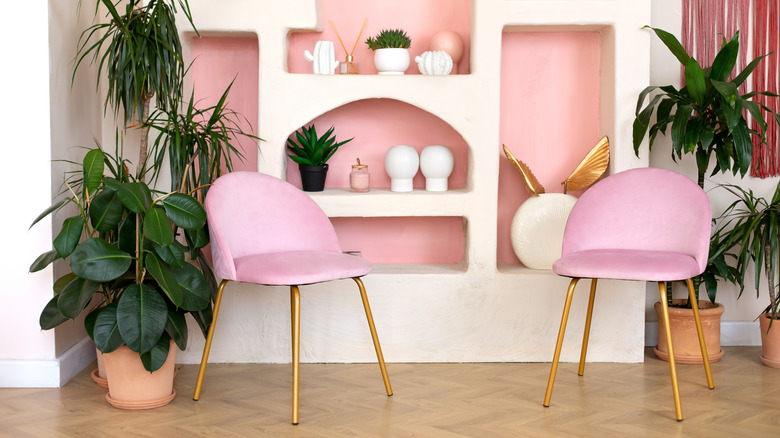
Memphis design became a popular design movement in the '80s. Its stylings were loud and impossible to miss, abstract with a dash of absurdity. This design incorporated polka dots, squiggles, and geometric patterns together with asymmetrical shapes and sharp lines. The effect was somewhat overwhelming, but very much of the era. The playfulness of the design really spoke to people and allowed them to take a more fun approach to interior design.
Going too big on Memphis design will date your space, but borrowing elements from it can make a statement. Instead of a whole room of furniture in this style, look for accent furniture like chairs and coffee tables that embody the trend without going overboard. This Interoknack Colorful Stacked Side Table captures that Memphis design spirit and would hold up next to a neutral-colored sofa on a brightly-colored area rug. For an even bolder look, Meridian Furniture's Contemporary Chair creates a striking look, but its cognac-colored fabric keeps it looking elegant, not dated.
Mix vintage '80s furniture in with your current pieces
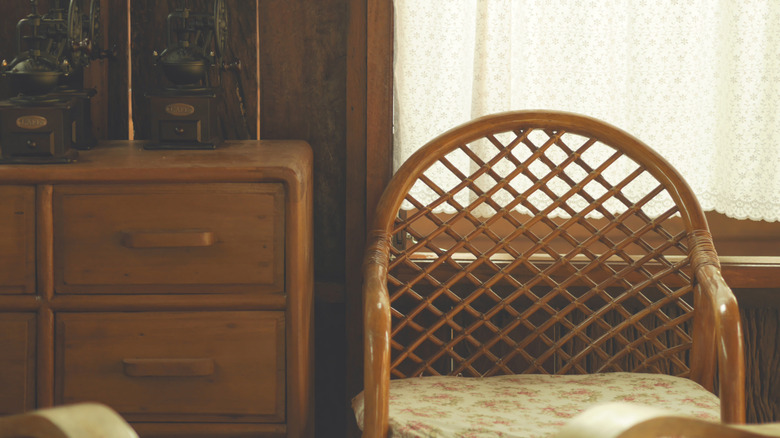
The furniture of the '80s found in most vintage and thrift stores today has some advantages over pieces from previous decades. It's slightly newer than mid-century, which increases the likelihood that it will be in better condition. A lot of furniture manufacturing left the U.S. during and just after the '80s, so there's still a great chance of finding quality American-made pieces in thrift stores. Furnishings from this era are also not as highly valued — yet — as some offerings from other eras. All this means that bargain hunters can still find a good deal on these furnishings that actually pair very well with contemporary styles.
Blending some vintage '80s furniture in with your current pieces adds interest, but leaves space for you to style up or style down, depending on the find. Of course, not all used furniture from a thrift store will be in great condition. If you're handy, though, you can give those pieces a modern update. A chair from the '80s could be reupholstered in a bolder printed fabric to contrast against neutrals or given a luxe, but muted, treatment in velvet. Stripping and refinishing a wooden coffee table can also freshen up the space without dating it. You can even paint it a bright neon blue or pink if you need more color.
Reflect with mirrored surfaces
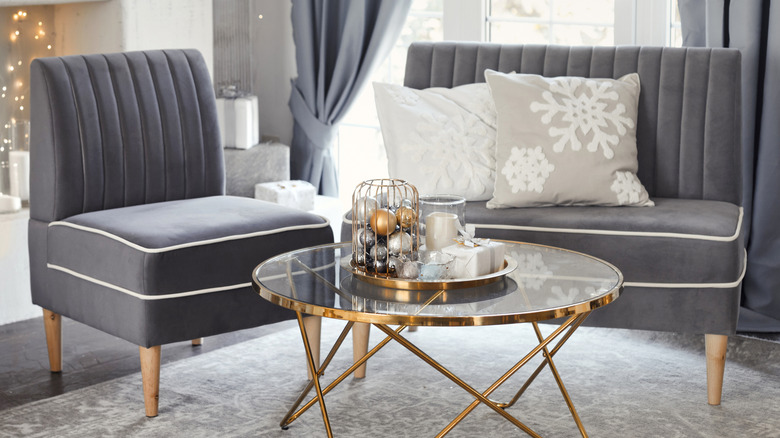
The '80s loved to reflect — the room that is. Big mirrors that stretch across an entire wall were meant to make the space look bigger and brighter by reflecting more light around it. The glass-topped coffee table gained popularity because its clear design created the illusion of more space. And everything from the coffee tables to the mirrors had a yellow-brass finish that made a dazzling effect. With so much light, it's amazing people of the '80s didn't wear sunglasses inside.
The effect did leave some '80s living rooms looking more like the nightclub from "Saturday Night Fever" than a relaxing space. But with careful curation, this can be a fun way to brighten your space without blinding your visitors. Limit your reflecting surfaces and mix and match when possible. A mirror with a high-shine brass finish can be a lovely touch when it's the only reflective surface in the space. With a mirror or glass-topped coffee table, other decorative objects like this Strona Brass Finish Arch Decor or the MFGDISCO Disco Ball Globe, can be scattered around the room to spread out the reflectiveness to make it more even. This will enhance the effect.
Layer lucite and other acrylics in home decor
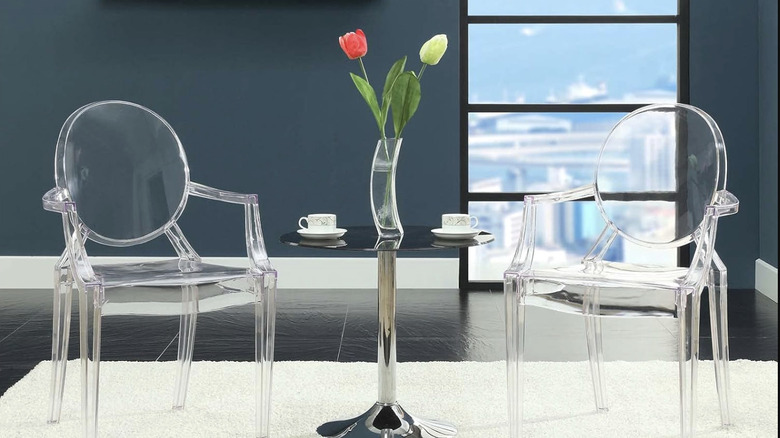
Lucite and other acrylics were popular materials in the '80s that fit in with the reflectiveness and high-shine finishes that dominated rooms. Dining room chairs in these materials looked striking against a more traditional dining table and played well with a fun ceiling fixture. In living rooms, acrylic coffee tables made small spaces feel more open and airy. There were, however, some drawbacks to using these materials in furnishings. Acrylic furniture leaves some feeling cold, and it wasn't always comfortable. Guests either needed a quick dinner or a soft cushion. The materials naturally lack color, and with '80s style is known for neons and pastels, relying too much on acrylics and not enough color in a space will leave it feeling flat.
Deciding how big to go with acrylics depends on how you're using color in your space. If you opted for more neutral walls in your dining room, then a set of Modway Casper Modern Acrylic Dining Arm Chairs will look invisible. To make acrylic feel warm, pair a pastel shade on the wall with a colorful lighting fixture like the Bokt's Modern Pink Sputnik Chandelier over the dining table. The chairs will reflect the color without adding too much to it. For smaller spaces not needing more color, acrylic vases and serving trays can infuse some '80s style into the room and help enhance the colors already doing the heavy lifting.
Soften spaces with Laura Ashley prints
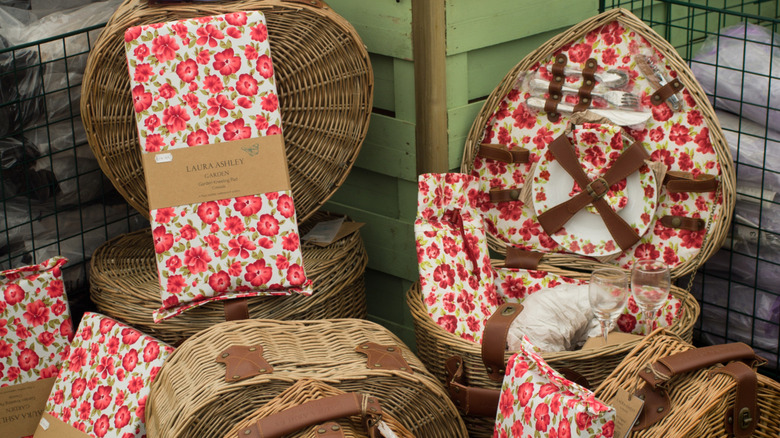
English designer Laura Ashley infused spaces with a cozy, feminine vibes and lots of florals, ruffles, and chiffon. She started her screen-printing business in the '50s and quickly became a household name. Although many of her prints were modern to the '60s and '70s, it was her florals that stood out. These soft designs evoked her countryside upbringing and gave spaces a romantic feeling. In the 80s, Laura Ashley designs covered bedspreads, pillows, walls, and so many more surfaces before falling out of fashion. Those designs did have a bit of a renaissance recently as part of the coastal grandmother decor TikTok trend.
Covering the walls, floors, and furniture Laura Ashley florals will be too much for contemporary spaces. Accenting with these fabrics, however, can make a space feel more elegant. Toss these Laura Ashley Throw Pillows onto your sofa and pair them with HUIMO Round Storage Ottoman. The prints may be '80s-inspired, but they don't always have to feel like the era. It's easy enough to swap out throw pillows or add other decor to make the florals feel more contemporary if your tastes change down the line.
Bring in a curvy coffee table
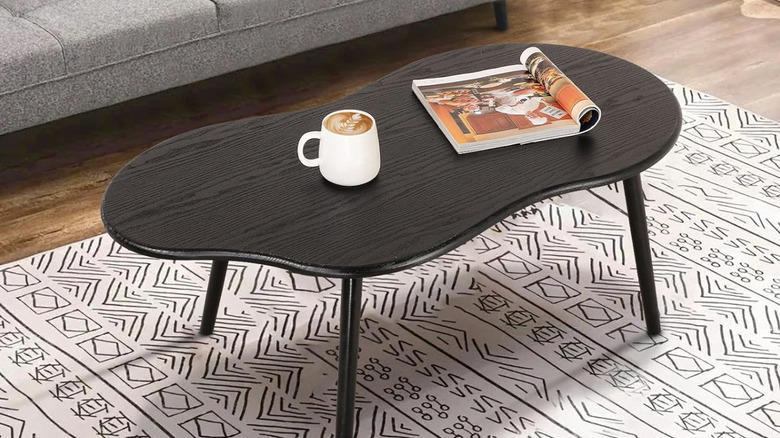
Curvy sofas, chairs, and coffee tables added to the playfulness of '80s designs. They were a big part of Memphis design, and they were a definite departure from the clean lines of mid-century modern. Although curved seating lacked some basic comforts, such as armrests, people were drawn to their sleek, sexy silhouettes. In a way, this style of furniture embodies a hallmark of '80s design: great to look at, but not always as practical.
A curved sofa may not be practical for your space, especially if you like having a chaise on one side of the sofa. Instead, opt for a wavy coffee table. That will bring in the playfulness of the style without making the flow of the room difficult to navigate. An asymmetrical design, like the one featured on this FEUFOAM Cloud Coffee Table, gives the table a little more flow and lets it contribute to the room's overall style, even when covered in mugs and candles. Need a little less curvy but still want the vibes? This ORRD Lift Top Coffee Table has scalloped trimming on the sides that nod to the era without committing to it.
Add a neon pop of color through decor
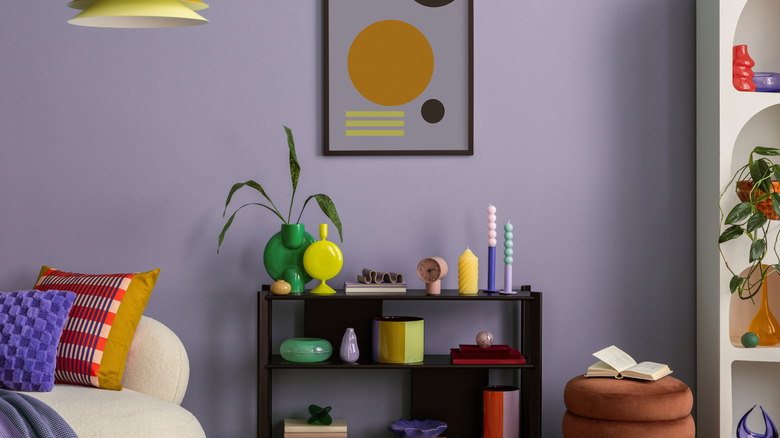
In the '80s, neon colors ruled the day, especially for children and teenagers. Brightly colored jackets, sweatbands, and fanny packs made a splash in the fashion world outside the home. Inside the home, while their parents likely decorated in pastels, the youths — and some very bold interior designers — embraced these colors that refused to be ignored. When combined with other '80s trends, neon energized maximalism and made it feel alive.
Neon shades of blue, green, and yellow certainly electrify the rooms they're in, but a little goes a long way. Choosing an overstuffed neon blue sofa means you'll be investing in the '80s trend for at least 10 years. Unlike simple decor, the sofa won't be so easy to switch out of if you get tired of the neon in two or three years. Decor in bright colors can be moved around the room and staged in places that need an infusion of color. Throw pillows in neon shades can also punch up a sofa, and a neon table lamp can brighten up an end table.
Go for glossy in the kitchen
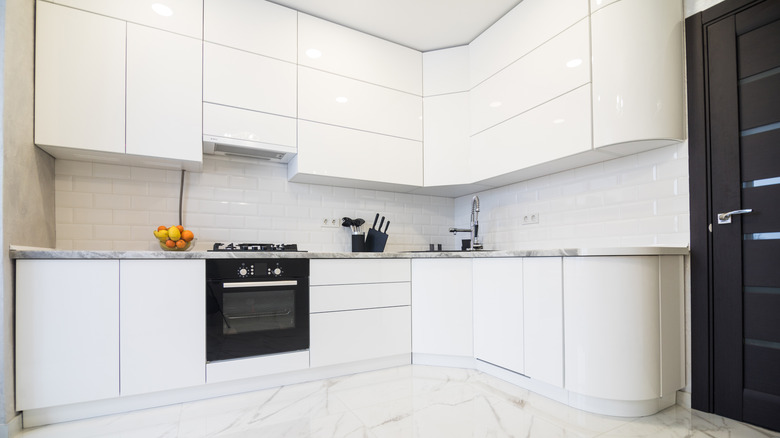
The reflective surfaces of the '80s didn't stay in the living or dining rooms. This trend spread into the kitchen through lacquer, a finish that's expected to trend in 2026. This shiny look gave kitchens an almost futuristic sheen that felt very modern and somewhat utilitarian. Maximalism in living rooms, bedrooms, and dining rooms created styles that couldn't be ignored. Yet, in kitchens, the effect was far more muted and clean. The finish on kitchen cabinets stood out without trying too hard or needing a bright shade for people to take note.
Lacquered cabinets can feel like too much, especially in a small kitchen. Although chrome and high-shine brasses were '80s staples, don't use them in the kitchen with glossy cabinets. Together, the two will overpower the space. To help soften it, use matte finishes on faucets and other hardware. This will give places for the eyes to land on and take a break from all the shine.
Bring back wallpaper on an accent wall
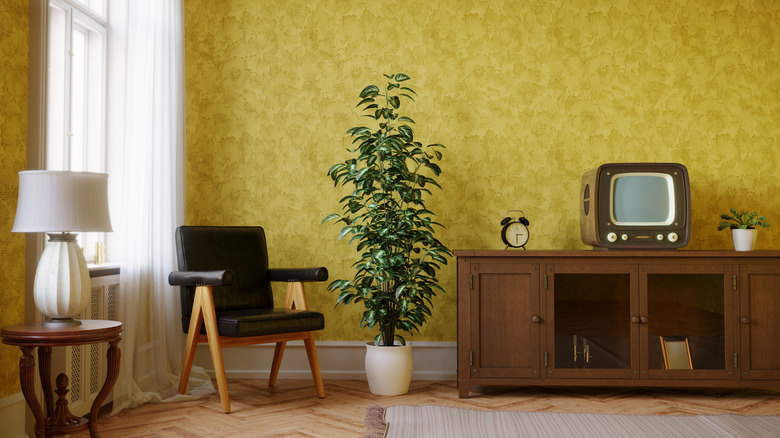
The '80s saw walls covered in wallpaper from the floor to the ceiling, and they weren't always simple stripes or flowers. These were bold prints, colors, and patterns that instantly injected the room with style. They were often glossy and had metallic shades running through them, adding to that high-shine look. The coverings sometimes created a dizzying effect, and they often clashed with other elements of '80s designs. Floor-to-ceiling wallpaper fell out of style and was replaced with neat borders in the '90s.
Nowadays, people are rethinking innovative ways to use wallpaper in rooms. Easy peel-and-stick options are now available, and there are a ton of cool and interesting patterns and prints, like Veelike's Pink Tropical Wallpaper or Osecage's Black And White Checkered Wallpaper. Covering a whole room in wallpaper will likely be too much for your space. Instead, choose one wall in the room and cover it with a paper that truly makes a statement. Because you're only doing one wall, you can go for a pattern that might be too much for multiple walls, but fits just right on one. Before installing your print, make sure the accent wall has some architectural feature that helps it stand out from the other walls. This could be a niche, a pair of decorative wall sconces, or detailed moulding. Targeting this wall will make the accent wall look more intentional.
Go playful with a neon light
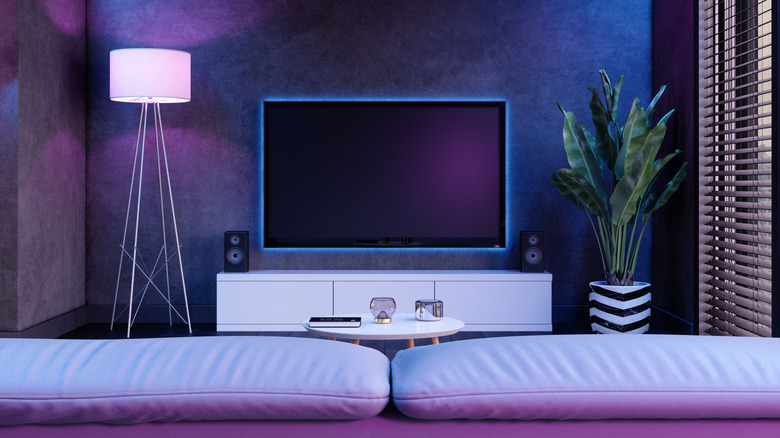
Neon colors weren't the only version of this trend that caught on in the '80s. The glitzy, color-drenched lighting of Las Vegas made its way into the homes of this era. Fixtures in these bright hues were popular in game rooms and other recreational spaces. They pulled from shades found on arcade cabinets and pixelated colors on TV screens.
Neon wall lights and table lamps can add a fun nod to the '80s if your design leans a little bit bolder, but there's more than one way to incorporate neon lighting in the home. You can choose an option that fits your lifestyle. Some opt for color-changing lights like the Govee Smart Bulbs in neon shades to up the ambiance during movie nights, while others use Cozylady's LED Neon Rope Lights to outline their TVs. Both options bring in '80s vibes, while keeping the design contemporary. You can find creative neon wall and table lights in fun designs, but remember, these are not task lights. You will have a tough time trying to read a book next to one of these light sources. More traditional-looking table lamps in neon shades, like this Color + Plus Spencer Neon Green Table Lamp, add task lighting and directly complement the '80s decor.
Hang oversized, geometric artwork
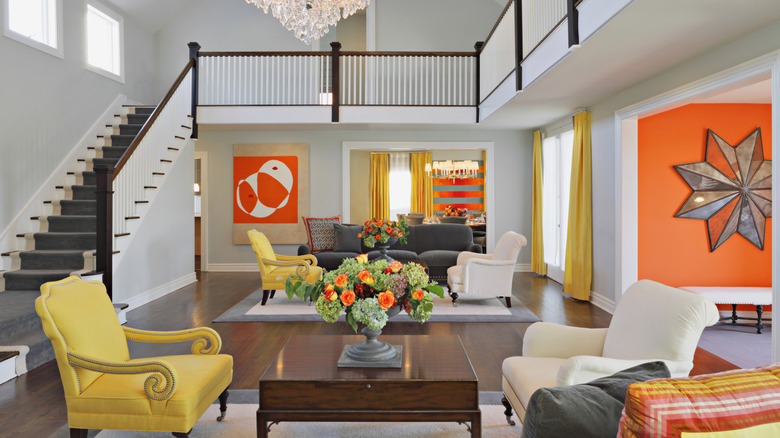
Abstract and geometric art ruled the '80s. The freedom of the designs meant that more color and contrast could be introduced to a space. Shapes already prevalent in Memphis design got to shine on the walls. The whole effect brought even more color into the room, but could still create contrasts. Artwork with white backgrounds on blue or green walls stood out.
Some designs overdid this trend by covering the space in geometric prints from the walls to the accent chairs, but nowadays, less is more. Using neutrals to let the colors in a geometric print pop works wonders for those who take a safer approach to design. For those ready to put bold on top of bold with colorful walls, look for an abstract piece with shades that stand out against whatever color you have on your walls. If you have a bright color, go for more subdued ones in your artwork. On the other side, dusty shades on the wall can be energized with bright prints.
Create a bedroom statement with a floral upholstered headboard
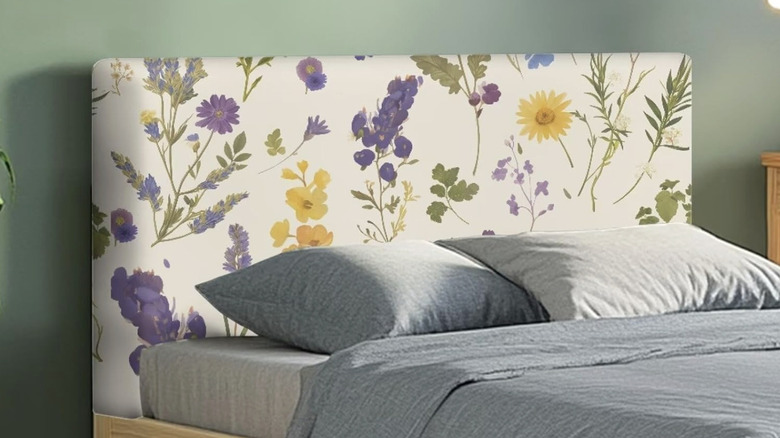
The floral trend that started with Laura Ashley went into overdrive during the '80s. Some decorators covered bedrooms in this print from the floor to the ceiling. It may have looked romantic and cozy at the time, but with frills and dust ruffles, it was just too much. Imagine seeing flowers on the bedspread, curtains, pillows, and walls. Everywhere you looked, something was in bloom.
Floral bedrooms were definitely one of those '80s trends that overdid it on maximalism, but light touches of it can still inspire warmth and coziness. You can bring in this spirit to the bedroom with an upholstered headboard in a floral print. Unlike a hardwood headboard, an upholstered one will soften the space by virtue of being fabric. The floral motif will only add to this. But even if you're not in the market for a new bed or headboard, the Kathyboom Vintage Floral Headboard Cover can add that feminine touch to your space.
Glamorize with lighting
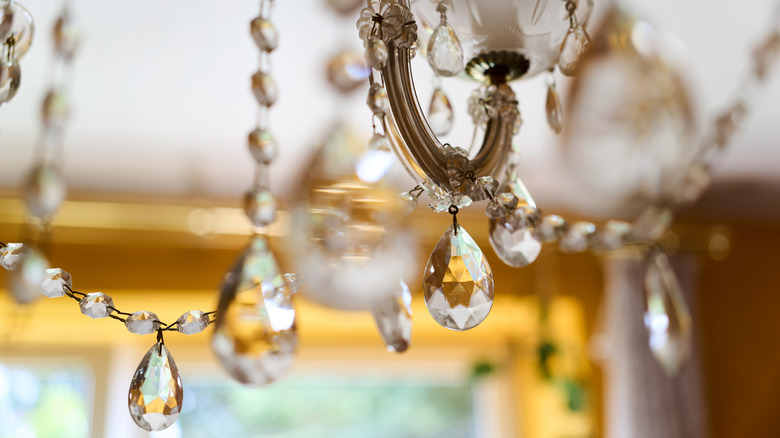
No doubt that lighting in the '80s refused to take a backseat when it came to design. Fixtures of that era could be dripping in crystals that made sunny rooms sparkle and fit well with traditional interiors. Others looked sleek and polished in chrome and high-shine brass that leaned more futuristic. Lighting as a whole tends to get overlooked when designing a room, but styles from this era were made to be part of the design, not just look nice on their own.
Using 80s-inspired lighting fixtures can elevate without overwhelming spaces in several ways. Small power rooms, for example, don't have too many decor options. A sconce or flush mount with crystal accents won't feel oppressive here and can be enhanced with the right wallpaper. In dining rooms, crystal chandeliers may end up seriously dating your decor, so in larger rooms, opt for a chrome fixture that can lean '80s or contemporary, depending on the furnishings and decor around it. This gives you flexibility when and if you want to change up your space in a few years.