

The Common Window Material To Avoid Using In Your Shower (& What To Use Instead)
We may receive a commission on purchases made from links.
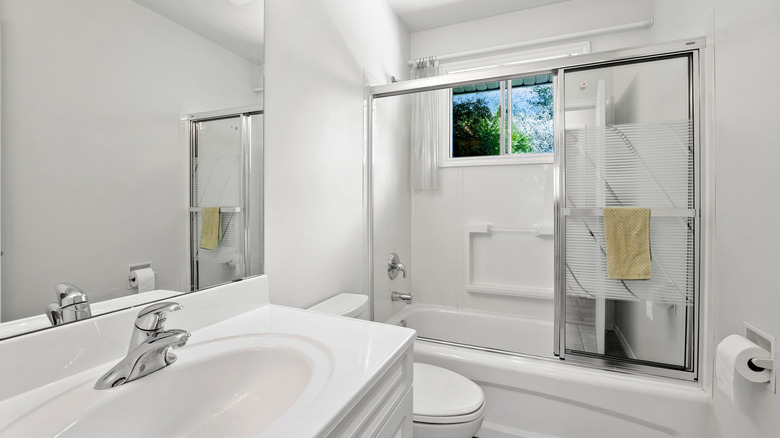
There are few better ways to elevate your shower space than adding a window. While the idea may seem untraditional at first, a strategically placed window in your bathroom can brighten up your shower, creating a luxurious, inviting experience with every shower. However, because the environment in your bathroom can vary drastically compared to other areas of your home, a common window material used elsewhere may not be the right choice here.
Wood is one of the most popular materials for windows, with a classic, warm appearance that blends seamlessly into a variety of aesthetics. However, when it comes to your shower, a wood window's beauty may not last long. That's because while this material is eye-catching, it's also quite porous, and in a humid shower space with splashing water, you may experience waterlogging that leads to rot and mold concerns. As a result, replacing your wooden window may be one way to stop mold from returning to your shower.
Fortunately, there are several alternatives to wood windows that hold up better to routine moisture, allowing you to enjoy that sunny morning shower without the hassle of mildew. These include vinyl and fiberglass windows.
Alternatives to wooden windows in your shower
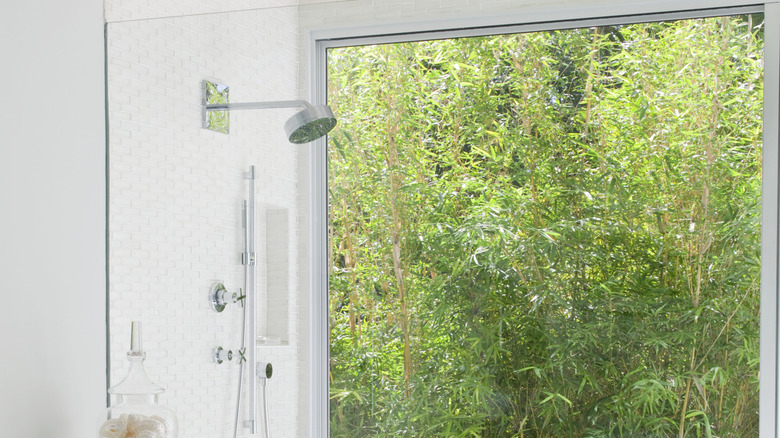
Like wood, vinyl and fiberglass are popular choices for window materials, offering a blend of durability and affordability. However, when it comes to the shower, their reigning trait is the fact that both of these materials are water resistant. Since only the frame is changing, you can also fit the glass with the same privacy options available for bathroom windows made of wood, whether that's frosting or privacy film. However, there are some key differences between vinyl and fiberglass windows.
If you're looking for the most affordable alternative to wood windows in your shower while still reaping the benefits of longevity, vinyl is a smart option. According to The Home Depot, adding a casement vinyl window — one of the most common types of shower windows — starts at an estimated $589, which is more than $200 cheaper than a wood window of the same style. Being made of PVC enhances its durability, as well as makes this window low-maintenance and easy to clean. This can take some of the elbow grease out of those weekly shower cleaning sessions.
While fiberglass may have a higher investment cost than vinyl, there are a few additional benefits you'll gain from using this material in your shower's window. Aesthetically, fiberglass can be crafted into slimmer frames than vinyl, helping you maximize the light in your shower. This is perfect for creating a cozy, naturally lit shower even in lower sun exposure areas. Fiberglass is also more energy efficient over time, which can be especially important when dealing with the heat and humidity of your shower.