

11 Types Of Paintbrushes For Home Painting (& What They Work Best For)
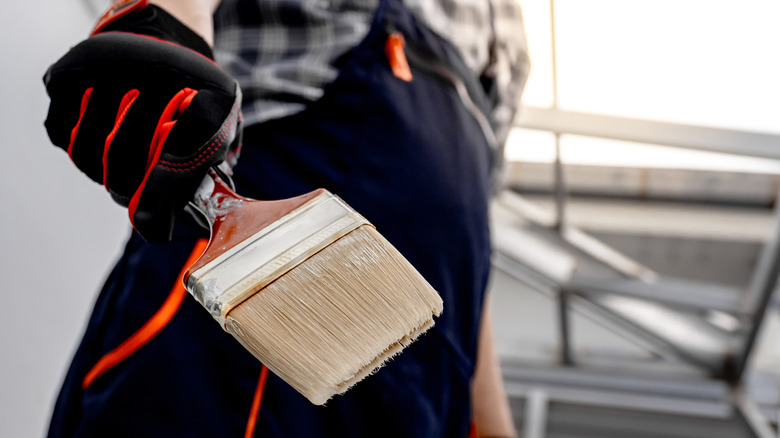
One of the biggest mistakes that people make when painting their homes is neglecting to equip themselves properly. And we don't just mean with painter's tape and a plentiful supply of sandpaper. What we mean is ensuring that they have the right type of paint for the surfaces they're decorating, and perhaps more importantly, the appropriate types of paintbrushes. This may sound excessive. After all, surely a paintbrush is just a paintbrush. The thing is, it's not. And before you ask, we're not just referring to size — although that's also an important factor to bear in mind.
The reality, as any decorator will tell you, is that there are lots of different paintbrush types to choose from. Each is designed to tackle a very specific type of painting task, and once you understand what each type of brush is for, decorating your home like a professional suddenly becomes infinitely easier. Equally, if you fail to understand the type of paintbrushes you're using, then you stand to make your life much harder (not to mention messier) than it actually needs to be.
So, what are the different types of paintbrushes? More importantly, which paintbrushes are you likely to need the next time you're possessed by the desire to decorate? Don't worry. In the guide below, we'll break down some of the most common types of paintbrushes you're likely to encounter at your local hardware store, all while explaining where in your house each is most likely to come in handy.
Flat brushes are excellent for painting large, open surfaces
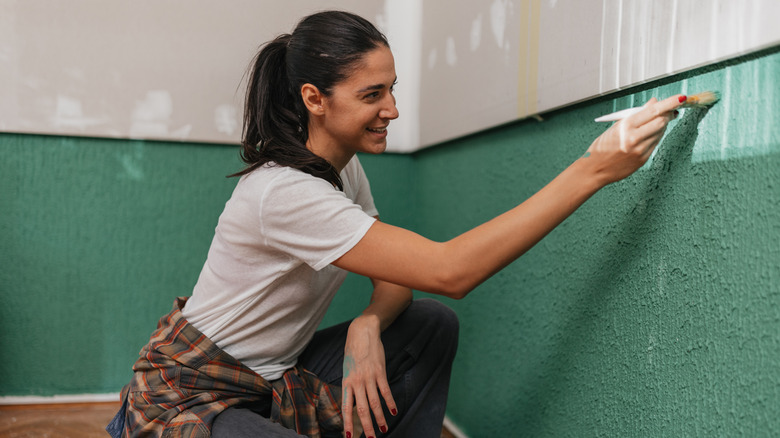
Featuring a wide, rectangular head shape with straight-cut bristles, this is the brush of choice for decorators who need to paint a large, flat surface. It could be a large interior wall or a ceiling — if you want a smooth finish with minimal fuss, this is the brush you need. Those straight, uniform bristles help to apply paint smoothly, thus reducing the chance of streaks or uneven spots. And since they are usually quite wide, these brushes typically leave fewer "crossover" marks.
Another tick in flat brushes' favor is that they usually carry a lot of paint. This means fewer reloads, which in turn makes them a boon to painters working from the top of a ladder. Now, given their blocky shape, large size, and the fact that they're often saturated with paint, they're usually not ideal for more precise painting tasks like cutting in or edging. But if you have a large, flat wall that needs smooth, even coverage, then it's hard to beat a flat brush.
Angled sash brushes are designed for precise edging around trims and corners
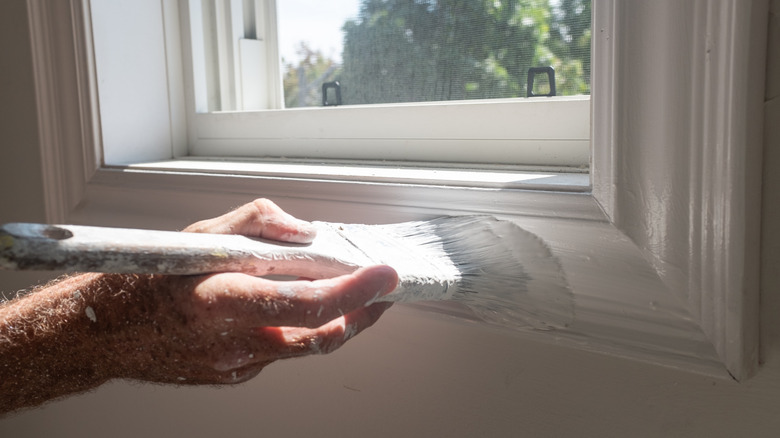
Angled sash brushes are, to flat brushes, what jigsaws are to sledgehammers. They're precision tools — designed for delicate work where attention to detail matters. They feature a slanted design that helps with tasks like cutting in and working around fixtures like light switches, trims, and corners. They can even help to reduce your reliance on painting tape, although, depending on your confidence to "paint within the lines," you may still wish to keep a roll of tape on hand in more visible areas!
Either way, you'll find painting around doors, window trims, and cutting in around ceilings and walls much easier with an angled sash brush. You'll also find them very useful for painting baseboards and staircase stringers. Finally, while they may not be the best choice of brush for more detailed moldings, if it's a choice between a flat brush and an angled-sash, you'll always be better off with the latter.
Round brushes are ideal for curved or detailed surfaces
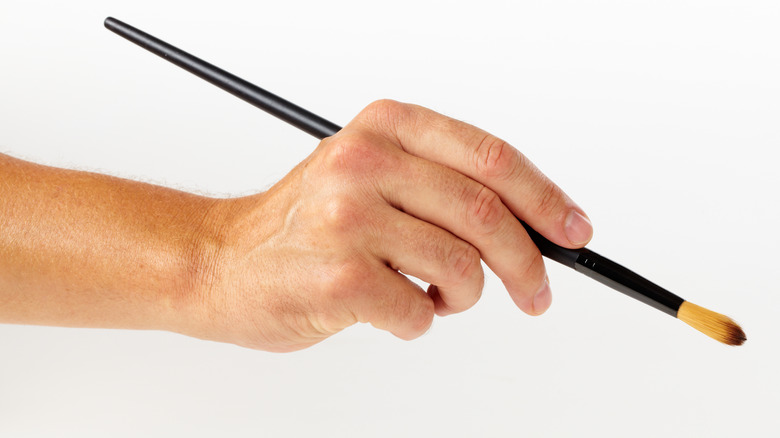
Featuring a cylindrical brush with a tapered tip, this type of paintbrush is a must-have tool for a flawless home paint job. Why? Because it offers sharp precision in both paint flow and control, especially when painting curved surfaces and those that need a delicate touch.
Round brushes are also useful for touching up small sections of chipped or smeared paint (it happens). Generally speaking, though, you'll want a round brush in your armory to handle things like decorative moldings, stairway spindles, balusters, and architraves. It may also come in handy outdoors for small exterior detail jobs, like painting shed trims or repainting ornate outdoor furniture.
Masonry brush
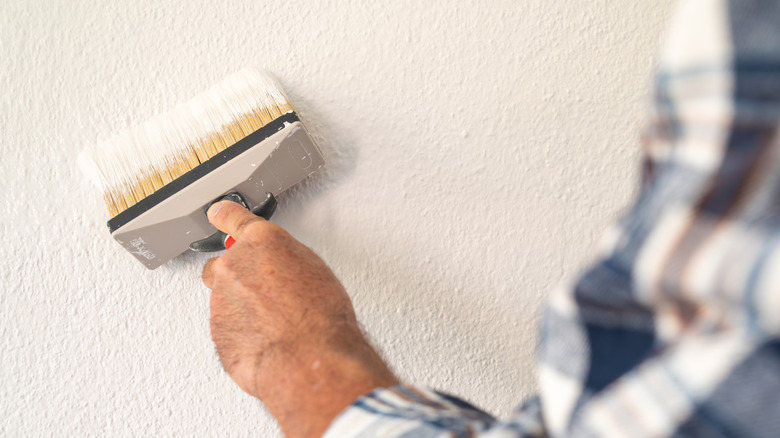
As the name suggests, a masonry brush is designed for covering rough masonry surfaces. It's perhaps the largest and most heavy-duty brush you're likely to add to your DIY supply kit, and while you may rarely have cause to use it, you'll be glad you have one when the need arises. This type of brush has a wide, blocky, rectangular head that holds a lot of paint. The head is also loaded with stiff bristles, which ensure even coverage on even the roughest masonry surfaces.
You can use a masonry brush to paint brick walls and stone. It'll also come in handy for decorating rendered or stucco surfaces, sealing concrete, and priming rough outdoor surfaces. And while you could, theoretically, attempt these jobs with another type of brush, you're almost always better off taking a trip to your local hardware store and buying a masonry brush, especially if you want to ensure a professional, seamless finish.
Radiator brushes allow you to get behind your heaters without coating them in paint
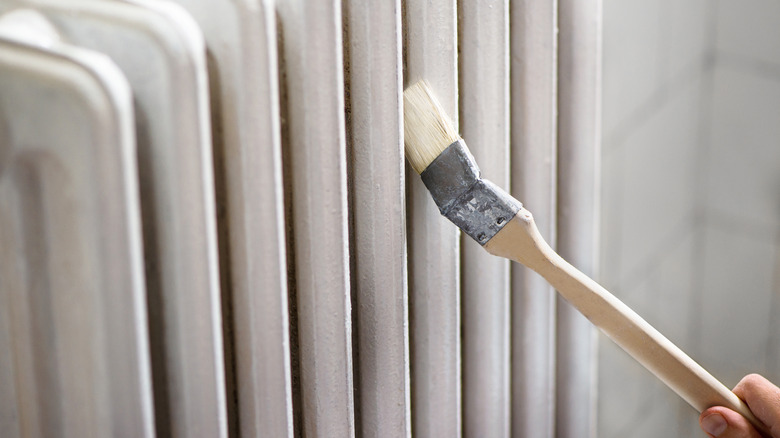
With a long handle and an angled brush head, this type of paint brush is the go-to for decorators who need to get behind their heaters when repainting. They help to access awkward areas, like those behind your radiator. And yes, before you ask, they will also make it easier to paint behind your toilet.
Some come with a one-sided brush head to help prevent marking your radiators. Others feature a regular brushhead, but on an angled ferrule to help slide into awkward, hard-to-reach areas, like behind your heaters.
You may think this is somewhat unnecessary. If you have electric wall radiators, then yes, they can absolutely be unplugged and removed from the wall to make room for you and your standard paintbrush. But if your home is heated with regular water-fed radiators, then this is unlikely to be easy without the help of a professional plumber. Nor are you likely to want to pull out your bathroom sink or toilet just to ensure a clean finish with your paint.
Another argument against radiator brushes is that you could just ignore the space behind your toilet, sink, or heaters. Especially if you're painting the room in precisely the same color as before, then honestly, who's going to notice? But if you're painting in a new color, then those hard-to-reach spots will become conspicuous.
Stencil brushes are perfect for adding detail to walls and furniture
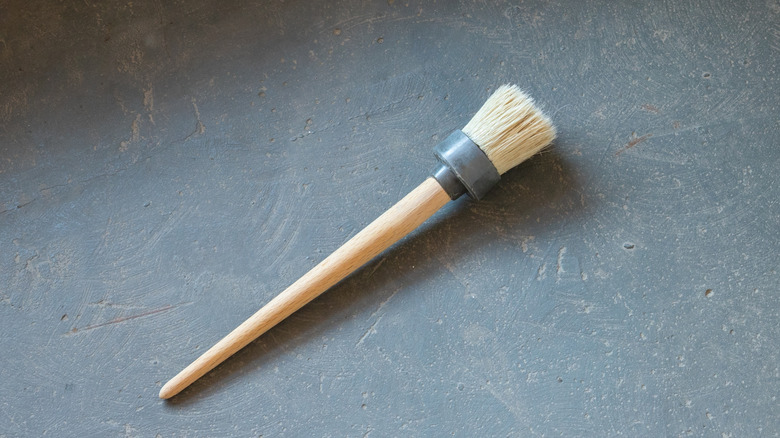
Featuring short, stiff bristles on a round, flattened brush head, stencil brushes are designed to be used with a distinct stippling motion, as opposed to the usual "stroke" you might associate with less specialized brushes. They're especially designed for use with stencils; in fact, they're perhaps the least "multipurpose" brush type in this guide. However, learning how to use a stencil brush is one of those DIY paint hacks that are absolutely worth trying, especially if you want to apply a touch of decorative detail to your home and can't afford a contractor.
For example, let's say that you want to paint a sunrise above your child's nursery bed, or a scene in the forest with your favorite childhood animals. Unless you're seriously gifted with a paintbrush, chances are that you'll use a stencil, and logic dictates that you should use a stencil brush. They provide superior control, and while you may curse buying a brush you'll use once or twice, the high-quality finish will be worth it.
Foam brushes can be used to paint large surfaces without leaving stroke marks
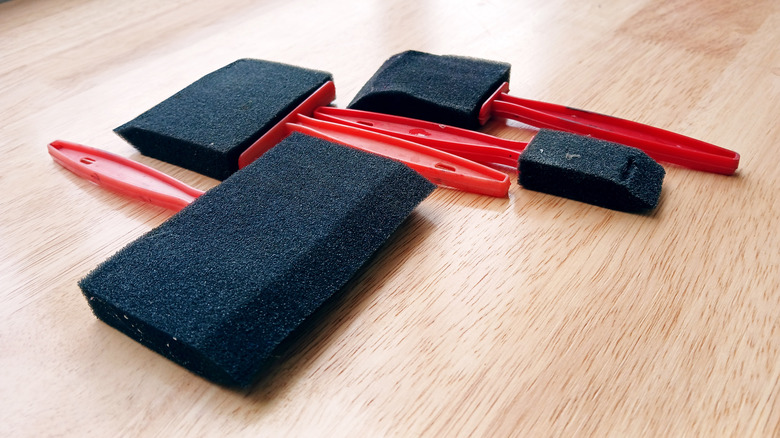
Designed with a single piece of foam for a head instead of lots of tiny bristles, foam brushes are made for jobs where a smooth, clean finish is the order of the day. They're often considered disposable and inexpensive, and are the brush of choice for painters working with acrylic or other oil-based paints, which can quickly ruin more expensive, bristle-type brushes. They're also an excellent choice in areas that require a thin coat of paint.
So, where might you find a foam brush useful? The answer is on any smooth surface. If you're glossing your handleless kitchen cabinets, for example, then a foam brush is sure to come in handy. They're also excellent for applying stains and varnishes to wooden furniture, or for sealing those same pieces. They're ideal for fixing scuffs or minor chips in smooth-painted surfaces around the house without leaving obvious brush marks, and if you're trying to stain a run of deck boards, these brushes are superb for getting it into the grooves.
No-shed brushes help DIYers achieve a blemish-free finish
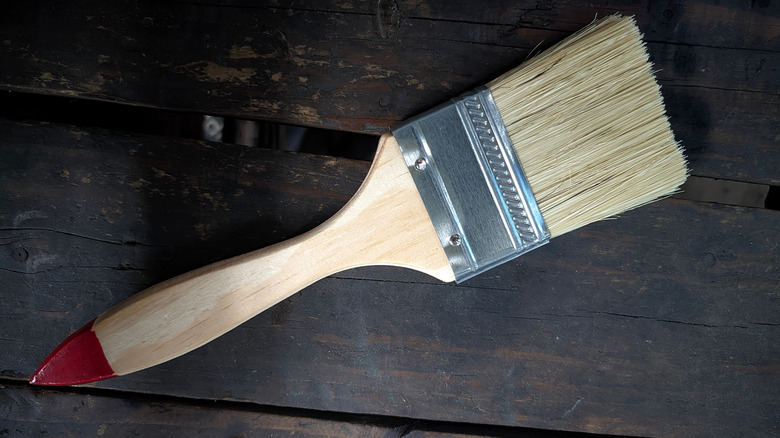
Another mistake people make when painting furniture is using old or cheap paint brushes. Any bristles that come loose may stick in the drying paint, which will look obvious on all surfaces, especially tables, chairs, and other furniture.
No-shed brushes avoid this. These brushes are designed with extra-secure bristles that are wound securely inside the ferrule. The brushes cost more, but they should last for years provided they're well-maintained. You can use them just about anywhere in your home that's highly visible, from your furniture and walls to the cabinets in your kitchen.
Flagged-bristle brushes are excellent for finishing with latex paint
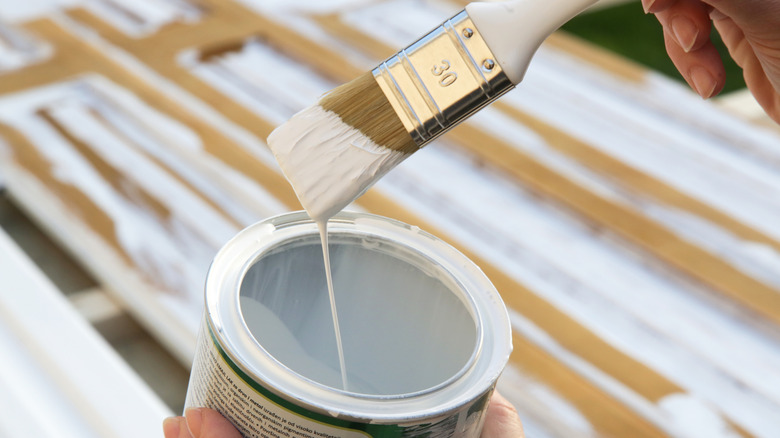
If you're working with latex paint, the best brush for a quality finish is almost always a flagged-bristle brush. They're otherwise known as "split" or "exploded" bristle brushes, and they're named as such because the ends of their bristles are split. This increases the surface area of the brush head, allowing it to hold more paint. In turn, this allows you to paint more smoothly with fewer brush marks, achieving a seamless finish on anything from cabinets and interior trims to final coats on your doors, walls, and ceilings.
Natural hair brushes are excellent choices for oil- and water-based paints
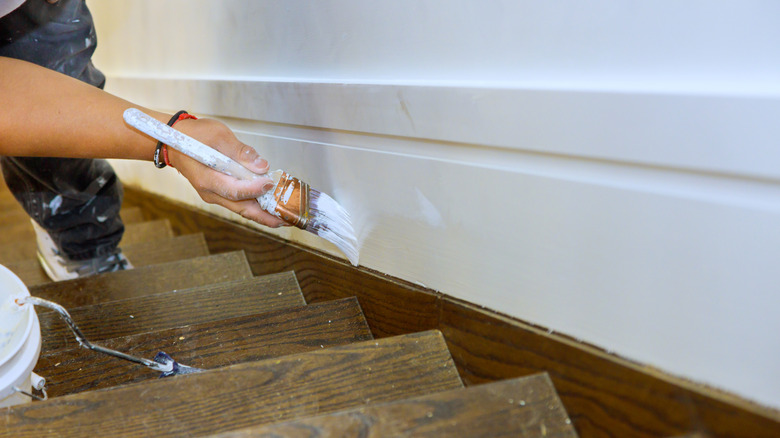
Often taken from Chinese hogs or badgers, the natural hair in these brushes tends to leave far fewer marks on painted surfaces than synthetic bristles. This makes them ideal for use with oil-based paints, varnishes, and, honestly, any job in which a smooth, streak-free finish is the goal. This could be the fronts of your kitchen cabinets or the moldings on your walls. It could also be the stain or varnish you use to revitalize that dining set that you snagged from the local thrift store.
Another benefit of natural hair brushes is that they tend to shed less than synthetic ones. This is because natural hair flexes more without breaking. They also absorb paint much better than synthetic bristles, reducing the need to reload your brush. Since the hairs both flex and flow more softly than those made from nylon or polyester, they allow for more precision and control when painting detailed surfaces.
Chiseled brushes are tapered to provide superior control where it counts
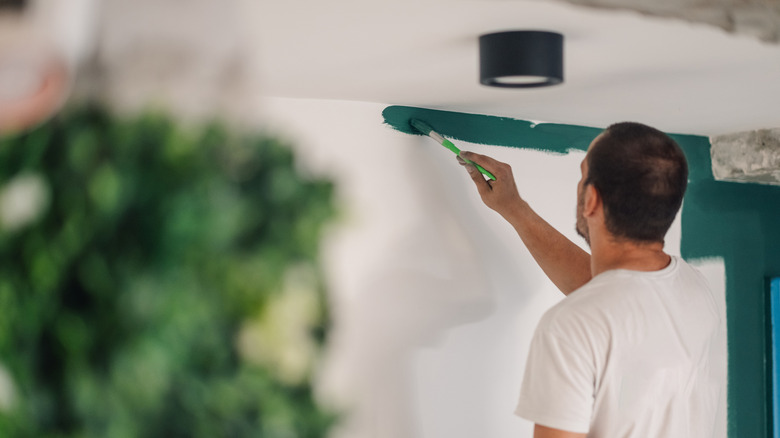
Tapered like a chisel, these types of brushes do away with the traditional flat, blunt end of standard paint brushes, helping home decorators to achieve better control in areas where it's needed most. It could be painting up to the seam between a wall and ceiling, getting into the grooves of wooden paneling, or adding a professional finish to decorative baseboards. If you need superior control in tight spaces, then a chiseled brush is sure to help provide it. What's more, with a chiseled brush, you can potentially do away with painter's tape, saving both time and money.