

How Lint Rollers Can Quietly Damage Fabrics — And A Better Alternative To Try
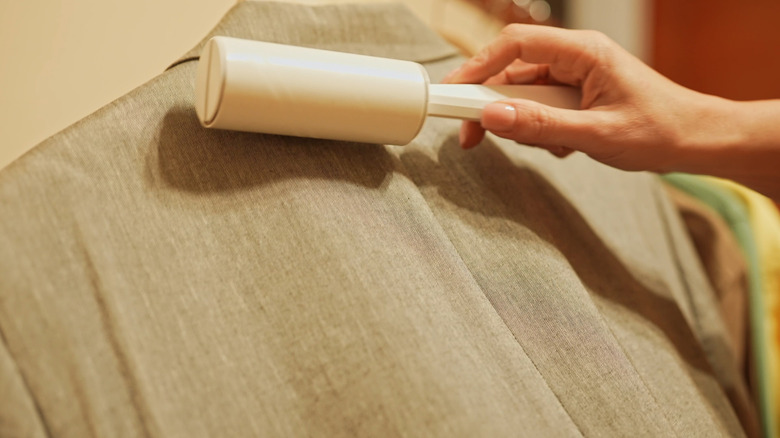
While there are ways to keep your laundry lint-free with a few tricks, once your clothes are dry, it may feel like your only solution is to reach for a lint roller. However, depending on the fabric of your clothes, your lint roller could be doing more harm than good by quietly causing damage. Fortunately, dryer sheets are a helpful alternative that you likely already have on hand.
Lint rollers work by employing an adhesive sheet to manually pluck the lint and fur from your clothing — and all you have to do is roll it over the surface. Easy, right? However, that very same adhesive sheet may also lead to minor clothing damage without you knowing it. When you're working with embellished fabrics (think intricate embroidery or even metal studs) you run the risk of removing those eye-catching accents. If your fabric is loosely woven, the adhesive may stick to and tug the fabric. Not to mention, there's also the risk of leaving small amounts of adhesive, leading to even more lint accumulating in the future.
In many cases, these effects aren't drastic, and some lint roller enthusiasts may never encounter problems with their favorite fabrics. However, if you're worried about your higher-investment or sentimental pieces, you may wish to find an alternative that keeps your clothing lint-free without risking potential damage. That's where a dryer sheet comes in handy.
Dryer sheets can remove lint from your clothes
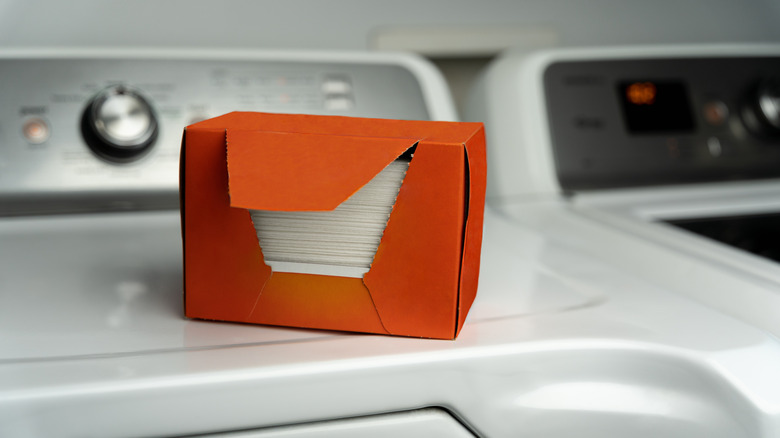
While a dryer sheet's ability to remove lint-attracting static from your clothes can help as a preventative, there are also ways to repurpose dryer sheets outside the laundry room – including as a lint roller alternative. Dryer sheets can be especially helpful when the culprit behind your fashion disaster is pet hair.
To use a dryer sheet in place of a lint remover, all you need to do is rub the sheet against your clothes. Dryer sheets contain softeners that minimize the static on clothes. With the static reduced, the clingy lint and hair are released from your clothes more easily and move to the dryer sheet — just like during your dry cycle. Just make sure to rub the dryer sheet in one direction, being cautious of your pressure so as to not damage the material. For particularly stubborn lint, you may find that dampening the dryer sheet before rubbing it on your clothing can help. If any conditioner is left behind, however, you may wish to rinse and dry your clothing to remove any visible residue, which may not be possible if you're in a rush.
Using a dryer sheet in place of a lint roller eliminates adhesive-related issues. However, there are some potential downsides to dryer sheets. Single-use dryer sheets lead to waste, and the softeners that make them effective could cause irritation if you have allergies or sensitivities. As a result, you may wish to find a natural or reusable brand, depending on your needs.