

12 Things To Do If You Find A Rabbit Nest In Your Yard
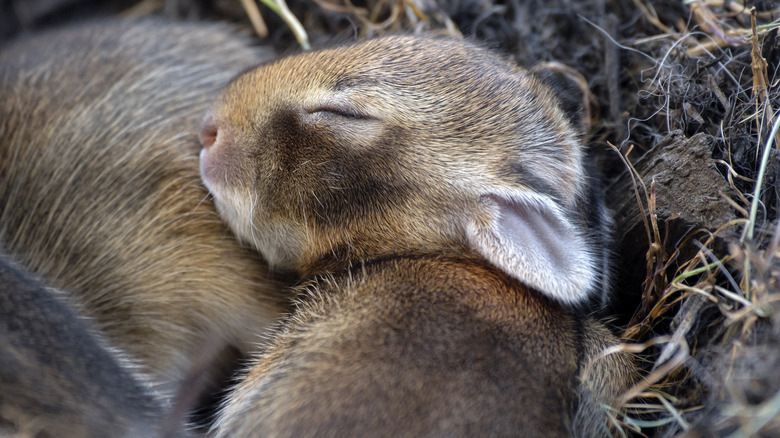
Have you ever watched a cute bunny hop across your lawn or backyard? Many people don't realize that rabbit nests are incredibly common in their lawns. I'm a master gardener with sizable gardens, so it's pretty common for me to stumble upon a nest of rabbit kits while working outside. I also work closely with local rehabbers to help educate others who might encounter shallow nests full of baby bunnies in their yard.
Nature is amazing and knows just what to do. Momma rabbits know how to care for their young, and baby rabbits know to be quiet and still while momma's away. It's efficient and simple. Problems most commonly arise when "helpful" humans, mostly with good intentions, try to help. Or, when people mow or stripe their yards super short without first walking the yard to look for signs of rabbit nests in spring and summer, they end up causing awful injuries to the hidden babies. Here's are the steps you should take if you come across a nest in your yard.
Confirm it's really a rabbit nest
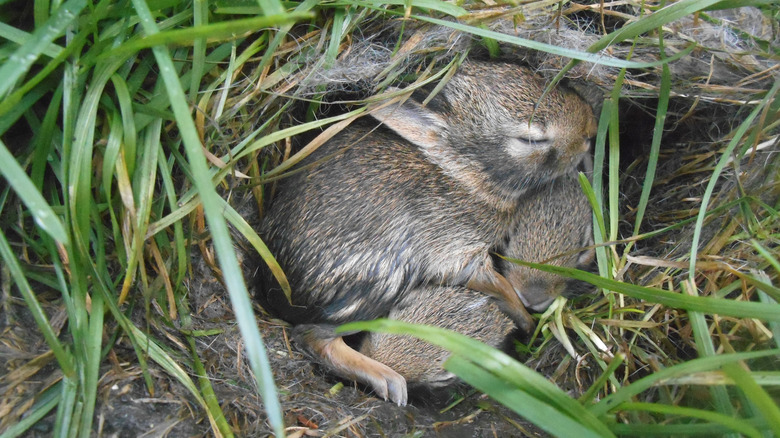
You're most likely to come across cottontail nests in spring and summer. The classic rabbit nest is a shallow, scraped-out depression. They can appear anywhere, from the base of shrubs to smack in the middle of your lawn. The nests are lined with dried grass and the mother rabbit's fur. The nest is then topped with a loose "lid" of dried grass and fur. These nests are really quite small and shallow, and they're nearly invisible until you step on them, mow over them, or your pets start bothering them.
If you have found holes in your yard and you suspect you've found a rabbit nest, not just a patch of dried grass, gently part the top layer and peek inside. If it's an active nest, you'll see a bunch of babies inside. Super-young ones will likely be pink, and those that are a week or two old will have all their fur. Once you spot the babies, please don't try to interact with them or let the kids touch them. Just cover them back up, replacing the "lid" as closely to how you found it as possible. Disturbing the nest lightly once isn't enough to make a mother abandon it, but repeated disturbance and harassment of the nest is definitely problematic.
Step back and keep pets and kids away
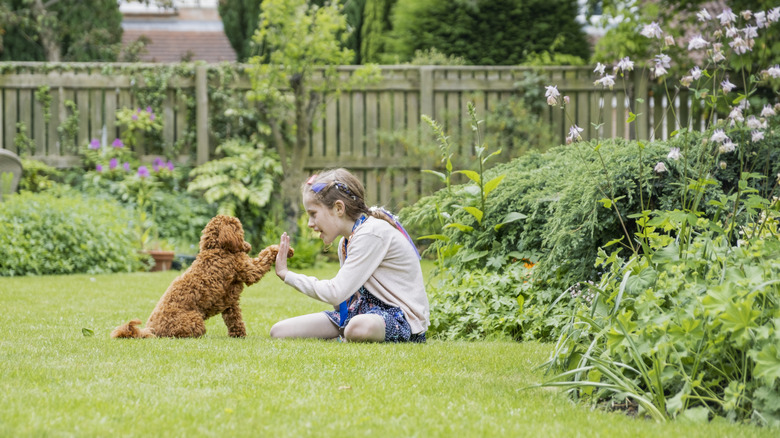
Now that you've identified a rabbit nest, leave it alone. Those tiny rabbit kits are not toys or pets; they are wild beings that don't want or need human intervention except in the direst circumstances. Mark the nest somehow, maybe with a couple of stakes pushed into the ground a few feet from the nest, so you know where to stay away from.
If you've got little kids, they'll undoubtedly be excited and want to look and touch, but don't let them. Instead, use it as a learning opportunity for respecting nature, and teach patience and boundaries. You could even set up a video doorbell or wildlife camera to capture activity at the nest site so you and the littles can watch the marvel of nature in action, from a safe distance.
If you have cats, keep them inside while the nest is still in use. Rabbit kits are independent and leave the nest at around three weeks old, so you won't have to inconvenience your cats for too long. You can always work on making your home more cat-friendly to keep them entertained while confined. For dogs, unless their recall and self-restraint are super-amazing, please keep them on leash in the garden and don't let them anywhere near where the kits are. Obviously, don't let them outside, off leash, and unsupervised. Yes, it's an inconvenience, but only for a couple of weeks, at most.
Resist the urge to rescue the babies
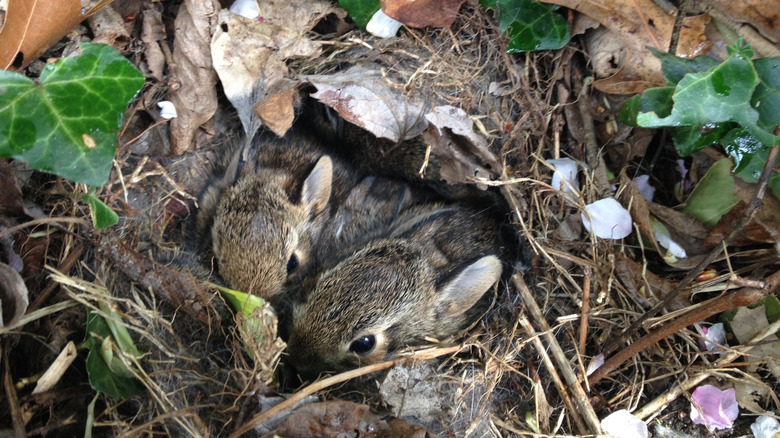
There are two common reasons I've come across for people removing rabbit babies. One, they think that because the mother isn't immediately around, they've been abandoned, and two, because they don't want to keep their dogs on leash for a couple of weeks, they kidnap perfectly healthy kits and dump them with a rehabber. Please don't do this! Those babies have the best chance of survival with their mother. Hand-raising them, even for experienced rehabbers, is very challenging.
If, when you find them, the babies are warm, huddled together in a tidy nest, and have nice plump little tummies, they most likely have an attentive mother. You may never see her, as mother rabbits only appear to feed the babies a couple of times a day to avoid drawing the attention of predators to her nest. If the babies are healthy, she'll be close by and coming back regularly to her young.
If you disturbed the nest, gently rebuild cover
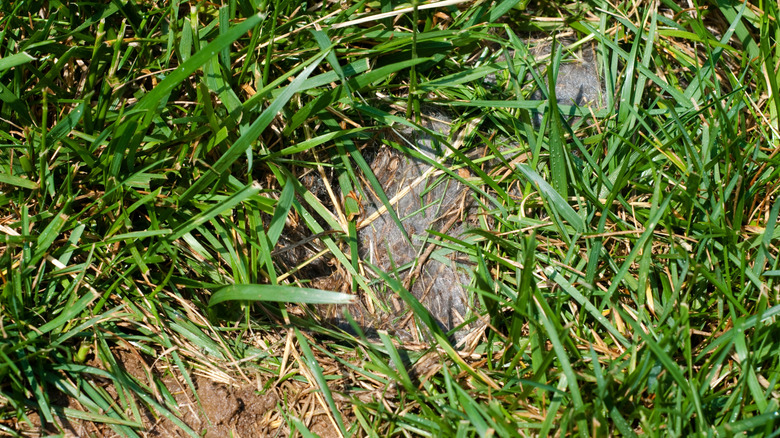
Many people don't know they've got rabbits nesting in the garden until they accidentally uncover the nest. If this happens to you and you've scraped the top covering off the nest, don't panic. Just check the babies and rebuild the top of the nest.
You don't have to handle each of them, but take a close look and make sure they're not wounded. If the babies have also been moved from the nest, then do pick them up, give them a quick inspection, and place them back inside the nest if they're uninjured. Place them close together to warm them quickly. Then, recover the nest with as much of the original grass and fur as you can. Your scent, if only brief and only on this one occasion, shouldn't make the mother abandon the kits. If the babies show any sign of injury, please contact a rehabber for advice.
Use a simple test to see if mom is still visiting
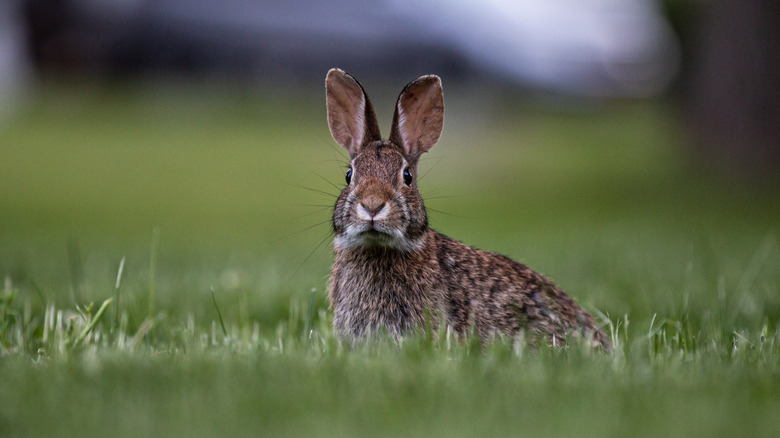
Sometimes, such as after a major nest disturbance, you do need to know if mom is coming back to nurse her kits. As mentioned above, you can always set up a video doorbell or other video-capable camera to see if mom is still coming back to the nest.
If not, place a few very light twigs in a distinctive pattern, like a simple square or criss-cross, on top of the nest lid, without squishing the babies or blocking the mother's access. Check back the next day and see if the pattern has been disturbed. If so, she's still around and visiting her babies. She's likely visiting at dawn and dusk to check and feed her littles.
If, after 24 hours, there's no change or signs of disturbance, check the babies. If they are cold, thin, or oddly lethargic, call a local rehabber for advice. However, don't just "rescue" them yourself, and please don't ever try to feed them cow's milk. Many people try this in a well-intentioned way, but it can cause intense pain and distress and potentially kill the babies.
Adjust mowing and yard work around the nest
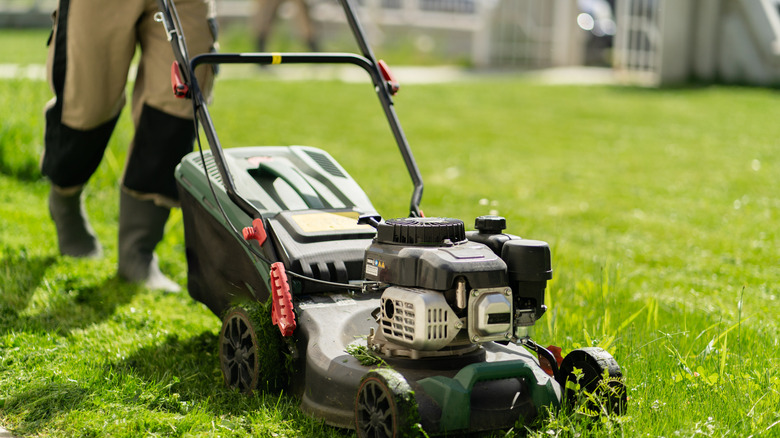
Rabbit nests are very shallow bowls that sit just below the grass level, so short mowing, mowing with a collection bag that sucks up clippings, and other yard work can result in, at best, uncovered babies. In bad cases, babies can get injured, sucked up, or killed. So, be cautious when you start mowing throughout the spring and summer.
If you suspect rabbits might be nesting, it's good practice to walk over your lawn before you mow to check for brown patches, obvious nest sites, and little tufts of fur that could indicate a rabbit nest. If you know that you already have one, don't do any kind of yard work anywhere near it, including mowing. Remember, the nest will only be active for a maximum of three weeks, so leaving an unmown patch for that short time really isn't that big of a deal.
Mark the nest so you don't forget where it is
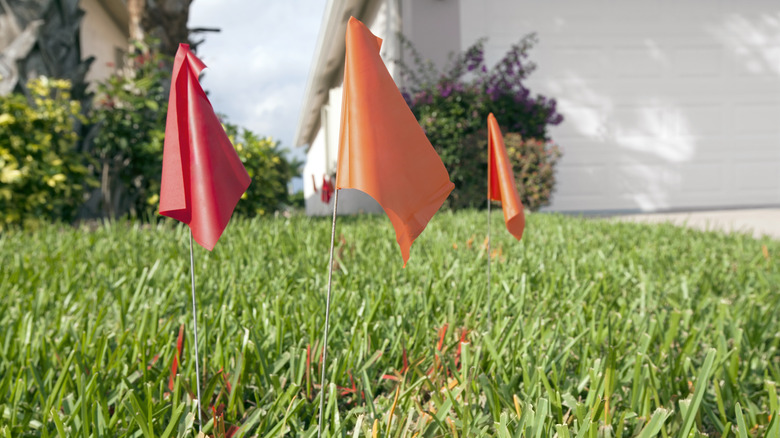
You don't need to fully close off the nest when marking it. In fact, you don't want to, as you don't want to restrict mom's access. It's also not a good idea to make the area too busy with new "stuff" that might put her off coming back to her young. The nest also shouldn't be marked so close that you risk hurting the babies. However, you do need to mark the area somehow, as once the grass springs back, the nest can be surprisingly difficult to find again. Rabbit does are extremely good at hiding their kits.
A few plant stakes or garden flags placed around the nest are sufficient. Just make sure you place a fairly substantial border between the nest and the stakes. The less disturbance and human activity around the area, the better. For human safety, if you're using garden stakes, I recommend you paint the tips a bright color, tie a small piece of fabric to them, or cut a hole in a tennis ball-sized ball (play pit balls are great for this) and place them on top of each stake. It helps stop the humans tripping over them. If you use a lawn maintenance service, tell them you've got a nest, where it is, and that you want them to be considerate and work outside of the marked area.
Know when not to move the nest
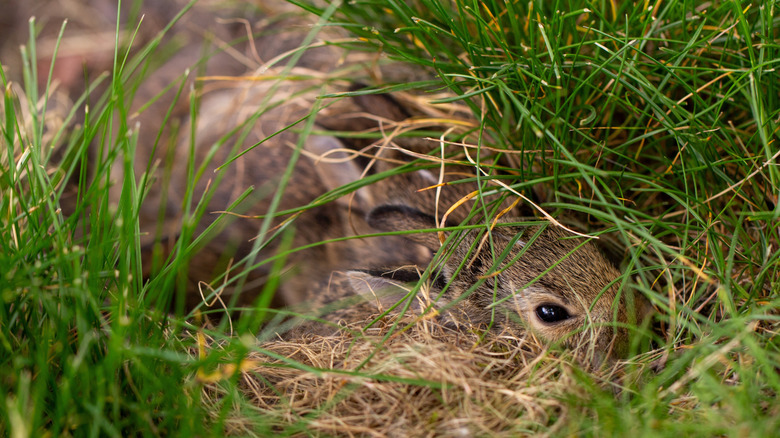
Unless there is no other option, do not move the nest or the babies. If you leave them alone, those babies will be self-sufficient and gone in just a few weeks. Rabbit does locate their nests very precisely. So, moving the nest even a short distance can confuse her and cause her to fail to find it. The intense disturbance, new location, and human scent combined can cause her to not recognize her young, and therefore, abandon them. Depending on where you live, it may also be illegal to relocate wildlife without a permit. Plus, a huge part of responsible wildlife stewardship is "do no harm", which includes no unnecessary handling or relocation.
In rare cases, it may be necessary to move a nest. For example, if it's directly next to a heavily used path and you can't ask people to go around or find another route, in the middle of a construction site, or where there's no way to prevent dog attacks or mower use. For a regular homeowner, none of these should really apply.
If a move is truly unavoidable, shift it as little as possible
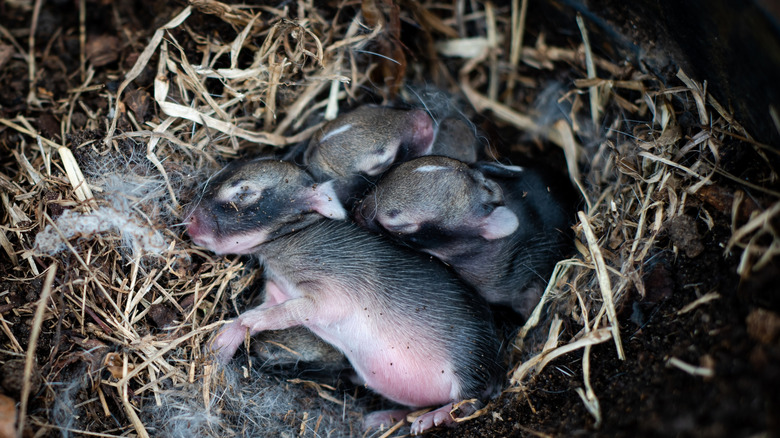
If you really feel that you have no choice but to move the nest, call a local rehabber first. They know the local laws and regulations around wildlife handling, and they know best in terms of relocation practicalities. Some may come out and move the nest for you, as they have permits for this kind of thing, and others will advise on the best way for you to go about it and where you should move them to.
In general, if you must move the nest, handle it and the babies as little as possible, and be careful not to drop them. Only move the nest to within a few feet of the original. Line it with the same fur and dried grass so the mother has the best chance of finding it again. Snuggle the babies back up close together so they can keep sharing warmth. Cover the nest with the same lid of grass and fur you removed. Then, mark the area and leave it alone so it's quiet and loses some of your scent before mom comes back to try and find her kits.
Learn the signs that babies really need help
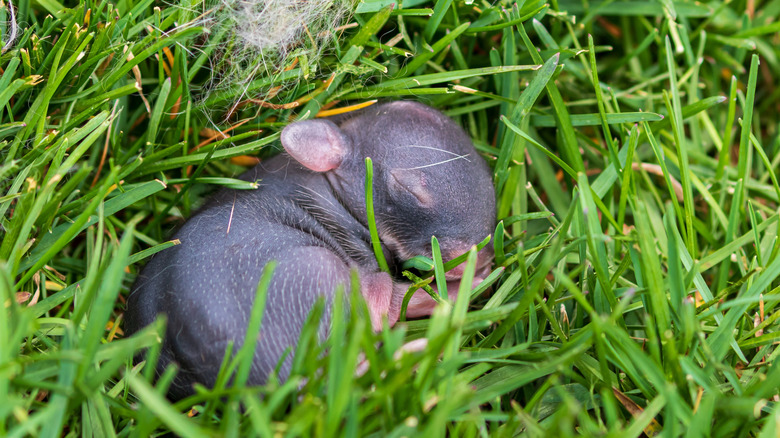
If rabbit kits are dry and warm, with plump little bellies, they are probably fine. Their vulnerability is also the reason a mother only appears a couple of times a day to nurse them. She's trying to make sure she doesn't accidentally lure predators to her babies. Not every baby rabbit you see outside the nest is in trouble. At three weeks old, they start leaving, and they might sit still in the garden for hours, and not move when you approach. This is normal behavior, and if they're bright-eyed, fluffy, warm, and about the size of a tennis ball, they're okay and don't need rescuing.
Nature is not always kind, and sometimes, the babies will need your help. For example, the mother could've fallen victim to a predator herself or have been hit by a car. You won't know that, though, unless you try the methods above to see if she's coming back.
Look for visible signs of distress, such as bleeding, obviously broken limbs, and open wounds. Youngsters caught by a pet cat or dog will also need emergency care, as even small skin breaks, especially from a cat, can cause infection without the right treatment. If the kits are covered in ants, fly eggs (which look like tiny grains of rice), or maggots, they need immediate help. The same applies if you find the babies cold and lethargic, you find them far from the nest, or lying in the open for hours. If you see any of these signs of distress, call a rehabber right away.
Call a licensed wildlife rehabilitator instead of trying to raise them yourself
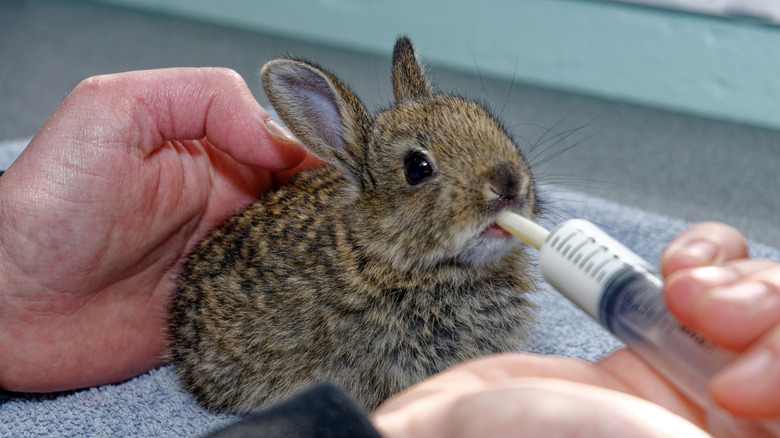
Raising rabbit kits is not easy, especially for regular people with limited knowledge and experience. Plus, in many states, you need the right permits to be able to raise or house wild animals, even cute little cottontails. Remember, they really are not pets. They don't want to be in your home or locked in a cage or pen. Do not feed a baby rabbit or any other wild animal that looks like it needs help. The wrong food, including the wrong type of milk, can easily kill them or cause significant pain. Call a rehabber for advice instead.
Wildlife rehabilitators are properly licensed and hold the right permits to be able to raise wild animals. Plus, they have the necessary skills and experience required to give the babies the best chance of surviving and being releasable back into the wild. Rehabbers are able to provide the right care, including the right diet and medical treatment.
You can usually search online for "wildlife rehabilitator near me". Alternatively, call your local humane society or animal control office, which can give you contact information for licensed wildlife rehabilitators in your area. Follow the rehabber's instructions exactly. They might ask you to place the kits in a ventilated box lined with soft fabric and keep them warm, quiet, and isolated until transport or collection can be arranged.
Give the nest time; young rabbits are ready to leave sooner than you think
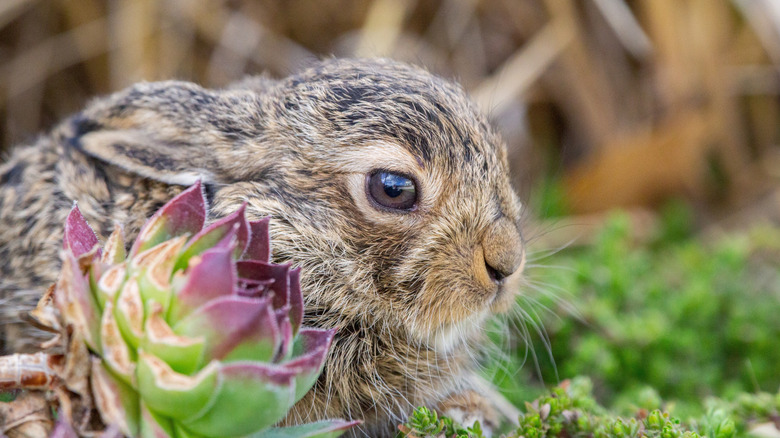
Rabbits grow incredibly quickly. They only stay in the nest for about three weeks. Yes, they still look tiny at this point, but they are fully independent and don't need your help unless injured or clearly sick. Give the nest and the babies the few weeks they need. Don't move them unless you really have no other option, and even then, talk to a rehabber first.
Let kids watch from a distance and marvel in the wonder of nature that's right in their yard. Keep kids and pets away, let the lawn around the nest grow a little longer for a couple of weeks. It provides extra cover for mom and babies and really does not hurt you in any way. Keep your dogs on a leash while the nest is active. Or, if you can, partition off the part of the yard where the nest is, without completely blocking mom's access.
The last time I had a rabbit nest in my back yard, I borrowed some temporary fencing from a neighbor and just ran it right down the middle of the yard. That way, the dogs could still get outside, but the nest was safe. Two weeks later, the babies had dispersed, and the fence was removed. If you do the same, just make sure the temporary face is secure so it doesn't fall.