

How To Choose The Best Type Of Shelving To Use In Your Walk-In Kitchen Pantry
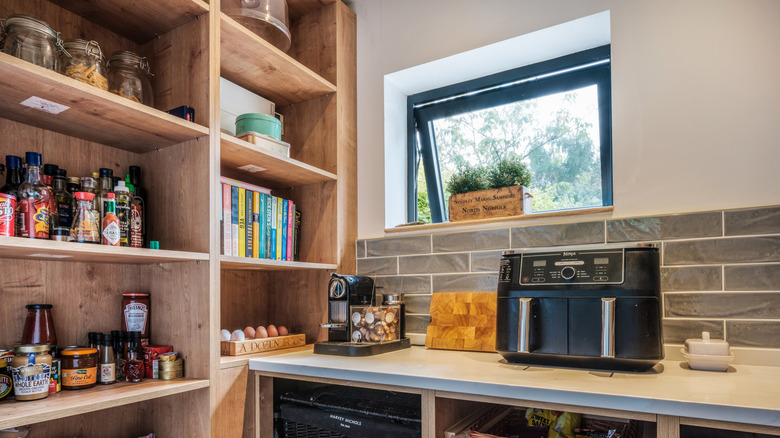
Imagine if you could take a time-lapse video of your kitchen, focused on an area that receives constant use, day after day, such as your refrigerator or coffee station. Or, take your pantry, for example. From pulling out appliances to restocking canned goods and snacks, the activity in your pantry never really stops. If you can get a clear picture in your mind's eye, you may be able to envision exactly how your pantry is used on a daily basis, which can help you choose the best type of shelving for your walk-in pantry.
Walk-in pantries rely on a variety of different shelf types to fulfill different storage needs. From bottled water and bulk flour to cereal boxes and extra rolls of tinfoil, the items you store in your pantry will determine the types of shelves you need, as well as their height, width, and depth.
Whether you're renovating your kitchen or considering ideas for a pantry makeover, you have a lot of decisions to make when it comes to pantry design. Shelves aren't the only pantry features to consider when maximizing your kitchen space, but they are important. When items are hard to reach or see, they get pushed to the back and forgotten about. However, if your shelves are easy to organize, use, and maintain, you can avoid problems like wasted food and frustration from not being able to find things.
Choose walk-in pantry shelves based on form and function
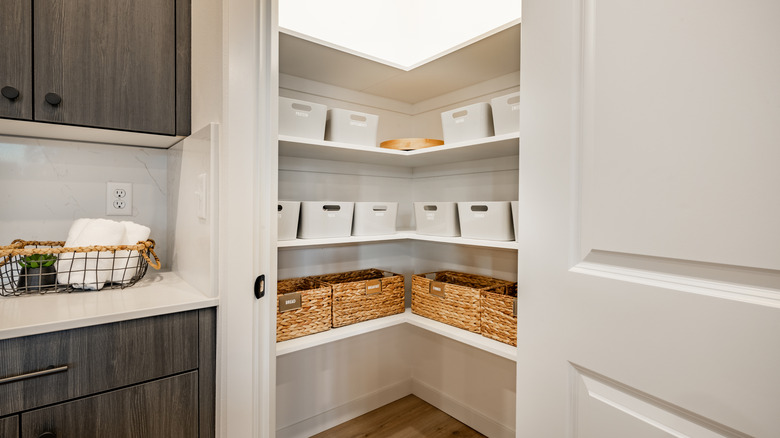
Taking an in-depth look at everything from how you cook to what you store in your pantry can help you determine the type and size of shelves you need. When you're deciding what types of shelves will work best for your walk-in pantry, consider everything from the kind of food your family eats to how often they grab a snack out of the pantry. This information can help you decide how wide your shelves need to be to store items such as cans of chili or boxes of pasta dinners. Then, measure items you plan to store so you know how deep and tall your shelves need to be.
Deep shelves allow you to store more, but they make it harder to access the back of the shelves. This is why some homeowners choose open, narrow shelves up high. This is why knowing the types of items you're storing and how often you grab for them can help you choose.
You can also choose between open or closed shelves. There are many ways to maximize space on open shelving, and this type of shelf can make everything easier to see, but it can also create visual clutter and make your pantry feel disorganized. Choosing between open and closed shelving often comes down to how much you tolerate clutter and how neat and tidy your pantry is normally.
Choose walk-in pantry shelves based on materials and style
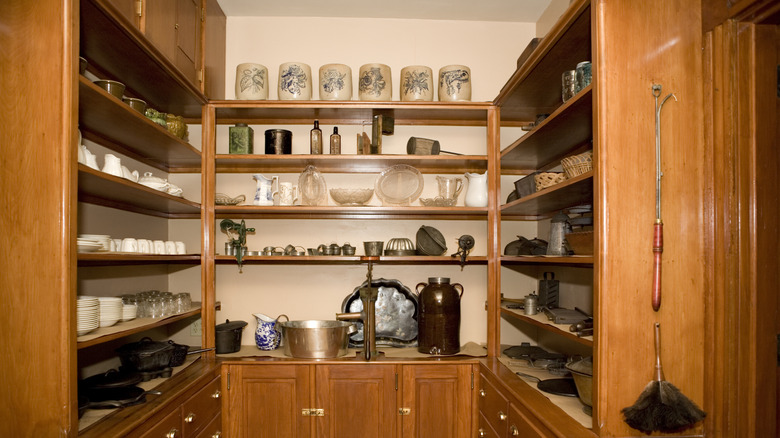
Whenever you're building a shelf, you have many materials and styles to choose from. To choose the best type for your walk-in pantry, you need to consider not only creative ways to expand your kitchen storage but also how your pantry shelves will look. Your shelves need to be strong enough to do their job while still being easy to keep clean, but you may have to strike a balance to find the right solution. For example, a laminate shelf made from MDF won't have the durability of a shelf made from ¾-inch plywood with edging, but it may look nicer or be easier to keep clean.
Sagging shelves are a common failure point, and fixed shelves are sturdier than adjustable ones. This is another thing to consider when choosing the best shelves for your pantry. Even if you want adjustable shelving, it might not be the right choice for your heavy canned goods. Unfortunately, with fixed shelves, though, you lose the ability to arrange them differently as your needs change over the years.
Layouts and task-related pantry zone strategies are other important considerations when choosing the best types of shelves. For example, you may want a wide shelf or countertop in your pantry to dispense cold cereal or portion out bulk food.