

7 Beautiful And Rare Plants You Can Only See In The Wild In Hawaii
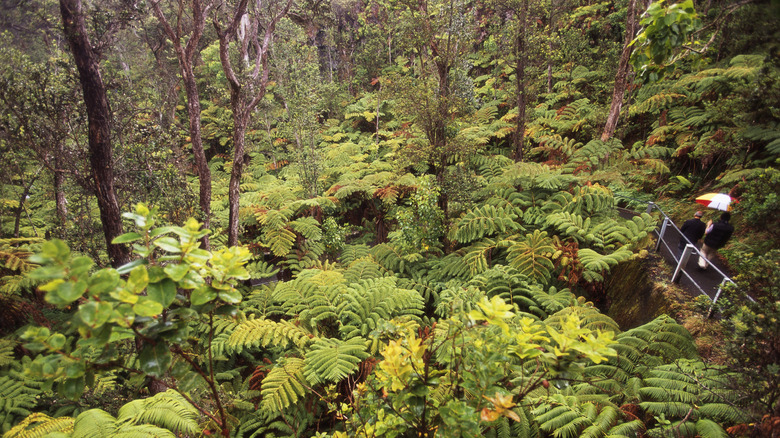
Islands are outposts for botanical marvels. These water-bound outcroppings often are home to some of the world's rarest plants, especially if they're far removed from other landmasses. Hawaii is the perfect example of this; the islands' remote location shelters plants unlike any others on the planet. There are about 10,000 native plants on the 137-island archipelago. Of these species, 90% only exist in these amazing tropical areas. It's only on the Hawaiian islands that you might stumble across the following 7 plants in the wild. Among them are flashy, spiky, vining, and towering specimens. Many have protected status, some are critically endangered, and almost all of them have deep cultural ties to the Hawaiian people. If you fall in love with any of these plants, it's pretty unlikely that you'll be able to raise one of your own. Still, there are some unique tropical houseplants and outdoor plants that can fake the feel of Hawaii, even if you live in a chilly northern or high-altitude zone.
Spy Hesperomania oahuensis that resemble the sun rising over the ocean, bristling 'Ahinahinas that bloom once before dying after decades of preparation, and — if you're lucky — the anemone-shaped flowers of a critically endangered Ko'oloa 'ula tree. Many of these plants have cousins that thrive in areas outside of the islands, like members of the heather, hibiscus, and gardenia families.
Haha
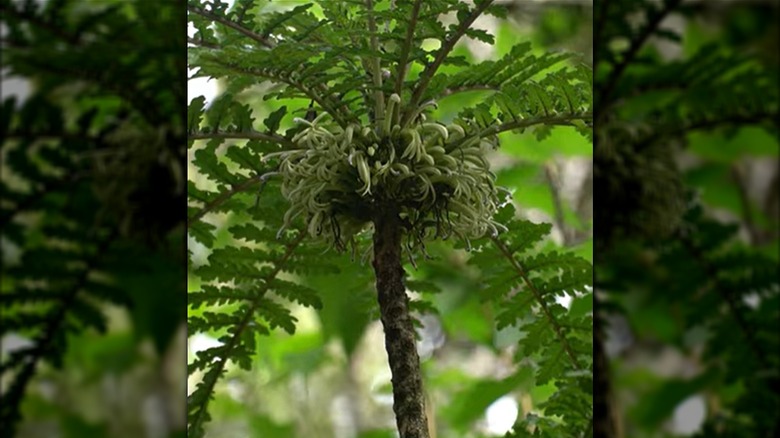
Lace up your hiking boots to glimpse a Haha (Cyanea shipmanii) plant in the wild. This extremely rare plant only grows on the eastern side of the volcano Mauna Kea. Haha is one of the rarest plants in the world, and finding a dupe for your indoor or outdoor garden is challenging. However, the Australian tree fern (Cyathea cooperi) is similar in shape with its tall trunk and plumy foliage, and it could make the perfect houseplant for your space.
Ko'oloa 'ula
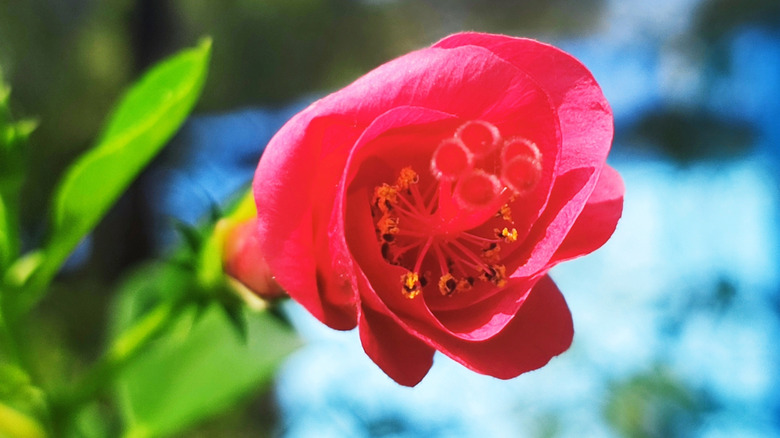
Are you up for more hiking? Ko'oloa 'ula trees (Abutilon menziesii) cling to rocky slopes above 600 feet on Maui, O'ahu, Lana'i, and Hawaii Island. This endangered shrub shows off charming heart-shaped leaves and pink flowers that resemble anemones. Flowering maples (Abutilon spp.) are cousins of these endangered plants and have many of the same characteristics, including pink or red flowers in some species. These plants can thrive outside in zones 9 and 10 and can be overwintered indoors in colder climates.
Hesperomannia oahuensis
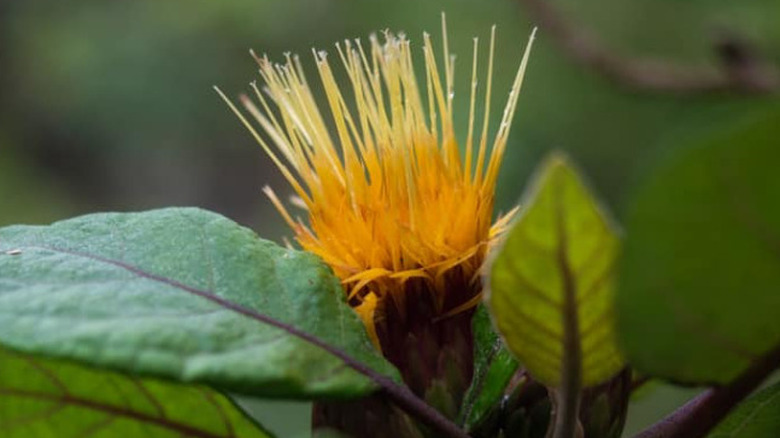
Keep your boots on for a trek to see an estimated 10 of these remaining living plants. Hesperomannia oahuensis is another mountainside dweller, specifically O'ahu's Waianae Mountains. This shrubby plant that grows up to about 11 feet tall sports flowers that look like paintbrushes dipped in sunshine-yellow paint. Although the flowers more closely resemble a bottle brush than a paintbrush, yellow jacobinia (Justicia aurea) could satisfy your Hespero-mania. This tropical native is hardy in zones 9 to 11, and it also makes a lovely houseplant.
Maʻo hau hele
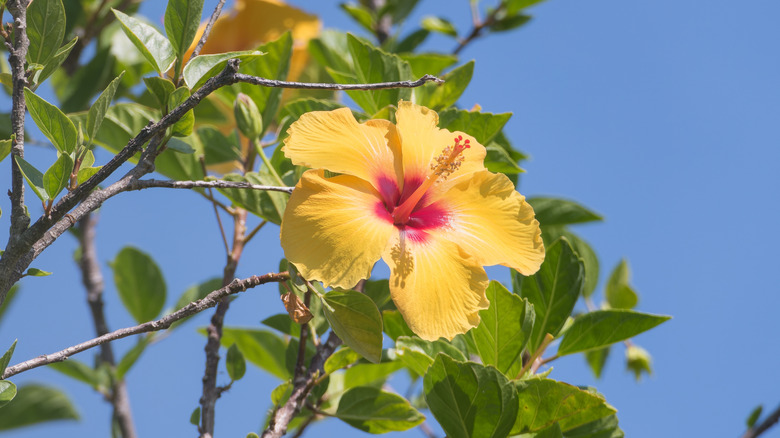
Another endangered plant of the Waianae Mountains in O'ahu, two species of Ma'o hau hele (Hibiscus brackenridgei) wave their yellow flowers in the breeze at elevations between 400 and 2,400 feet. Although these plants are threatened, it's not hard to find colorful varieties of hibiscus flowers to grow at home. The yellow hibiscus (Hibiscus hamabo) can brighten gardens in zones 8 to 12. These plants also take well to large containers that can come indoors in winter in cooler zones.
Na'u
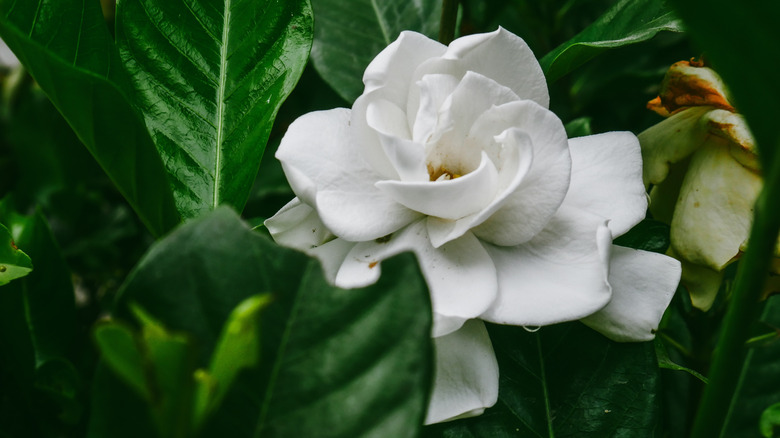
Although it looks much like other gardenias, the nanu plant (Gardenia brighamii) grows mainly in rocky soils on Lana'i, concentrated near Kanepuu, Puhielelu Ridge, and Wahane Gulch. It's believed to be extinct or exceedingly rare on other islands. Other types of gardenias will grow happily outdoors in zones 7 to 11, but they also grow well in large pots that can overwinter indoors in cooler areas.
'Ahinahina
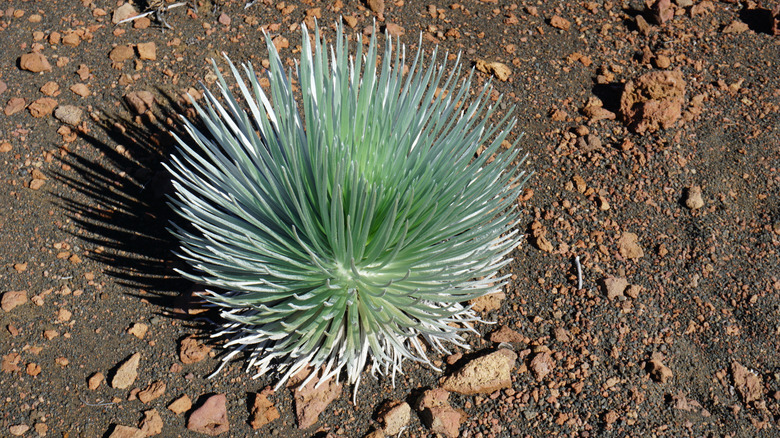
'Ahinahinas(Argyroxiphium sandwicense ssp. sandwicense), are spiky, silvery-green orbs that look similar to yuccas. The sword-like leaves grow to a bit over 15 inches in a rosette pattern. After storing energy for as many as 90 years, these plants send up a towering spear of flowers once before dying. Adam's yucca (Yucca rostrata), although it grows up to 15 feet tall on a trunk, has a similar shape and coloring as the 'Ahinahina and is hardy in zones 5 to 12.
Mehamehame
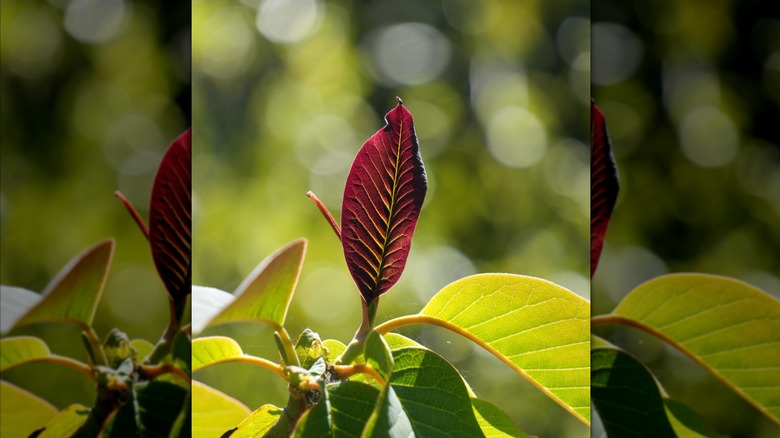
A tree as tall as a Mehamehame (Flueggea neowawraea) looks too tough to be endangered, but that's not the case. At up to 100 feet tall, Mehamehame trees poke their heads above their neighbors on Moloka'i, Kaua'i, O'ahu, Hawaii island, and Maui. Their branches sprout a long series of lanceolate leaves that could pass for peach tree leaves. Although peaches only grow to be under a quarter the height of a Mehamehame, the tasty fruits could make up for any other missing commonalities.