

12 Benefits Of Community Gardens And Steps To Get Started In Your Area
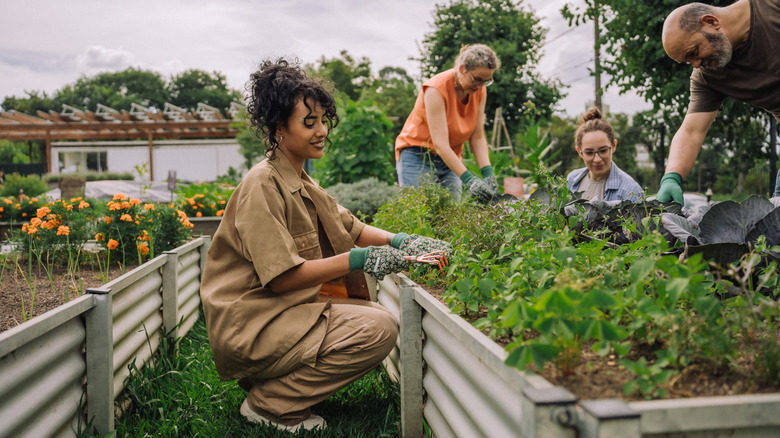
Gardening is a great hobby with many benefits. Unfortunately, not everyone has access to one or the ability to grow one in their own backyard. This is where community gardens come in. These spaces are a valuable resource that brings people together, allowing them to participate in a hobby that might be otherwise out of reach.
A community garden is exactly what it sounds like — a space where a particular area gathers together to grow fruits, vegetables, and even flowers. These can be rural, suburban, or urban. No matter where they are located, community gardens provide many benefits to the neighborhoods they are in. While some of those benefits are directly related to the food they provide, the advantages are incredibly diverse. Beyond food, community gardens increase neighborhood value, provide beauty and a sense of purpose, and can even improve safety.
Creates valuable green spaces in urban settings
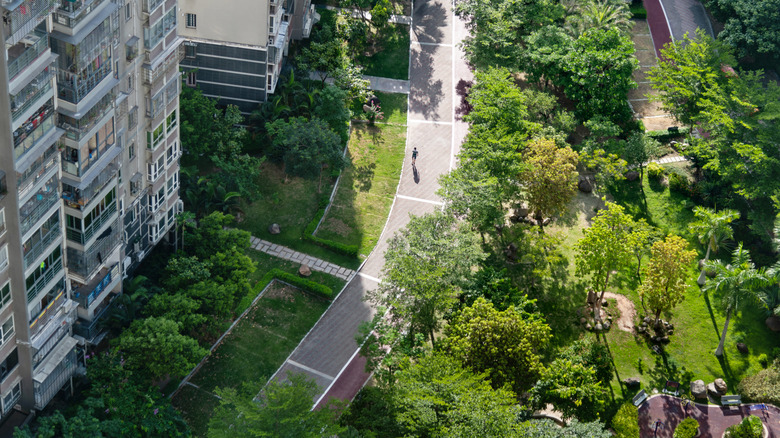
Green spaces (areas within a city that are intentionally designed to include plants) are vital to the health of the environment and the people who live in them. These spaces are important for densely populated areas because they keep the air cleaner and cooler, help prevent flooding, provide habitat for wildlife, and improve the mental and physical health of inhabitants. City parks, tree-lined streets, and rooftop gardens are all examples of green spaces.
Community gardens create green space in local communities, and the benefits transcend economic perks. These areas help to prevent neighborhood flooding by absorbing stormwater runoff. Soil and vegetation also don't absorb and store heat the way asphalt and cement do. Instead, they physically cool the air around them through the evaporation of soil moisture and a process called transpiration cooling, where plants release water vapor into the environment. This means that neighborhoods with community gardens may stay cooler overall.
Battles food insecurity by improving access to fresh, nutrient rich foods
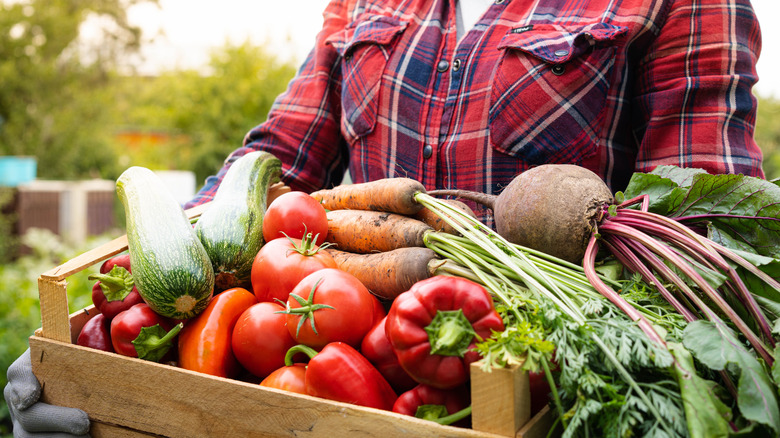
Gardens help to fight food insecurity by providing access to fresh, nutrient-rich food. Growing produce from seeds or starter plants can be substantially more affordable than buying it from the grocery store. Just $70 worth of seeds and gardening supplies can produce up to $600 worth of food, according to some sources. Better access to fruits and vegetables can also directly improve the diet (and therefore health) of people who might otherwise be eating large amounts of processed foods.
Community gardens are particularly helpful for people living in what is known as a food desert. This is an area where it's logistically difficult to buy healthy food due to the distance from affordable retailers like grocery stores. Having access to a community garden means low-cost produce that's just around the block — a game changer for the people living in these food deserts. In many urban areas, a backyard garden simply isn't feasible. Having a community garden down the street makes enjoying fresh produce accessible to more people.
Fosters a sense of community and belonging
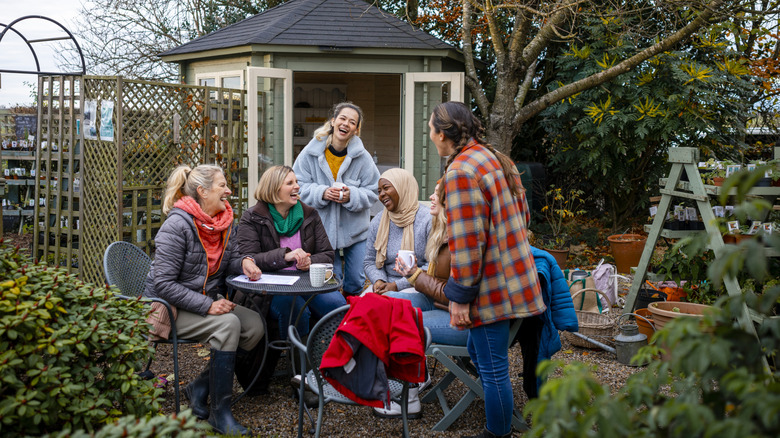
It's not a secret that doing things together brings people closer. Gardening is no different. It can create a sense of purpose because it fosters pride in joint effort and allows people to see the literal fruits of their labor. Working together in a garden can help nurture new relationships and build a sense of belonging through shared accomplishment. Gardening brings people out of their homes and into shared spaces, allowing neighbors to meet and friendships to form.
Community gardens can transform the entire vibe of a neighborhood into one of togetherness and belonging. When neighbors work together in a community garden, they become partners with a shared goal and a unified vision. Because gardening is inherently slow-paced, hands-on, and stress-reducing, neighborhoods with community gardens tend to have a more relaxed and peaceful atmosphere.
Improves soil health and air quality
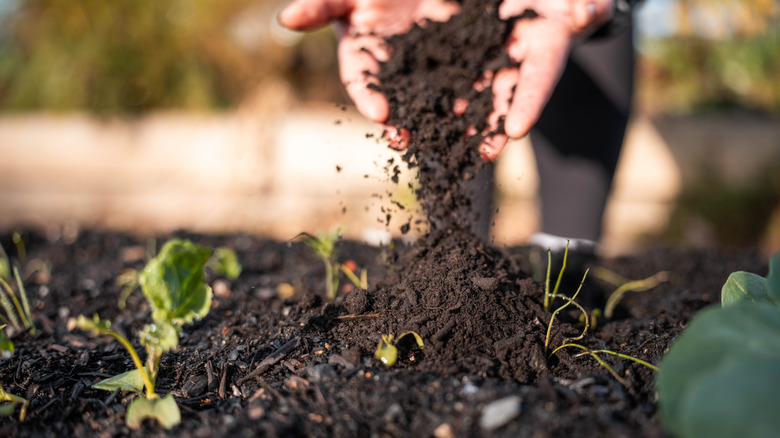
Gardens are great at improving the air and soil quality in a local area. They do this in a variety of ways. The process of gardening itself does a lot to improve the health of the soil within the garden. Composting, soil testing and amending, tiling, watering, and growing plants all work together to create a soil that is rich in both nutrients and microbes. Gardens can even have an effect on the surrounding area by reducing soil erosion, decreasing runoff and groundwater contamination, and improving local biodiversity. Gardens also improve air quality by filtering and absorbing pollutants.
These benefits spread to the entire community, whether that be a suburban neighborhood or a city block. Community gardens have been shown to absorb air pollutants — such as carbon monoxide, ozone, and sulfur dioxide — that are commonly found in urban air. Better air quality means cleaner, healthier air for the whole neighborhood. Reduced runoff means fewer chemicals leaching into the community groundwater and washing down the street.
Reduces neighborhood waste through composting
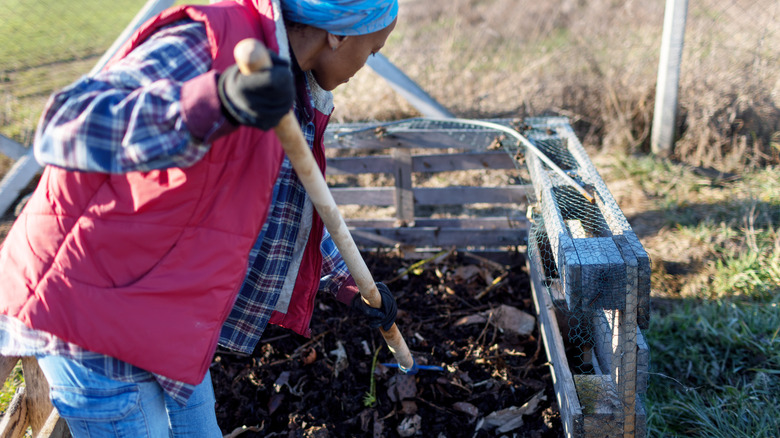
Waste tends to pile up fast in areas where a lot of people live. One of the benefits of community gardens is that they can help to reduce the amount of waste that a neighborhood produces. They do this by giving community members a place to compost items, as well as something to use that compost on.
This benefit spreads beyond the borders of the garden itself. Instead of throwing kitchen scraps in the trash, members of the community surrounding the garden can throw them in the community garden compost pile. This means households produce fewer bags of trash each week. Community garden compost bins can also be a place for community members to dispose of yard waste like leaves and grass clippings. If you have just started composting, learn about what you should and should not add to keep the pile healthy.
Increases property value of surrounding lots

An often-overlooked benefit of community gardens is that they tend to increase the property value of surrounding homes. According to a study by NYU's Furman Center, community gardens have a significant positive impact on the property value of homes within 1,000 feet of the garden. The study also found that community gardens can spur housing development as they tend to increase the number of homeowners in their vicinity.
This is a major benefit to anyone owning a home in a neighborhood that contains a community garden. For homeowners planning to sell, it means you may be able to sell for more once your home is on the market. Even if you aren't planning on selling, owning a home near a community garden means more financial security because it adds value to your investment. This effect is strongest for neighboring lots, but can extend to the entire neighborhood as well.
Boosts the perceived quality of the neighborhood
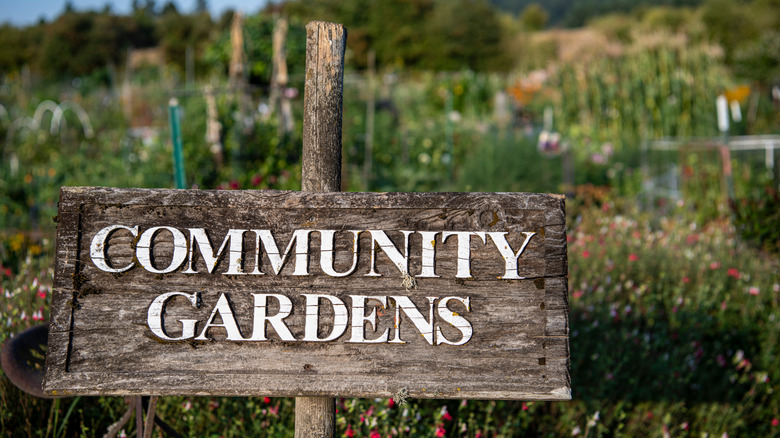
Community gardens make the neighborhoods they are located in a place where people want to live. Beyond just increasing the property value of adjacent lots, community gardens also increase the perceived quality of the neighborhood. In other words, they turn an ordinary neighborhood into a community that both visitors and residents alike view as valuable.
This value can come from tangible elements like increased property value, visual appeal, and affordable produce. But, it also comes from intangible elements like pride and a sense of belonging. These elements can't be seen, necessarily, but they can be felt by anyone who walks into the community. Having a garden in the neighborhood can attract new residents, helping it to grow, while also improving the quality of life for current residents.
Differentiates property listings from other areas
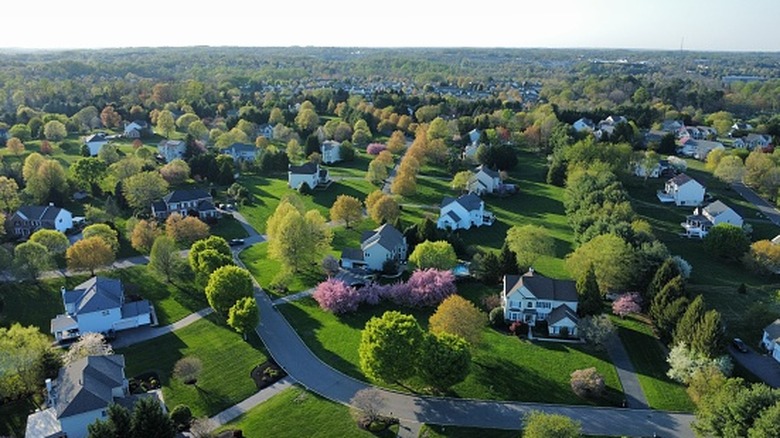
The process of buying a new home can easily turn into a headache. Slogging through a never-ending list of seemingly identical homes in matching neighborhoods doesn't make things any easier. Another benefit of community gardens is that they can add something special to otherwise generic home listings. Having a garden in the neighborhood can make a home stand out from the pack.
This benefit is a pro for both buyers and sellers. For buyers, a neighborhood community garden can be an attractive feature that may place one home above another while sorting through listings. For sellers, nearby community gardens help to make a property more desirable and make it stand out. Community gardens enhance a home's appeal, and can be marketed as a unique feature that will enrich the lifestyle of potential buyers.
Transforms empty eyesores into flourishing green spaces
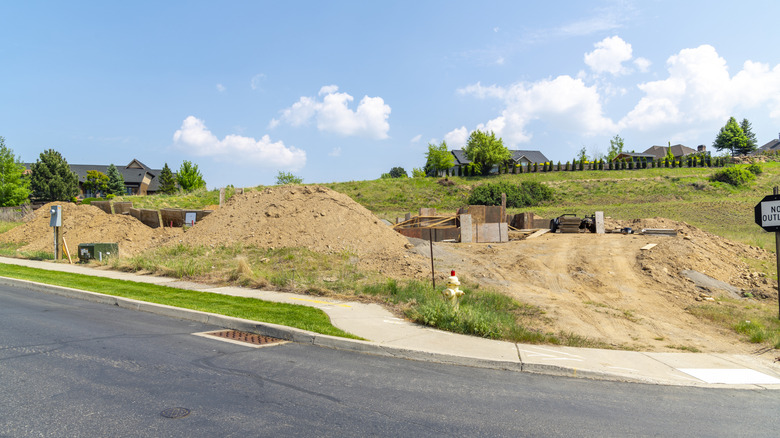
It's no secret that empty lots can be an eyesore. Vacant areas tend to be overgrown (or completely bare) and full of construction debris, graffiti, and trash. Maintained green spaces, on the other hand, are the exact opposite. Gardens, whether flower or produce, instantly make an area more beautiful and can increase the beauty of the whole neighborhood. Plus, gardening is good for your mental health. The beauty of green spaces can decrease stress and boost feelings of well-being, making people happier and healthier overall.
Starting a community garden in an empty lot is a great way to transform an otherwise useless space into something both beautiful and productive. It gives the lot a purpose, making it more likely that it will be maintained and remain free from trash. Community gardens can even turn a desolate space into a vibrant centerpiece.
Creates a kid-friendly neighborhood space
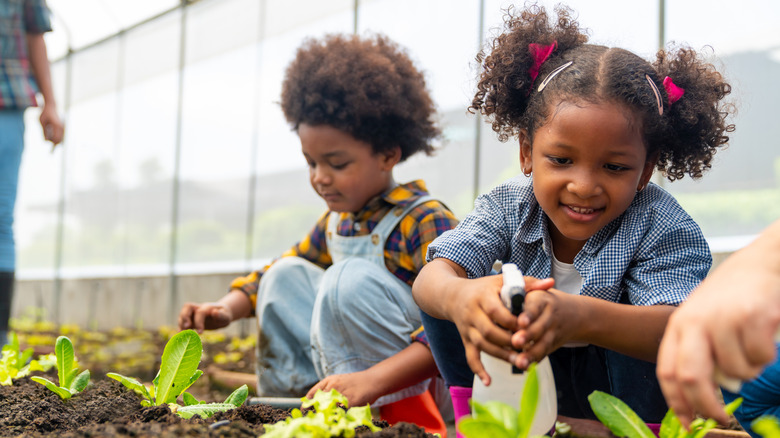
Yet another benefit of community gardens is that they transform neighborhoods into kid-friendly spaces. These are safe, thriving, and offer plenty of opportunities for youth to play, learn, and explore. Some community gardens are even designed with children in mind, providing play areas to keep the littlest of gardeners occupied.
In many areas, a community garden can be more accessible to families than a public park. Outdoor play is incredibly important for a child's development. Experts recommend that school-aged children spend around three hours each day playing outside. Well-designed community gardens give children a safe place to play outdoors, as well as offer plenty of opportunities for hands-on, sensory-rich learning.
Increases neighborhood safety

One of the more surprising benefits of community gardens is that they can have a measurable effect on neighborhood safety. This means less crime overall. Studies have shown that community gardens not only decrease crimes like theft and graffiti but also more violent crimes such as gun violence and assault. According to a study published by the National Library of Medicine, vacant lots that have been turned into well-maintained green spaces can reduce violent crime in a neighborhood by nearly forty percent.
There are several ways that community gardens help to reduce crime. Perhaps the most obvious is that they encourage residents to go out of their houses and into the garden, directly increasing community surveillance. Crimes such as theft are less likely to occur when there are many people outside to witness them. Poorly maintained vacant lots have been shown to increase depression and anxiety, which in turn can increase the number of crimes people commit. In other words, happy people are less likely to commit a crime. Overgrown lots also provide criminals places to hide while conducting illicit activities. Cleaning up those lots and replacing overgrown brush with a community garden brings more people into the area and eliminates the hiding spots.
Appeals to both landlords and potential tenants

Community gardens do more than appeal to buyers and sellers. They are a huge bonus for landlords and potential tenants as well. Having a community garden in the neighborhood can be helpful for landlords trying to fill rentals and can also help justify pricing them a bit higher than their competition. For tenants, a neighborhood community garden is a huge perk and can easily tip the tables when comparing similar properties.
Joining a community garden is the perfect gardening hack for homes without a backyard. Community gardens are particularly beneficial for renters in apartment complexes that don't have private gardens for tenants. Some come with no outdoor space at all. A nearby community garden can allow renters a chance to connect with nature and enjoy the many benefits of growing their own produce. Even renters who live in houses with ample backyards can benefit from a community garden because some landlords do not allow gardening on the properties they lease.
To get started, find land and assemble a team

It may seem like a daunting task, but the steps to starting a community garden are quite simple. Before anything else, you will need to gather a team of people who are interested in the project. This can be a group of friends, neighbors, or anyone else you think might want to pitch in. You won't need a lot of people at the start — even a handful of committed volunteers can make the dream a reality.
You will also need to start fundraising. Depending on your area, a community garden can cost upwards of $7,500 to start. Crowdfunding is a good way to raise money, but you can also look into grants and sponsorships to help your garden get off on the right foot.
The next thing you will need for your community garden is land. A good location should be flat, have decent soil, enough sunlight, and access to water. Some community gardens rent space, while others borrow vacant lots — just make sure you get permission first! Different areas will have different zoning laws as well (basically just rules for what can be done on a particular piece of land). So, it's important to check with your local authorities to make sure you follow all the rules.
Make a plan and set the rules
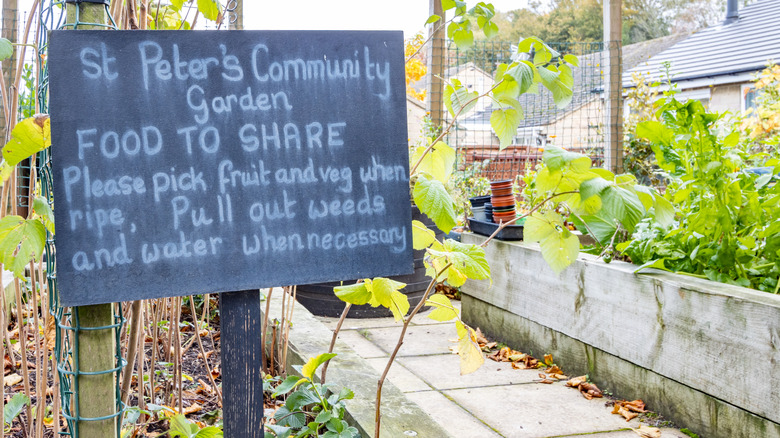
Once you've assembled a team, you can work together to form a plan for your garden. A lot of choices will need to be made. For example, you will need to decide what you want to plant, whether you will have raised beds or inground gardens, and even how you will share supplies. Before making any decisions, you should make sure to consider the conditions of the land you have chosen for your site. How big is it? How will you divide plots? How many plots will you have? What kind of plants will grow best in your soil, with your weather conditions, and the type and intensity of sunlight available? Questions like these will help save a lot of regret down the road.
This is also the time when you will decide the rules that members will need to follow. Community gardens come with a lot more guidelines than people may initially think. For example, how will chores be divided? Will your garden use pesticides or stick to climate-conscious gardening and organic methods? How do new members join? Will you charge a fee to use the community garden? Setting rules early on will be essential to helping your new community work together as a team.
Building, prepping, planting, and maintaining
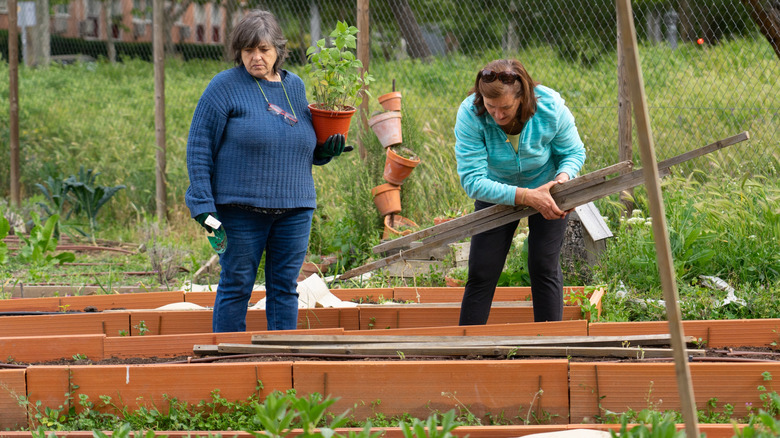
Now that you have all the details figured out, it's finally time to get to work! This step involves designing your garden, building raised beds, garden sheds, testing and prepping soil, and sowing seeds (or planting young plants). Before you do anything else, it is helpful to start with a written map of your garden design. Talk with your team to decide on your priorities, and build from there.
Some community gardens use raised beds, while others plant directly into the ground, and some even use a mix of both. Other structures you may need to build include garden sheds for storing tools, a compost pile, and an irrigation system. You'll also want a plan for community-building spaces you want to include — like a play area for children or seating for members to hang out. Once the structure of your garden has been built, you should test the soil and make any amendments you might need. Then, with soil prepped and structures built, it's time to plant. From there, you can work together with your team to tend your new garden and reap the harvest it yields.