

How To Harvest Cilantro For A Fresh Herb Supply That Never Stops Coming
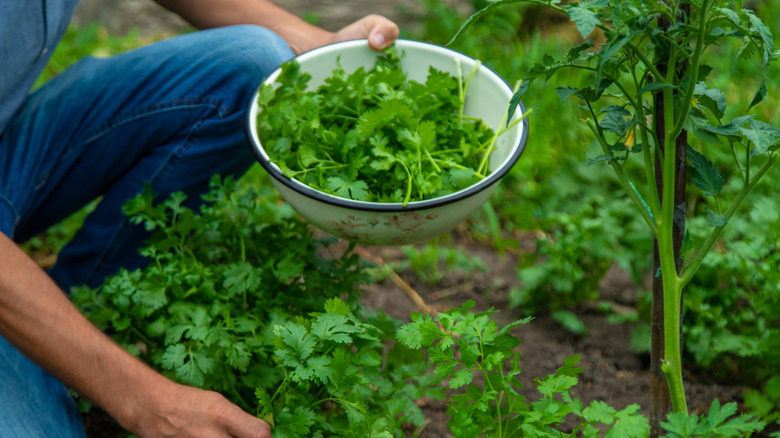
There is nothing like fresh herbs when it comes to cooking. Whether your yard is full of fragrant greenery or you're growing a kitchen herb garden on your windowsill, you probably want these plants to keep growing for as long as possible. To ensure that your cilantro provides you with a constant supply of fresh, healthy leaves, it is super important to harvest it correctly. To do this, you need to wait until the plant is big enough to harvest, pick the right leaves, and keep harvesting the herb regularly to keep it from going to seed.
Harvesting your cilantro too early can stunt its growth, so make sure you wait until the stems are around 6 inches tall. This is normally 45 to 70 days after planting the herb from seeds. Keep an eye on the herb, as your home-grown cilantro may taste bitter if you let it bolt before harvesting. By waiting for the right moment to collect the flavorful leaves, you help your cilantro plant thrive while also avoiding bolting issues. As bolting happens quickly in hot weather, consider where you grow your cilantro to avoid this, and keep the plant well watered.
How to harvest cilantro for continuous growth
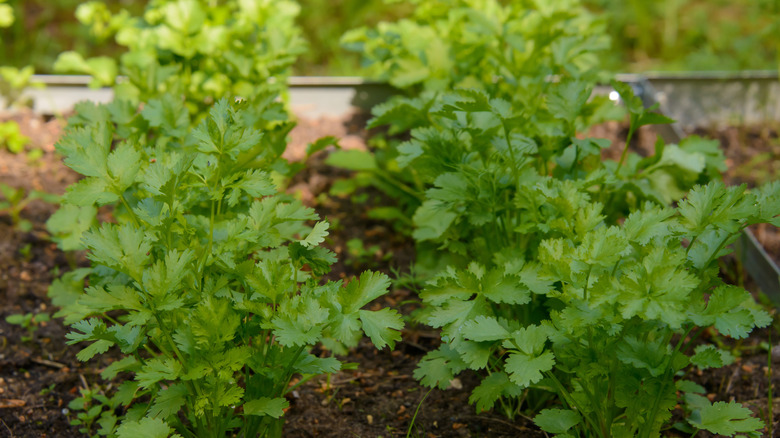
When the time is right for harvesting your cilantro, cut the older, outside leaves from the plant, using sterile shears to protect the plant, at about 1 to 2 inches from the plant base. This will encourage new leaves to grow and allow you to have a continuous supply of the herb as the inner leaves make way for new ones. Unless you're going to harvest the whole plant at once, take no more than a third of the plant each time you harvest. When you harvest your cilantro, you should also take off any stems that are putting on flowers, as this will prevent the herb from going to seed.
Alongside harvesting the outside leaves of the plant, there are other things you can do to keep your cilantro thriving and putting on new growth. Keep your cilantro constantly moist by watering it regularly, but watch out for the soil getting too damp. If your cilantro is in your garden, you may wish to mulch it for moisture retention and weed prevention. Fertilizing the herb a few times during the growing season will also prolong its life. Also, keep an eye out for signs of leafhopper pests and other issues that could damage the plant.