

15 Low-Effort Ways To Keep Your Bathroom Clean & Spotless

We may receive a commission on purchases made from links.
If you find yourself dreading weekly bathroom deep-cleans that seem to go on forever, you might need a better way to stay on top of your bathroom chores. Cleaning your bathroom can take up a solid chunk of time, especially if you're careful about taking care of your shower grout and disinfecting your toilet each week. If you want these tasks to feel impossibly easy, low-effort weekly bathroom cleaning habits, or even daily habits, can help you tackle your chores more casually. Lazy cleaning hacks are sometimes the best way to be productive, after all.
From cleaning tasks that can be done while you shower to tips that will help you make the most use of all your favorite or unexpected bathroom cleaning products, it doesn't have to be difficult to enjoy a spotless bathroom every day of the week. We've rounded up 15 bathroom cleaning tasks that are so low-effort, you could practically do them in your sleep. Some of them don't even require more than a couple seconds of your time.
Clean your shower while you use it
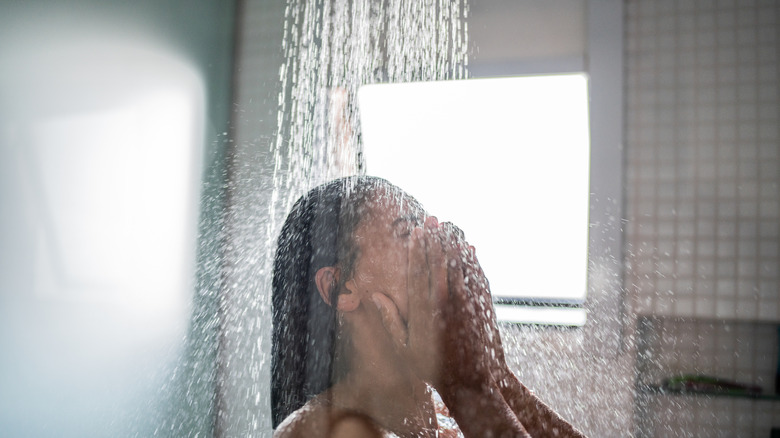
There's no better time to clean the shower than when you're using it. Keep a sponge and bottle of soap in the shower; when you get in, the walls will already be wet, and you can get straight to scrubbing. This is also a great task to check off while you wait for your conditioner or hair mask to soak in. If you take hot showers, the steam can even help dirt and grime lift off your shower walls more easily.
To make this bathroom chore even easier, you can also consider keeping a refillable soap dispenser brush in your shower, rather than a sponge and dish soap. Just fill the handle of your brush or sponge with soap, and it will dispense it automatically as you scrub. The soap should wash off your walls as you continue showering, but you can also help it along with an additional sponge or rag, or your hands.
Add a gel cleaner to your toilet
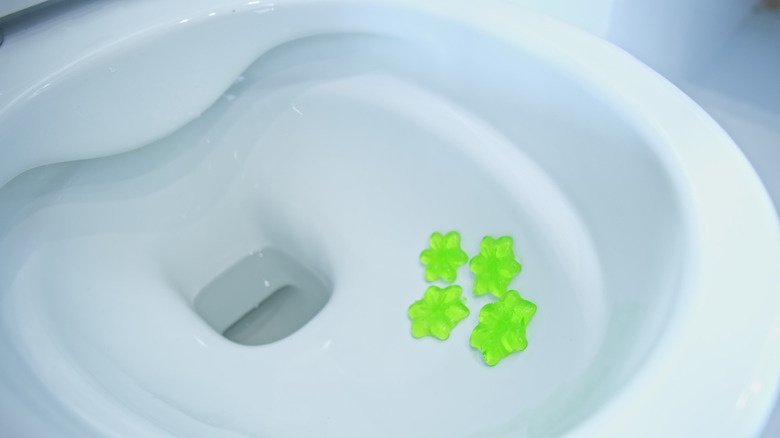
A gel cleaner isn't a replacement for cleaning your toilet regularly, but that doesn't mean it isn't useful. Gel sticks are made to be placed in the toilet bowl; press the stick them onto the side of the bowl, and it will dispense a stamp of fresh-smelling cleaning gel. This helps prevent odors from permeating your bathroom, and the cleaning gel can keep your toilet sparkling for longer, too.
Gel cleaners are also good for making it a little easier to clean your toilet with a brush or wand. Every time you flush, cleaning agents will be released from the gel and agitated around your toilet. This means that you're less likely to notice mildew buildup around the waterline in your toilet. Gel sticks can sometimes help prevent staining, too.
Keep a squeegee hanging in your shower
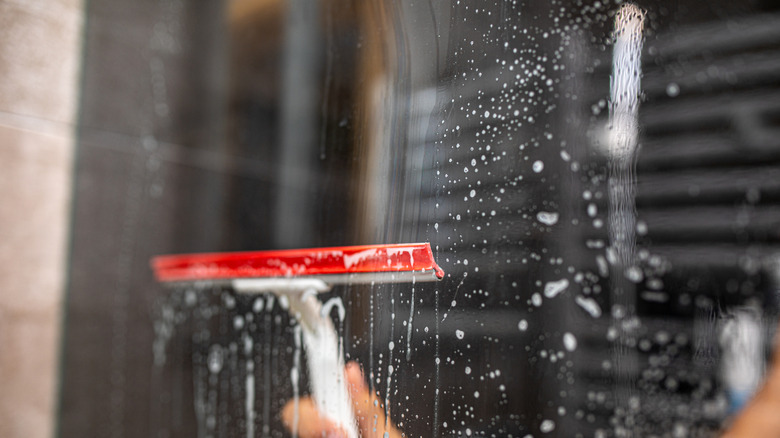
The best way to prevent hard water from building up on your shower walls is to squeegee the water away at the end of every shower. Once you've turned the faucet off, start squeegeeing at the top of each shower wall, working your way down until you've gotten all the steam and water droplets off your shower. If your shower has glass doors, make sure to squeegee these, too — doing so will keep them looking freshly cleaned all week long.
A hanging squeegee is easy to keep on hand in the shower, even if you have limited storage space. Look for an option that has a hook at the end of its handle, such as the Full Circle Clean Ocean Squeegee, so you can easily hang it. Before you step out of the shower, you can also wipe up any stray drops with a sponge.
Let your cleaners sit before wiping them off
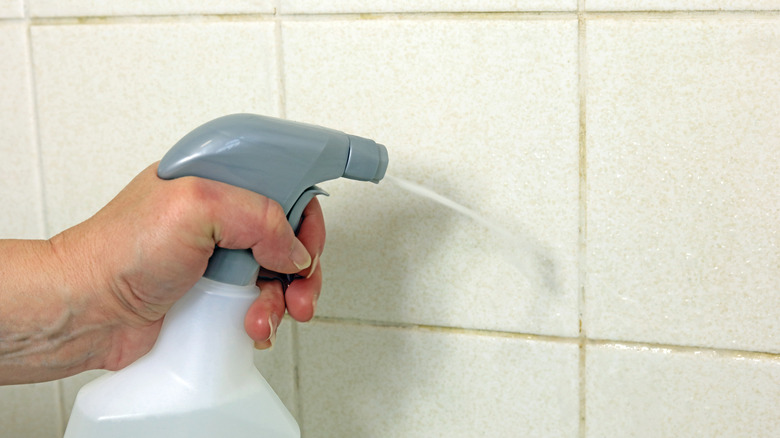
If you use a multipurpose cleaner in your bathroom, never wipe it off right after you spray it. Any kind of cleaner needs at least a couple of minutes to work its magic on whatever you spray it on. Cleaners that are intended to sanitize your bathroom may need even more time to get rid of germs. Solutions that lift mold, mildew, or stains will definitely take a bit of time to work.
You could spray down your bathroom counter before you get ready in the morning, then wipe it off when you're done brushing your teeth. Let your cleaner sit on and in your toilet before you scrub it down. This will actually make your cleaner more effective and easier to use; instead of needing multiple applications and wipe-downs, the dirt and grime should be removed with just one round of application.
You can also set your bathroom hardware up for an occasional soak in white vinegar while you work or go about your day, which will remove hard water stains without much need for scrubbing. Just tie a bag containing half water and half white vinegar around your faucet and shower head, leave it for the day, and come back to a bathroom that looks brand new.
Use an electric spinner to clean your tile
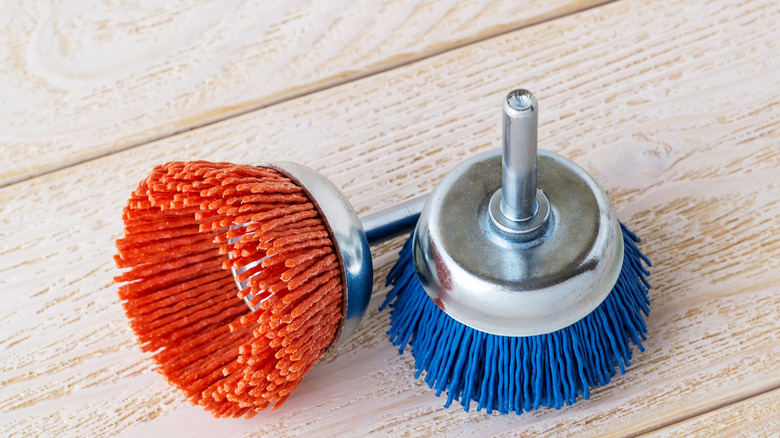
It's so much faster to scrub tile with an electric spinning brush (and it's way more fun, too). Instead of getting on your hands and knees to scrub at the spots on your tub — or risking a fall every time you stretch to reach the top tiles in your shower — a spin scrubber does all the work for you. Electric spin brushes — such as the Bomves Electric Spin Scrubber on Amazon — typically come with a long, extendable handle. At the end of the handle is an electric spinner, to which you can attach a variety of brushes, mop heads, and sponge attachments. Turn the spin scrubber on, and the brush at the end will rotate around quickly, so you can simply hold it in place instead of performing that scrubbing motion yourself.
If you're not sold on a spin scrubber just yet, you can DIY one at home. Take a cordless drill and grab a scouring or cleaning attachment for it (if you don't already have one, it's fairly easy to find a set for under $10). Then, use the drill to scrub stubborn stains on your walls. It won't have the exact same benefit of being extendable, but it certainly will take some of the effort out of scrubbing down your bathroom.
Disinfectant wipes make cleaning so much easier
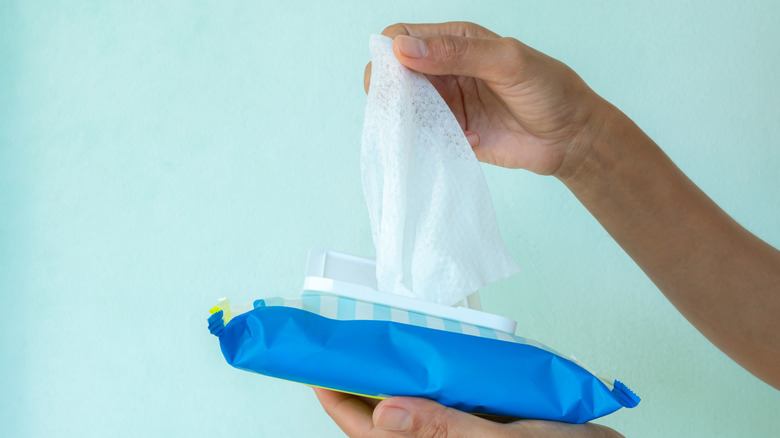
Disinfectant wipes take a lot of effort out of your cleaning routine. It's much easier to grab a wipe and quickly run it over your counters or toilet than it is to get a sponge ready (and then disinfect the sponge afterwards, too). With a disinfectant wipe, you just throw it away when you're done using it, which is much more sanitary than storing a dirty sponge in your bathroom. It's the quickest way to give your toilet seat a lightning-fast wipe down. Wipes are also good for quickly targeting the floor around the toilet, the handle, and the top of the toilet tank — especially if you have young children.
Wipes are a handy disinfectant alternative if you're trying to avoid spraying harsh chemical cleaners all around your bathroom. If you have limited ventilation, you might not want to use a spray sanitizer. A disinfecting wipe removes germs just the same, but without the risk of breathing in aerosol chemicals.
If you want your bathroom to smell fresher, disinfectant wipes are also a good option. You'll find lots of different scented wipes. Just don't trust any that claim to be flushable; flushing wipes down the toilet could lead to major plumbing disasters later on.
Apply cleaning paste to your grout before you shower
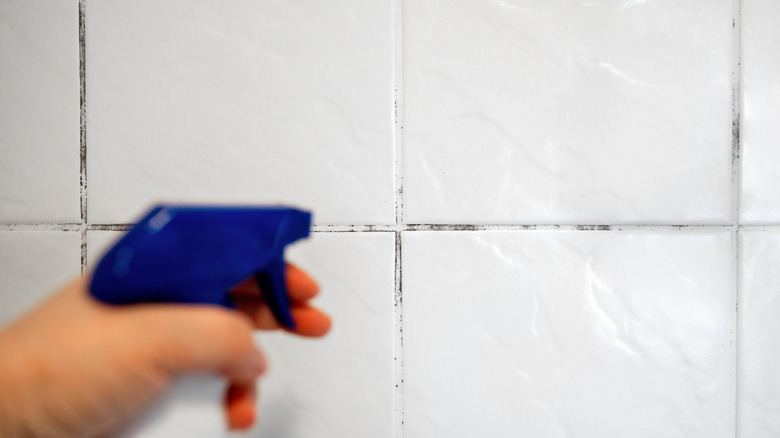
Give your shower grout a faster clean by applying cleaning paste before your shower. A good homemade option is a 1:1 paste made of baking soda and hydrogen peroxide, which can lift stains and mildew from your tile grout. The baking soda has a basic pH that breaks down organic matter and acidic stains, while hydrogen peroxide is an oxidizer that attacks the molecules of the organic build-up. Let the paste sit for at least 15 minutes before you shower. When you're ready to hop in, just turn on the water and allow most of the grout cleaner to wash away before you get in.
Once you're inside the shower, you can clean off any paste that's still stuck to your walls with a sponge or scrubbing brush. This is also a good time to give your grout a quick scrub. Just be sure not to shower with any chemical-heavy grout cleaner that could potentially damage your skin; homemade or all-natural cleaning solutions are the best way to go here.
Use an old toothbrush to take care of your grout
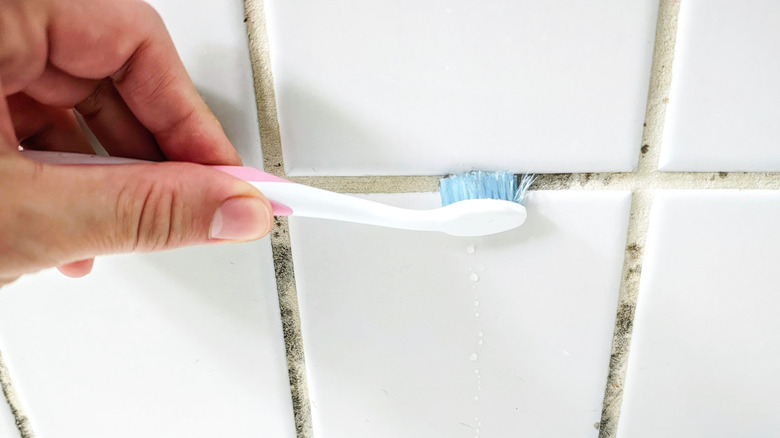
Don't toss that old toothbrush away just yet! The bristles of an old, used toothbrush are just right for getting the grout in between your tiles. You can start off with a grout cleaner or just focus on lifting the grime with soap and water. Each time you shower or clean your bathroom, focus on a different section of grout, and you'll have a spotless shower in no time.
Depending on the size of your grout lines, a smaller toothbrush may be preferred. For even easier scrubbing action, an old removable head on an electric toothbrush also works well here. It's basically a mini spin scrubber. Just be sure to label your removable electric head or used toothbrush clearly, so that you don't mix the two up when it's time to brush your teeth!
Leave the fan on after you bathe
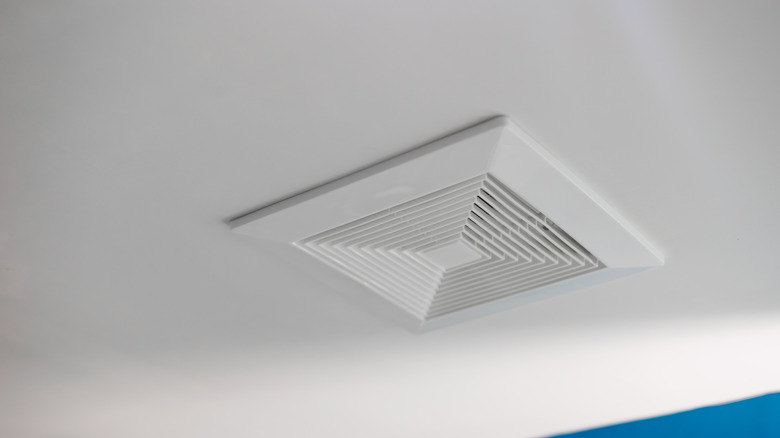
Who knew one of the most effective ways to keep your bathroom clean doesn't require any work at all? Every time you shower or take a bath, the bathroom fan should be on, and it should be left on until the moisture and steam completely dissipate. In most bathrooms, you should leave your fan on for at least 30 minutes after finishing your shower, but an hour is even better.
Additionally, airing out your bathroom every single day is a good idea. As moisture builds up over time, it leads to mold and mildew growth, and, as you already know, your shower grout, walls, toilet, and ceilings are all prime places for moisture to build up. If your bathroom has a window, open it regularly for more effective ventilation.
You can clean your mirror with shaving cream
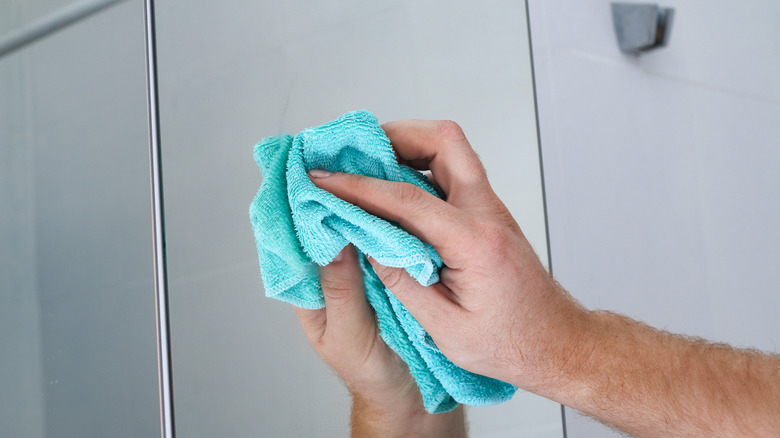
Tired of having a foggy mirror after every shower? It only takes a minute to wipe it down with shaving cream, and you'll be left with a mirror that remains squeaky clean no matter how much steam it encounters. Spray some shaving cream onto your mirror and grab a sponge or paper towel to wipe it all around the mirror. Be sure to cover every inch of the glass. Then, wipe the shaving cream away with a dry cloth.
The reason this works is because shaving cream contains surfactants, a thin layer of which is left behind even after you wipe. This layer is hydrophilic, so it reduces the surface tension of water, preventing it from forming into droplets that become opaque, aka fogged up. Essentially, shaving cream works just like a defogger. It'll also leave your mirror completely spotless.
If you don't have shaving cream on hand, white vinegar can also work well here. Mix a 1:1 solution of white vinegar and water, and spray it onto your mirror. Wipe it away with a dry cloth, and the vinegar will create a barrier against steam, much like shaving cream does.
Flush your toilet regularly
For those with second bathrooms or guest bathrooms that don't get much use, it's still important to flush the lesser-used toilets every so often. Stagnant water is a breeding ground for mold and mildew; you'd be surprised to see how much can build up even in an unused toilet. Flushing them regularly agitates the water — in both the toilet bowl and toilet tank — which helps keeps them clean, even when not in use.
Flush your unused toilets every week or so. You can also run your sink and shower about once a month to be sure that there aren't any issues there, either. It's one of the quickest and easiest routine bathroom cleaning tasks you'll ever need to check off your list.
Rinse off your products while you use them in the shower
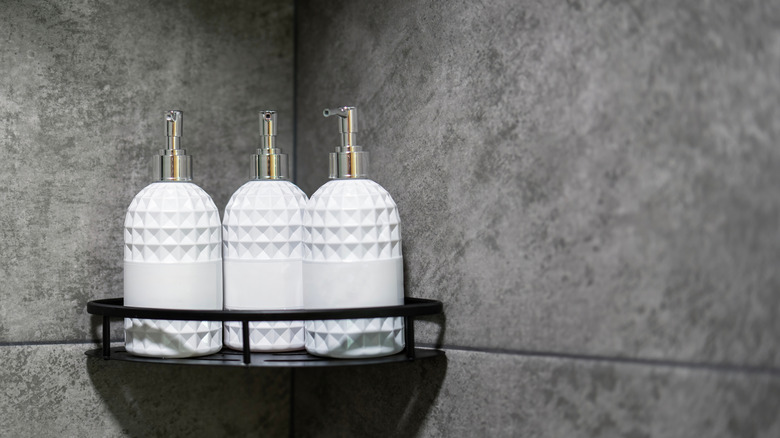
If you keep toiletries like shampoo or body wash on your shower shelf, chances are, the undersides of your toiletries are growing mildew if they aren't cleaned regularly. So, every time you pick them up, simply give the underside a quick wipe with a sponge. If you really want to make this task quick, you can even use just your hand and some water from the running shower — it's up to you!
Wiping down your shower toiletries regularly will prevent mildew from building up. You can also give the sides of each bottle a quick rinse to clean up any product leaks before they make a mess of your shower shelf. While you're busy wiping down your toiletries, this is also a good time to quickly wipe off the shower shelf underneath, whether with a sponge, cloth, or the soap-dispensing brush discussed earlier.
Toss your bathmats in the laundry with your towels
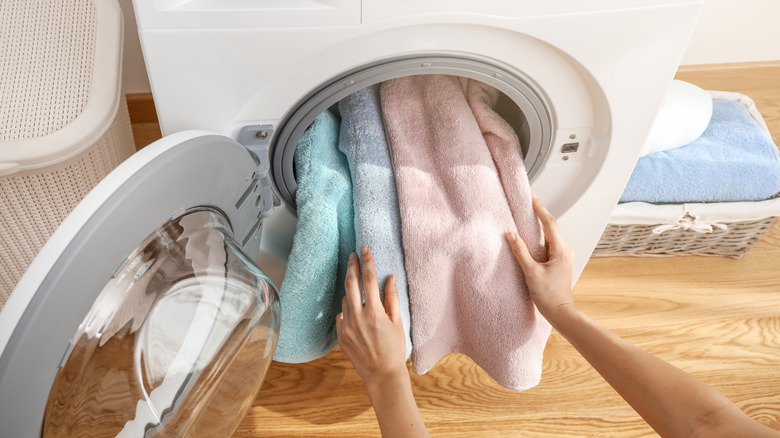
If the floor of your bathroom feels or smells dirty even though you just vacuumed, chances are, it's the bath mats! Most experts recommend washing your bath mats just as often as you wash your towels (about once a week). Giving your bath rugs a quick cycle in the washing machine is a (mostly) hands-free way to keep your bathroom floor neat and tidy. Plus, they are notorious to holding onto moisture, to cleaning them reduces the changes of mildew growth.
Most bath mats are typically made of similar material as bath towels; this means that you don't even need to worry about running an extra load of laundry. Wash both together in warm water to keep your bathroom looking fresh and clean. Let your bath mats spend some time in the dryer once they're done; this will fluff them up again, making them feel soft and extra-absorbent once more.
Use a trash can liner and store extras underneath
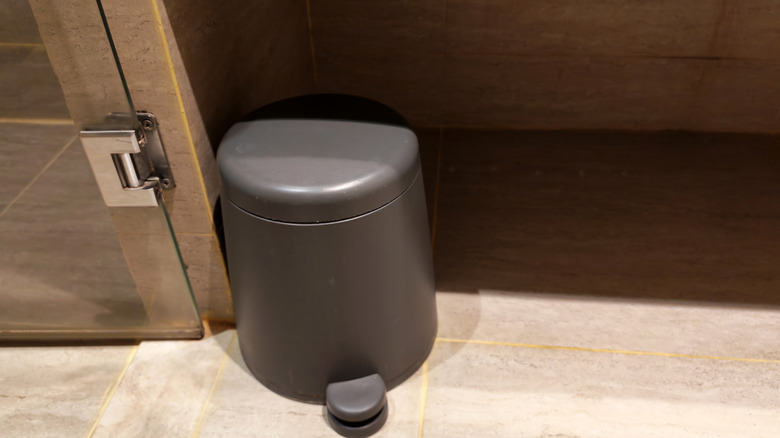
Taking out the trash is never a fun task, but there's a way to make it a whole lot better. First, line all of your bathroom trash cans with a small liner (you can also reuse an old plastic shopping bag). This keeps the trash in your bathroom separate from the can itself; any spilled liquid, stains, or smells will never penetrate the actual trash can, so it'll look (and smell) brand new every time you take your trash out.
We have another quick hack for making your bathroom trash chores even easier: Stash spare liners underneath the existing working liner, so you can replace it immediately without having to waste any time (or forget to do so and end up needing to clean even more).
Give the sink a quick wipe down right after you use it
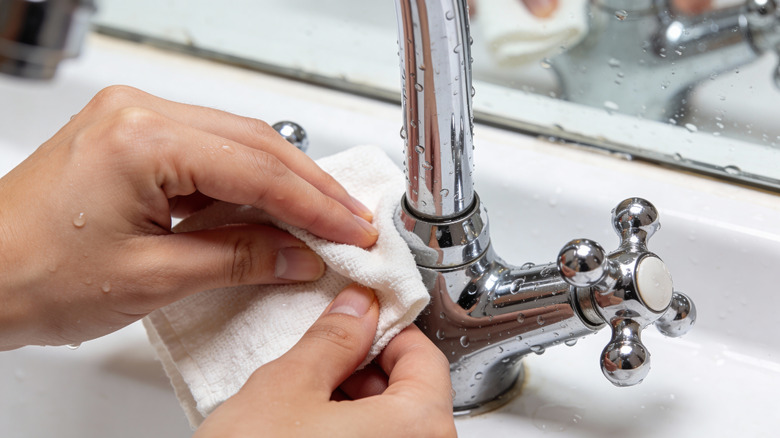
When getting ready in the morning or at night, wipe down the sink as soon as you're done using it. First, grab a rag, paper towel, or square of toilet paper and quickly pick up any stray hairs that the sink or drain has collected. This will prevent hair from building up in your drain, causing clogs later on.
Next, it's time to take a sponge or cleaning rag and quickly wipe up the water from your sink. Give your faucet a quick wipe-down, too, to prevent hard water stains from building up in the future. Keeping your sink dry when not in use means it'll look like it's just been cleaned every time you use it; when you wipe down your sink regularly, mold and mildew don't have the chance to build up, either.