

Why Over-Mopping Actually Does More Harm Than Good
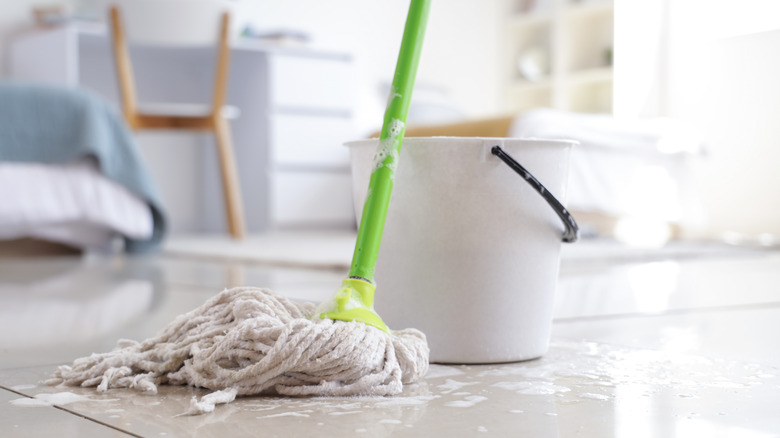
When it comes to giving your floors a good scrub, you may believe that more mopping yields cleaner, better results. It might be tempting to grab the mop and bucket and wash your floors every day or two in order to make them shine, removing any buildup and dirt as they accumulate. After all, high-traffic areas in particular can quickly accrue grime and look dull as a result.
However, many cleaning experts and professional housekeepers say that, in most cases, over-mopping can actually do more harm than good. That's right — a chore that's supposed to keep your home looking fresh and clean can end up wearing down surfaces, corroding floor finishes, and even attracting more dirt over time.
One of the biggest consequences of over-mopping results from the amount of water you end up using. Too much moisture on hardwood or laminate floors can seep into their seams and cracks. When that happens, your floors can swell, bubble, and warp. As such, it's important to try to use a damp mop rather than a soaking one. You want to avoid leaving puddles in spots that will take longer to dry out.
Wood, in particular, can absorb water when you over-mop and become deformed as a result, eventually ruining your floors. How often you should be mopping your hardwood floors depends on the amount of traffic and dirt or debris in the area, but once every two weeks is a good rule of thumb to prevent oversaturating them.
A tile floor isn't much better, as the grout can wear down over time, so it's best to mop once a week at the most, sweeping or spot-mopping when needed. Whatever surface you're mopping, most high-traffic floor spots only need to be cleaned once per week, and the rest of your floors only need to be mopped just once per month.
More downsides of over-mopping, and why floor type matters
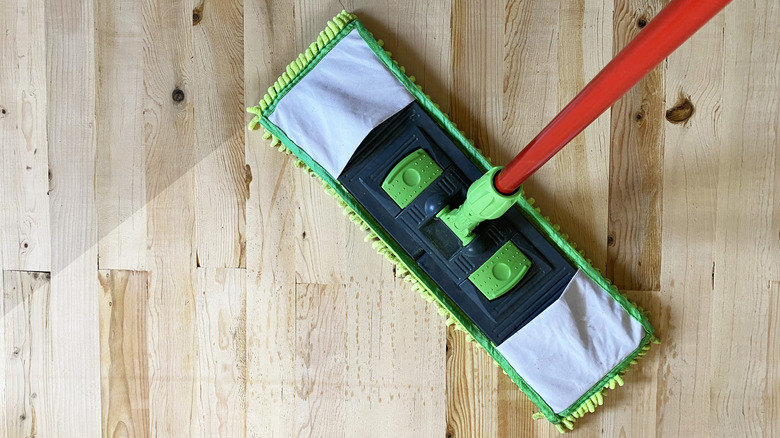
You want to take time to research and follow mopping tips that will keep your floors looking brand new. Over-mopping can do the opposite and end up making your floors look dirtier after washing than when you started. There are a few reasons why this occurs. With a mop-and-bucket system, the mop head becomes dirty almost immediately. Then, you're just pushing that dirt, grime, and bacteria around the floor, making it worse. The water, in turn, also becomes dirty early on, and if you're not switching out for new and clean water, the dirty water you're mopping with ends up keeping the floors from being clean.
The cleaning solution you use on your floors can be yet another factor that contributes to dirtier floors. When you over-mop using chemicals, you can corrode the finish on your floor, which can lead to damage, and the cleaning solution can make it worse. If you notice your frequent mop sessions leave your floors with a sticky or filmy residue, it ends up attracting more dirt.
Ensure you use appropriate cleaning products for your floor type and follow the manufacturer's guidelines for the amount to dilute with water. Hardwood or finished floors will need a different cleaner than tile or laminate, for example. It can be helpful to run a damp mop of clean water over your floor after using a solution, lightly rinsing away any chemicals that can corrode the floor or leave a residue. You can also skip the solution altogether and use just some mild soap and water to mop. You can also look into the best mops for your hardwood flooring or specific floor type to get more out of each mopping.