

I Still Regret My LG Fridge Purchase. Here's What You Can Learn From My Mistakes

We may receive a commission on purchases made from links.
Investing over $1,000 every few years in new tech has become par for the course, and these standards are unfortunately seeping into appliances, as well. I'm not a wealthy lady, and I have an extremely strong aversion to wasting money. A mere five years ago, my husband and I sank over $1,500 into a new LG French Door Refrigerator when our old one finally gave out. Despite high energy efficiency ratings and good reviews at the time, this new fridge has developed structural and mechanical issues that I wish I'd foreseen — and that I wouldn't expect from a newer machine.
I only upgrade my cellphone once the old one is beyond repair, so forking out a G and a half every few years for a new fridge is unacceptable. For purchases that involve most or all of a paycheck, I do serious research. Performance, sustainability, and consumer reviews all play into the decision. When it came to choosing the right refrigerator for our kitchen, I focused mainly on big-picture issues, like energy efficiency, price, and size. Since large appliances are meant to last years, of course, they'd also be made of durable materials, right? Not necessarily; it isn't the LG appliance's specifications that makes my blood boil; it's every time another chip of plastic cracks away from a drawer or shelf.
There are several lessons I took away from this experience. The biggest one was always shopping in person. Don't ignore consumer reviews, but more importantly, open your potential fridge and inspect it from top to bottom while you're at the store.
The LG's flaws snowballed after the first year
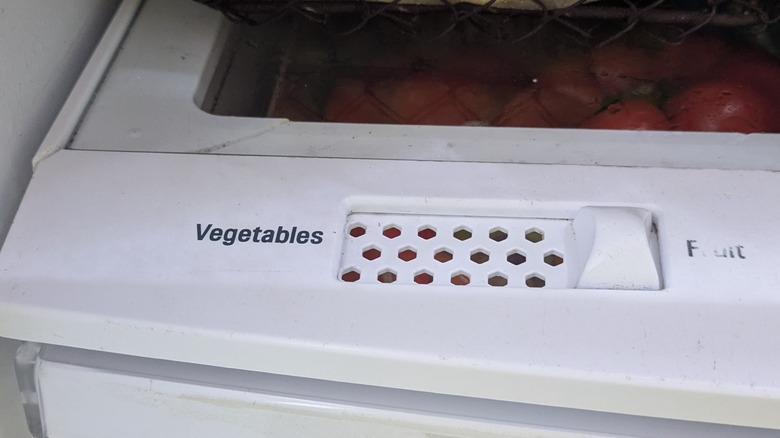
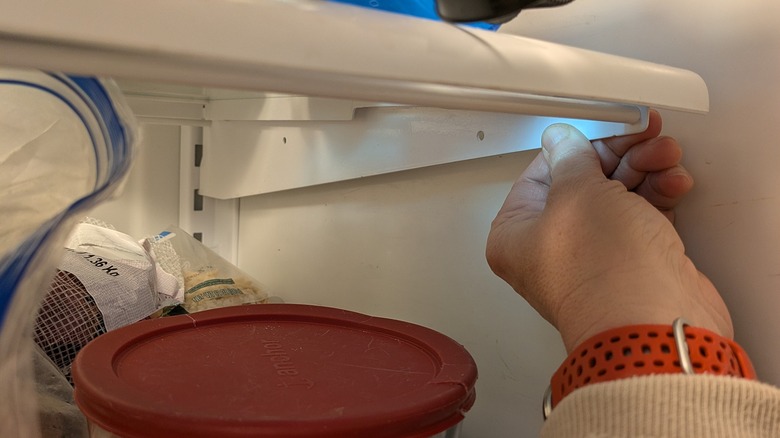
Perhaps a year went by without complaint after installing the refrigerator in our kitchen, but once the first flaw made itself known, more soon followed. Among the most tedious issues is that, instead of sturdy metal shelf supports that hook into the back of the fridge, our LG has only one nice arm per shelf, while the other clings unsuccessfully to a projection on the interior wall. Now, every time I grab something from a shelf, I need to resituate it so that the projection supports the loose edge. I don't know that I would have identified this as an issue while shopping IRL, but heed my warning: This oversight makes for precarious shelving. Its instability puts unnecessary stress on the shelves, which could be why a few of the plastic frames have cracked.
Even with a quick and easy way to clean parts of a refrigerator, if those parts don't come out of the appliance — or even function normally — without damage, what's the point? Even without heavy manhandling, the LG fridge started shedding pieces like chips of plastic, drawer wheels, and a full door on one interior compartment. After every deep cleaning that entails removing components to wash them, more damage occurs.
So, when our relatively new fridge's ice maker began to lose consistency, that was a clincher for my appliance-based rage. Our LG developed noisy mechanics and feast-or-famine ice production after about two years. No matter how much I love a massive chunk of ice in my water, how well the fridge's ice maker works didn't even cross my mind as I researched. This is definitely a feature that I'll research better for our next fridge investment.
Key takeaways from my LG experience
Is it that I regret buying my LG fridge, or are LG fridges in general not great? Well, another one of their models, the LG Top Mount Freezer Refrigerator, is a best seller at Home Depot and earns high consumer ratings comparable to those of other popular brands' refrigerators. Plus, machines that are lemons are a pretty common phenomenon. However, the poor design and shoddy plastic elements in my particular LG fridge tell me that this is probably a bad model in general.
On a recent visit to a friend's house, I noticed that her Amana fridge is a lot like mine, but with some upgrades I wish my LG had. The Amana has thicker plastic trim around each shelf, and it has no chips or cracks. Each shelf sits securely on two metal arms, and the freezer compartments are made from thick, coated wire rather than plastic, as in mine. I'll certainly look for these details in my future fridge.
It's probably impossible to avoid plastic elements in any fridge. I recommend seeking out a model with more metal than plastic features, if possible. If not, look closely at the plastic components to gauge any possible weak points. If I'd known better, Reddit would've been a great shopping resource to ask specific questions about the fridge's construction and durability. But the step I won't leave out for our next major appliance investment is closely inspecting a physical model before shelling out the dough.