

16 Home Design Trends That Won't Make The Cut In 2026 (And What To Do Instead)
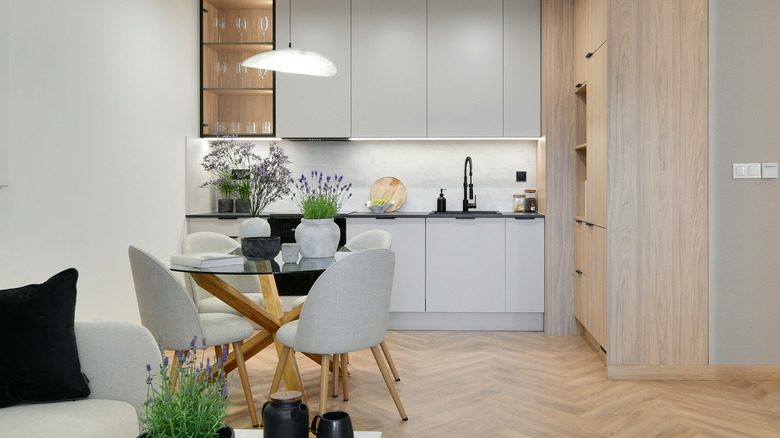
Home design trends come and go, but if you like being trend-conscious, the ever-changing nature is part of the fun. Whether you're always in search of the next big thing, looking for inspiration for a major home refresh, or still exploring your personal aesthetic, current home design trends are a great starting point to discover what people enjoy and what's on its way out. If you want to stay on-the-pulse, we've rounded up some trends waning in popularity in 2026, and what to explore instead.
Trends come in cycles, gaining popularity and then going out of style after a combination of oversaturation and enough time. But of course, it doesn't mean you have to make any changes: If any of the following aspects are part of your personal taste or work well for your home, they're always worth keeping around. In general, 2026 continues to move away from minimalism and towards warmer, cozier, and more personalized homes. If you're renovating, redecorating, or just rethinking your space, consider this guide to designing a home that will feel current this year and beyond.
Spaces devoid of personality
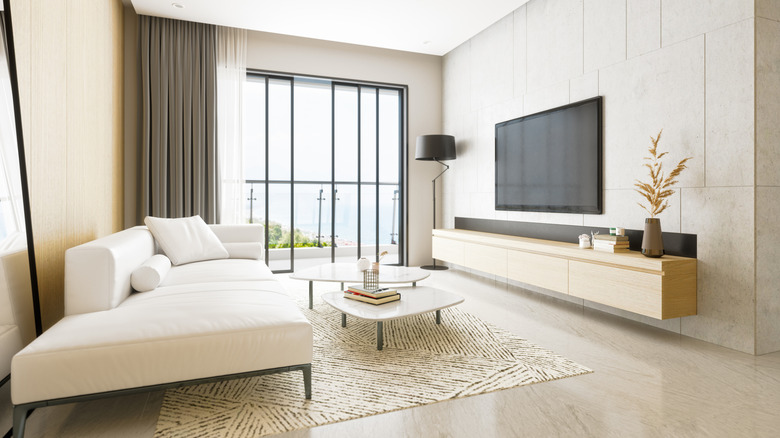
Rather than a specific trend, this is an overarching idea that informs many of the style shifts on this list. For years, ultra-neutral and minimalist spaces dominated feeds and homes. A distinct lack of character is where 21st-century modern minimalism ended up, with spaces that felt utilitarian more than anything else. The sparseness made every home look similar. There were some shifts recently to warming up minimalist spaces, with Scandinavian and Japandi trends, but now it's going even further. Recent maximalism trends felt like a full-on rebellion against minimalism, but maximalism for its own sake feels overwhelming to many. Now, with more focus on personalization, you can land anywhere on the spectrum between the two. Really, it seems many are sick of blank, sterile spaces that veer copy-paste. Instead, people want to live in homes with character that is true to their tastes, however subtle or bold.
Instead, this year continues a shift towards more authentic, lived-in homes. Tap into decor styles that feel timeless to you to create a space that leans curated and collected. Historic and vintage home trends are all fair game, ranging from bold Art Deco elements to funky 70s-inspired touches. Ideally, update your space with fewer cheap, mass-produced items, which can feel disposable and quickly time-stamp a space. Vintage, thrifted, family heirlooms, handcrafted, or self-made DIYs feel more personal and worth keeping, even through future trend cycles.
Bland white, gray, or beige rooms
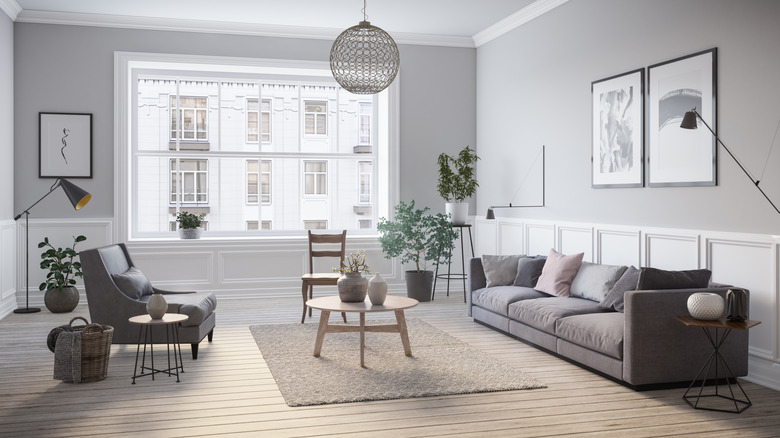
All-neutral rooms once felt like a safe, sophisticated choice, but after being the norm for too long, they can now feel boring and flat. Sometimes labeled the "sad" white, gray, or beige aesthetic, light, monotone neutral color palettes just aren't cutting it anymore for people who want character-filled spaces. These color palettes can feel restrained and one-dimensional, and since it's fairly easy to paint your home like a professional, you don't lose much by trying a new hue.
This year's trending styles involve more layering and dimension. In general, there's a lot more color in home design today compared to recent years, with designers favoring moody and jewel tones. In some ways, neutrals never go out of style, so if you really love a monochrome moment, play with variations in tone and texture. There are also neutral-adjacent colors you can try, for example, deep, rich browns are really coming around (especially with dark wood stains rising in popularity). The trend also appears in textiles and paint colors, with quite a few brownish tones in the 2026 paint colors of the year. It's not a huge departure from neutral favorites, but can add depth and richness to minimal rooms.
Sage green everything
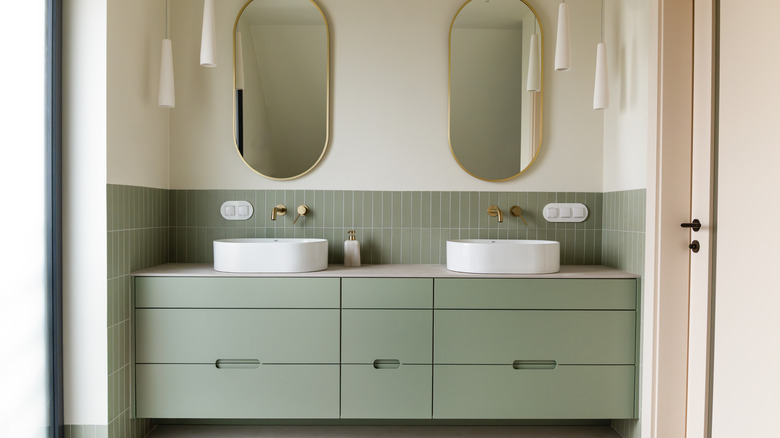
Sage green is a pretty color, but it's yet another hue that oversaturated the market. It's one recent decor trend our design historian is happy to leave behind in favor of new shades. Sage green matches the lighter tones of previous years, which is excellent for a serene, spa-like space, but doesn't suit current moodier aesthetics. Since it's calm, inoffensive, but a bit more interesting than white or beige, it became a go-to "safe" color and can now come across as unimaginative rather than thoughtful.
Greens definitely still have their place (even sage green, if used more intentionally). However, they lean darker and moodier, for example, earthy olive or moss green shades. Earthy vibrancy is the color trend you'll likely hear more of this year, referring to earthy colors that are more vibrant rather than muted. It feels like a combination of recent trends toward both earthy and jewel tones: Natural, warm, and subtle hues, with their saturation bumped up a bit, bringing them closer to the moodiness of jewel tones. Examples of earthy vibrant colors include ochre, rust, terracotta, plum, and soft blue — gorgeous alternatives if your sage green walls are starting to feel lackluster.
Scalloped decor and patterns
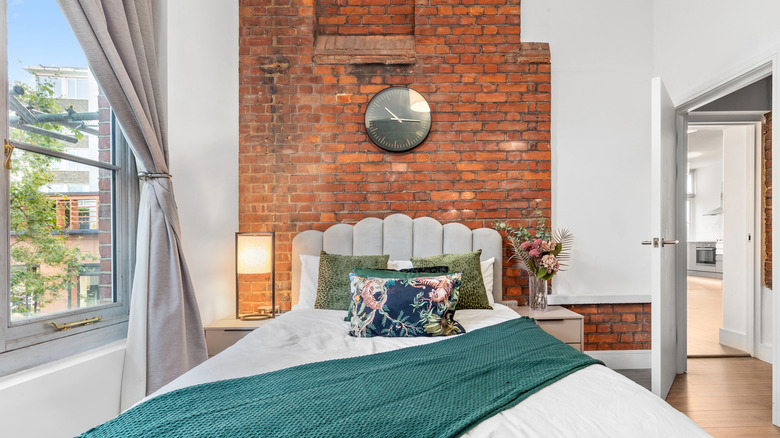
Scalloped everything was another trend that overtook the home decor market, with retailers selling all sorts of items, from scallop-edge trays to mirrors to headboards. It's fun, but it became a cute afterthought that sometimes feels like it belongs in a teenager's bedroom rather than a curated home. When this type of design element saturates the market to the point where it's available from many cheap sellers, it can feel like it's brought some shape to a room, but not much substance.
If you're yearning to incorporate some scallops into your space, and are having a pang of disappointment at the thought that they're already out (before you maybe even had a chance to channel this fun detail) take heart. There is an inherent playfulness to scalloped designs that can be timeless when styled intentionally. To get that look, choose scalloped elements that feel more deliberate and part of a theme, rather than something that looks slotted-in. For example, scallops can still work with one of Pinterest's trend predictions: The Funhaus, circus-inspired trend. The shape feels childish and whimsical, which is exactly what some people are looking for. In 2026, consider more distinctive scalloped designs, with less familiar sizes, placements, and patterns. For example, this Matilda Goad & Co. Wool Tufted Scalloped Rug can tie together a styled room, compared to having random scalloped trays or picture frames scattered around. Additionally, finding vintage items that feature scallops can make this element feel more everlasting and less "fast decor." If you're not after a whimsical look, it makes sense to skip scalloped designs altogether.
Picture-perfect gallery walls
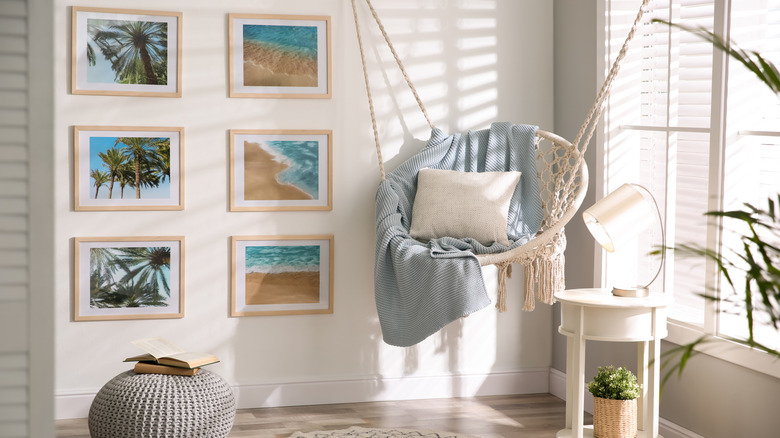
The concept of a gallery wall is timeless. However, the perfectly symmetrical, showroom-ready version is out. To suit minimalist spaces in recent years, gallery walls veered symmetrical and aligned, used matching frames, and might include themed family or vacation snapshots. Despite the personal photos, the rigidity can feel impersonal and staged. If you're going for a more serene and stark look, it still works, but if you're after coziness, try a wall with more variety.
Personal, creative, mish-mash gallery walls have already been trending, and we expect the trend to continue in 2026. These are walls that look less uniform and more organic, like they belong in a home rather than a wall in a modern art gallery. Use frames of different shapes, sizes, and styles, and art and prints instead of just family photos (but don't be shy to sneak these in too!). You can also incorporate texture — for example, throw in a small tapestry, fiber art piece, or even shelving for 3D art or decor. This type of wall also gives you more freedom to evolve over time as you collect different artworks, prints, or take new photos.
Sparsely decorated spaces
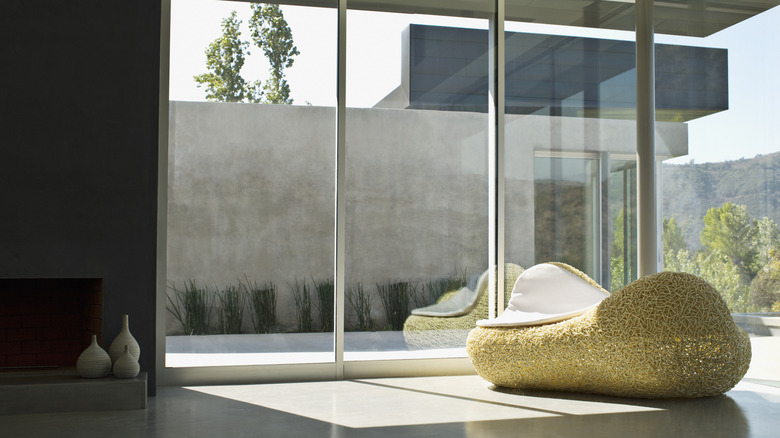
It's harder to create an individual and character-filled space without, well, stuff. There's only so much an ultra-minimalist look can communicate about your personal style. Again, this type of sparse decorating, with a curated item or two and lots of empty space, was a popular feature of 21st-century minimalism.
Decorating today is all about layers. You can choose how far you want to take it, ranging from fairly minimalist to full-on maximalist, but trends right now favor dimension: Anything but a plain decoration on a flat background. This trend can look like layering colors, patterns, and textures. It can be as simple as sticking to neutral decor, but focusing on diverse textures, or as loud as mixing busy patterns like florals and stripes, a pattern pairing trend that gives life to any room.
Cookie-cutter wall art
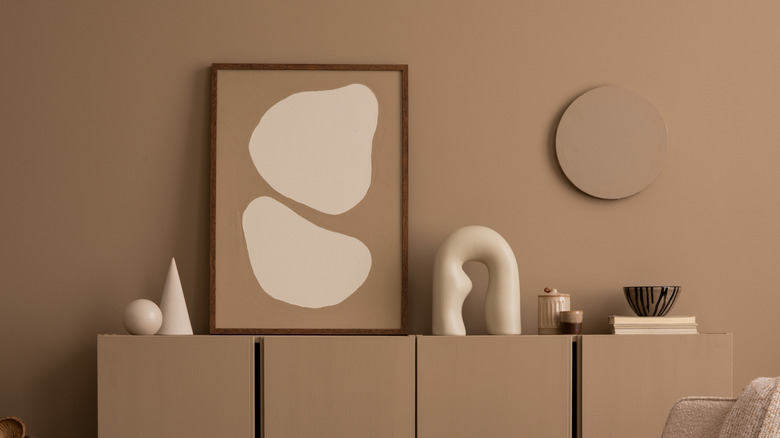
Mass-printed, underdeveloped art can lose its meaning. At some point, it felt like most spaces had the same minimalist prints or abstract artworks. Art is subjective and many enjoyed these serene pieces, but again, it ended up everywhere. It feels more commercial and less curated when a room is full of prints you might see on Target shelves or lining the walls of a corporate office. It can still be pretty, but there are alternatives that feel fresher and more elevated for 2026.
With the ongoing trend towards cozier, lived-in spaces, there's been a move back to more classical art. This coincides with a trend toward traditional furniture, which feels far homier than modern fare. Some people thrift artwork, others print famous artwork that's in the public domain, others buy from small, local artists. It's about choosing more detailed, curated pieces. You can even make your own (sans art skills), with creative ideas like framing a pretty scarf or textile piece, using peel-and-stick wallpaper to create large custom artworks, or even covering photo frames or matting in patterned fabric to customize your current framed pieces.
White oak
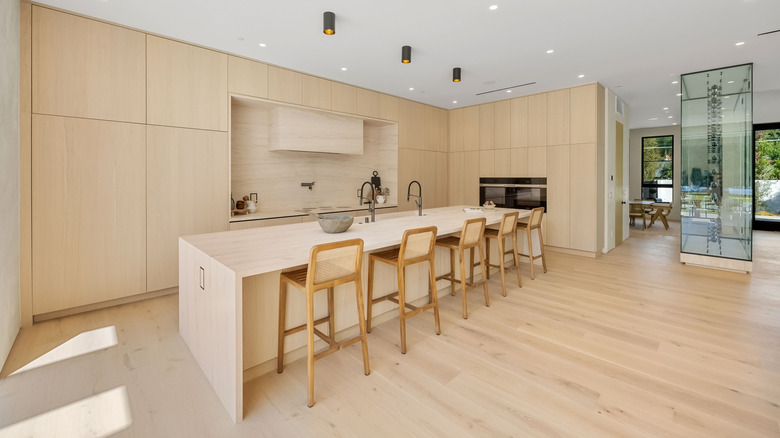
White oak was the trending wood of choice for a while. It's light enough to suit modern-minimalist spaces, but has more warmth and interest than painted white wood. It often appeared in the form of white oak flooring, furniture, and cabinets, particularly in kitchens. It's another trend we've seen everywhere, so naturally, some are ready to move on. It doesn't mean you need to renovate, since real wood is valuable and, at its heart, timeless. There are ways to add to the space too, to up trendiness without getting rid of white oak features (which are objectively beautiful).
In 2026, dark wood stains have made their way back into the spotlight. Dark shades really suit the shift toward more moody, traditional, and cozy spaces. In a new build or major renovation, you might choose darker stains if light ones feel outdated — but also try to choose materials you can paint or re-stain in the future, since wood trends always eventually shift. Smaller projects include staining or painting wood cabinet doors or furniture pieces. The low-effort and renter-friendly alternative is to just cover it up with removable products: White oak floors look great with stylish patterned rugs, and peel-and-stick products come in so many colors and patterns for covering up other pieces.
White and gray imitation Carrara marble
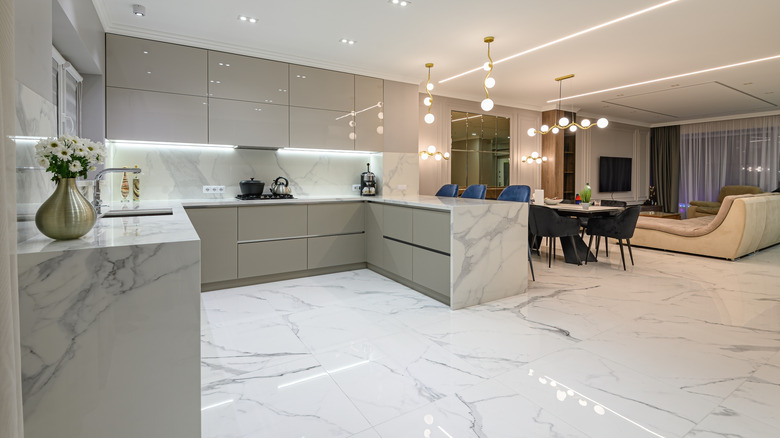
The beauty and elegance of real Carrara marble is absolutely timeless, but the synthetic stuff doesn't look nearly as nice, and now feels overdone. For the past few years, these imitation products have filled feeds and homes, tired us out of this color scheme, and cheapened the look of marble (at least, for the time being). In particular, white and gray marble really dominated, to the point where this color pairing is probably what most of us imagine if you're asked to picture marble in a home.
There are so many different marble tones, like cream and beige for a similar but warmer look, white marble with a dark grain for more contrast, and dark marbles for more drama. The real thing looks best of course, but is out of budget for many. There are better options than porcelain tiles with a printed-on pattern though. If possible, try to go for other natural stones with the look you want: For example, quartzite will look more natural than man-made alternatives.
White bouclé
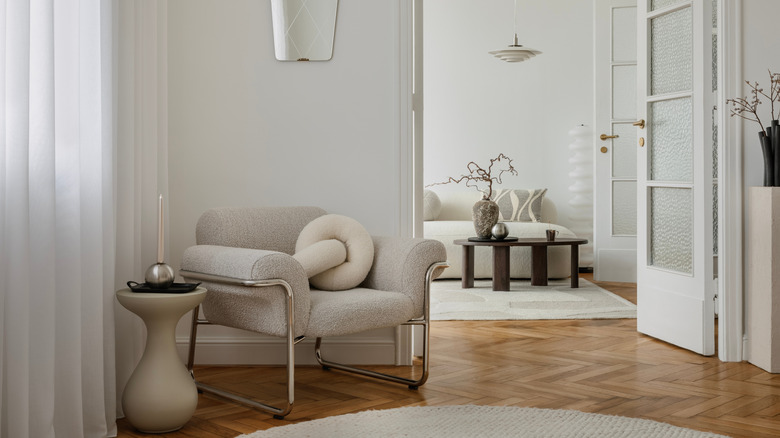
White bouclé really took over living room, bedroom, and dining room furniture and textiles. The fabric's ubiquity led to another case of oversaturation: It started as a more upscale fabric, but versions were adopted by all sorts of retailers, some of them low-quality and cheap-looking. Also, in real life, many found bouclé impractical, further solidifying it as a waning trend.
If you really love the fabric (it is a lovely, cozy texture, after all), but are looking for more visual interest, choose colorful bouclé selections. Or, look to other upholstery options that are on the rise. Instead of jumping to white, gray, and beige, choose deeper colors and patterns instead, such as pretty antique-inspired patterned pillows or even tartan upholstery.
Matte black hardware
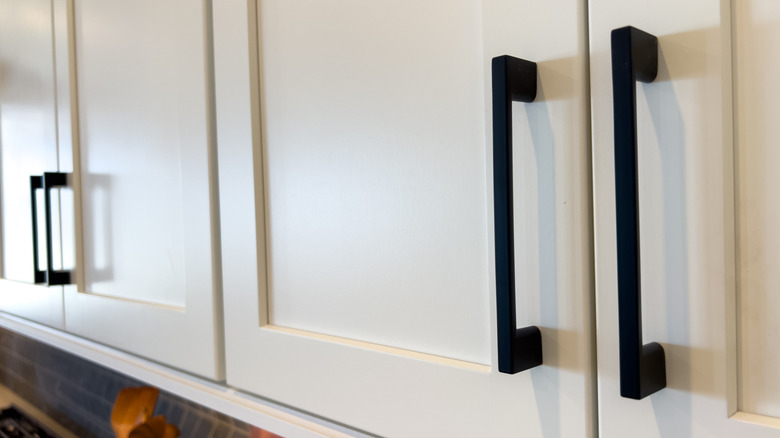
Matte black fixtures were the hardware of choice in contemporary and modern farmhouse styles of recent years. Often paired with white cabinets for a high-contrast look, it has a certain sharp and polished feel that aims at perfection rather than warmth. Again, it's a style that can still work in many homes, but has moved out of the trend spotlight this year.
Instead, 2026 trending hardware has a warmer, more natural, and more traditional finish. The end look is softer rather than bold and contrasting. Some popular finishes include brass, nickel, and pewter hardware. There's a trend towards materials that look more organic and aged, so some may opt for unlacquered options that develop a patina over time. Mixed metals are also trending, so that's another option. Brighter silvers are having a moment too, with chrome accents as an unexpected choice, predicted to be hot in 2026.
Overly open floor plans
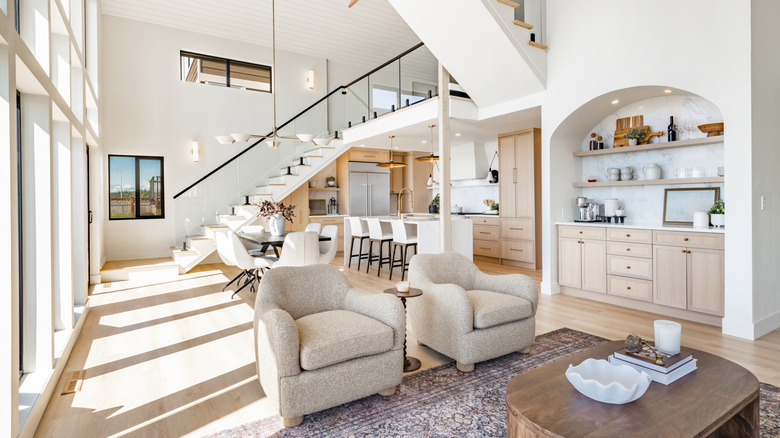
For a while, open concept floor plans were the default choice. There are benefits to these open spaces — they're airy and bright, make it easier to keep an eye on kids and pets, and are great for hosting. However, they don't feel nearly as cozy as traditional rooms and they lack privacy and separation. Some open plan spaces are here to stay in 2026, for example, between the kitchen and living room in smaller homes. However, the whole-floor, uber-modern type of open concept floor plan is fading in popularity.
Trends lean toward more defined spaces. This can look like a mix of open plan for some areas, and closed-off spaces for others, based on practicality. More traditional, completely closed-room floor plans are also an appealing option for those who want purposeful, delineated spaces. Separation can come in the form of walls and rooms, but also in the form of more dividers in an open concept space (a good option if changing the floor plan isn't an option), or opting for wider doorways between rooms to increase flow but keep a feeling of distinct spaces.
Fluted wood furniture
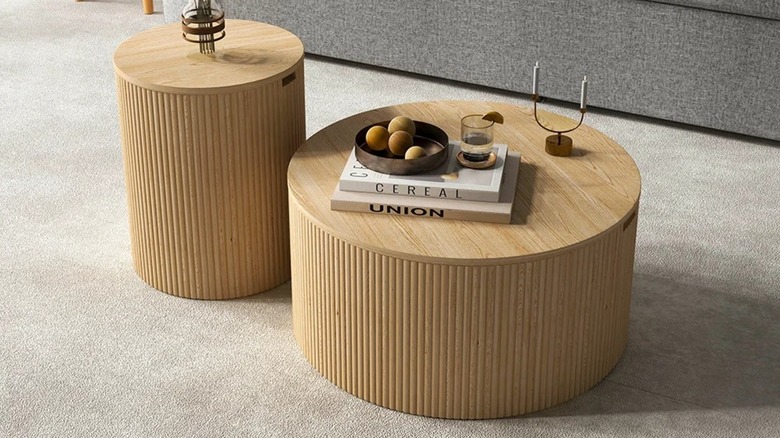
Fluted wood furniture was popping up all over the place, including from cheap furniture brands. It's an easy design addition that also made its way into DIY circles because of how simple fluted panels are to apply. However, after doing the rounds, it started feeling like a shortcut way to add quick visual interest to cheap furniture, associating the texture with mass production and lower quality.
Fluted wood also feels a bit too simplistic for the recent shift back to ornateness and detail. Instead, consider a return to craftsmanship (or at least the appearance of it). Opt for wood furniture with carved designs, inlays, and other heritage-inspired and traditional details to stay on trend in 2026.
Subway tiles
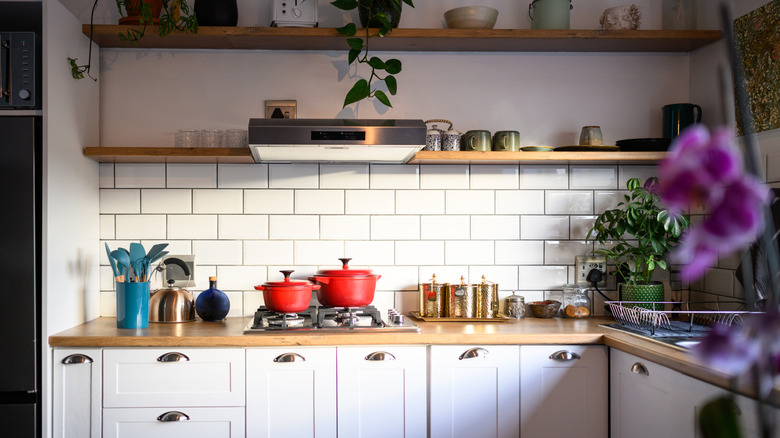
The general uninspired feeling toward subway tiles is a great example of trend fatigue in home design. This tile pattern completely took over social media feeds, and then proliferated in builder-grade homes and quick DIY flips. The tiles themselves are far from unappealing: The simple design is a great backdrop. However, now they can feel generic and unoriginal because of overuse.
Choosing distinctive, colorful subway tiles is one way to bring them back into trendier territory, though it seems the design-forward are choosing other tile options completely. A variety of tile types, with warm and homey colors, distinctive patterns, textures, and variation in size add visual design. Instead of serving as a simple backdrop, 2026 tile choices focus on options that make a space feel more bespoke and creative, such retro leaning and handmade styles.
Picture-perfect symmetrical spaces
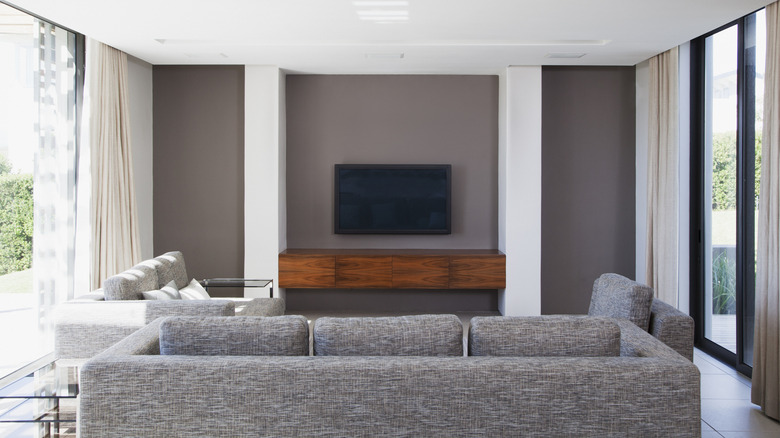
Maybe it's due to social media fatigue or the rise of AI images are playing a part, but it seems people are seeking reality and relatability nowadays. Gone are the days when the pinnacle of design is a room that looks more like a photoshoot set than a home — it's nice for interiors to look put-together, but people don't want to live in a home that's solely curated for Instagram. Nor do they want to live in a space that feels like a computer rendering.
With aesthetics like wabi-sabi having a turn in the spotlight and a resurging appreciation for craftsmanship, 2026 will likely continue embracing imperfections. Practicality and personalization is more "in" than perfection. Asymmetry won't come across as messy, but interesting and distinct compared to the repetitive look of symmetrical, matchy-matchy spaces.
Only recessed lighting
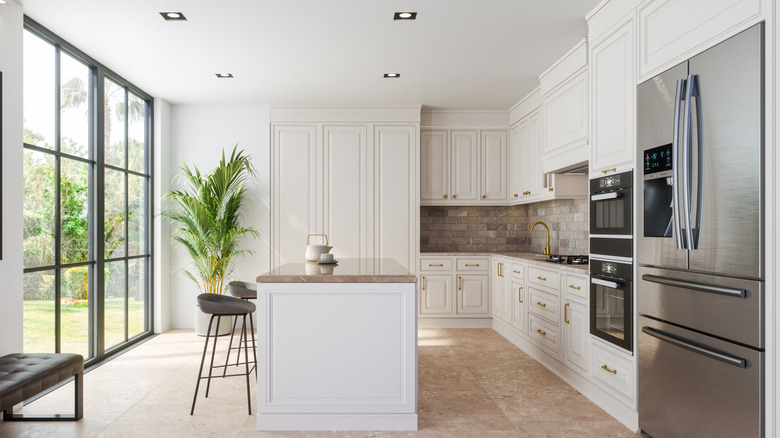
Recessed lighting has its place because it's so practical, especially for task lighting in the kitchen. However, it was in most new builds from the last decade, so it feels overdone. The simplicity of recessed lighting lacks character, and more suits minimalist spaces with its barely-there design. It doesn't bring much to a space stylistically and can make the ceiling feel flat and lacking in dimension.
You don't need to do away with recessed lighting altogether: Many homes now combine it with other lighting types, for example, with recessed lighting over kitchen counters and pendants or a chandelier over the island. Augmenting with creative, sculptural lighting can bring more design and customization to a space. For low-profile options, spotlights can offer just a bit more design than pot lights. For a statement-making effect, consider installing large chandeliers (that are work of art within themselves) or large, unique pendants.