

How To Turn Old Plates Into An Adorable Bird Feeder
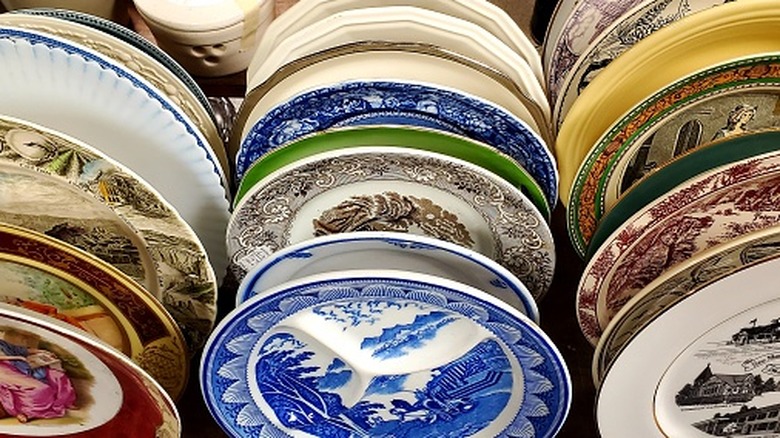
Walk into any second hand store, and you'll find plenty of plates. Dishware pieces are some of the most common items you'll find at thrift stores, and you can usually pick them up for just a few bucks a piece. A larger or same-sized plate inverted over another one, held in place with the right hardware, can become a budget-friendly bird feeder that's charming, too.
With wide, flat surfaces and slightly raised edges, two plates can team up for a spot that's easy for birds to perch on, eat from, and even take a bit of shelter from the weather. Scan the Goodwill shelves for a couple of plain plates or cute ones with matching, complementary, or pleasantly contrasting patterns. A bowl or two will work, especially if one is a broad, shallow one.
To hang this budget-friendly DIY feeder, purchase a threaded rod and a chain or heavy wire. Also buy the following hardware to fit on the threaded rod: four washers, one cap nut, one flange, and one eye nut. Lastly, grab your drill and a diamond drill bit or a tile and glass bit that's just slightly wider than your threaded rod to make holes in the plates. To drill into the plates, gather up a towel, a spray bottle filled with water, and some masking tape.
How to turn plates into a birdfeeder
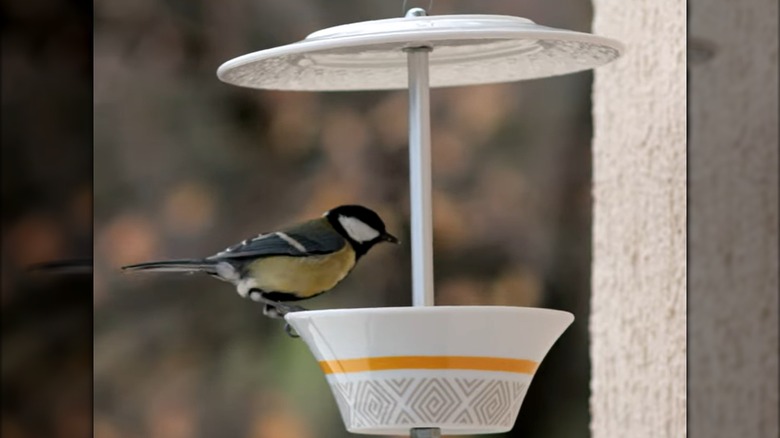
Fold the towel several times to make a cushy pad, and place the plate upside down on it. Mark the center of the plate with tape, spray your target spot with water, and very slowly begin drilling. Don't add extra pressure on the drill; instead, just let the bit and the weight of the drill do the work. Take breaks to cool the bit, and re-spray the spot when you continue drilling. Repeat this process until the hole is finished in both plates.
Turn the bottom plate face-up, and insert the rod through the hole, leaving about 1 inch extending below the plate. Place a washer over this end of the rod, and secure the cap nut over the rod to hold the bottom plate in place. Slide another washer over the rod that will rest against the face of the plate and protect the hole. Next, on the top end of the rod (where the top plate will sit face-down), screw the flange nut, flange side up, about 1 inch down, and place a washer over it, followed by the plate. Fit a washer and the eye nut over the rod's end.
Attach your wire or chain to the eye nut, and hang your feeder in a spot that will keep feathered friends safe. Choose one that isn't too windy or close to a window, and that isn't too close to hard objects that the feeder might hit and break against in a breeze. Fill the bottom plate with seeds, and watch the birds feast.