

Are Monobloom Arrangements Taking Over Floral Design In 2026? We Asked A Florist
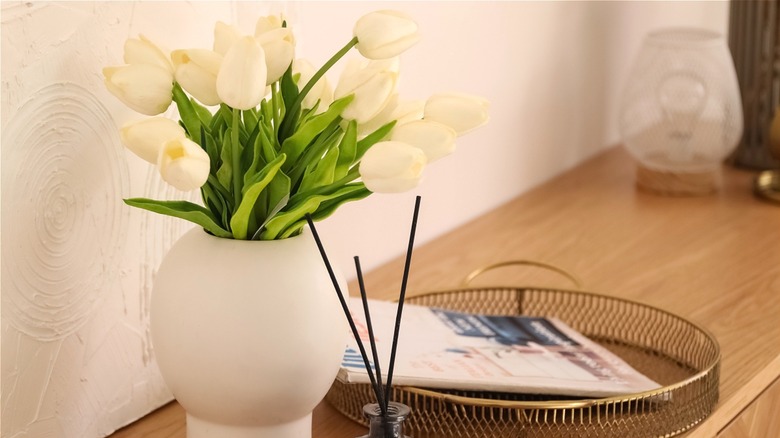
While most bouquets incorporate a balance of blooms, monobloom arrangements seek to keep things simple and modern by sticking to one flower type, often in a monochrome color palette too. For example, a bundle of sunny yellow tulips, elegant gathered orchids, or clean chamomile — not all three. But when carefully selected collections have been the go-to for so long, is this floral trend actually set to take over? To help us understand the truth, we spoke to Spencer Falls, also known as The Unlikely Florist. During his exclusive interview with House Digest, he said, "In my opinion, monobloom arrangements are not trending. People are loving a variation of color, texture, and fragrance. This is best achieved by a multitude of stems."
There you have it; the matchy-matchy botanicals may be having a minor moment, but they're not set to overtake the true art of curated arrangements. Falls, who often curates florals for weddings, art installations, and other special events, elaborated, "When using different flowers, you can create depth and dimension in a way that's just not possible with a monobloom arrangement." Instead, he recommends choosing a thoughtful mix of flowers, either through a florist or at a local market. To aid in this, Falls also offers some advice for choosing florals that suit the space, honor practical needs, and feel freshly on-trend.
Mixed arrangements are still leading over the monobloom trend
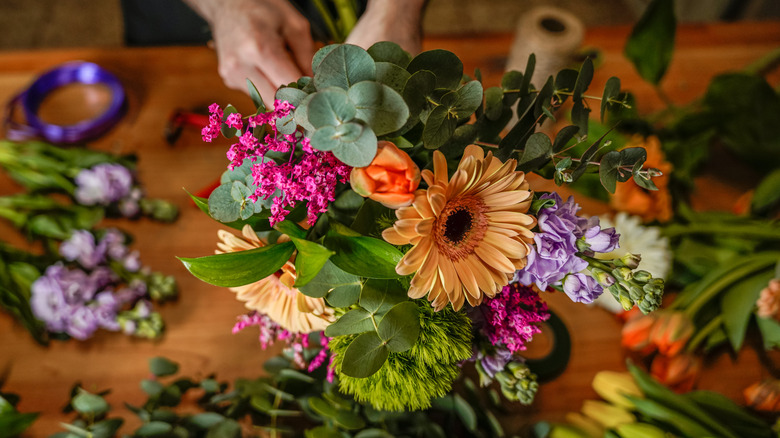
Sometimes mixing flower varieties serves a practical purpose too, providing both visual and physical weight. "My clients have been wanting long stems that reach high in their rooms and still hold the weight in the bottom," Spencer Falls explained in his exclusive interview with House Digest. In one instance, Falls blended together an assortment of snapdragons and hydrangeas in order to satisfy his client's dynamic vision. "It worked because of the different shapes of the flowers. Hydrangeas are large and low while snapdragons are tall and slender." Falls also notes that generous green foliage helps anchor arrangements, saying, "It can create a great bed for all your flowers to be seen."
Of course, one of the caveats of using a mixed floral arrangement is that some blooms may wilt sooner than others. Short-lived varieties like tulips or daylilies may not be cut out for this type of design, unless you're comfortable with daily preening. "My recommendation is always to use hearty, drought-tolerant flowers like protea and wax flower," Falls says, "That way they'll last longest in the vase and be enjoyed by your family longer!" In addition to choosing low-maintenance blooms, make sure you're putting your cut flowers in the right spot. A cool and smoke-free environment will help them stay perky.
Consider the surroundings in your floral composition
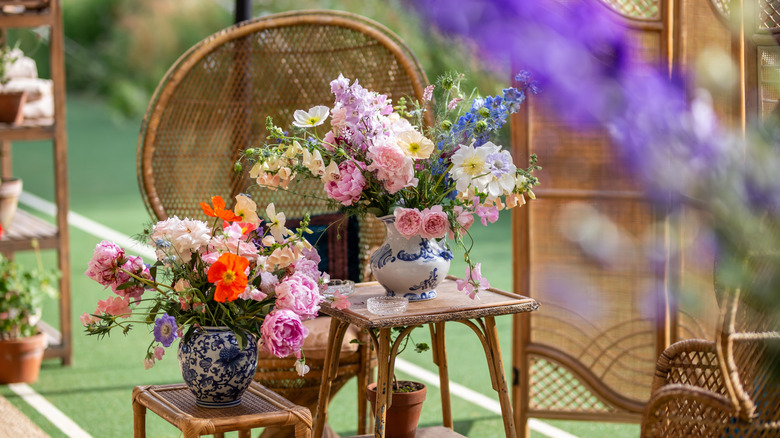
Luckily, you don't have to be an expert at blending florals to master the eclectic floral arrangement trend. In his exclusive interview with House Digest, Spencer Falls gave some key advice to follow before you grab your garden shears or phone your florist. He says, "Knowing where you are going to put the arrangement before you arrange it is always a great idea. That way you know the best composition." Think about the surrounding colors, textures, and furniture shapes in the room and allow them to inspire your mix-and-match floral selection. The height of the room could also influence the height of your display — tall ceilings call for tall spires to draw the eye upward. The energy and activity in the room is another factor. A busy living room will suit bright, sturdy blooms like sunflowers, while a relaxing bathroom may need something more soft and subtle, like baby's breath.
Considering the room a bouquet will fill is one of the most helpful rules to follow for a stunning flower arrangement every time, whether you're picking out a gift for a loved one or adding a touch of freshness to your own home decor. As for which bloom colors, in particular, are the most trendy right now, Falls notes, "It always depends on the occasion and location. Sometimes it's vibrant greens, blues, oranges, reds, and yellows. Other times it's muted blushes, soft blues, and pastels."