

Naturally Keep Ticks Away From Your Home By Growing This Lush Herb
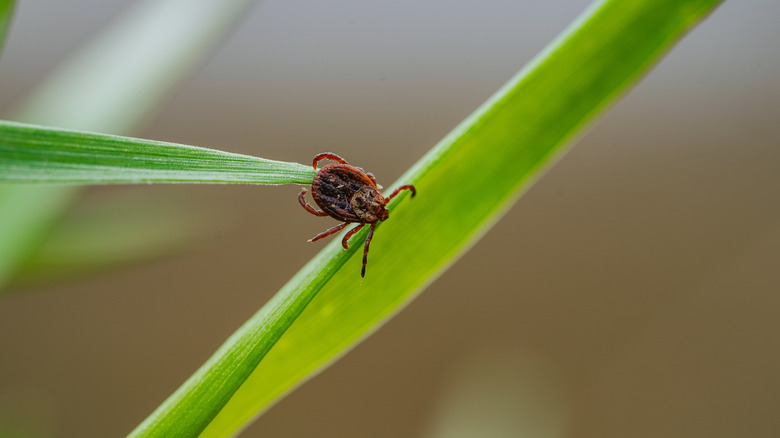
No gardener wants to see a tick on their leg or arm. It's a terrible sight! Ticks spread diseases when they use their mouthparts to pierce you and suck your blood, so you'd probably rather see dead seedlings and mushy tomatoes than a tick on your skin. Instead of risking exposure, keep ticks out of the yard with plants that repel them, like wormwood (Artemisia spp.). This plant group contains around 300 species of perennials and annuals with aromatic, silver-green leaves. Wormwoods also send wasps buzzing away from your yard for dual-purpose pest control. Their aroma keeps pests away naturally, allowing you to enjoy the garden without harmful chemicals or sprays.
For expert tick control near your home, consider planting wormwood in your beds, borders, and containers. Gardeners in tick-prone regions should especially consider the benefits of adding these plants to empty sites. Choose your favorite from a wealth of options, then plant the wormwood wherever you frequent in the garden. Combine wormwood's repellent properties with anti-tick strategies, like wearing pants and long sleeves, and you'll have a complete regimen for avoiding encounters with these pesky pests. And don't forget to avoid tall grass! Ticks commonly frequent brushy, grassy sites.
Repel ticks with the best wormwoods for the job
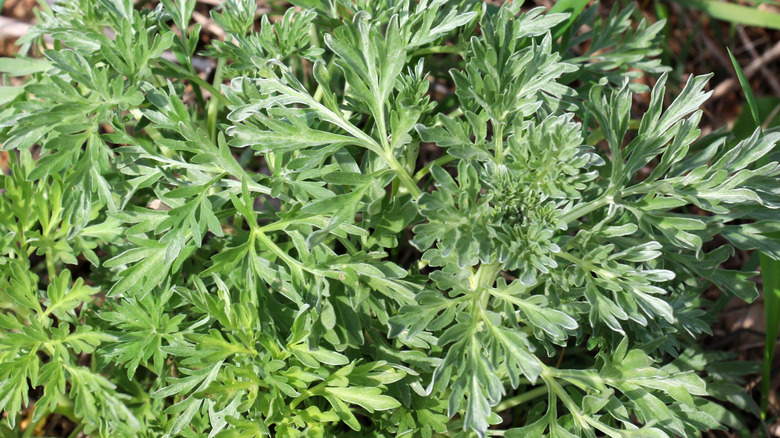
Not all wormwood species grow the same, and the right one for you depends on where you live. Most wormwood plants are known to repel insects and arachnids, though some have verified results. For expert tick control, studies show that absinthe (Artemisia absinthium), sweet Annie (A. annua), and Judean wormwood (A. judaica) work well. Sweet Annie is an annual, whereas absinthe and Judean wormwood are perennials. You'll need to sow sweet Annie seeds and let the plants resow themselves to encourage a sizable population. Absinthe thrives perennially in USDA growing zones 3 through 9, while Judean wormwood excels in zones 6 through 9.
All these wormwoods need excellent drainage. Amend soggy sites with compost ahead of planting, or grow the plants in containers with quick-draining soil. Containers are superb because they let you move the plants where you need them most. Say you want to make your patio the ultimate outdoor entertaining destination and need to keep the ticks away naturally—simply move the plant-filled pots near your patio table! Wormwoods also need full sun or partial shade to excel, with at least three hours of daily direct sunlight.
What to do if wormwood is invasive in your region
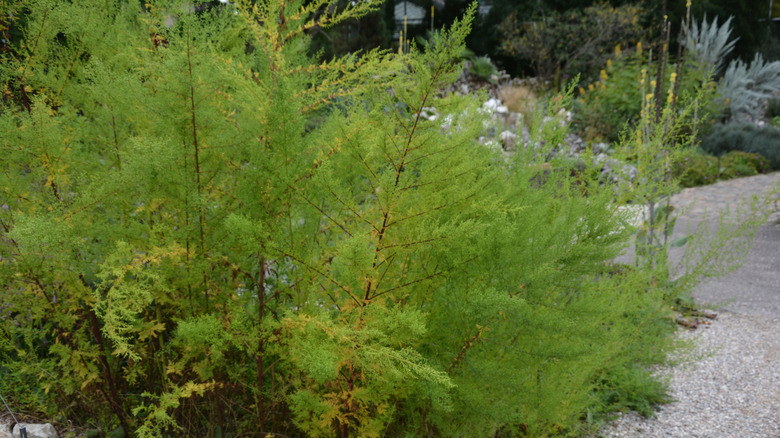
It's important to note that sweet Annie, or annual wormwood, is invasive in parts of the eastern U.S., such as in West Virginia and New Jersey, and absinthe is even more invasive, particularly in northern states like Oregon, Washington, the Dakotas, Colorado, and Wisconsin. The two species spread into wild areas, where their seeds and roots establish stands that push out native vegetation. Consider experimenting with other wormwoods to naturally repel ticks without harming your local ecosystems. But be warned, despite being one of the types of weeds that are actually good to grow, you should also avoid planting mugwort (A. vulgaris) in New Jersey, Connecticut, Georgia, Indiana, Kentucky, Maine, Maryland, New York, Virginia, and Pennsylvania, where it's invasive, too.
One non-invasive species that also repels rabbits and deer is tarragon (A. dracunculus). It's a classic French herb that critters dislike for its strong smell. The more aromatic the wormwood is, the better off you'll be, since ticks dislike intense aromas. The plant dusty miller (A. stelleriana) is another option, native to parts of Alaska, Asia, and Canada, although it is considered invasive in New Jersey. Nurseries often carry it, as it features fuzzy silver leaves and sunshine-yellow blooms.
You could also plant cultivated hybrids that perform well in garden settings. 'Powis Castle' is exquisite in the yard, as it forms mounds of feathery gray foliage that are ornamental and aromatic. 'Silver Mound' has similar features but on a shorter structure. It'll stay under 1 foot tall, whereas 'Powis Castle' may reach over 2 to 3 feet.