

Kitchen Soffits: 8 Smart Ways To Hide The Eyesore
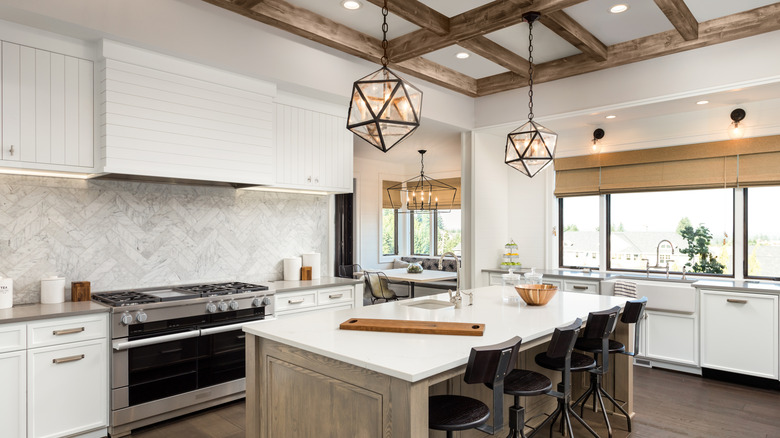
While many people think kitchen soffits are awkward and annoying, they often serve a purpose. Because they eliminate the hard-to-reach space above cabinets that's difficult to keep clean, kitchen soffits were popular during the 1960s to 1980s, which is when most houses had shorter ceilings and standard cabinets. But today, many designers say that soffits are one of the worst kitchen trends of all time.
Unfortunately, whether they are part of an architectural design or a way to hide mechanical systems, soffits are often built-in features that can be costly to remove. If you're looking for ways to hide this eyesore, we found 8 kitchen soffit ideas that have been tried by homeowners with surprisingly good results. These smart ideas include everything from simple paint makeovers to adding trim or wood beams.
Modern homes with tall ceilings avoid that challenging space above the cabinets by stacking them all the way to the top. With more room and more cabinet heights available today, sleek minimalist designs can avoid the bulkhead, another term for kitchen soffits. Bulkhead is an apt description for something that sticks out and takes up storage space, which is the most common complaint people have, especially when they live in a small home. While these decorating ideas won't solve that problem, they do offer some of the best solutions for working with all different types of kitchen soffits when they are too expensive to remove.
Trim and paint to match the cabinets
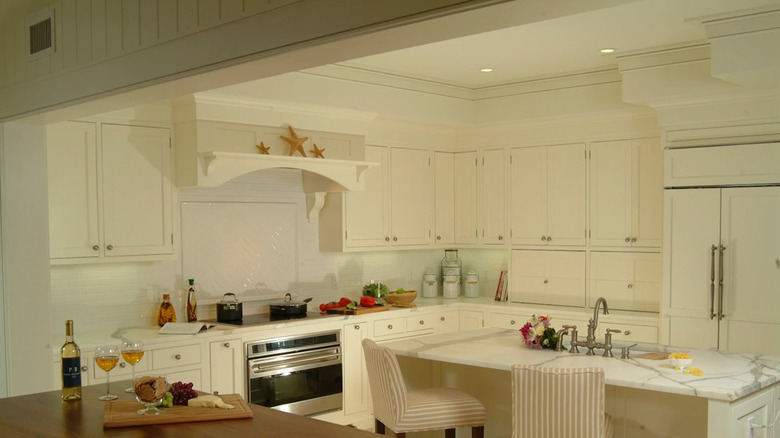
When you choose to paint the kitchen soffit and the upper cabinets the same color, it creates an optical illusion that minimizes the awkwardness of this design. For example, using a lighter color for both the upper cabinets and soffit can brighten the kitchen and make the space feel taller, even when short walls are a problem. When you use this idea with the right combination of trim, it helps the soffits blend in, and gives the room a more open, cohesive look.
Cornices and crown molding can provide a high-end aesthetic
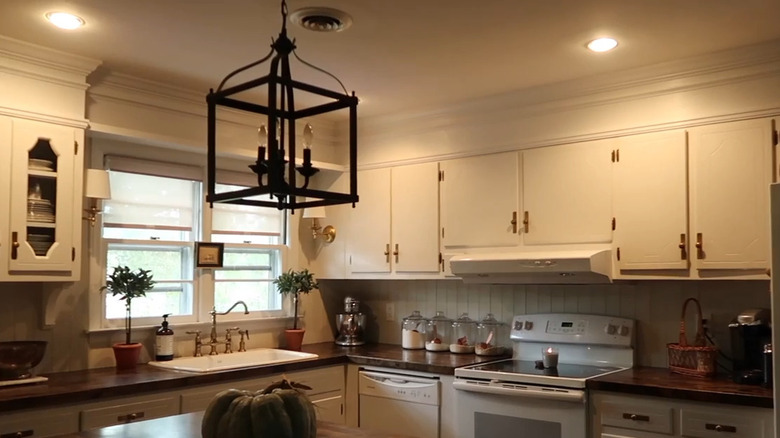
Many soffits were installed to cover the gap above kitchen cabinets, but if someone boxed in the space above the cabinets without adding any trim, it can look boring and plain. As we saw, adding a little paint and trim can do wonders, but if you take it up a notch and use cornices and crown molding, you can achieve a high-end look. This is a challenging DIY project, but if you have the right skills, it's something anyone can do. When done right, it can look as though the soffits are part of the cabinetry.
Dark contrasting molding can create a custom look
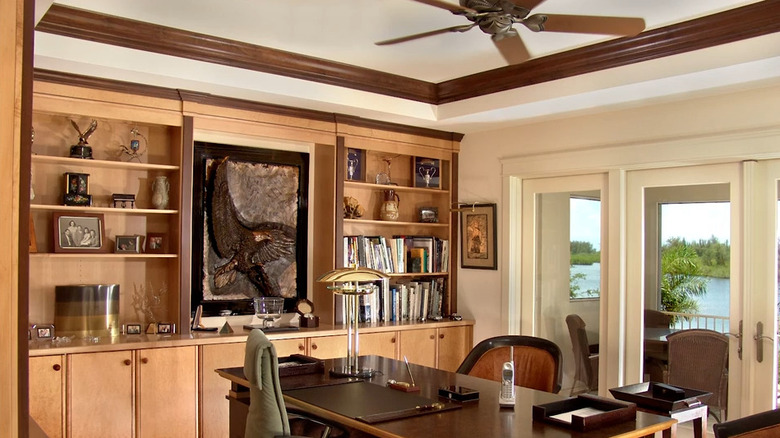
Your kitchen soffit might not be a beautiful architectural design, but we've already seen that it can be transformed into a custom built-in look with the addition of some trim and molding. Take that idea one step further and show off your soffit details by using dark, contrasting molding. After all, if you're confident in your design, you may want to draw attention to it.
Extend the bulkhead around the room to add interest
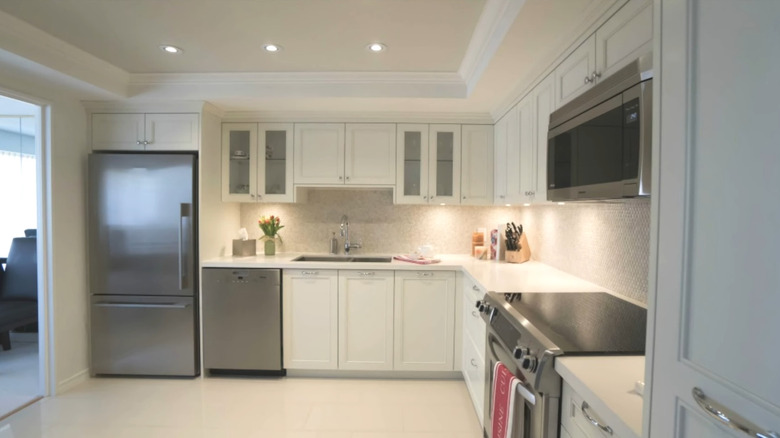
Extending the bulkhead around the entire room is an effective solution for hiding the eyesore of a kitchen soffit, but it's not quite as DIY-friendly as many others on this list. However, it's an extremely effective choice if you can't remove your soffit, especially if you use cornices and crown molding for the details. It creates the effect of a raised ceiling, turning your kitchen soffit into an interesting architectural detail rather than an annoying and awkward feature. For this design alternative, you can use a wide range of finishes to match your kitchen aesthetic and fit your unique style.
Extend the bulkhead into the room for a modern look
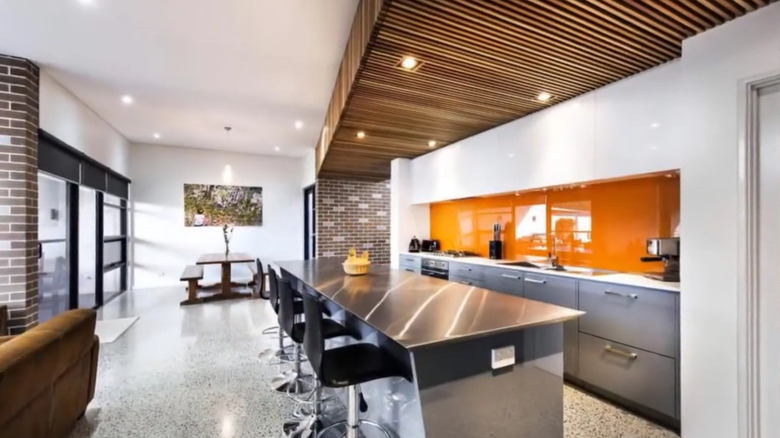
If you extend a kitchen soffit farther into the room, you can effectively create a dropped ceiling plane, turning your awkward soffit into a unique ceiling design choice. Rather than hiding the soffit, this brings it out into the open and draws attention to it. When you use highly decorative finishes such as unique wood textures or bold paint colors, the effects can be dramatic and stunning. However, this may be hard to accomplish if you already have short ceilings, but it's an idea worth considering even if you only use a few inches to create an interesting design.
A wood beam aesthetic can work wonders
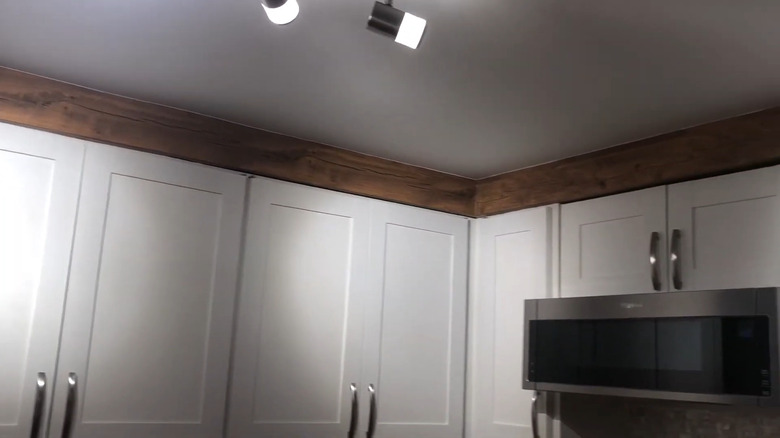
If you want to camouflage your kitchen soffits using a wood beam aesthetic, you can use wood beams to completely change how they look. Using wallpaper, contact paper, or real lumber, you can turn the soffits themselves into faux wood beams. Another idea is to add wood beams across your ceiling that butt up to your soffit, creating the illusion that it has a purpose. This adds character to your design, giving your home a rustic look that works with a variety of aesthetics, including farmhouse, boho, modern cottage, and coastal beach styles.
Adding lights can draw attention away from soffits
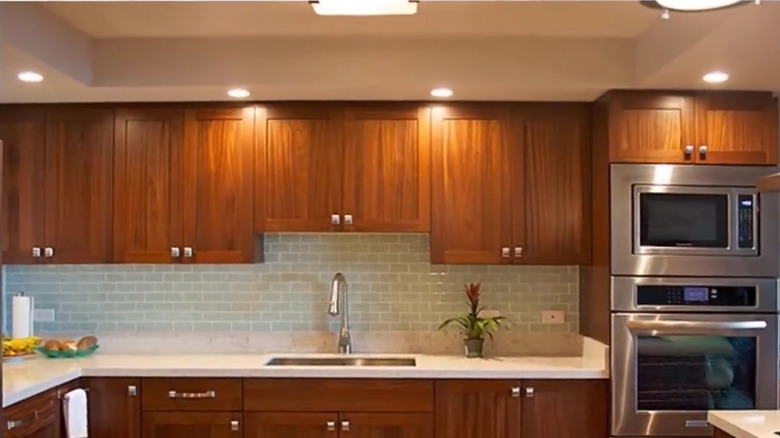
Although this isn't an ideal solution, it will change the look of your kitchen and it's something to consider. Whether you can add recessed can lights or wall sconces to your kitchen soffit will depend on the size and shape. Both can be used to highlight other parts of the kitchen to draw the eye away from the soffit and put the focus on cabinetry, ranges, and other features. While this idea might not be enough on its own to hide the ugly eyesore of a kitchen soffit, it could be more effective when combined with other ideas.
Beadboard can transform the look of your kitchen
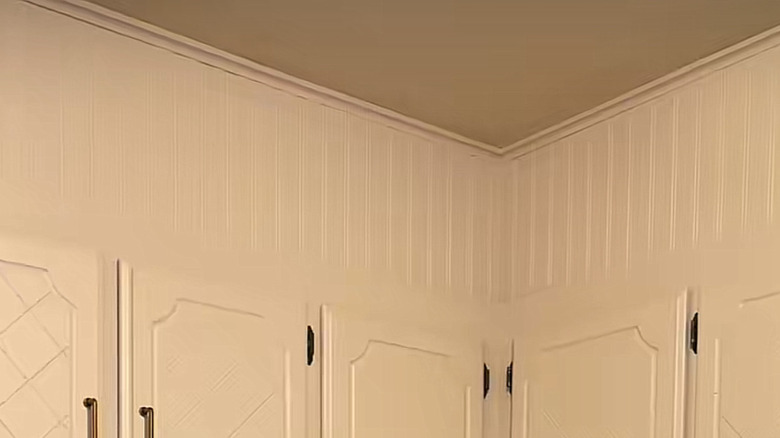
Beadboard is a classy wall option for clean lines in your home, and it's one of the best solutions we've seen for hiding the eyesore of a kitchen soffit. Beadboard comes in 4x8 sheets, giving you a little more flexibility when it comes to covering different sized areas. Adding beadboard to your kitchen soffit using a little bit of trim, caulk, and paint can help you transform your kitchen from boring to amazing. Beadboard can be used with a wide range of styles, and there are many types to choose from to help you find exactly the right look.