

Food Storage Containers That Should Never Go In The Microwave
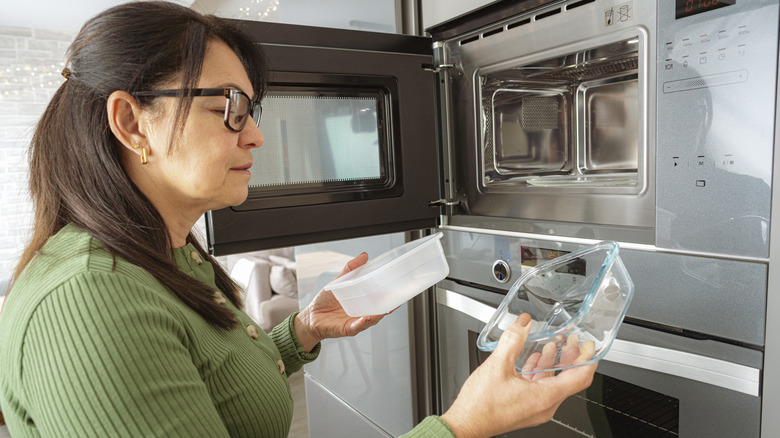
Alongside cars, elevators, and antibiotics, it's hard for many folks to imagine their daily lives without the convenient luxury of a microwave oven. Although a microwave is marvelous for melting, thawing, heating, and reheating food in minutes, it isn't a perfect appliance, and there are still some container types that shouldn't be microwaved. After a long day, the urge to pop a takeout container in the microwave might override your concern for its material, but the wrong choice can affect your food's safety, make a mess, damage the microwave, or even start a fire. A few materials you should basically never microwave include Styrofoam, foil and other metals, and certain plastic food containers. If they aren't obvious, sometimes these materials can still sneak into your microwave through paper coatings, metal handles, or embossed foil logos.
Most other reusable food storage container materials, like glass and ceramic, are safe to microwave, but these can vary too, especially if you're using handmade pottery or vintage containers — there is a difference between PYREX and pyrex labels on cookware. If your container has a microwave-safe stamp on the bottom, it will probably hold up just fine. Even so, some microwave-safe materials should still be used cautiously, particularly when health concerns are involved.
Microwaving plastics and Styrofoam can present a health risk
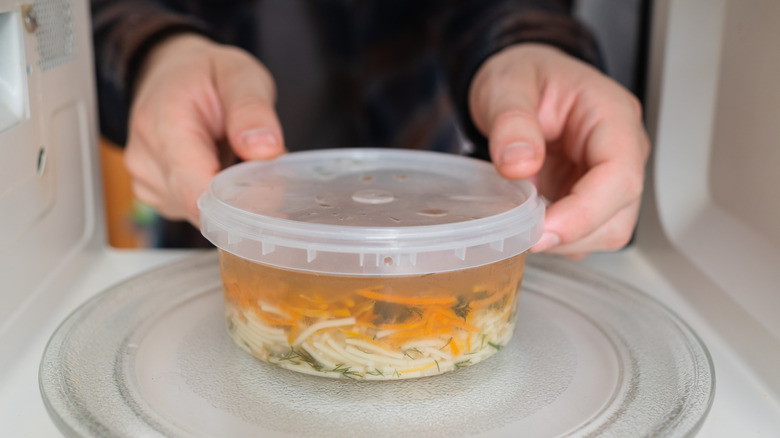
Heating plastic food storage containers can release microplastics, BPA, and phthalates into food. "The presence of microplastics in the human body has raised concern about their potential to cause unwanted human health effects, including inflammation, cancer, and reproductive harm," says toxicologist Dr. Kelly Johnson-Arbor (via Prevention). The risk of leaching chemicals is even greater for foods with high fat content — like last night's leftover queso or greasy fried rice. The same logic applies to paper or cardboard containers with a plastic or wax coating.
Styrofoam, also known as polystyrene, is another material that should almost never be microwaved. This might come as a surprise, since many quick heat-and-eat foods like instant ramen come in Styrofoam cups. Heating Styrofoam containers in the microwave can cause them to leach plastics into your food and expose you to cancer-causing chemicals. Health risks aside, Styrofoam can also warp or split and make a mess in your microwave.
What about plastic containers that are intended for meal prepping and food storage, like Tupperware or Rubbermaid products? Some types of plastic, like polypropylene (PP) and polyethylene (PE), are considered microwave safe because they can withstand higher temperatures without being compromised. These containers typically include a microwave-safe label on the bottom. But the potential for microplastic contamination from these reusable containers is still under scrutiny. A study published in Environmental Science and Technology found that microwaving some containers for just three minutes could release over 4 million microplastics and over 2 billion nanoplastic particles per square centimeter of plastic. When in doubt, leave plastic out.
Metal and paper-based materials may damage your microwave
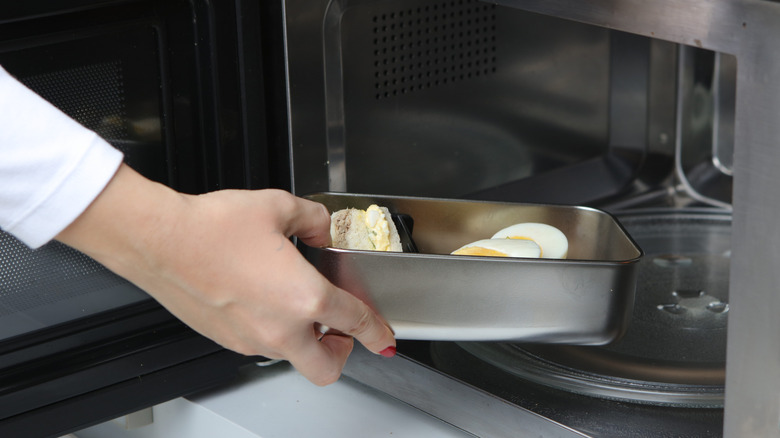
Metal food storage containers like those made with aluminum foil should never be microwaved, and you should also keep an eye out for sneaky metal parts like lids, handles, rims, clips, and utensils. Most people learn at a young age not to microwave metals, but it's fair to wonder what happens when you put tin foil in the microwave. Instead of absorbing heat, metals will actually bounce the microwaves back around the inside of the appliance, which can damage the microwave or cause it to overheat. Some metals will also produce sparks, a reaction known as arcing. These electrical zaps may leave discolored marks on your microwave walls or damage the internal components that allow it to generate waves properly.
Metals aren't the only items you should think twice about before putting in the microwave. Some seemingly innocuous materials like cardboard, parchment paper, or paper towels can be risky too. Dry, hot paper products are perfect tinder for a fire, which can be ignited by metal arcing or contact with overheated high-fat or high-sugar foods. Uncoated paper bowls and similar containers are usually okay for brief reheats in the microwave. However, you should be cautious not to overheat these. Some cardboard clamshell to-go boxes are also too big to completely turn around on the rotating microwave dish, so the uneven heating could raise your fire risk more. To reduce the chances of your paper containers catching fire, it's best to heat the food in short intervals, use a low-power microwave setting, or transfer it to a microwave-safe container.