

Forget Granite - This Chic And Durable Countertop Material Is Taking Over Kitchens
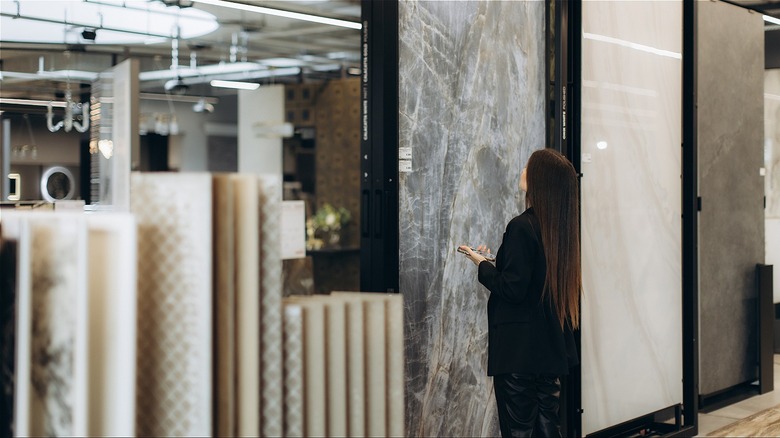
Natural stone countertops are undeniably beautiful, but there are plenty of downsides to granite countertops you'll wish you knew before installing. Granite in particular is often favored thanks to its high level of durability, low chance for scratching, and low maintenance requirements. But granite being such a popular pick means that it won't make all that much of an impact in your space, especially if you stick with non-exotic options that are more accessible to buyers. Despite its popularity, granite can also get pretty expensive — you can expect to pay around $35 to $55 per square foot, meaning that it can easily cost upward of $3,000 to outfit an entire kitchen.
If you're looking for a more stylish alternative that might also save you some money, consider a countertop material that's just starting to take off as a trend: bluestone. Bluestone is a type of sandstone or limestone that, as the name suggests, often has a natural blue-gray tint due to the large amount of feldspar it naturally contains. Amidst the wide array of browns, beiges, and creams you typically see when shopping for slabs, a material like this is sure to stand out, making it perfect if you're going for a cool tone or a moody look for your kitchen theme.
The pros and cons of bluestone
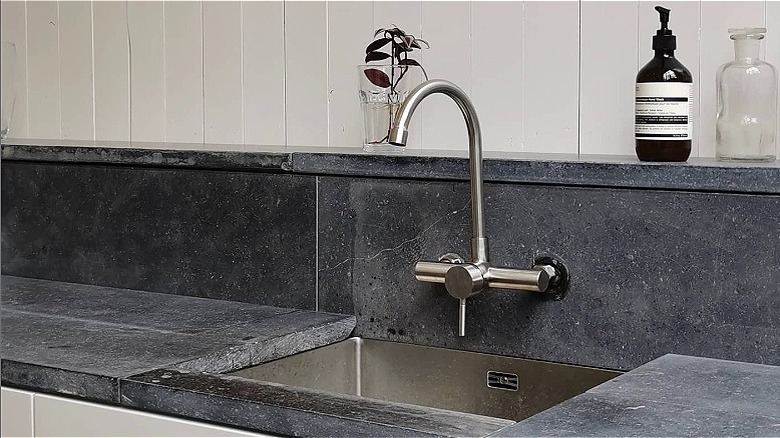
Before you decide whether or not this lesser-known countertop material is for you, it's necessary to weigh some pros and cons, as well as learn more about the stone itself. There are two primary varieties of bluestone you can choose from: bluestone from the Northeast U.S., most commonly quarried in locations like Pennsylvania, New York, and Virginia, and Belgian bluestone. The former is mostly sandstone, meaning it has a more textured, rustic look, while Belgian bluestone is limestone, giving it more of a refined, smooth edge. As a result, American bluestone is a popular pick for outdoor applications, but it's not unheard of to use it as an indoor countertop material. U.S. quarried bluestone is significantly more affordable for American builders and designers, especially if you live in this region of the country. In contrast, the general rarity and cost of importing Belgian bluestone might turn off some potential buyers.
Whichever variety you choose, bluestone is a natural stone. While this sounds like a pure positive at first glance, and natural stone in general often provides a unique look that you won't get with manufactured options, these materials do require some extra TLC. Bluestone is naturally porous, so it's susceptible to staining and etching. This means that it's necessary to be very careful with your cleaning routine and ensure the material stays well sealed — if you don't stay on top of this, a kitchen mess as common as spilled wine or a splatter of tomato juice could wreak havoc on your countertops.