

The Valuable Pottery Brand You Should Be Looking For At The Thrift Store

Hunting through thrift stores for interesting trinkets and beautiful finds is a fun way to spend a weekend. However, sometimes, we may come across a piece that is admired for more than just its beauty. Sometimes, the things we find in thrift stores hold stories within them, making them not just valuable in terms of money, but also rich in history. A rare and valuable vintage pottery brand that you should always keep your eyes out for at your local thrift store is Marblehead.
At the heart of the Arts and Crafts movement, which occurred at the turn of the 20th Century, Marblehead pottery reflects a time when handmade was valued, and beauty was for everyone. Like other pottery companies of the time, Marblehead has a very interesting story behind it. It was founded by Dr. Herbert Hall as part of a therapy workshop for women who lived in a sanatorium. After the doctor hired the chemist and potter Arthur E. Baggs, the company soon grew, with other potters, designers, and decorators joining Baggs to create the body of work that the company is now famous for.
As a prominent Arts and Crafts pottery company, handcrafted pieces by Marblehead are extremely sought-after and can be worth a lot. Some pieces can be seen in museums and exhibitions across the country, with a vase on display at The Metropolitan Museum of Art in New York. If you find one of these in a thrift store, it may be time to celebrate. Undecorated pieces can fetch a few hundred dollars, but decorated designs can be worth thousands.
How to spot Marblehead pottery
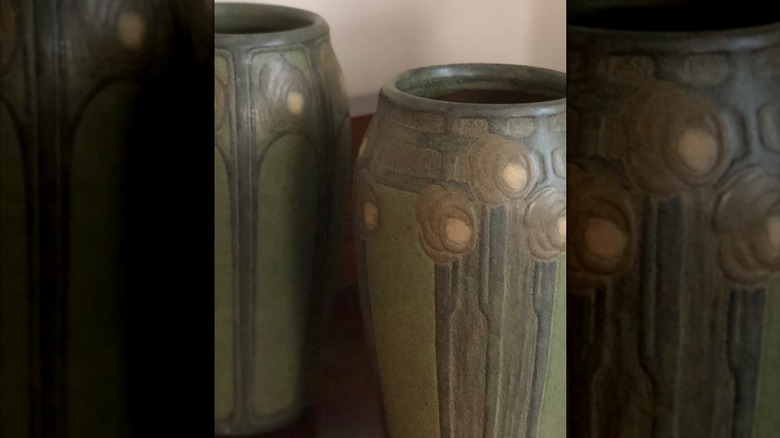
To identify authentic vintage pottery at the thrift store, it is super important to know what you are looking for. The majority of Marblehead pieces are vases and bowls in relaxing, natural hues of brown, gray, green, yellow, and blue. They have a soft matte finish, which was a popular choice in the Arts and Crafts movement. Many Marblehead pieces showcase designs inspired by nature, such as tree motifs, flowers, and vines. Sailing ships are also seen on Marblehead pottery, nodding to the maritime history of New England, which is where the pottery was made.
However, just finding a decorated pottery piece in a matte color doesn't mean you have an authentic piece. You need to examine it for marks to determine if it is Marblehead or not, and these marks can be found at the bottom of the piece. There are a few different Marblehead logos. Earlier pieces depict a seagull with the letter M over it. Later marks were of a sailing ship with an M and a P on either side. There are also often artist signatures or initials on the pieces. If in doubt about what you have, authenticate your latest thrifting find with an appraisal. And if you have a Marblehead? It is up to you what you do with it. You may wish to sell it on or keep it as a little bit of history in your home.