

Martha Stewart's Top 11 Tips For A More Organized Kitchen

We may receive a commission on purchases made from links.
If you want a tidy and well-organized kitchen, there's no better home guru to turn to than Martha Stewart. Since her first book was released in 1982, Stewart has been dishing out expert advice on everything from hosting parties to cleaning your home — so it makes sense that she's amassed an impressive amount of kitchen organization tips. Across the number of kitchens that Stewart has owned and worked on, you'll see a few familiar organizational features that are present in every one. We've taken a deep dive into the most popular kitchen organization tips that Stewart has recommended over the years, all of which she uses herself to make her own kitchens beautiful and functional.
Whether you're finally braving a pantry decluttering or want to make your pots and pans easier to access, Stewart truly has an organization tip for everything in your kitchen. We rounded up 11 of our favorites to help you organize and declutter your pantry, straight from Stewart herself. You'll also find a few handy tips on how to implement her advice in your own home.
Decant your nonperishables to organize your pantry
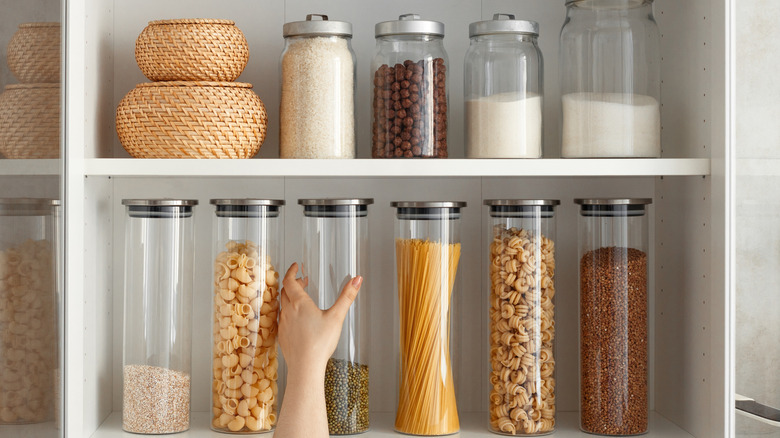
Decanting bulk nonperishables — like pasta, cereal, or baking supplies — has become a big trend on social media in recent years. Martha Stewart is in full support of decanting; it's one of her best tips on how to keep your pantry organized and easy to access. "I store everything in clear glass jars that are tightly sealed... I always decant my sugar and flour. It's better to keep them in jars," she told The Today Show in 2018.
Stewart primarily relies on large glass jars to store her pantry items. She says that she often purchases nonperishable ingredients in bulk, because she's cooking so frequently; if you, too, like to make the most of your Costco runs, then be sure that the decanters you're purchasing are big enough to store everything you need inside. It's also important that you choose jars with airtight seals, to ensure that the ingredients inside don't go bad.
Decanting is about a whole lot more than just making your pantry look pretty, however. Decanting your boxes of crackers and cereals can help prevent pests from chewing through the cardboard and snacking on your food. A well-sealed container keeps your chips and candies fresher for longer than a mere chip clip. And, as Stewart herself points out, a regular bag of sugar is hard to open and use without spilling sugar everywhere — a large container solves that problem in a snap.
Use a labeler to organize your pantry
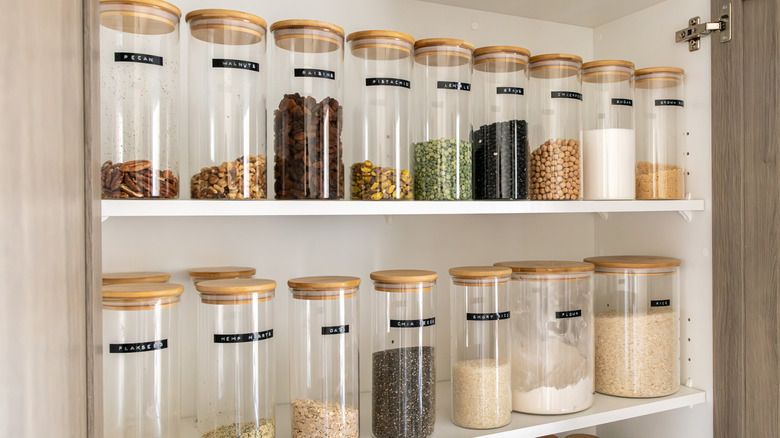
Now that you've decanted your nonperishables, it's time to label them. "Put [pantry items] inside a marked and labeled container," Martha Stewart told The Today Show. But what should you do if you don't have a P-touch label maker like the queen of organization herself? "You can print labels on your computer," Stewart advises. When affixing the printed label to your containers, we'd recommend taping over the entire label with clear tape, to prevent any spills from making the label illegible.
Labeling your containers will make it easy to identify your pantry supplies at a glance (and will prevent any nasty ingredient mix-ups). But there's one more thing Stewart says you should add to your labels: the expiry date. This will make it easy for you to spot and discard ingredients that are about to go bad. It's also especially important when you're decanting items that come with a best-by date on the package.
Lastly, Stewart always labels her spices with a label maker. "For spices, you should put the date on the bottom," she says. It can take a year or more for your spices to lose their flavor — but a dated label will save you a whole lot of guesswork in the end.
Add vertical dividers to your shelves
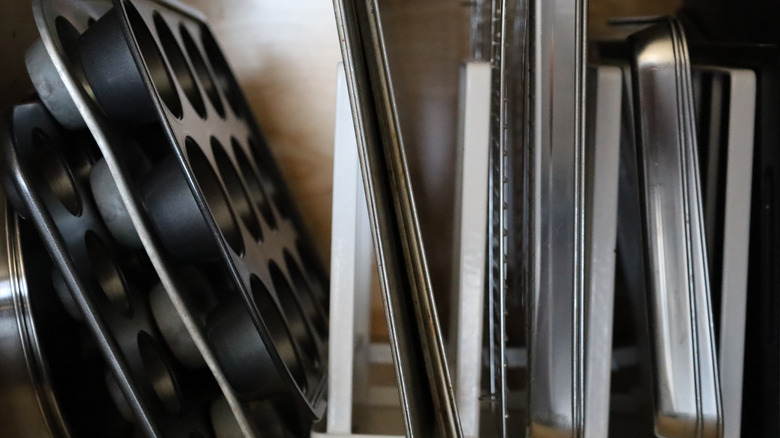
"Vertical storage makes the most of your cupboards," said Martha Stewart on The Today Show. If you feel like you're wasting cabinet space, you might need to try Stewart's simple storage trick. She stores items like cutting boards and baking sheets upright in her cupboards; this way, they take up less space and are easier to access.
To make your upright items even simpler to pull out and put back, add vertical storage dividers between every few items. In particular, Stewart says, "Upright steel slats provide perfect spots for heavy baking sheets" (via Martha Stewart). This way, you can clearly see all of your baking sheets at once, rather than storing them on top of each other — and their weight will be properly supported by the steel slat dividers. You could also opt for an open cupboard divider, such as the slatted Steel Cookware Holder from the KORRTFID store on Amazon. These types of dividers use thin racks to separate baking sheets, thin pans, and cutting boards from each other, holding them upright.
Organize similar utensils together, and keep them in a crock
It's probably well past time for you to go through your kitchen utensils and declutter them. The simplest way to do so is by following Martha Stewart's method: "When organizing kitchen utensils, the first thing to do is place everything on a table and group like items together, discarding any that are broken or too worn," Stewart writes on The Martha Stewart Blog. Stewart has a vast collection of cooking utensils — but for those of us without industrial-sized kitchens, it's a good idea to donate any utensils you feel like you have too many duplicates of. This way, you can free up storage space for more commonly-used items.
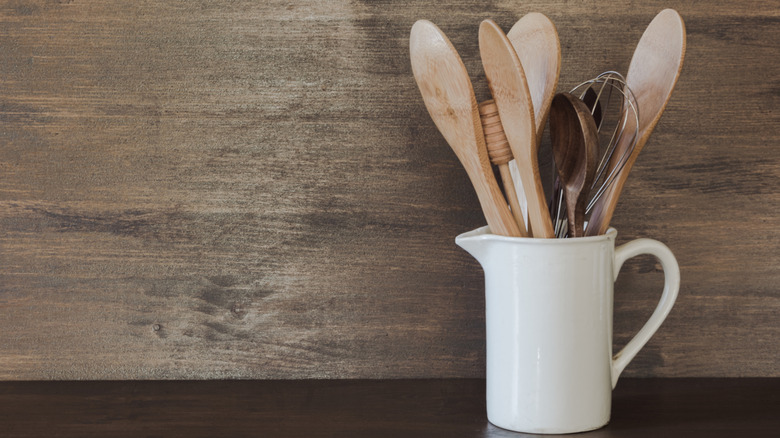
Once you're left with only the utensils in good condition, it's time to get organizing. "Vintage and antique crocks can be used to hold utensils on the counter," Stewart continues. "These strong, large jars are durable and easy to keep clean. They can be found at tag sales and consignment shops, or new in stores and online."
You may have seen at least a few kitchens with utensil crocks on their counters; some utensil sets will even come with their own storage crock. Sourcing a vintage crock is a good way to add style and unique personality to your kitchen. Place each utensil handle-down into the crock, so that you can clearly identify each utensil without needing to pull them out.
Organize your utensils with drawer dividers
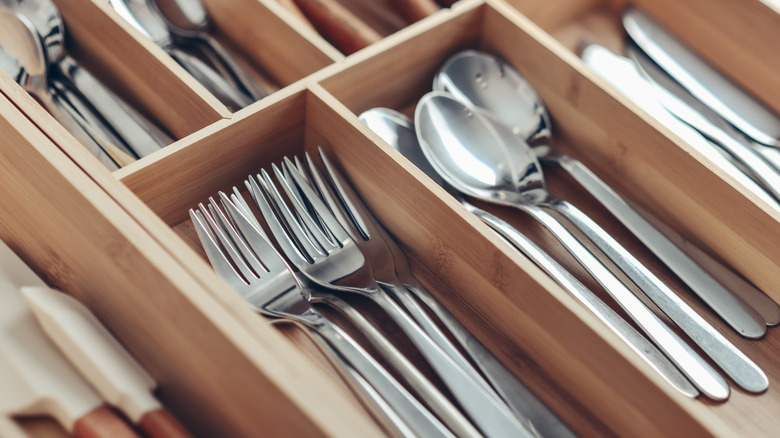
"I want [drawers] to look pretty," said Martha Stewart on The Today Show. "When I open a drawer, I want it to look organized and not that horrible mess that so many of us end up with." More relatable words have never been spoken. If you want to achieve Stewart-approved, organized drawers, then you should follow her advice and invest in a drawer divider for all of your utensils.
"[A drawer divider] really helps with silverware and knives and tools," says Stewart. Instead of allowing your utensils to roll around helter-skelter, a drawer divider contains like utensils in one spot, preventing them from shifting over time. For your silverware, you could opt for a dedicated utensil organizer, such as the Umilife Bamboo Kitchen Drawer Organizer, which has spaces for all different sizes of spoons, forks, and knives. Or, you could try separate dividers, which allow you to mix and match dividers as you please. The latter is great for a drawer that contains all different sizes and shapes of cooking utensils. Expandable drawer organizers are another handy tool that can be modified to match the size of the drawer or utensils you want to use the divider with — a good option if you aren't quite sure how you want to organize your drawers just yet.
Store your commonly used items close to wherever you use them
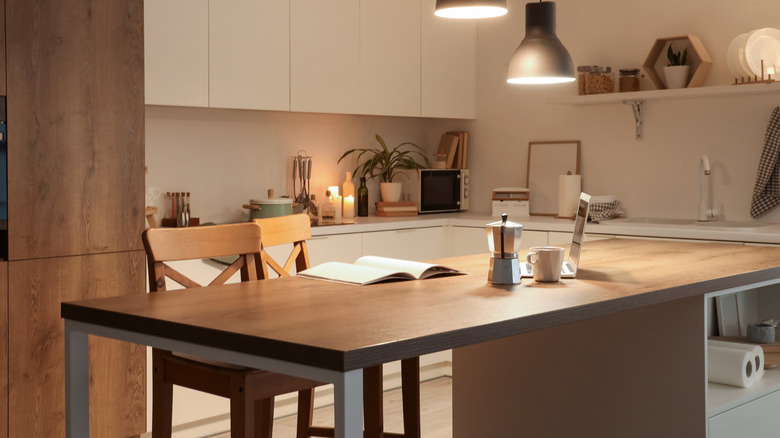
"One of the simplest ways to get and stay organized is to keep the things you use most frequently nearby," says Martha Stewart on her YouTube channel. "Pots and pans are best kept near the range or cooktop. Keep mixing bowls near the countertop you use for food preparation."
Her advice may seem simple, but take a look through your kitchen, and you can probably find at least a few things that are stored far away from where you typically end up using them. While you're cooking, you want the process to be as streamlined as possible, especially for the things that you use every day. As you go through your daily routine, keep tabs on your favorite mixing spoons, bowls, pots, and pans.
Once you've identified those that you use much more than the rest, figure out ways to make them more accessible. This can be as simple as placing your most-used pan in the front of the cupboard instead of off to the side. For some items, you might need to rearrange your counter space or switch up the items you put in your top drawers. Don't feel bad about storing less-used cookware and appliances in your pantry or an out-of-the-way cupboard, either. It'll feel like less of a hassle to go out of the way for these items when you don't have to do it every single day.
Lazy Susans will help you claim the most cabinet space
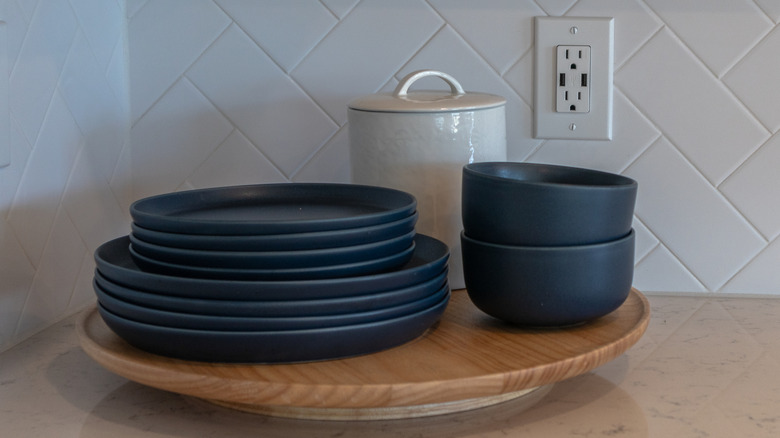
Martha Stewart is a major proponent of the lazy Susan. "This lazy Susan makes the most of any corner cabinet, and it's just an incredible way to maximize your space," says Stewart on her YouTube channel. It's true — a lazy Susan is a kitchen's best friend. It instantly transforms your corner cabinet from unusable to smart storage.
Corner cabinets are a struggle because, without a lazy Susan, it's extremely difficult to access the back shelves. Corner cabinets are often deep and awkwardly angled. But when you add a lazy Susan — a raised tray that can spin 360 degrees — it's easy to simply spin your shelving around until you find the condiment or dish you're looking for.
Some modern corner cabinets will come with built-in lazy Susans, which is another great way to maximize your corner cabinet space. But if you don't have a rotating shelf, then just add a few separate lazy Susans to the interior instead; even just one tray in the back corner of your cabinet minimizes the amount of reach-arounds you have to do to access your ingredients. Outside of the corner cabinet, lazy Susans are a smart way to make deep or tall cabinets a little more accessible.
Hang your pots and pans on a rack
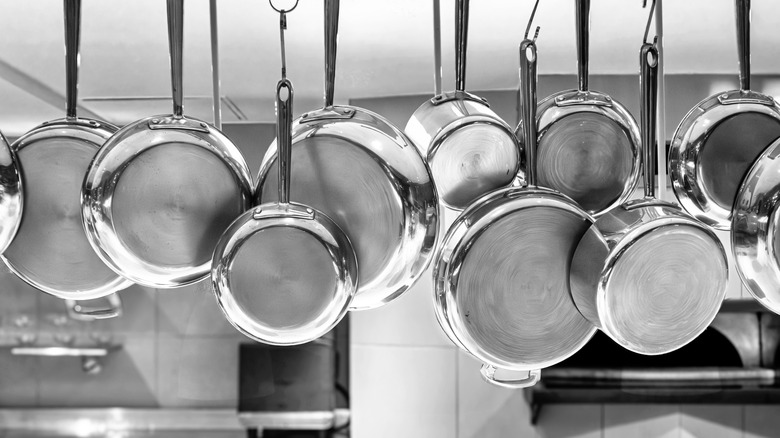
If you've seen a few of Martha Stewart's incredible kitchens before, then you know she usually has a massive ceiling rack that she uses to store all of her pots and pans. While few have a cookware collection as impressive as Stewart's, there's no denying that the ceiling is an underutilized storage space. As she shared via CBS News, "Hanging pots on a rack is such a handy way to keep your pots and pans because you just reach up — 'Oh, I'm going to steam some eggs, I need a pot that size' — so it really makes it easy to keep your pots and pans in sight, clean, by the way, and looking great."
Besides making it easy to see all your pots at once, you have to admit that a ceiling storage rack is the easiest way to store pots and pans. There's no good way to store them on their sides, and if you choose to stack them, you'll always be faced with the struggle of wrangling out the largest pot. Hanging them from their handles, however, means they're always close by and ready to use without any hassle. Plus, installing a ceiling rack will help you free up an immense amount of cabinet, pantry, and drawer storage space.
Ditch the knife block and go for a knife drawer
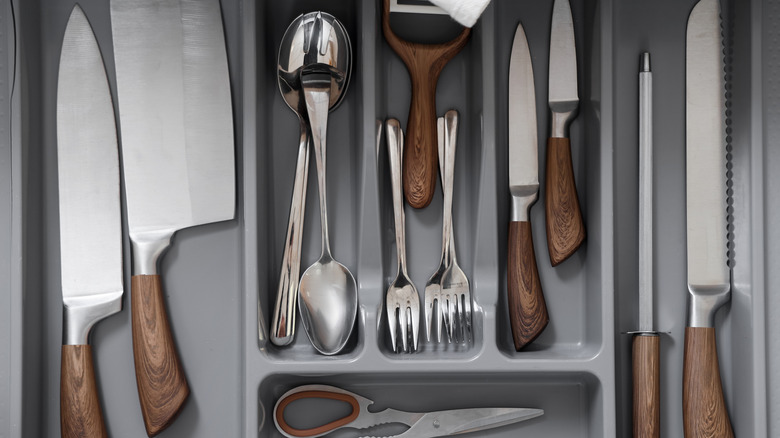
"Another organizational tip for all of you, is to make a knife drawer," says Martha Stewart (via CBS News). While some chefs swear by a knife block or magnetic wall hanging strip, Stewart's method of organizing knives is much more traditional. A knife block takes up a lot of space on your counter (and the other gross reason you might want to avoid a knife block is due to the amount of germs it collects). A knife drawer, on the other hand, is a sleeker, more compact way of organizing your knives. "You start with small [knives] and get to larger, larger, larger," Stewart advises. This way, you can easily find the knife you need based on size alone (and it creates a beautiful display, too).
Stewart also recommends a cork liner for the knife drawer. A cork liner does a number of things at once — it protects the knives themselves, by keeping them positioned in one spot and preventing their edges from becoming dulled or scratched over time. Cork is often used to clean knives without scratching them, making it a safe material to use for storing even your most expensive chef's knives. A cork liner is also a must if you want the drawer itself to remain completely scratch-free.
Styled shelving supports make storing dishes easier
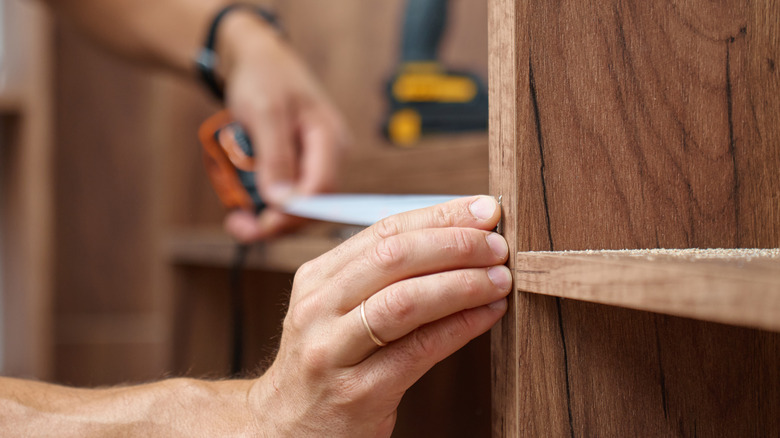
To organize your kitchen like a professional, look to the little details — like your shelving supports. "I like 'bird's beak' supports, an old carpentry style with notches that let shelves slide in and out," says Martha Stewart (via Martha Stewart). Bird's beak shelf supports run up and down the sides of your cabinet walls; when you want to add a shelf, you just slide one in to any of the notches. This custom kitchen shelving addition allows you to reorganize your kitchen with ease.
Bird's beak supports aren't very challenging to add to your existing cupboard setup, but there are other ways you can work with shelving to make the most out of your kitchen storage, too. Extendable stacking shelves stand on their own, unlike a typical cupboard shelf, so you can remove and replace them with ease. These stacking shelves are also great for adding multiple shelves of customizable heights to a large cupboard space, dividing it further for extra organization. Options like the NEX Bamboo Shelf Organizer offer shelves with expanding widths, though you can also find shelves with legs that extend to fit tall items underneath.
Add a plastic bin to your kitchen sink for organized cleanup
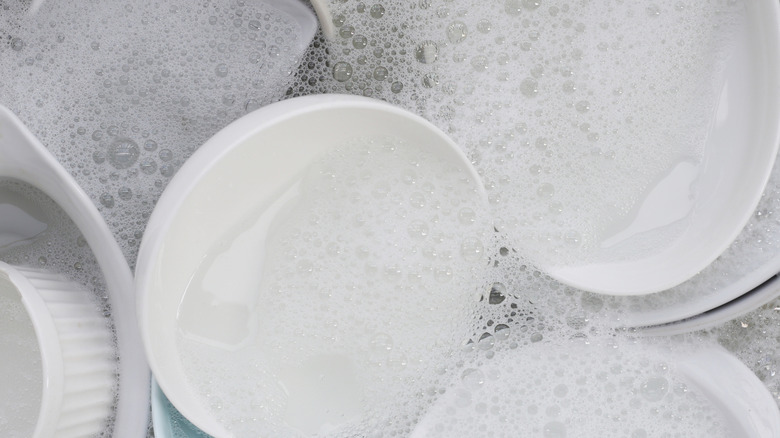
When you do the dishes, a simple plastic bin will save you loads of time and energy. "Use a plastic bin for soaking or soaping to save water," says Martha Stewart (via Martha Stewart). Keep the bin in your sink — instead of lining up dirty dishes on your counter or kitchen table, just place them into the bin and fill it with hot water. The bin will keep your counters free of clutter — and a good soak in soapy water will prevent grease and food from drying onto your dishes, making them easier to clean later on.
A dish bin is also a good way to streamline your cooking process. As soon as you're done using a pot or pan, place it in the dish bin. You can then save it to deal with it later, without letting it crowd up your valuable cooking space. As Stewart points out, a dish bin is also a good tool for cleaning your dishes without wasting water. It can also prevent food and grease from going down the drain and clogging your pipes (here's what happens if you put grease down your garbage disposal).