

Turn An Old Cork Into DIY Garden Mulch On A Budget
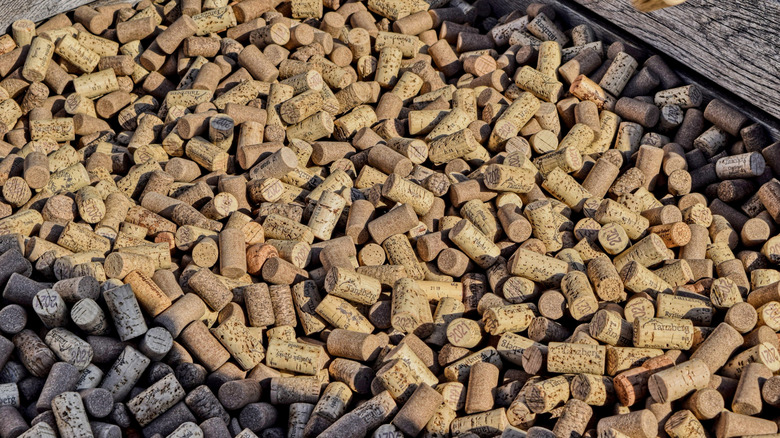
Got corks? If you drink wine, then the answer is yes! A cork is a handy tool for plugging up a wine bottle, but its usefulness isn't over once the wine is gone. Cork is a natural, woody material, and it makes an excellent mulch in a pinch. Rather than buying expensive bags of mulch, you can repurpose the wine corks into a crumbly, moisture-retentive soil amendment for the growing season. The mulch works superbly for pots, garden beds, and containers, and it's lightweight enough that it's easy to transport around the yard.
It takes many corks to make a decent amount of mulch. You may use them whole or chopped, scattering them about the soil so that they cover the top layer. With time, the woody pieces will decompose into carbon. The more carbon there is in the soil, the healthier your woody trees and shrubs will be. Woody plants use carbon to make more wood — the more wood you add to the dirt, the more carbon will be available for the other perennials.
No matter whether you're growing seedlings or planting saplings in the yard, a cork mulch may be the solution for your garden. It'll blanket the soil, offering warmth and insulation in the winter. In the summer, the covering will conserve moisture beneath the ground, allowing your plants to stay healthy and perky amidst heat waves.
How to use old cork as a garden mulch
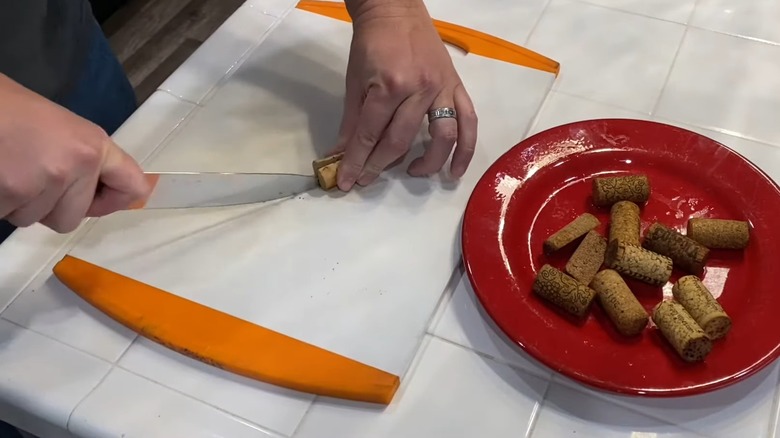
The lazy way to use a cork is to simply throw it on top of the soil. It'll decompose in place and work as one of the best types of mulch in the meantime. This is an easy solution, but it leaves an uneven, ragged appearance in the garden. A little bit of extra labor will help the cork break down more readily, and it'll help it look better in your yard. Rather than using whole corks, try blending a bunch of them in a blender or food processor. This will chop them up into tiny pieces that more closely resemble a bagged mulch from the store. Then, scatter the chopped pieces all over the ground in an even layer about 3 inches thick. The chopped layer is difficult for weeds to get through, and it prevents the plant roots from drying out in the summertime.
If you dislike the way the cork mulch looks, try turning it into your own DIY compost first! Compost needs carbon and nitrogen, and woody materials like cork are perfect for boosting the carbon levels in a compost pile. Combine cork with nitrogen-rich green materials, like kitchen scraps and garden clippings, and turn and water the pile daily until it's ready. The compost will look black and crumbly when it finishes, and it makes for a fantastic mulch material.
There are many different ways to repurpose old cork in an eco-friendly manner. Use whichever method works easiest for you, whether it's leaving the corks whole, chopping them, or composting them.