

The Soapstone Countertop Alternative That's More Durable & Easier To Maintain
We may receive a commission on purchases made from links.
According to Apartment Therapy's annual State of Home Design survey, about 71% of designers predicted that soapstone would be the next big up-and-coming material in 2025. Indeed, soapstone's dark coloration perfectly suits the neutral-yet-bold aesthetic that has steadily crept into magazines and online feeds. But some homeowners have mixed feelings about installing natural soapstone countertops, mostly owing to how easily it scratches. Composed of varying degrees of talc, soapstone is a delicate material, so it won't tolerate scrubbing or harsh chemicals very well. It also has to be maintained with mineral oil if you want it to show its best color. Luckily, there's another material that can bring you a soapstone-like look without all the fuss: carbo brushed quartz. Produced by LX Hausys under the brand name Viatera, carbo brushed quartz features a neutral black base with lacy gray veins and a matte surface that strongly resembles natural soapstone.
A great choice for modern kitchens, the dark, elegant countertop material also pairs well with several gorgeous cabinet trends set to take over in 2026, such as light oak, bold paint colors, and sleek hardware. Both quartz and natural soapstone are non-porous, which means they're highly stain-resistant and don't need to be sealed. A brushed surface gives it the same "soft" textured effect, but unlike natural soapstone, carbo brushed quartz doesn't require any oiling or special cleansers to look its best. This makes it more suitable for families, home chefs, house party hosts, and other busy households.
Carbo brushed quartz offers a similar striking look with less maintenance
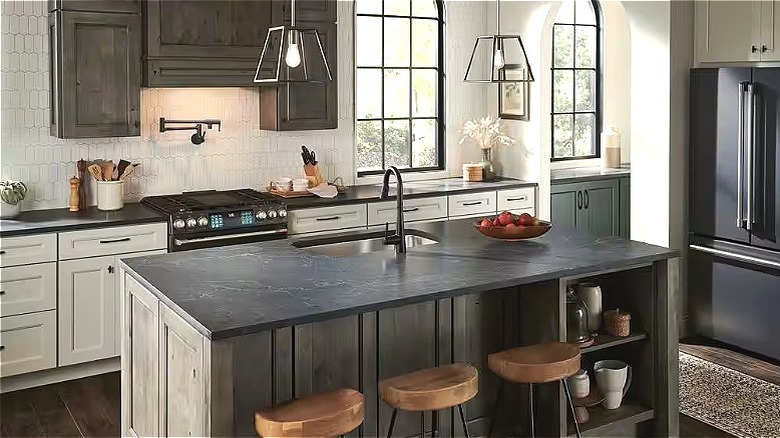
Brushed quartz is a man-made countertop material, but don't let that fool you into thinking it's somehow less desirable than natural slab stone. The Viatera carbo brushed quartz countertop from Home Depot is made with 93% natural crushed quartz, making it highly durable and scratch-resistant. Most retailers offer carbo brushed quartz countertops as a custom-order program, so prices may vary depending on your kitchen, but it shouldn't cost much more than other types of high-end quartz: roughly $50 to $200 per square foot. For comparison, soapstone may cost around $60 to $130 per square foot.
Choosing quartz instead of soapstone can save chore time. Soapstone generally must be cleaned with soap and water only, while you can use a plastic scraper, gentle cleansers, and other materials to clean quartz countertops and remove stains. Natural soapstone should also be oiled if you want it to retain its dark, rich color and prevent water droplets from leaving spots. Many people have to oil the soapstone roughly every month or so for the first one to two years. With a quartz countertop, no oiling or conditioning is necessary. Over time, scratches may need to be sanded out of soapstone, but quartz is less likely to require scratch repairs. Overall, maintenance for quartz is extremely minimal; simply wipe it clean as needed.
There are some drawbacks to consider when choosing carbo brushed quartz. The talc content of soapstone makes it heat-resistant, so you can safely place hot pans directly on the surface, but you can't do the same thing with quartz. Quartz doesn't scratch nearly as easily as soapstone, but it's still not recommended to cut directly on either surface because this can dull your knives and scuff the countertop over time.