

Say Goodbye To Drafty Windows In The Winter With These 13 Hacks

We may receive a commission on purchases made from links.
Are your curtains constantly twitching, even though you know for a certainty that the window behind them is closed? Have you also been startled by an unusually sharp trajectory in your winter heating bill? If so, then it might be time to address those drafty windows. But before you panic, allow us to reassure you: It's probably not yet time to call the window fitters and ask them for a quote to replace your frames. Nor is it necessarily the time to call and pay an engineer to come out and fix them. Instead, there are several easy DIY hacks that you should try in order to deal with the draft.
When we say "hacks," we mean clever, low-tech, and low-cost interventions that can help to alleviate your problem in a pinch. Crucially, we mean ideas that you can try by yourself — without the need for hired help. Some are more involved than others; however, they are all DIY friendly, they're all cheap, and most importantly, they've all been shown to help determined draft excluders just like you to keep the winter where it belongs: outside.
First, use a candle to detect where the draft is coming from

If you're hoping to be as precise as possible when re-sealing your window, then using a candle can help identify the source of your draft. You could also use an incense stick or a wet hand, although you should know that a flame or incense stick is likely to be more precise. With a flame or smoky stick, you'll actually be able to "see" where the draft is coming from, rather than trying to "feel" it on your hand and then approximate the sensation to a specific spot on your window frame.
All you need to do is pull your curtains aside and out of the way (which is more for safety than anything else), and then light the candle or incense stick. Hold it near the window's seal and move it around. Whenever it moves past a drafty spot, the flame or smoke trail will bow. Now, it's important not to stop once you find a draft; if there's a fault in one part of the window seal, there could well be more elsewhere. Check the entire seal, and mark the areas that need to be fixed. It's best to use this trick on a windy or very cold day. If there's no wind or the weather's very mild, the draft may not be as noticeable as it would during a storm or when it's freezing cold outdoors.
Use a blanket to temporarily stifle drafts

Provided that you have some spares that you don't desperately need to snuggle under during the winter months, then you can use blankets to block out those pesky drafts. It's not a permanent fix, and it's far from ideal when compared to getting the windows professionally sealed and fixed. But in a pinch, blankets can work to block out drafts.
There are two ways to use them. The first is to hang them over your windows, fitting them as snugly as possible. Try using a fleece blanket, which should insulate your room more than a thinner throw. As for how to attach it, the easiest way is with velcro strips. Apply them around the perimeter of your window frame and the edge of your blanket, then use those to fasten the blanket in place.
The other method is to roll your blanket up to make a draft excluder. Simply roll the blanket, tie it with a rubber band or a hair band to prevent it from unraveling, and position it at the base of your window. This method is best used with thinner blankets, since they tend to be easier to roll and keep in shape than bulkier, thicker furnishings.
Seal your windows with anti-draft tape
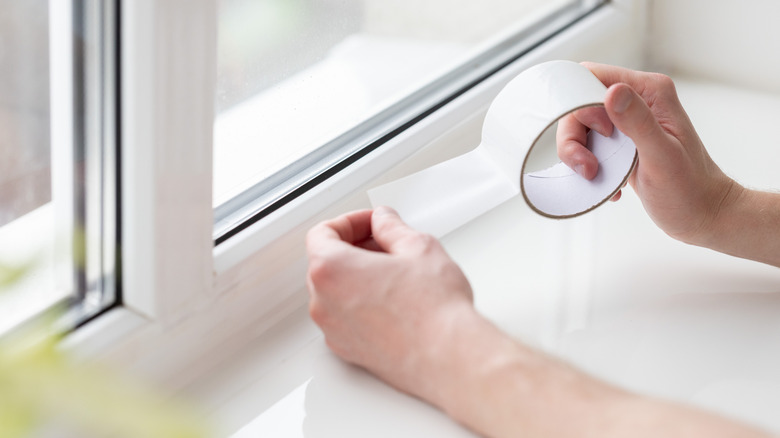
If you'd prefer to eradicate drafts in your windows without erecting a small bivouac each evening, then consider sealing them with anti-draft tape. Per the name, this product is designed precisely for this task and is cheap and easy to use.
As for which specific product you should use, it's up to you, although Alien Tape is strongly recommended to help insulate against drafts. You can use this tape both inside and outside, meaning that if there's a hole in the outside of your window frame that's allowing air to get through, you can swiftly block it off. Alternatively, you could buy expanding foam tape. Like Alien Tape, you apply this around your seals. The difference is that, once you've taken it off the spool and applied it to your seals, foam tape slowly expands into a robust, weatherproof seal, thus helping to plug any drafty holes.
Make a draft excluder from some fabric and a pool noodle

Gaps around the windowsill are some of the most common culprits for drafts during the winter. Over time, the caulk and sealant around them can crack and deteriorate, and even if the rest of your window seals are in fine fettle, your windowsill can seriously impact your ability to keep your room at a stable temperature. For this reason, draft excluders are highly popular. And while they're widely available to buy, if you happen to have a pool noodle kicking about in the garage, then you may not actually need to spend a dime.
Even if you don't have one already, pool noodles only cost a few dollars, and you're unlikely to spend much more on a length of pretty fabric, either. Yet when you pair the two together, you have the makings of a stylish and effective DIY draft excluder. Simply cut the noodle to size, matching it to the bottom edge of your window. Wrap the noodle in your chosen fabric, secure the fabric in place (with either stitches, staples, or glue), then place the finished article at the base of your windowsill.
Let the light in, trap heat, and banish the cold with an opaque shower curtain
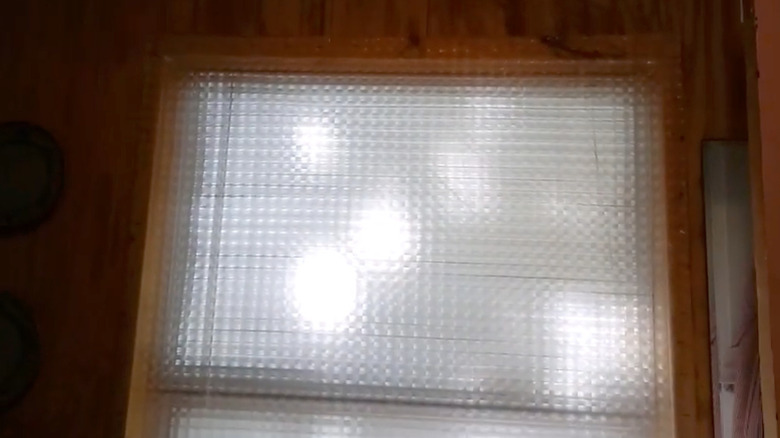
It's important to note that this is far from ideal as a long-term solution. However, if you're struggling to keep your room comfortable, and your energy bills are starting to climb unnecessarily, then lining your drafty window with a shower curtain to keep your home warm is worth at least considering in the short term. It works in much the same way as a regular curtain in that it helps to stop excess heat from escaping. Provided that you ensure a tight fit, it also helps to keep drafts from getting in.
To ensure a snug fit, the best way is to use adhesive-backed strips of Velcro. Assuming that the draft is coming from one of your window pane seals and is not caused by degradation around the outside of your frame, then the best place to fit these strips is around the frame itself. Cut your shower curtain to size, and apply the corresponding velcro strips around the edge. Using velcro will make hanging and removing the curtain easier, allowing you to shut out the cold and draftiness at night or during bouts of bad weather, and then take it down when the sun's shining.
Upgrade your weatherstripping
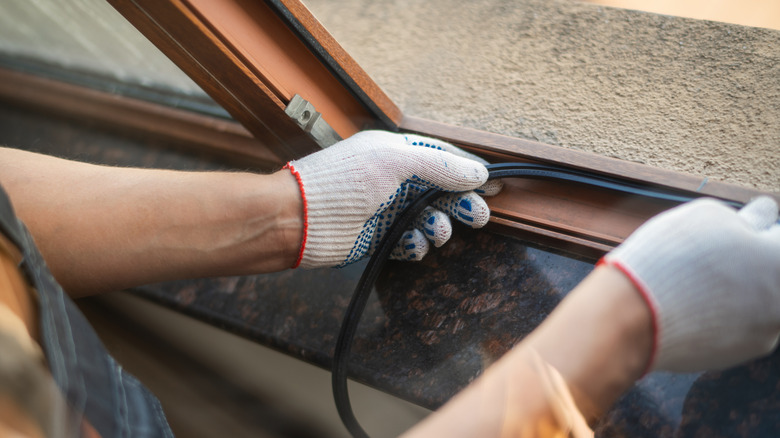
As far as drafty-window hacks go, this one is perhaps the closest to a professional fix. It's certainly one of the most frequently recommended by window-maintenance firms. It involves upgrading old and degraded weatherstripping, and while it sounds like the sort of job you should hire a contractor to do, it's actually really easy to do yourself.
Most weatherstripping products are simple to apply. They come in various styles and materials, and some are even self-adhesive, which makes them even easier to work with. The best way to manage extreme temperatures and drafts with weatherstripping depends on which product you choose to buy, but in most cases, all you need to do is cut your strips to size, then apply them around the seals of your windows. Applied carefully, and they'll solve your drafty problem, saving you money both in the short term versus hiring a contractor, and in the long term by making your home easier and more efficient to heat.
Improve window insulation with some window film
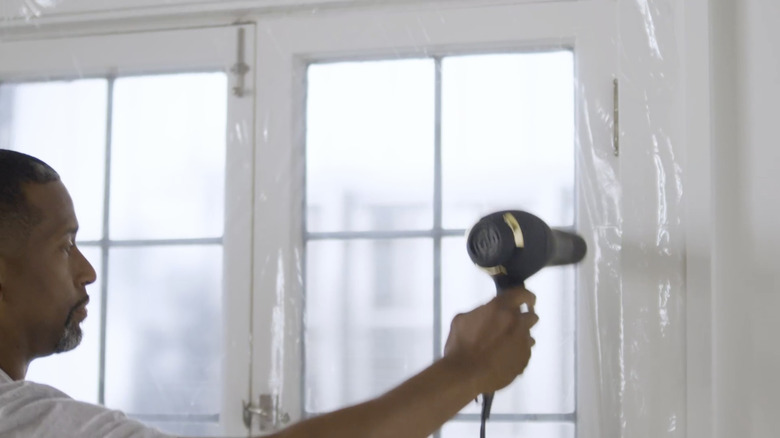
Another affordable, DIY-friendly way to keep annoying drafts out is to use window insulation film. It's super straightforward to apply, usually taking less than an afternoon. Importantly, while it's only intended as a temporary solution, it's also highly effective. It works by creating a new, airtight seal over your window, which not only helps to lock out drafts, but also helps to keep the warmth where it belongs: inside.
To do it, first buy a window insulation kit, like this max-strength kit from Duck, and then follow the instructions. As well as the film, these kits usually include double-sided tape, which you use to stick the film in place. You'll need to ensure your windows are clean and free from dirt before you start, and once the film is loosely in position, you'll need a hair dryer to shrink it into place.
Close your curtains earlier to trap in heat for the evening

It sounds so obvious, but one of the best curtain hacks to help keep your home warmer in the winter is simply closing them earlier. This doesn't have to be every day. Instead, keep an eye on the weather forecast and try to get ahead of any bad weather. It could be a front of low pressure that's set to bring strong winds. Alternatively, local forecasts could be showing a significant drop in temperature.
Either way, drafty windows are worst during bouts of bad weather, and if your curtains are open when they hit, the resultant drafts can quickly cool the room that your radiators worked so hard to warm. Whether you're working with regular curtains or supplementing your window dressings with other ideas from this guide, like blankets or a shower curtain, by closing and hanging them a little earlier, you'll find it much easier to keep the warmth indoors, where it belongs.
Tape bubble wrap to the inside of your windows
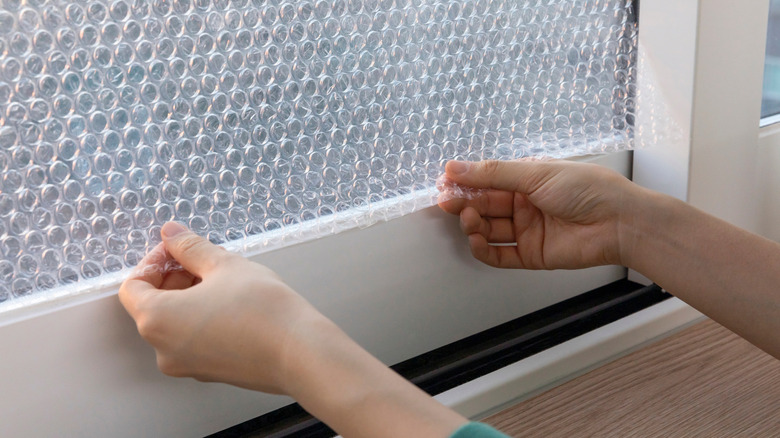
If you're looking for an immediate fix to your draft and you're none too worried about how it looks, then let us ask you: do you have a roll of bubble wrap handy? If so, then another cost-effective way to insulate those woefully sealed windows is to fit some sheets of the bubbly stuff around the edges of your window frames. It works similarly to double glazing, but instead of a single, large air gap, it uses lots of smaller ones. Those air gaps slow down the transfer of heat, thus helping to keep your interior warm for longer.
Admittedly, this is far from the prettiest fix in this guide. But as a short-term solution, it can be highly effective, especially when paired with more traditional window dressings, like blinds or curtains. You'll need to try to fit it as snugly as possible to ensure it keeps out as much of the cold air as possible. As for how to attach it, there are a few ways you could try. Double-sided tape is perhaps best, as it allows the bubble wrap to sit nice and snug to the surface of your frames, thus minimizing gaps through which drafts and cold air could infiltrate your home. Alternatively, you could use strips of Velcro.
Use towels or long socks to make a DIY draft excluder
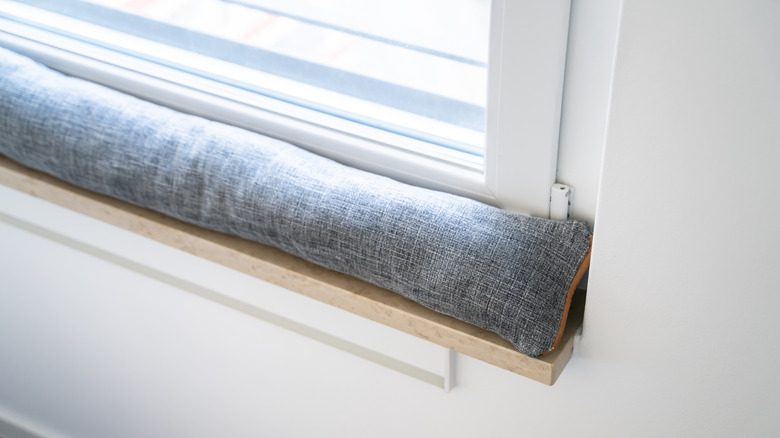
For households without pool noodles kicking around in the garage, and who would rather save their blankets for snuggling up on the sofa, a rolled-up towel can also be used to make an effective draft excluder. You could also use some old long socks. For best results, choose a fabric that you can sew into a sock, and then fill it with something to weigh it down and further insulate against cold drafts, like sand.
Since the base of your window is naturally its coldest part (remember that cold air sinks and that heat rises), a homemade draft snake can be a powerful tool in mitigating against cold spots. It can help to stem drafts as a result of cracks or degradation in the caulking or sealant around your windowsill, and it can also help to minimize the effect of downdraft — where warm air in your room meets the cool surface of your window, forcing cold air downwards and into circulation around your room.
The important thing to bear in mind here is that this is not a long-term fix. If the cause of your draft is a damaged window frame or seriously-degraded seal, then you should look to address the issue as soon as possible. But in the meantime, a homemade draft snake with some towels, a sock, or some decorative fabric is sure to keep the worst of the winter winds out.
Ensure you keep your trickle vents closed
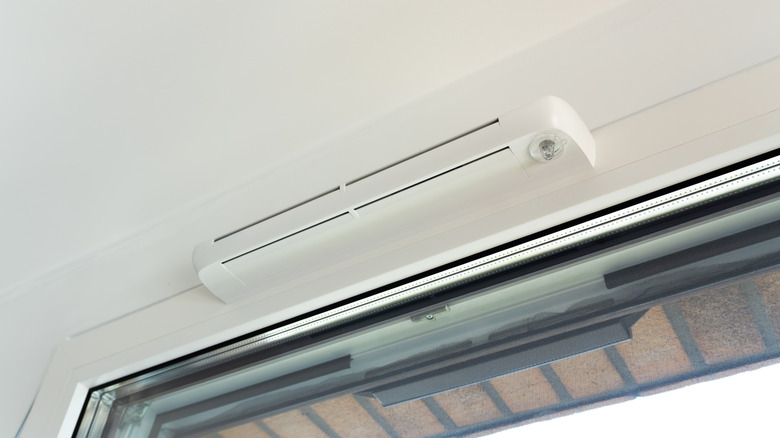
The trickle vents around your windows are a crucial part of your home's infrastructure. They allow it to breathe when necessary, helping to circulate fresh air and prevent the build up of dank air. By helping it to breathe, they mitigate against the build up of condensation, which in turn reduces the risk of your home developing mold. The only problem with them is that, in the winter, they have a habit of letting in the cold.
With this in mind, when the weather's really windy or severely cold, make sure to close your trickle vents. Try not to close them for long periods, as this can cause issues with condensation, damp, and mold. Instead, consider closing them at night, when it's likely to be cooler and therefore when you most need to run your radiators. By closing your vents temporarily, your radiators won't have to work as hard to warm your home, and in turn, you'll have to pay less in order to run them.
Fill any gaps temporarily with silicone, caulk, or rope caulk
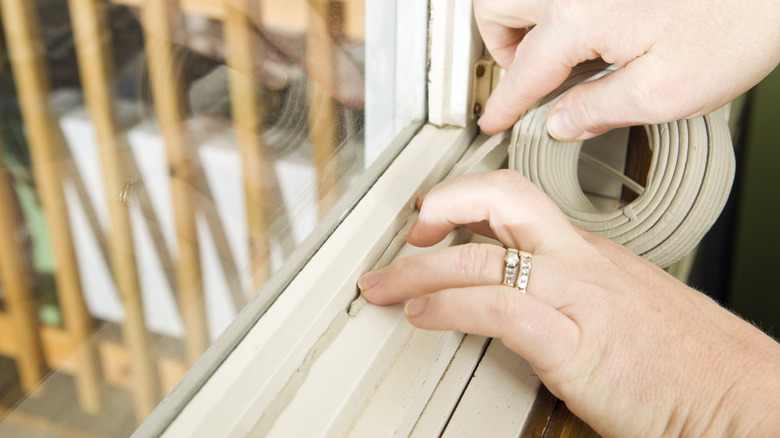
There are a few ways to temporarily plug the gaps in your window seals to lock out annoying drafts. For example, do you have a tube of caulk or silicone handy, and a silicone gun to help apply it? If so, you'll find this is one of the most effective ways to seal any faults that you've found around your window.
Alternatively, you could use a product known as rope caulk, like this mortite fingertip caulking cord from Frost King. It has a consistency similar to clay, so it can easily be molded into cracks, crevices, and around ruptured seals. Even if the seal between the sash and the frame has blown, you can use rope caulk to seal it. Sure, you won't be able to open the window for the winter, but if you can get it fixed in the spring, it'll at least help to keep the draft out during the worst of the winter weather. Rope caulk is easily removed, too, so you won't have to worry about "gluing" your windows shut as you would with more traditional caulk or silicone.
Use a tension rod and blackout curtains to keep the cold out
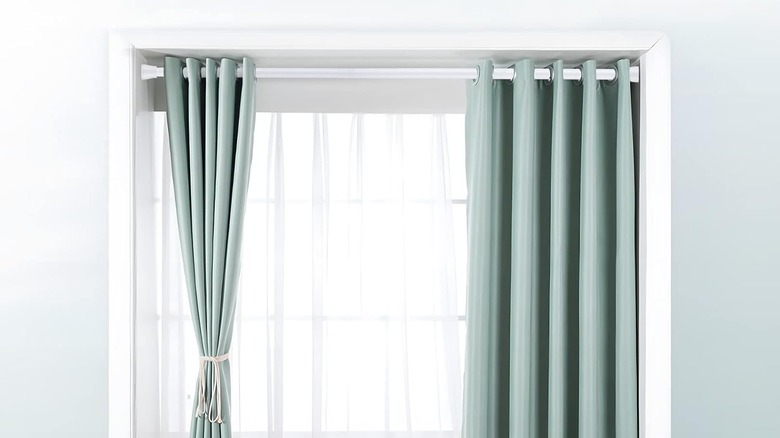
We've already touched on curtains and how simply closing them a little earlier can help minimize the effects of drafty windows. But what if you don't have curtains? In that case, it may be time to get some. And before you worry that you'll have to drill new fixtures to hang them, don't. Whether you're renting and don't have permission or would prefer to avoid drilling holes in your walls, tension rods provide a no-drill hanging method that honestly couldn't be easier.
With a tension rod, like this adjustable tension curtain rod from MEXAU, you simply extend it to match the width of your frame, ensure that each end is flush against your walls, and then tighten the pole until it locks in place. Since you don't have to install additional pole-mounts, you can fit tension poles nice and close to your curtains, thus ensuring a tighter "seal" between your curtains and the cold surface of your drafty windows.
To double down and ensure you get as much bang for your proverbial buck with this hack, consider using thermal blackout curtains. By design, these types of curtains work to keep warm air in, making it easier to maintain a stable interior temperature. And if you hang them in your bedroom, the blackout fabric will also come in handy on mornings when you could use some extra winks.