

12 Non-Toxic Cleaning Solutions To Get A Glass Oven Door Shining Without A Fuss
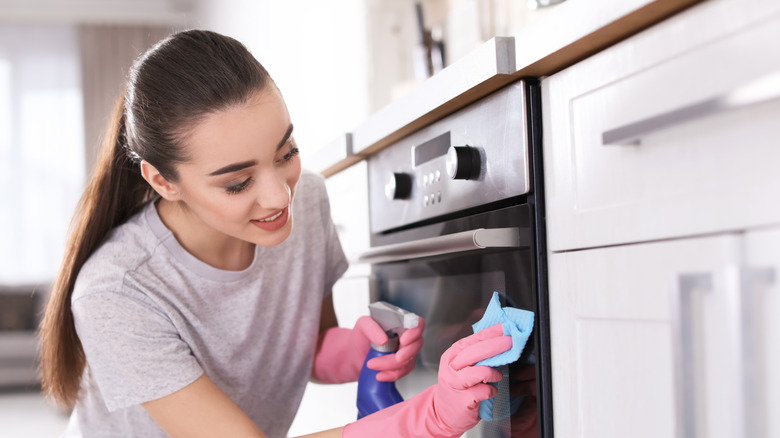
If there's one thing that people tend to associate with oven cleaning, it's fumes. And certainly it's tempting to want to "go nuclear" when cleaning your oven, including the glass oven door. After all, everything that spills in the oven tends to get super-heated into layers of brown, hardened gunk. And with the glass "windows" that adorn modern ovens, it's as if all those weeks and months of accumulation are on merciless display – whether it's on the door's interior, exterior, or the in-between area.
Yet cleaning a glass oven door doesn't actually require toxic cleaners in order to remove food particles, grease, and buildup. In fact, you may be surprised how far you can get with a minimum of elbow grease and financial outlay. A little knowledge and a well-stocked pantry can get you pretty far. The main mistake to avoid when cleaning a glass oven door is forgetting that it's, well, glass. Blasting it with scouring pads and harsh cleaners will only have you trading dirty panes for permanently scratched ones. Instead, look to simple tools and common household ingredients in order to gently but thoroughly clean your glass oven door.
Use water-dampened microfiber cloths to quickly deal with spills
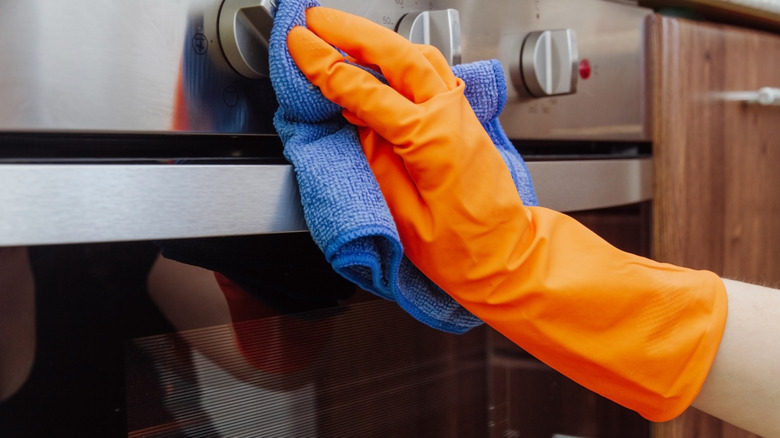
We often think of the rags we clean with as mere vessels on which to apply the "real" cleaner. Yet modern cleaning cloths can do much more than simply rub on a separate cleaner. Microfiber cloths, specifically, are an eco-friendly way to address dirty areas. Their split-fiber surface is able to efficiently absorb liquids, grime, and germy areas – even without additional cleaning products. Because each fiber is positively charged, the cloths are superior for attracting and absorbing grease and other food debris, which are negatively charged. Use them on the inside of the glass door to cope with splashes and spills, and on the outside to erase fingerprints and other smears.
Obviously, you can pair commercial or DIY cleaning products with microfiber cloths to enhance their effectiveness. But for daily cleaning of the outside or inside of your glass oven door, simply use a microfiber cloth that's been dampened with plain water. Fold it over several times to increase the surface area of the split fibers. This will loosen spills and grime. Follow your cleaning with a dry microfiber cloth to buff away any remaining streaks. After each use, don't forget to disinfect microfiber cloths in the washing machine with warm water.
Pair a vacuum with razor blades to tackle caked-on, dried grunge

You probably don't usually break out the razor blades and the vacuum when it's time to clean kitchen appliances. Yet these implements make quicker work of tough oven spills than traditional methods do. When your glass oven door (and perhaps the rest of the interior) has several layers of grease and grime to cope with, a good "scrape and vac" works surprisingly well. Just as the razor blade hack does wonders for cleaning gunk on a glass stovetop, it's also helpful when you're taking oozing casseroles out of the oven and end up leaving piping-hot spills on the opened door. Your vacuum can then make quick work of any scraped-off gunk that falls into the oven door's nooks and crannies.
This method works well either as spot cleaning or as an efficient first step when you need to deep-clean the entire oven, including the door. Of course, you'll want to wait until the stain cools. Once it has, start by getting rid of some of the more solid layers. A razor blade or paint scraper removes much of that grime. Start in an inconspicuous place, just in case the scraping leaves an unexpected mark, and you need to stop. For crumbly bits that break off and get into the nooks and crannies of the door ridges, position your vacuum's wand to get as much of the debris as possible. If needed, move to additional oven door cleaning.
Whip up a heavy duty paste combo for deep cleaning
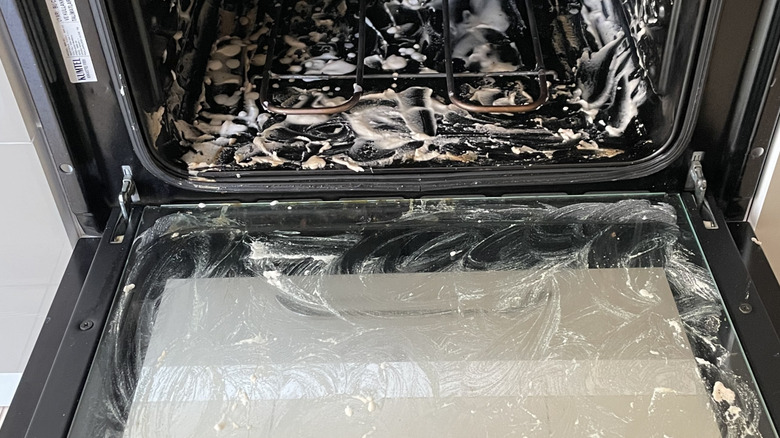
We all know that regular cleaning is the best way to prevent those layers of grease, grime, and gritty debris from hardening into an impenetrable clump on the inner glass oven door. But we also know that sometimes we just don't get to those daily tasks. Rather than beat yourself up, take action! A heavy-duty paste that you paint on, then rinse off, takes months of neglect with it — with minimal elbow grease. In fact, this formulation can handle both the inner oven door and the rest of the oven's interior as well.
To start, mix together 1 part vinegar to 6 parts baking soda. Add a splash of liquid castile soap. Slowly drizzle in enough water to form a thick paste. "Paint" this cleaning paste on the oven's grimy areas with a pastry brush. Apply it with a circular motion, using gentle strokes. Use it on the inner oven door, as well as any parts of the oven's interior that need cleaning. (If you're doing the rest of the oven, remove the racks prior to cleaning it.) Let the mixture sit for at least an hour. Rinse the dried paste off with a clean rag or microfiber cloth that's been dampened with water.
Create a winning spray bottle combo of vinegar, water, and cornstarch
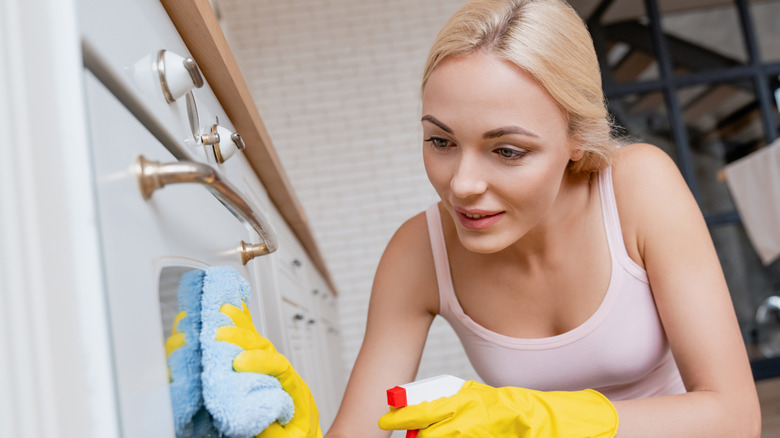
One time-tested way to get your glass oven door sparkling clean? The vinegar method. Vinegar is a gentle, natural acid that's useful for cleaning glass while breaking through stubborn stains and buildup. Pair it with water, along with grease-absorbing cornstarch,to gently but effectively clean the glass oven door. Keep a spray bottle of this mixture handy to make the routine an easy one. These regular wipe-downs are the best way to avoid having to break out the "elbow grease" down the road when the grime layers turn into immovable lumps.
For a spray bottle-sized glass-cleaning formula, stir together 2 of cups of warm water, 2 cups tablespoons white vinegar, and 1 ⅛ teaspoons cornstarch. Pour into a clean spray bottle and shake it thoroughly until the cornstarch dissolves. (If you don't have cornstarch, use equal parts vinegar and water.) Spray on the interior and exterior of your oven doors, and wipe clean with paper towels or a clean rag.
Toss salt onto fresh spills to prevent long-lasting stains
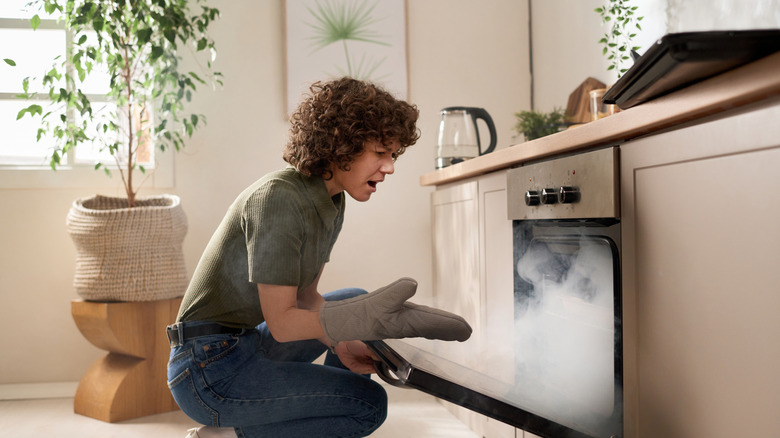
Did you drip a bit of blueberry filling onto the open oven door as you were extricating the pie from the oven? Or maybe a fiery over bubble of your first lasagna? Don't fret – it happens to the best of us! How you treat that spill depends on whether you have time to deal with it now or once it's cooled and hardened. For the latter, there are other methods. But warm, fresh spills are easier to remove. Of course, you do want to be careful not to burn yourself while doing so. Make sure to wear oven gloves and long sleeves while dealing with your freshly "christened" oven door.
If you've caught the spill while the oven is still warm, it's a good time for the salt hack to bring back the oven door's sparkle. First, sprinkle a bit of water directly over the soiled area. Follow this immediately with a generous amount of salt. Salt provides abrasive power and bonds with the mess. It also prevents combustion, which means less charring. Once the oven and the spilled "gunk" has cooled, get out a plastic spatula or razor. Carefully scrape the soiled area away. Rinse it with plain water, then wipe dry.
Harness the power of lemons to loosen up both interior grime and exterior smears
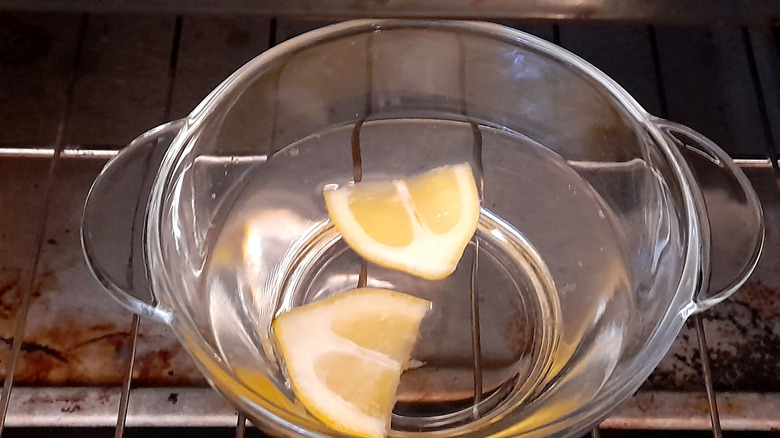
You can use lemons' grease-fighting properties in at least two ways to help keep your oven door clean. One involves stirring freshly-squeezed lemon juice into water, then heating an oven-safe bowl of this liquid in the oven to loosen grime. Another is to simply mix water and lemon juice inside a spray bottle, then applying the lemon water directly to the interior or exterior of the glass door. The latter method's especially good for cleaning fingerprints.
To steam-clean your oven's glass door, along with the rest of the interior, start by preheating the oven to about 240°F. Squeeze a lemon into an oven-safe bowl, pie plate, or small casserole dish. Fill the rest of the vessel with tap water, and carefully place it into your preheated oven. Let the mixture steam for at least 20 minutes. After turning off the oven, open the door and wait for it to cool slightly. Then, wipe off the loosened dirt and grime with a clean rag or microfiber cloth.
To harness the power of lemons on a daily basis, squeeze about 1 tablespoon of fresh lemon juice into a spray bottle filled with water. Shake thoroughly, and use on the inside and outside of the oven door. The lemony formula works great on fingerprints and greasy smears!
Check out your oven's AquaLift function for steam-cleaning power

Increasingly, homeowners and apartment dwellers are turning away from the traditional self-cleaning function of most ovens. Often, the distaste stems from the resulting smokiness of the super-heating function, along with the accompanying fumes. If this self-cleaning function just doesn't scream earth-friendly to you, it's worth trying the gentler "AquaLift" function that your oven may have come with. Not every oven has this "self-steaming" option, but if yours does, it's the ideal way to loosen grime from the door's interior glass without dealing with smoke and fumes.
It's important to check your own oven's manufacturer's instructions to determine if it has a steam-clean function, as well as how to use it. In general, you'll want to remove the oven racks and any easily-scraped debris from the glass door and oven interior. Then, pour just under 2 cups of distilled water into the bottom of the oven, or enough to cover the surface. Close the door, and hit the AquaLift self-clean function. Once the timer beeps, carefully open the oven door, using paper towels or rags to sop up most of the water. Finally, wipe down the oven door and interior with the remaining water to clean the surface areas, before buffing them dry.
Clean your oven door's exterior with warm, soapy water
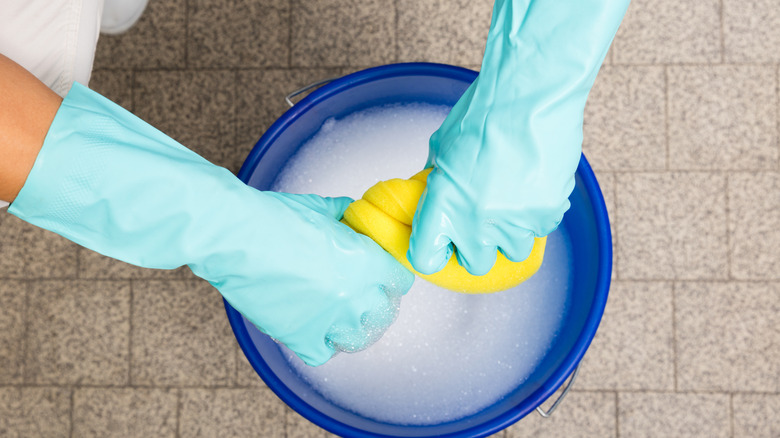
In general, the outside of your oven door isn't vulnerable to heavy-duty spills and grime. But even the exterior's glass inset and the surrounding area still gets its share of streaks and smudges. A pail of soapy water to quickly handle these marks. The simple, sudsy solution often works wonders, even on the inner door's stubborn stains.
Put your favorite dish soap in a bucket of warm water. Keep in mind that a little soap often goes a long way, especially on glass surfaces. Start out with just a few squirts into the bucket of water. If you're especially concerned about artificial dyes and fragrances of commercial dish soaps, use a liquid castile soap that's either plain or scented with essential oils such as lavender or citrus. Dip a sponge or cloth into the bucket of sudsy water. Gently rub the cloth or sponge onto the glass oven door, making sure to wring out the sponge before applying it to the door. When you're done, use a second sponge or cloth that's been soaked in plain water to rinse the soapy solution off. Finish with a quick buff using a clean, dry cloth.
Use a squeegee to spruce up your glass oven door
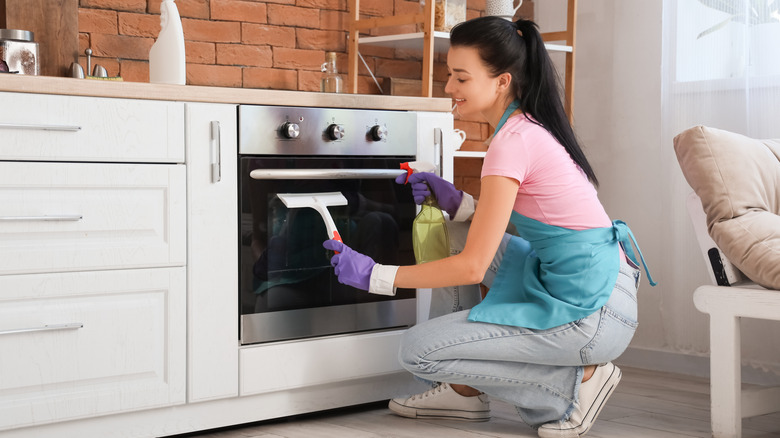
Why leave the squeegee loitering in the garage when the tool is so efficient at cleaning your home's glass surfaces – including oven doors? Like super-efficient microfiber cloths, squeegees allow you to use plain water in place of glass cleaners. Some commercial glass-cleaning products may contain harmful solvents, spread by aerosols or misters that may cause breathing issues for some people. Instead of opting for these potentially toxic products, try the squeegee method first.
Start by spraying plain water on the inside or outside of the oven door. Next, "squeegee" the water and loosen the gunk. If you're dealing with fingerprints or grease, a bit of lemon juice added to the water with which you first dampen the glass adds to the effectiveness. Water-diluted white vinegar also enhances the "squeegee method" if you have some extra dirt to remove. If the oven door glass still looks dirty after squeegeeing, don't despair! You probably just need to finesse your technique a little bit. Wipe down the squeegee with a clean cloth more frequently, and try going top to bottom rather than side to side, while also overlapping each stroke slightly.
Explore magic melamine foam to de-grime oven doors
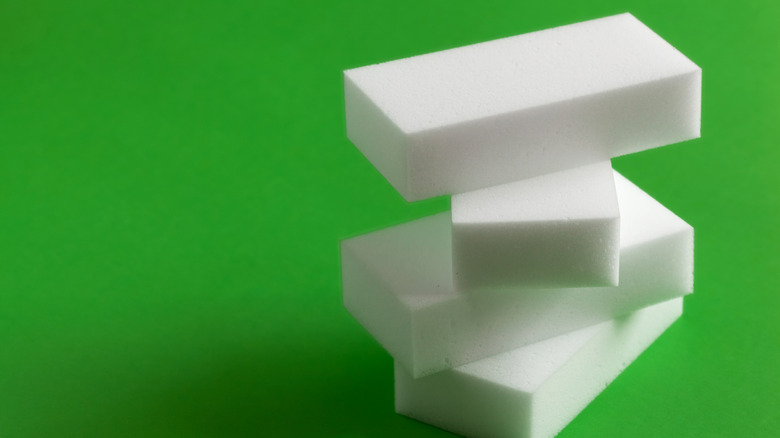
Like microfiber cloths, melamine foam products such as the Magic Eraser can often get the job done with just the addition of plain water. That "magic" extends to grimy glass oven doors! (Unlike microfiber cloths, however, melamine foam products can't be endlessly reused. If you're concerned about adding extra debris to the landfill, you might want to save this convenience product for times when you really need a fast, effective solution.) Melamine foam sponges are made without extra chemicals. They're blown into a foam consisting of multiple air pockets. The material around the air products has edges that can catch at the surface of dirt and grime, quickly lifting them up.
Running the melamine foam sponges under a bit of water activates their cleaning powers. To tackle your oven door, wet the sponge until it is damp but not sopping wet. Rub it gently over an out-of-the-way part of the glass to make sure you aren't scratching it. Once you're satisfied, gently scrub the part of your oven door that you need to clean, whether it's the glass inset or the surrounding surface. Rinse off the sponge partway through if the area is especially grimy. (In a pinch, you can also tear the sponge in half for a bit more clean surface area.) When the oven door is cleaned, gently buff it dry with a clean cloth.
As a final note, these sponges do contain faint traces of formaldehyde. While they are not considered toxic, it's important to keep them out of the reach of curious pets and children. If your skin is sensitive, you may want to wear gloves while working with the sponges.
Tackle the in-between part of your oven with a long-handled tool
It's a mystery with a maddeningly simple solution. You carefully clean both the exterior and interior of your glass oven door, yet there are still food particles and grime that make the oven look anything but clean. Even if you've already realized that it's the area in between the two panes that need cleaning, it may seem impossible to get to those grimy bits. Fortunately, it's easier to clean this area than you think.
Oven doors are designed to come off, allowing you to access the problem area with a long-handled tool. Following manufacturer's instructions, depress the hinges on either side of the oven door. Carefully place the released door on a towel-covered surface, such as a table. Next, wrap a cloth around a broom handle or yardstick and secure it with an elastic band. A microfiber cloth is ideal for this use, but a clean dish towel will also do. After soaking the cloth part in soapy water, insert the cleaning tool between the panes of glass. This enables you to scrub that no-man's land free of dirt and grime. You may need to rinse and re-soap the tool more than once. Follow up with a rinsing step by re-attaching a non-soapy, damp cloth to the broom or yardstick. After drying with an additional cloth, replace the door, again following the manufacturer's instructions.
Finish up with crumpled newspaper to keep the oven glass streak-free

Whether you're using water and a squeegee or a sponge with vinegar, getting glass "clean" doesn't always mean getting it streak-free. Often, smudges get left behind, even when the glass oven door itself is clean as a whistle. That's why the old-fashioned trick of using a newspaper to finish up can still be a good one. (Of course, this method is best employed if your newspaper of choice is an old-fashioned, non-glossy section with reasonably thick paper.) Just make sure to wear gloves while using the newspaper trick to avoid the wet ink getting on your hands.
Crumple up a non-shiny, non-colored wad of regular newspaper for this finishing touch. Rub back and forth against the glass surface until any remaining streaks from your cleaning step have disappeared. Use separate sheets of newsprint for each side of the door – interior and exterior – when cleaning the entire door.
If you're still seeing streaks, try diluting your cleaning solution with more water. Some additional ingredient, whether it's soap, baking soda, or a commercial cleaner, is in too high a proportion to water to properly rinse and buff off.