

Common Money Tree Pruning Errors That Could Be Stressing Your Plant
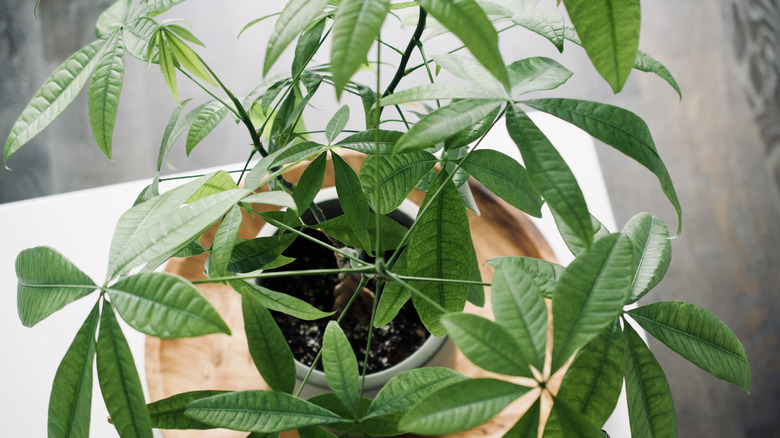
Money trees (Pachira aquatica) are popular houseplants thanks to their attractive growth habit and the fact that they're safe to grow around pets. While they're generally considered easy to maintain and grow well in indirect sunlight, they do require some pruning to keep them in good shape — and getting your pruning techniques wrong can cause undue stress on the plant that can make it look worse.
When left to their own devices, money trees have a tendency to grow tall and leggy. If you don't keep up with pruning, this can make them look a little gangly. At the same time, if you prune too much at once or during the wrong season, you can end up stressing your houseplant, which can lead to disease, stunted growth, and even death.
Whether you're trimming so you can braid your money tree or just doing a light pruning to keep it tidy, there are a few common mistakes that many houseplant growers make. By learning how to avoid them, you can keep your money tree vibrant and healthy. From over-pruning to pruning at the wrong time, here's what to avoid (and what to do instead) when it comes to keeping your money tree healthy and attractive.
Avoid pruning too much at once
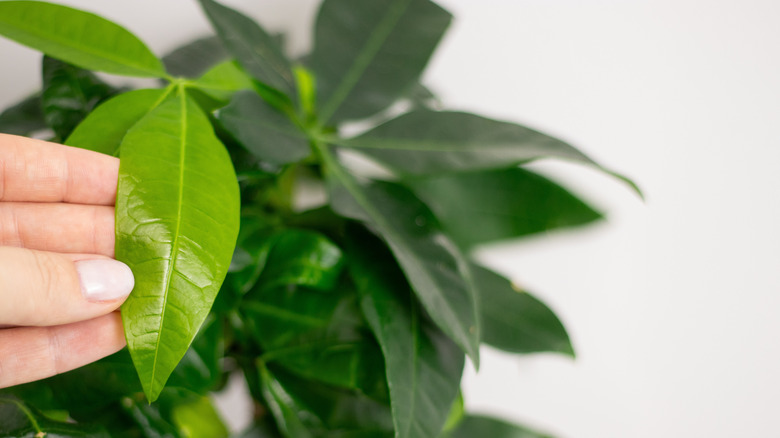
One of the easiest mistakes to make with any plant, money trees included, is erratic pruning. Maybe you forgot to prune for a while or kept putting it off, only to realize that your money tree has gotten pretty wild-looking. Then, to make up for lost time, you end up hacking away multiple stems in hopes of trimming it back into shape and growing a fuller money tree. This erratic pruning schedule isn't good for your plant.
When you remove too much plant material in a single session, it can cause your money tree to go into shock. To reduce the shock your tree experiences after pruning, don't remove more than half the length of any stem, and don't cut into the braided sections. And, as a rule of thumb for any tree, avoid removing more than about 20% of a tree's foliage in a single session.
If it's been a while since you last cleaned up your tree's appearance, you might have to split your pruning into multiple sessions. In this case, you can prune once in early spring and again later in the summer to touch up any spots you missed. Be sure to limit your cuts in both pruning sessions, sticking to the guidelines from before. From there, make it an annual routine to inspect your money tree and snip off stray stems or leaves. By keeping up with regular pruning, you'll minimize the amount you have to remove in any given session.
Avoid pruning during the dormant season
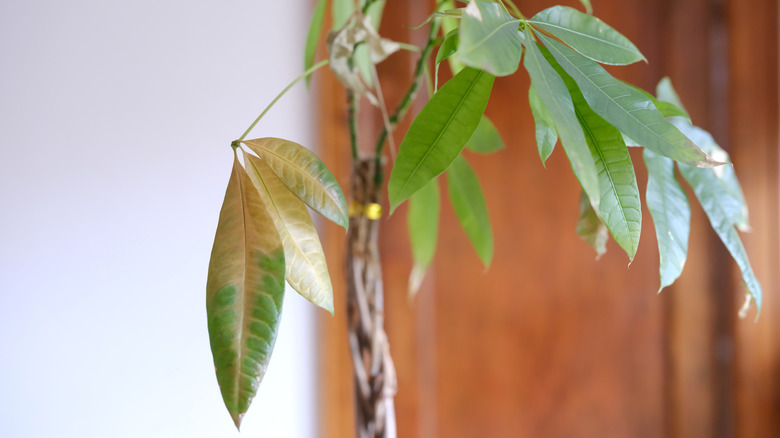
Don't prune your money tree during the dormant season. During the fall and winter, when its growth has slowed, your money tree may not have the energy to recover from pruning as quickly as it needs to. The tree needs to have the strength to heal the cuts and produce new growth. If you're pruning for the purpose of propagation, that's even more reason to avoid doing it in the dormant season. You may have heard that it's easy to propagate a money tree from cuttings. This is true, but you're more likely to successfully see roots develop on those cuttings if you do so in spring or early summer.
Beyond pruning too much and pruning at the wrong time, there are a couple of other mistakes to avoid making with your money tree. For example, you should avoid using dull pruning shears. If they aren't newly sharpened, your shears can end up creating a jagged cut that's harder to heal, leaving your tree vulnerable to disease.
Finally, when you're done, don't make the mistake of forgetting to check the plant's moisture level after pruning. Money trees already like a lot of moisture, but you don't want to overwater it, especially while it's recovering. During this time, you'll want to keep the plant in indirect sunlight, providing water and humidity as needed.