

How Much Is Your Family Silver Actually Worth?
We may receive a commission on purchases made from links.
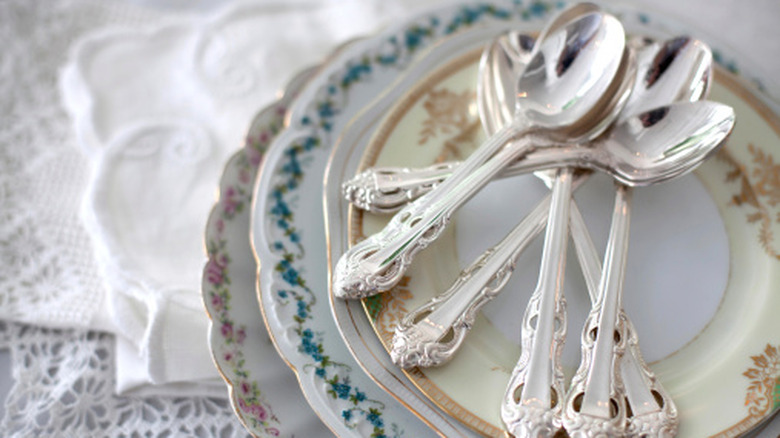
It's not uncommon for families to have valuable silver pieces that are passed down through generations. Silver was once a popular wedding present, and items made of this precious metal hold their value, often have functional purposes, and can stay in good condition for centuries. Whether you're in possession of your grandma's flatware set, a few family-owned vases, or some shiny bowls, you might be wondering what these pieces are actually worth in today's market. Are they really as precious as they've been treated by those who have passed them down, or do they hold more sentimental and historical significance than monetary value?
When determining the worth of your silver pieces, you can take two approaches. You can either calculate the cost of the silver itself, giving you a more precise value if you were to melt down the items and sell them as scrap. Or you can take a look at any hallmarks, patterns, or unique pieces to see how much the items would go for on the resale market. The approach you choose will depend on your goals, but before you do all that, it's necessary to determine if your pieces are real silver.
Thankfully, this is a fairly simple process. Start with a good clean and polish to make your vintage silver shine like new. Feel the weight of the items — if they're heavier, they're likely solid silver, not plated. Then, check to see if they're magnetic. If they're solid silver, they won't attach to the magnet, giving you a clearer indication of how to go about appraising their value.
How to determine the value of silver based on weight
Even if your item feels like solid silver, before you gauge its value based on weight, you should check to see if it contains any additional materials. Some items, even though they contain real silver on the outside, are filled with other metals, waxes, or resins that help add stability and make cheaper products feel more high-quality. This can significantly impact their pricing, and items that are filled or "loaded" may not have enough silver to be of value based on the quantity of precious metal alone. Weighed items should have a tiny stamp on the base. At this point, you should also determine if your items are fine silver or sterling silver, which is simply an indicator of how much pure silver is in the metal alloy. Fine silver is stamped 999 (99.9% silver), and sterling silver is stamped 925 (92.5% silver).
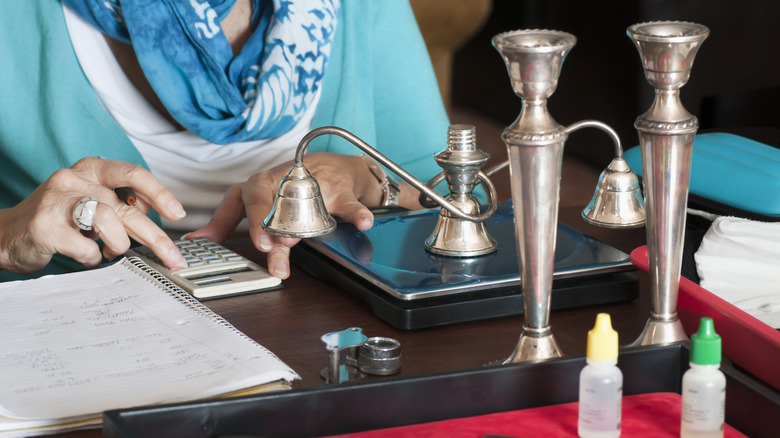
For truly solid silver pieces, determining their value is as easy as weighing them and doing some simple calculations. The value will be based on the pieces' weight in Troy ounces, so you'll want to pick up something like this Maxus Digital Pocket Scale that displays this value. Make sure to write down the weight of the pieces to make future calculations easier, as the spot price of silver continuously fluctuates.
Now, it's time for some math. Multiply the weight of your items by their purity (.999 for pure and .925 for sterling), then multiply that figure by the current spot price of silver, which can be found on a website like APMEX. This will be the pure value of your items — but if you're actually planning to sell to a buyer, you should be aware that they will take a hefty cut.
How to determine the resale value of silver items
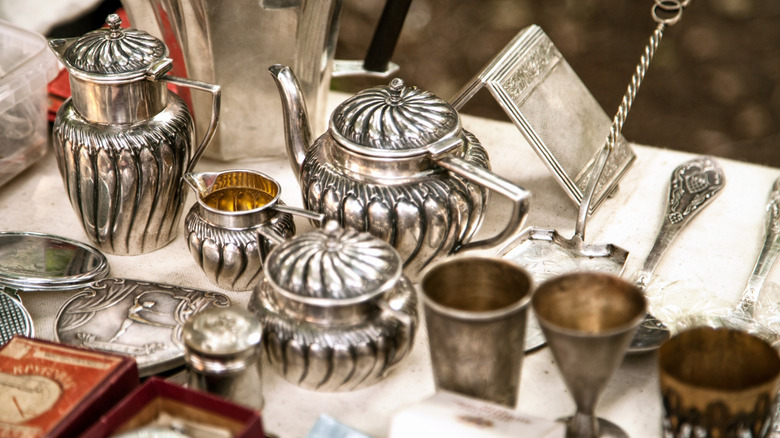
When it comes to antique silver, the value of the precious metal isn't the whole story. Respected brands, unique items, and older pieces can fetch much more than the cost of the materials, so it can pay to look at your silver in more detail or even have it professionally appraised.
One of the easiest ways to compare your items to others that are already on the market is to look for a stamp that identifies the manufacturer. This is fairly common to see, so even if you don't have the story behind the items or their original packaging, there's a high chance you'll learn more with a bit of inspection. Respected brands to look out for include Reed and Barton, Gorham, Towle, and Tiffany. If you found a hallmark, look up the brand on eBay or other online auction sites to get an idea of what similar pieces are going for.
If you're completely lost and want an at-a-glance view of what an item might be, online resources like Google Lens or even collectors' forums can help with identification. From there, you can continue your online research, hopefully stumbling across some additional hints as to what you're in possession of and what it might be worth today.