

The Aromatic Evergreen That Feeds Birds & Pollinators While Providing Privacy
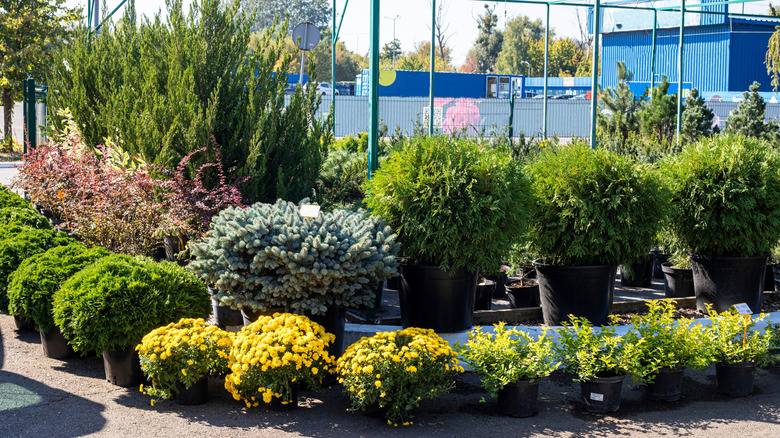
Are you on the hunt for one of the best winter plants for patio privacy? You need a tree with foliage that stays thick even in the coldest months of the year. Wouldn't it be nice to grow a tree that releases a fresh, spicy scent when you brush past it or crush its needles, like a bayberry candle? Planting a native Southern wax myrtle (Morella cerifera) is an excellent way to keep neighbors from peeking into your yard. Plus, these bushy trees give birds and pollinators food and a place to call home in USDA Hardiness Zones 7 through 11. The shrub grows a thick wall of olive leaves that stay on the branches all year long, and it's softer looking than sharply manicured boxwood or privet hedges.
These evergreen trees can put on 2 feet of growth in just one year. They will eventually top out at somewhere between 10 and 25 feet, but you can easily keep them smaller with pruning. The Southern wax myrtle fills in empty spots so quickly that it looks like it's been part of your yard forever rather than something you just brought home from the nursery. The branches are flexible and don't snap easily in heavy winds or light loads of ice and snow, making it a great choice for year-round privacy in areas that experience strong storms. Note however that the branches will droop under the weight of heavy snow.
How to grow Southern wax myrtle for thick privacy hedges
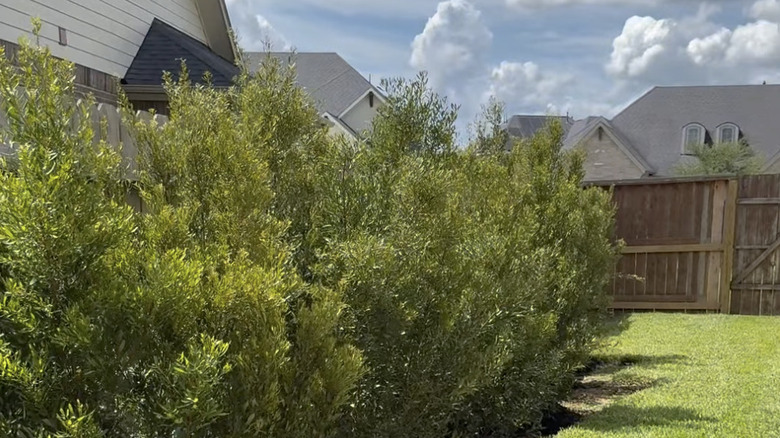
When you plant fast-growing wax myrtle in your yard for a low-maintenance privacy screen, you need to space the trees correctly right from the start. Dig holes for these shrubs about 5 or 6 feet apart to make sure the branches tangle together and close up any gaps. This creates the kind of heavy coverage that really makes a yard feel private. This shrub is incredibly hardy and doesn't struggle in sandy or soggy soil. It also has a unique way of pulling nitrogen from the air to feed itself, which is what allows it to thrive in poor soil — the tree may even improve it. While Southern wax myrtles will tolerate shady backyards, you'll get much denser growth if you plant them in a spot with plenty of sun.
Giving the branches a quick trim in the late winter or early spring keeps the plant tidy while encouraging it to grow more side branches. This creates thick, bushy plants that can handle wind and still keep your yard hidden from the street or neighboring properties. Because these evergreen trees can tolerate salt, they're the perfect option for coastal gardens where most other shrubs struggle and turn brown in the salty air. It's worth noting that while the Southern wax myrtle makes a fantastic privacy screen, you should be careful where you plant it for safety. The same resins and waxes that give the leaves their signature scent also make the plant highly flammable. In areas prone to wildfires, keep these shrubs at least 30 feet away from your home.
Why Southern wax myrtle is a great choice for birds, bees, and butterflies
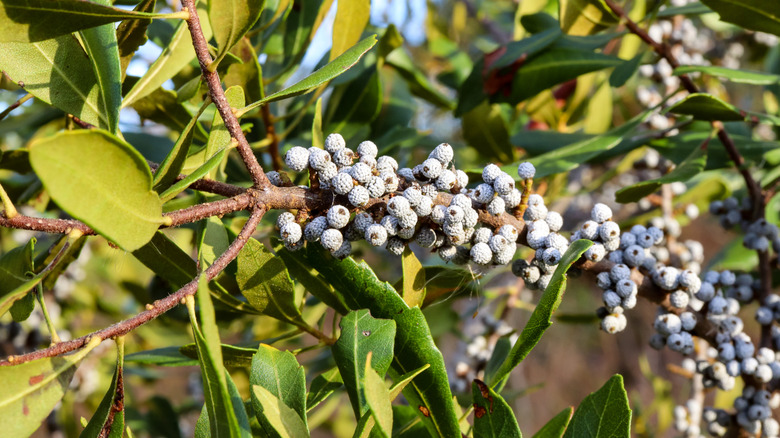
Using Southern wax myrtle as a year-round privacy screen also supports local birds through winter. The female plants grow clusters of small, blue-gray berries from summer through fall, and many stay on the tree into winter. They're loaded with nutrients birds need to keep up their energy when the temperatures drop. Depending on where you live, you might see yellow-rumped warblers or catbirds perched on the branches, snacking on the berries. Southern wax myrtles are either male or female, not both, so you need to have at least one male plant within a 40-foot radius of female trees. If not, you won't see any berries.
Once spring arrives, your solid privacy hedge will become popular with pollinators. This shrub's flowers are small and easily overlooked, but they provide honeybees and butterflies with early-season nectar. A dense stand of Southern wax myrtles also serves as a nursery for banded hairstreak and red-banded hairstreak butterflies, whose caterpillars feed on the living and fallen leaves. The dense, twiggy interior of your living privacy fence is a safe resting and nest-building spot for songbirds, helping them stay out of sight of predators. When looking for plants that are most likely to bring swallows to your yard, for example, this shrub makes the list. Planting a few Southern wax myrtles offers more than just privacy — you're contributing to an ecosystem that keeps birds and pollinators happy.