

Is Dish Soap The Secret Fix To Affordable Pest Control? Here's The Truth
We may receive a commission on purchases made from links.
Picture this: It's a lovely sunny morning in spring, and you head out to the garden with your morning brew to inspect your prized roses. As you look closer, you gasp in horror to find that the buds are smothered with pesky aphids that are threatening to destroy those lovely blooms you've been so looking forward to. Now, like many gardeners, you might immediately run inside and grab your dish soap, some vegetable oil, and your trusty spray bottle. This is the common recipe for homemade white oil that gardeners have been using for years, but is it really the best way to solve your problem, or could it do more harm than good?
The idea behind this formula is that the dish soap acts as a surfactant, which allows the liquid to adhere to the leaves, while the oil smothers the tiny soft-bodied insects so that they suffocate. Often, this is touted as a natural and affordable solution for pest control, but while the oil might be naturally-derived, the dish soap is not. In fact, it's not actually a soap, which is typically made with lye and fats, but rather a detergent, containing a number of lab-formulated chemicals. For example, Dawn dish soap contains chemical solvents designed to dissolve oils, fats, and grime on your dishes, not to kill pests or even weeds. This means that dish soap might just not be that affordable pest control fix you've been looking for, and you're better off using it to clean your bathroom.
How dish soap could be harmful to your plants
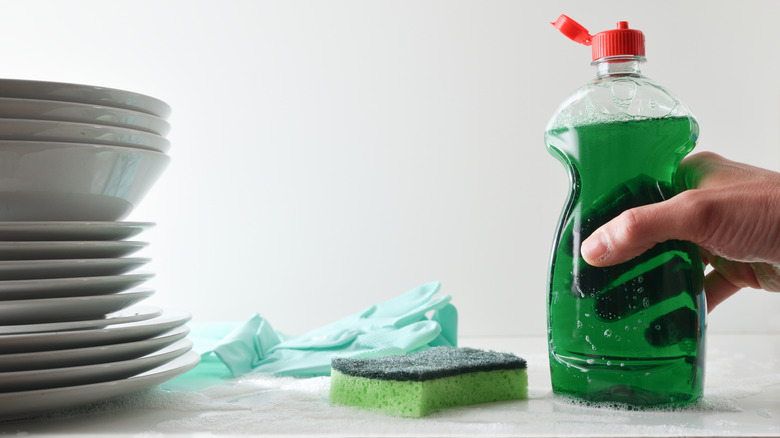
Although most dish soaps are labeled as gentle, this usually refers to the fact that they're not going to hurt your skin, but the same can't be said for the leaves on your plants. Most plants have their own mechanisms to protect themselves from environmental dangers such as pests. Their leaves are often coated with a waxy layer, which prevents water evaporation and even inhibits fungi and bacteria from taking hold. The solvents in dish soap can break down this protective coating, leaving the plants much more vulnerable to disease attack. So, when you grab that spray bottle filled with your dish soap solution and spray it on your plants, you might end up with dried-up leaves.
The other problem you might encounter is that any concoctions containing dish soap will not only kill pesky insects like aphids and mealy bugs on contact, but they're also going to harm the best bugs that protect your garden (such as ladybugs) that you want to see in your garden. So essentially, this so-called natural pest control solution is actually no better than commercially available products such as insecticidal soap. In fact, it's probably going to do more harm than good in your garden.
Why insecticidal soap may be a better solution
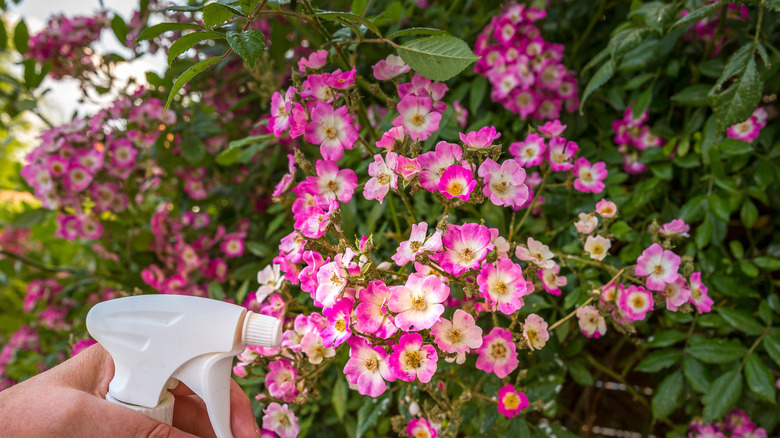
Insecticidal soaps, like this Trifecta crop control soap for plants, are formulated specifically to use as pest control, and are one of the best ways to get rid of whiteflies on indoor houseplants. These products normally contain fatty acids mixed with potassium salts (like potassium hydroxide), so they're actually more similar to real soap rather than the detergents labeled as dish soap. Most importantly, they've been formulated to be used specifically on plants rather than washing dishes. They offer only a contact-type pest control and leave no residue on the plant leaves.
In simple terms, the acids contained in these products break down the cellular structure of soft-bodied insects, causing them to die. Although these products might not be as cheap as the dish soap sitting in your kitchen cupboard, they're going to be much more effective at killing pests such as aphids, mealybugs, scale insects, and even whiteflies. You just have to remember that they only work when they've made contact with the bugs and may need to be reapplied until all the pests are gone. As with any type of garden product, make sure that you read the instructions on the package and take note of any precautions.