

The Property Brothers Agree: This Major Flaw Is Asking For Costly Repairs

Property Brothers, Drew and Jonathan Scott, are renowned for renovating troublesome spaces and hopeless designs into dream homes for homeowners. But even they agree –- some houses are just not worth the effort. If a house has a major structural flaw, such as a sinking foundation or uneven floors, it can almost cost you half your annual paycheck and a boatload of problems to fix. You're better off steering clear of these homes altogether.
Structural problems refer to those issues that are directly related to the integrity of the foundation, roof, or load-bearing walls of the house. These problems, when left untreated, can lead to the collapse of the entire house. When talking about a doomed property they came across early in their careers, Jonathan Scott told Realtor.com, "They [Homeowners] were set on this one house that had been built on an old landfill and the house was sinking," he said. "And so, it had massive structural problems. We told them: 'This is not the house, do not buy this house.'"
Although there can be several causes for structural flaws in a house, since this house was built on a landfill, the biggest reason for the defect in this case was likely the lack of soil stabilization. If the soil underneath your house is not capable of bearing its load, you might see a house standing on top but over time you will see major signs of settling of the foundation. The decomposition of soil elements would cause the house to sink. Aside from the problem of sinking, poor soil compaction can also lead to differential settlement, which can also result in problems with stability.
Structural issues can cause massive headaches (& bills) down the road
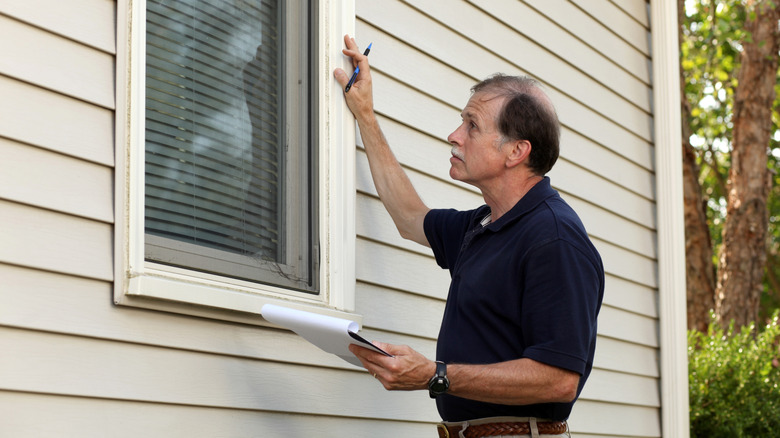
Apart from settling, you also need to be wary of other red flags that are essential clues the foundation is wreaking havoc on the home's structure. While buying your house, look out for signs, such as horizontal cracks on the walls or floors of the house, water damage or drainage issues, sloping floors, or bowing walls. Furthermore, if you notice that the windows or doors of the house do not fit well into the frame, do not treat them as minor repairs you can handle later on. This can be a symptom of a much larger issue with the foundation, which can cost you anywhere between a few thousand bucks to a hefty $50,000, depending on the severity of the issue.
Talking about short-sightedness while fixing such homes, Jonathan Scott added details to his anecdote about the home built on the landfill in his Realtor.com interview, saying "And then they decided that they didn't want to fix the problems properly, they just wanted to level the floor out. But then you'd have like a 6-and-a-half foot ceiling height at the back of the house." Treating just the symptoms of structural defects instead of the root cause can be a huge mistake as well.
Apart from the foundation and the walls, the roof also deserves a keen inspection. Some contractors cut down on costs by hiding old shingles under newer ones, and multiple layers of shingles on a roof can be a sign of issues lurking underneath, such as roof rot. This can add extra weight to the structure of the roof. Ignoring these issues can prove costly later on.
The average cost of fixing major structural problems

Fixing structural problems can cost you anywhere between $5,000 to $25,000, depending on the severity of the issue and the fix, while more complicated stabilization fixes can cost even more. Across the entire nation, foundational repairs cost anywhere between $2,200 and $8,100 on average, per This Old House. However, if your house requires procedures like foundation lifting or leveling, the expense can rise very quickly. It is not uncommon for people to spend as much as $50,000 on fixing foundations. Meanwhile, ignoring these issues can amp up short-term costs related to flooring, plumbing, and roofs.
A 1,200-square-foot roof replacement, on the other hand, can cost you an average of $5,700 to $12,000, per Fixr. Again, that cost can spike depending on the complexity of the issue and the quality of the material being used. Furthermore, fixing soil issues that can cause problems with settlement can be up to $5,000 or more, while wall reinforcements can reach up to $12,000, if you're using carbon fiber techniques, per Modernize.
The good news is that you can avoid all these costs if you don't let appearances deceive you while looking for a new home. If you're unsure about your ability to spot giant structural red flags, it is a good idea to hire professionals and let them inspect the house for you. While you may not have the privilege of letting the Property Brothers to do this for you, you can definitely leverage far greater expertise and know-how than merely guessing it all by yourself.