

Best Tips For Attracting Owls To Your Yard (& The Benefits)
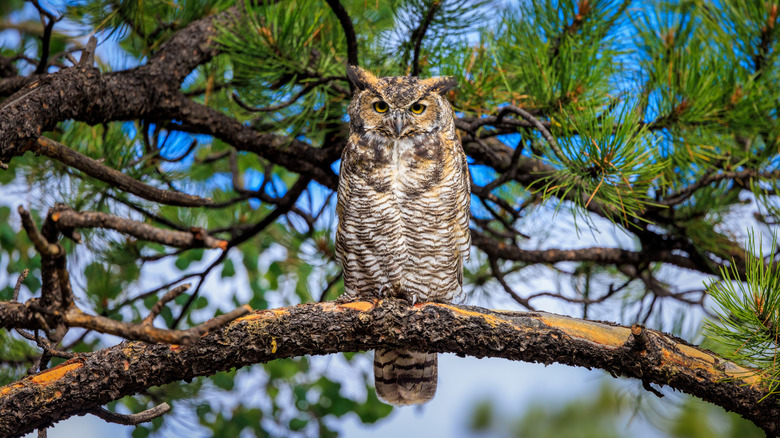
Have you ever caught a fleeting glimpse of an owl in your back yard? No? If you would like to, there are some surprisingly easy ways to encourage them into your garden. More than that, there are significant benefits in allowing them to make themselves at home — benefits that'll have you kicking yourself for not making your yard more owl-friendly sooner. For example, a number of owl species will quite happily take the reins on your rodent control strategy. In doing so, they'll play an important role not just in your garden, but in your area as a whole, helping to ensure that the numbers of different species remain balanced. Beyond biodiversity, those who appreciate the drama of nature and wish to witness more of it in their backyard are sure to love hearing the subtle swoosh of owls after dark. And there's something thrilling about hearing a pair of owls converse as one leaves the nest for their nightly hunt.
There's no single way to encourage owls to make a home for themselves in your garden. Instead, depending on your yard and your particular circumstances, a multi-pronged approach is best. And that's what we're here to help with. Whether you have pets, porch lights, or are unsure about your garden's plants, if you have owls in your area but they're conspicuously absent from your yard, then this guide is sure to help.
Certain species of owls can help to keep rodent populations down in your yard
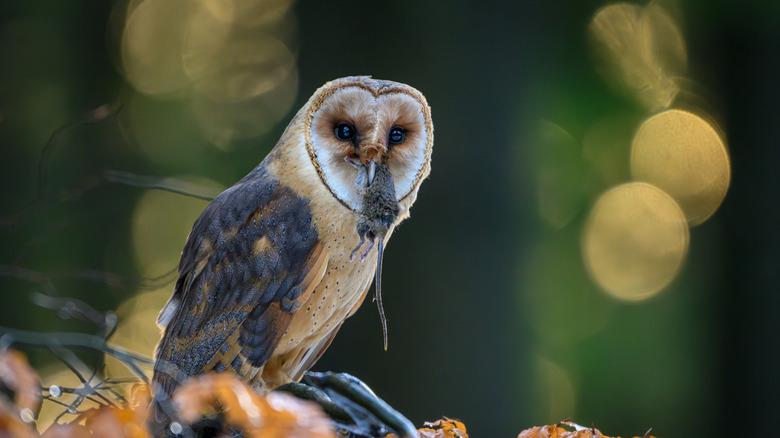
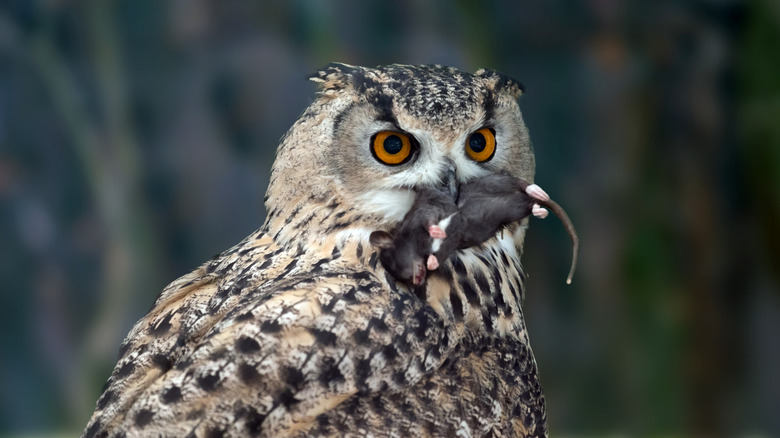
If your yard is harboring a thriving population of rodents, you're going to want to listen up. Barn owls and screech owls, in particular, are fantastic allies when it comes to pest control. They can get through a surprising number of rodents in just a single evening, and over the course of a single nesting season, they can consume thousands. In other words, their presence is perhaps the most inexpensive solution to keeping rodents out of your garden.
As an example, it's thought that a single eastern screech owl can eat up to a thousand mice in a single year. A single barn owl, meanwhile, might take between three and four rodents in just one evening — and that's just to feed themselves. Once these birds settle in and start breeding, their need for protein grows virtually exponentially. In other words, if you have a rodent problem, and you manage to encourage owls to start nesting in your garden, then you're unlikely to have that problem for long.
Natural pest control is almost always preferable to mechanical traps or poisoning. Other species can easily fall foul of certain traps, and if you're laying poison, then you can inadvertently harm owls and other animals, which can suffer from secondary poisoning. With this in mind, if you have owls in your area, be sure to steer clear of pesticides that could harm them. Owls like to hunt from high perches in quiet, undisturbed areas, so to keep the owls coming for the rodents, be sure not to disturb them by making lots of noise outside at night when they are likely to be awake and hunting.
Providing a haven for owls supports biodiversity in your wider area
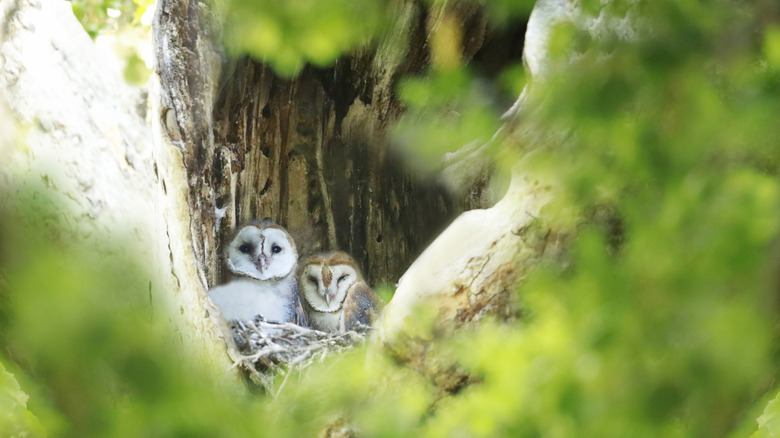
Turning your yard into a sanctuary for owls follows the same basic principle as supporting any wild animal: By offering them safe passage, you are actively helping to stitch back together the complex tapestry of your local ecosystem. Your garden ceases being a spot of urban sterility, and instead becomes a crucial link in a much larger chain of biodiversity. And if you happen to have rodents in your area, as we've already discovered, owls play an important role in keeping their populations in check.
This is especially important in areas surrounded by farmland, where unmanaged rodent populations can have devastating effects on crops. But it's also important in heavily-populated urban areas, where animals like owls risk being crowded out of their natural homes by humans. By turning your garden into a micro-haven for owls and other local species, you can make a significant difference in maintaining your region's delicate ecological balance.
As we'll cover in more detail later, there are several ways to do this. For example, if your garden is home to a burgeoning population of rodents, then try not to interfere with them, as they will be an immensely attractive source of food for any owls in your neighborhood. Planting native trees makes your yard more attractive to local owls, since they're more likely to recognize them as a source of shelter, and if you add nesting boxes to those trees in spots that are quiet and sheltered from the wind, they'll be even more likely to look upon your garden favorably.
Birders are sure to love having owls visit their garden
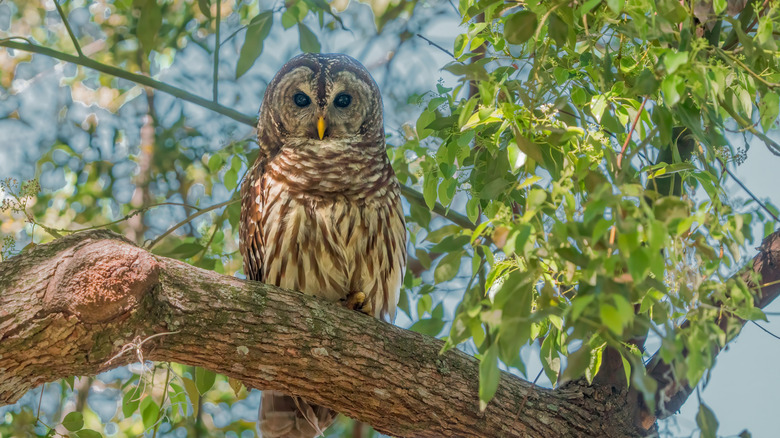
This benefit boils down to a simple appreciation of mother nature. So, let us ask you: Do you enjoy seeing the drama of the natural world unfold from your kitchen window? If so, then (as you'll see shortly), there are plenty of birdscaping tips you can follow to turn your yard into a bird haven.
Of course, being nocturnal, owls are one of the most elusive species, meaning you're unlikely to spy them from your kitchen window when you're doing the dishes after breakfast. However, you might just hear the sound of an owl hooting (or, depending on the species, screeching, whistling, purring, snorting, or even hissing) from a branch somewhere in the darkness of your yard. Sure, it's not necessarily as rewarding as watching a woodpecker go ham at your suet feeder, but if you're an avid birder, you'll find no shortage of satisfaction in turning your yard into an after-dark haven for owls.
Fortunately, there are plenty of ways to do this. As you'll see later in this guide, some involve doing very little — like switching off your porch lights, keeping your pets indoors at night, and allowing rodents in your yard to go about their business. Others, like installing nest boxes or planting native trees, require a little more work. In all cases, if you're an avid birder and are determined to welcome these enigmatic creatures into your little slice of horticultural paradise, they are all, without exception, absolutely worth taking the time to do.
Provide shelter for owls in quiet, low-traffic areas
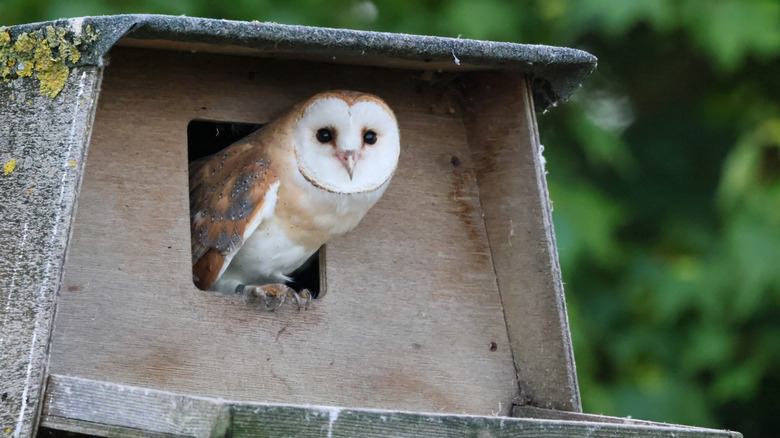
Owls are mostly nocturnal and prefer sheltered areas to hang their proverbial hats during the day. They typically favor quieter spots, ideally those away from the noise of humans and pets. This means that if you're unable to minimize pet disturbance or the noise of excitable children, then owls are less likely to venture into your yard and stay there.
The goal is to make the owls feel safe in your garden, and depending on the species living in your area, there are different ways to do this. For example, if you have cavity-nesting species, like barred owls and screech-owls, then installing nest boxes can be a great way to stack the odds in your favor. Place them high up in a tree, away from the worst of the wind and out of reach of predators (including your cat). You should also try to ensure that the boxes are placed away from any other small-bird feeders and baths. Smaller bird species will mob larger birds of prey, and owls are unlikely to take shelter in your nest boxes if doing so comes with the risk of attack.
Don't encourage rodents, but don't discourage them, either
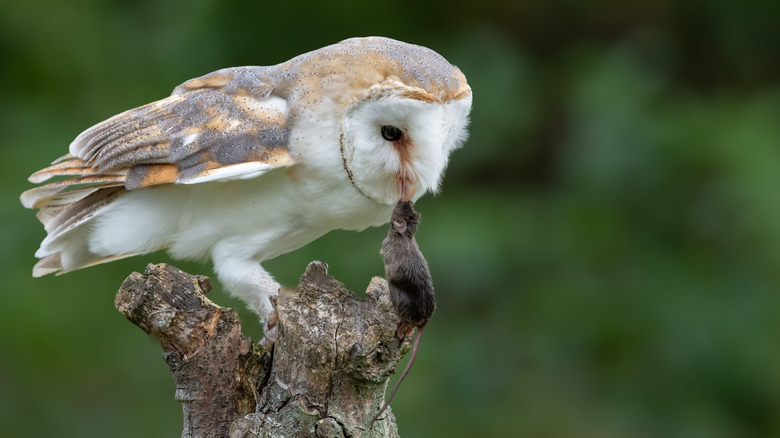
The first thing we'd like to say here is that you shouldn't start putting food out with the intention of attracting rodents. It's not that it won't work, rather, on the contrary, you'll probably find that it works marvelously well. The problem is that, unless your local parliament of owls gets wind that the rodents have started to make themselves at home in your yard, you could find yourself with a serious infestation on your hands.
Instead, what we're saying is that, if there are already rodents in your garden, then hold off on taking any drastic measures to control them. Avoid laying poison, as this could inadvertently harm owls if they prey on contaminated rodents. Depending on the severity of your rodent infestation, you could lay humane traps if needed. Then again, these are rarely an effective solution by themselves. What's more, if you're making tweaks elsewhere in your garden in the hope of attracting owls, then the pitter patter of rodent feet going about your garden may just be the sweetener owls need to swoop in and make themselves at home. And when they do, you may well be surprised by just how quickly your rodent problem resolves itself.
Large, deep bird baths are ideal for when owls need to cool themselves and bathe
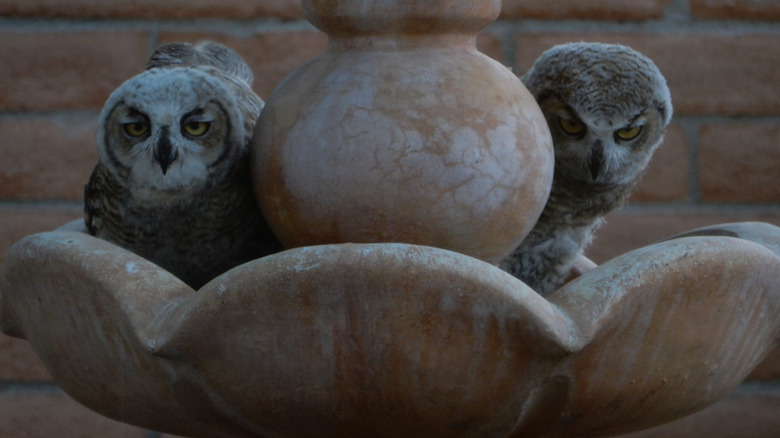
Regardless of the species, one of the best ways to attract birds into your garden is with the inclusion of a bath. Like most creatures, owls are most likely to settle down in an area that affords them easy access to food, shelter, and water. And while they get the majority of the water they need to survive from their food, owls are nevertheless partial to a good preen now and then, especially in the height of summer.
To ensure your bird bath is owl-friendly, opt for one that's large and at least 2 inches deep. Owls are typically larger than the other birds you're likely to see at your garden's regular-sized bath. What's more, smaller birds tend to mob larger birds like owls, so even if you had a "one-size-fits-all" bath, you'd still need to install separate bathing stations. Position the owl bath in a quiet corner, close to where you've put your next box (or close to any hollowed-out trees you already have in your yard), and ensure that the water is frequently changed to prevent the growth of harmful bacteria.
Keep pets inside after dark
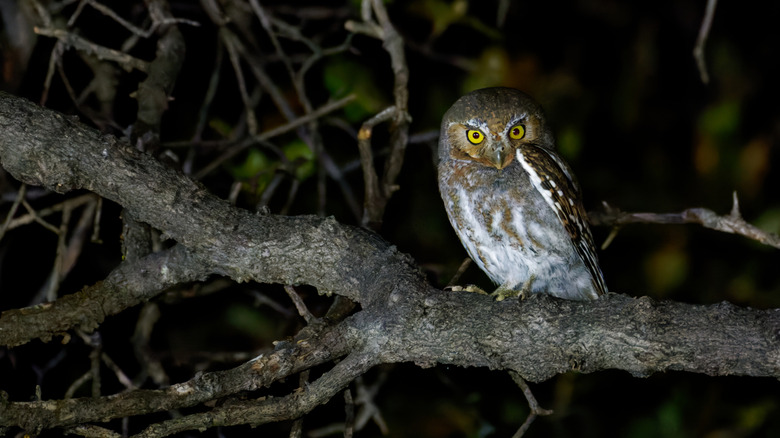
How would you feel about venturing out into the Serengeti to pick up your groceries? With all of those predators lurking nearby, you'd probably prefer to avoid it, right? That's precisely how owls feel in gardens dominated by loud and dangerous pets.
For example, if you have a dog, their bark is sure to be enough to keep owls from sticking around for long, even if they don't actually pose a serious threat. Alternatively, it could be your cat, and while it may not make a scary noise, it's unlikely to allow any owls to go untouched should it have the chance to stalk one. With that in mind, if you're hoping to attract owls and you have pets, then it's best to keep them indoors at night. During the daytime, owls are unlikely to be out and about, meaning they're unlikely to rile up your dog or pique the curiosity of your cat. At night, though, owls come out to hunt, and if your pets also happen to be abroad, then the two are unlikely to play nicely together.
Try to minimize light pollution in your garden
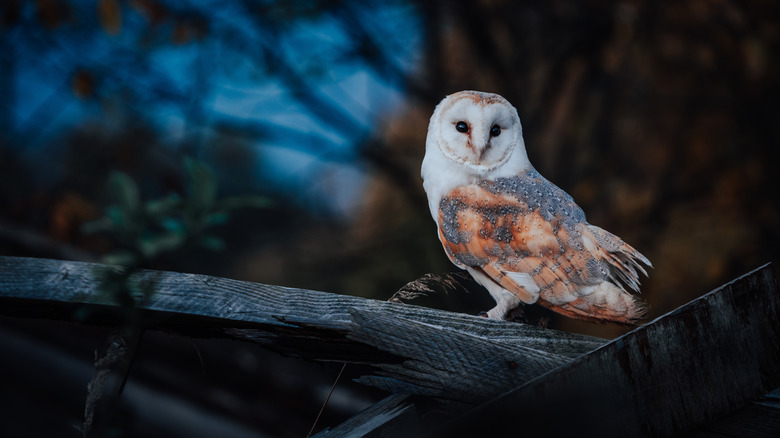
One of the most striking features of an owl is its eyes. Compared to the rest of its body, they're incredibly large — often accounting for between 1% and 5% of an owl's body weight. The reason they're so big is to maximize the amount of light they can take in at night. Don't forget, owls are nocturnal, which means that they come out at night to hunt. Like a camera with a long shutter speed, those large eyes mean the owl can see up to 100 times better in the dark than humans, and that gives them a serious advantage over their prey.
What this means is that, if you want to make your garden more owl-friendly, then darker is always better. If your yard is constantly flooded with light in the hours of darkness, then it'll rob owls of their primary advantage. In other words, they'll be unlikely to hang around for long. Tips to reduce light pollution and make your yard more owl friendly include keeping curtains drawn after sundown, and having your backyard porch lights switched off whenever you're not using them. You should also switch off motion-sensing lights, as these are likely to startle any owls that happen to swoop past and activate the sensors.
Use dense native trees and plants to your advantage
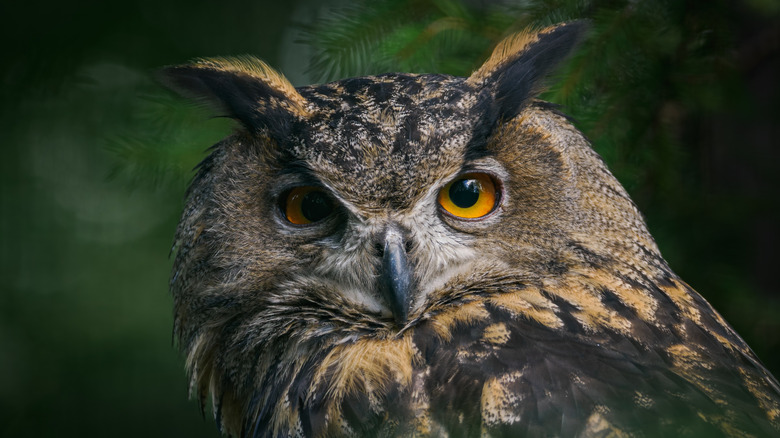
Have you ever heard the phrase "what grows together, goes together?" If so, you probably know that it's usually used to describe food pairings. However, it's just as relevant for gardeners who are hoping to encourage more wildlife in their yard. In fact, planting trees and shrubs that are native to your area is one of the best ways to attract birds, regardless of the species. Because they're native, local birds recognize them and accept them more readily as a food source. In some cases, they also turn to them as a valuable source of shelter.
It's the latter that's most important when it comes to owls. It's especially true of native evergreens, which provide dense shelter for owls all year round. Since owls don't build their own nests, they tend to rely on the trees themselves to provide them with shelter from the elements. And since they've evolved over millions of years to both recognize and prefer native tree structures over those from other parts of the world, you can stack the odds of owl attraction strongly in your favor by simply sticking to native plants.
Encourage insects and rodents with a brush pile (and avoid pesticides)
Instead of fastidiously clearing your lawn of debris after a storm or at the end of a long and productive growing season, consider tossing some of those leftover branches and autumn leaves into a pile. There are several benefits of keeping a brush pile in your backyard, and one of the most important is that it can be immensely beneficial for local wildlife. Remember what we said about supporting biodiversity in your local area?
By allotting a part of your garden to a brush pile, and by avoiding the use of insecticides, you'll put on a safe and seriously tempting spread for an array of different species. The rotting leaves and twigs will provide an excellent habitat for various insects, and those, in turn, will attract owls, many of which are just as happy eating insects as they are other small animals. Those insects will also attract rodents, thus making your yard even more of a tempting prospect for any local parliamentarians.
Resist the urge to deforest your garden
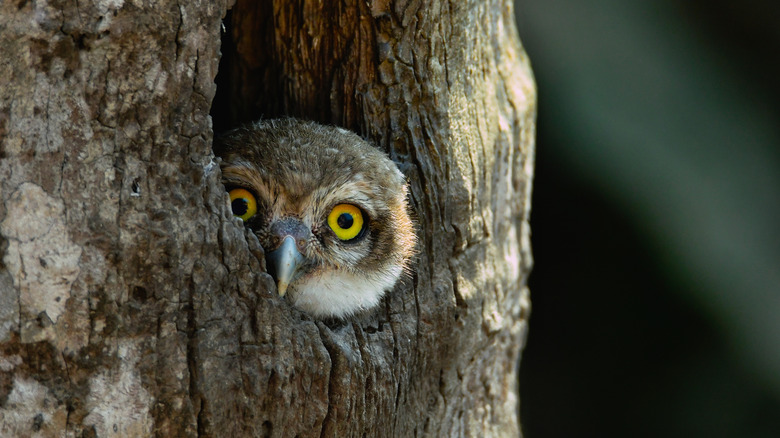
It's not necessarily enough to plant native trees and toss your broken branches into a brush pile. If you're hoping to attract animals as elusive and habitually fussy as owls into your yard, then you also need to resist the urge to over-manicure your garden. Even if you have trees that are dead and starting to decay, these are sure to be attractive to owls, particularly species like the barred owl, which likes to nest in the hollows of large, dead trees. As for those trees that are still living, try to keep your pruning to a minimum.
Regardless of species, a meticulously well-pruned garden is unlikely to attract wild animals like owls. Instead, your goal should be to have your trees mimic the natural "messiness" and density of most owls' natural habitat. What's more, unless they're beginning to pose a safety risk, you should avoid cutting down any particularly tall trees. These provide a handy watch tower for owls to look over their hunting ground below, and they're also excellent places in which to install nest boxes.
Avoid filling in old animal burrows
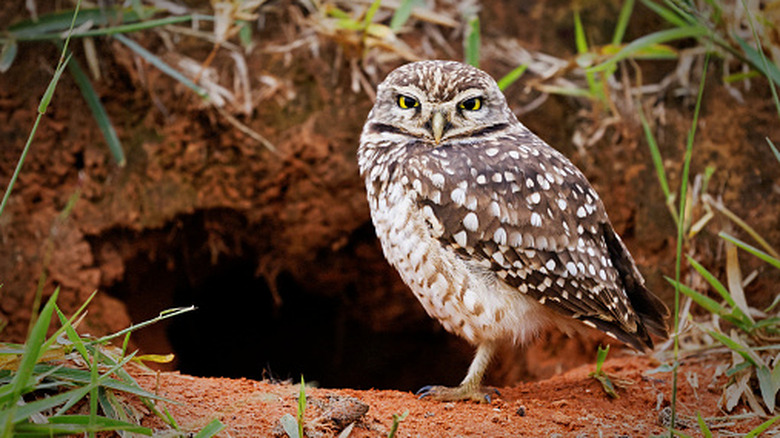
Most species of owls will thank you for allowing your trees to grow wild and for maintaining a healthy brush pile. But there are some, like burrowing owls, who prefer to nest in the ground. As you might expect, given the name, these particular owls are perfectly capable of digging themselves a cozy hole beneath your garden. But they'll also quite happily take over the old, abandoned burrows of other creatures, like skunks and armadillos.
Unfortunately, due to habitat loss, burrowing owls are now rare across much of their natural range in North America. With this in mind, you should try to avoid filling in any old burrowing sites dug by other creatures. If you do, you risk burying one of these beautiful birds (or a family of them) alive. What's more, you make your yard less likely to attract any opportunistic owls in search of a nest. While they're smaller than other owl species like barn owls, they nevertheless feed on an array of pests, including scorpions, voles, mice, and even snakes, which means they're well worth having around in your yard.