

Drop The Screwdriver: Try This Solution To Replace Chipped Driveway Pavers
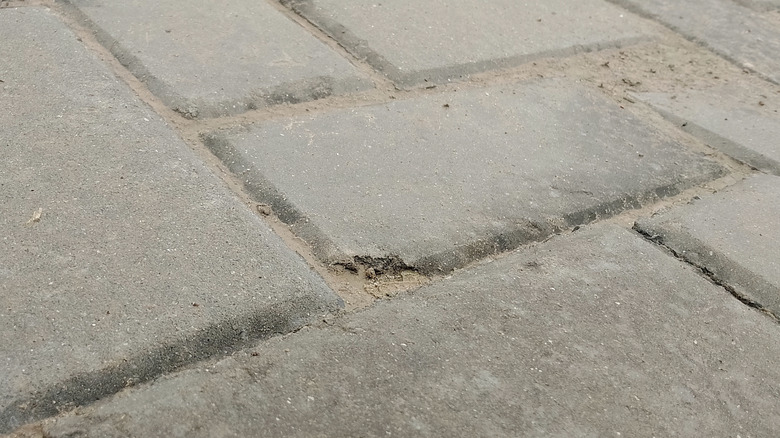
One of the most attractive sights at the front of a house has to be perfectly aligned pavers. It shows the owner takes pride in their home, and the individual pieces allow for several clever driveway layouts that are sure to boost curb appeal. However, wear and tear and objects like bikes getting dropped on them can result in pavers getting chipped. Eventually, you may want to replace them.
You probably don't need to lift large areas to address damaged pieces. It's tempting to grab a flat-bladed screwdriver, jam it into the narrow gap between the pavers, and lever out the trouble spot. With care, this can be successful, but the problem is that as you lean on the screwdriver to pry and lift it out of place, it will put pressure on the paver next to it, and there's a real danger you'll chip that one too.
One effective solution is not to use a screwdriver (or indeed anything else) to lever the chipped paver out. Instead, you could break it up in situ. You're going to toss it anyway, and breaking it up with a hammer and chisel will let you remove it without risking damage to the pavers around it. It's not just for driveways, of course. The same technique also works if you chose pavers for the patio of your dreams or for your garden pathways.
Using a hammer and chisel to remove chipped pavers
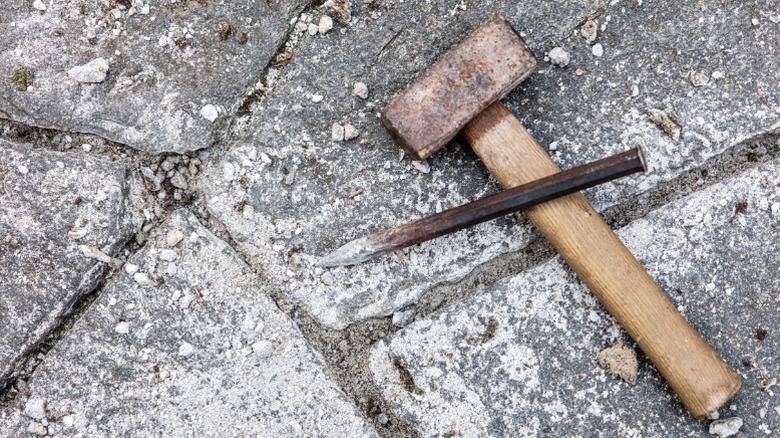
For this quick DIY, you need a cold chisel and a hammer. Unlike wood chisels, a cold chisel is designed for cutting through metal and masonry. It is solid steel throughout (sometimes with a rubber sleeve to grip it). Among the essential tools for any paver project are safety glasses and strong gloves, so make sure you wear them to protect yourself from flying debris.
The idea is not to try to smash the paver in one hit, which could result in a nasty accident if you slip. Instead, chisel along the middle of the paver a bit at a time and across it at 90 degrees. Eventually, the paver will weaken and break up. If you're patient and work carefully, you should be able to remove these smaller pieces without disturbing or damaging any of the surrounding pavers.
Once the old paver has been removed, you'll need to level the area underneath. A little sand is usually used, although it will depend on how the original driveway or patio was laid. When that's done, you can fit a new paver and bed it down with a rubber mallet. Finish up by filling any small gaps to match the rest of the driveway (polymeric sand is normally used).