

Turn An Old Tablecloth Into A Stylish DIY Kitchen Drawer Upgrade
We may receive a commission on purchases made from links.
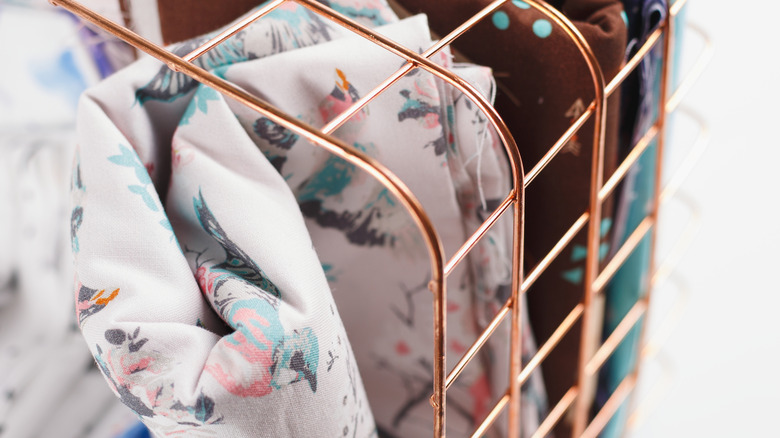
Tablecloths are chosen for a reason, or even passed down lovingly from family members, so throwing them away can feel wrong, even after stains take their toll through the years or they don't fit a new table. If old tablecloths have piled up in the back of your closet but you still love their patterns or the history they represent, you can breathe new life into them with a simple DIY upcycle — cutting the cloths to size to line kitchen drawers.
Lining drawers (or even open shelves) with a patterned tablecloth is a simple adjustment that can make your kitchen feel more cozy while also protecting the drawer interiors from scuffing or surprise spills. If you don't have old tablecloths on hand, you can find one at a thrift store or pick one up from someone who is decluttering or moving.
There are a few ways you can do this DIY, depending on whether you're comfortable with having the new liners stuck to the drawer surface or will need to remove them. You'll need a ruler to measure the drawer and fabric, plus scissors or a rotary cutter and a straight edge to cut the cloth. To make it removable, you'll need fabric stiffener or a base material like medium-density fiberboard. Either way, it's a good idea to have a stain protectant like Scotchgard on hand to spray on the tablecloth. Use either Mod Podge or a water-based glue that works on wood for an adhesive. If you're using a light-colored tablecloth, it's also smart to use paint primer on the drawer first to prevent the color of the wood, or any stains, from peeking through.
Transform tablecloths into drawer liners with this DIY project
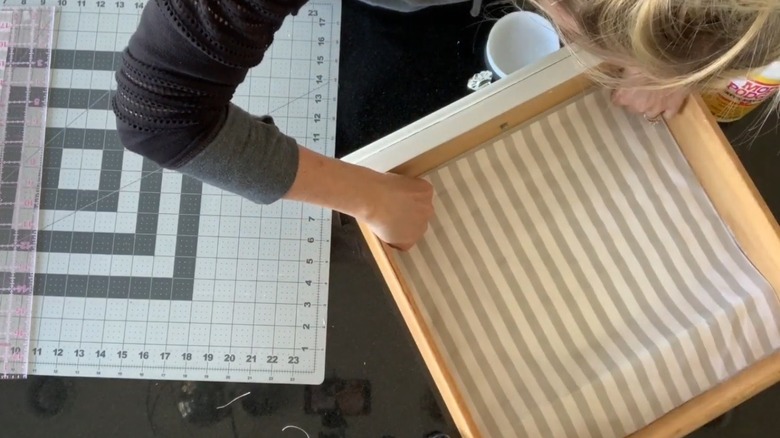
Once you've picked out the old tablecloth to repurpose as a drawer liner, start by measuring and cutting. Add about a quarter of an inch to the measurement to ensure a good fit. Use your ruler to measure the dimensions of the drawer, and the scissors or rotary cutter to cut the tablecloth accordingly (taking this opportunity to cut around stains or flaws), and lay it inside to see how well it fits. Spray the newly cut fabric with Scotchgard to make it easier to clean once installed. If the drawer you're working with isn't the standard straight rectangle, you can use a genius trick that makes lining curved drawers so much easier — cut the cloth a bit larger than it needs to be, and lay it in the drawer first so you can make a series of small cuts that will help it settle into the wavy part.
From here, the process changes based on how easily removable you want the liner to be. If you're comfortable with it staying in place, you'll need an adhesive like Mod Podge and a paintbrush. Open the drawer and pour in the Mod Podge, then spread it evenly with a brush to coat its interior surface. This will make your cut-to-size piece of tablecloth adhere, so when you press it onto the drawer, make sure it's lined up straight and take the time to press out the air bubbles that may have formed.
If you're a renter and want easy removal, the key is either attaching the tablecloth to a stiff backing or using a fabric stiffener. With either method, you can make a liner that can be very easily lifted out.
How to make removable tablecloth drawer liners
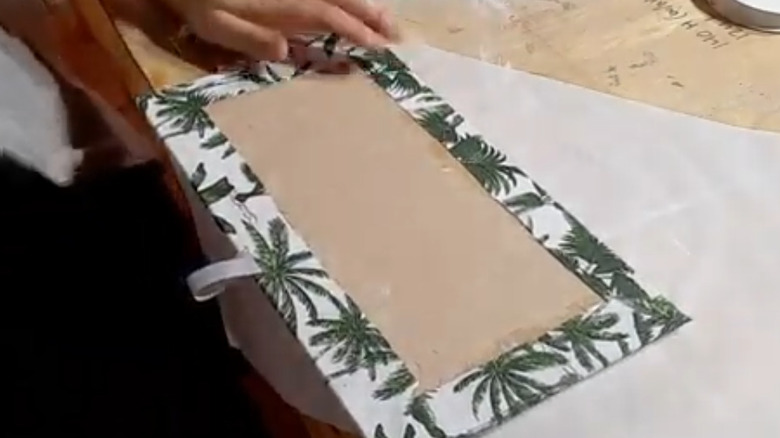
Upcycling beautiful tablecloths into removable drawer liners is a simple change you can make to a small apartment kitchen that personalizes the space. One option is attaching the fabric to a piece of medium-density fiberboard cut to fit inside the drawer. Lay your cut fabric onto the sanded piece of fiberboard and check that any patterns are lining up, then fold it in half, spread wood glue like Lineco PVA adhesive on the exposed half, press the cloth down, and repeat for the other side. Continue to glue any excess fabric to the back. You can also attach a folded ribbon to one edge of the board to make the liner easier to remove.
Another way to make your tablecloth liner removable is by soaking it in fabric stiffening solution, like Aleene's Fabric Stiffener and Draping Liquid from Amazon. Submerge the roughly cut tablecloth in a bowl filled with the stiffening liquid. After it becomes coated, wring it out and leave it to air-dry, then lay it in your drawer, making more precise cuts for fit and securing it with some double-sided tape. Once dry, the fabric should feel paper-like and be easy to remove when needed.