

Backyard Insects & Birds That Love Feeding On Dandelions
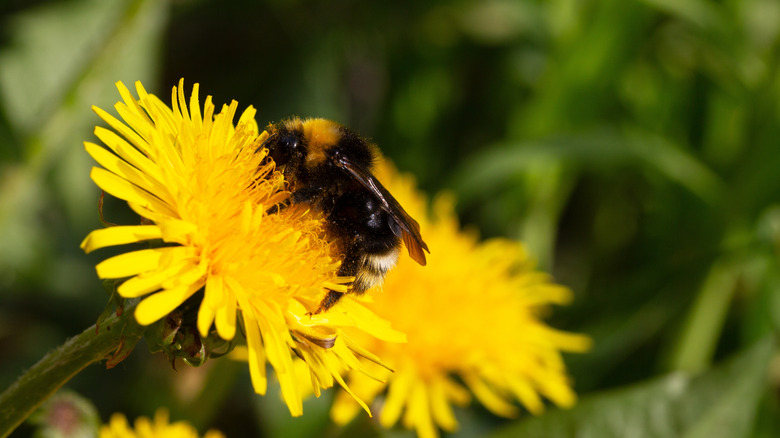
Don't kill the dandelions in your yard just yet. If you're strict about the appearance of your lawn, getting rid of those sunshine-yellow flower heads speckling your otherwise blemish-free grass may be at the top of your to-do list. However, while they may not typically feature in manicured lawns, dandelions can offer a variety of benefits. For instance, did you know that the dandelions in your yard are good for bees? Also, numerous other insects and birds don't just feed on dandelions — they often rely on them.
Dandelions (Taraxacum officinale) are a common sight throughout much of the United States. Native to Europe and Asia, these flowers have become a naturalized species that attracts many foraging animals. This is because dandelions are among the first flowers to pop up come spring. As a result, when bumblebees and butterflies like swallowtails and painted ladies begin to look for early-season nectar, dandelions are a reliable food source. Several finch species also enjoy making a quick snack out of these vivid flowers' seeds.
Consequently, if you're looking for an easy way to attract more birds to your garden (as well as other beneficial animals), leaving the dandelions you'd otherwise mow down can be a simple method. You can also take additional steps to help wildlife-magnet flowers thrive in your yard, such as offering rich soil.
House finches
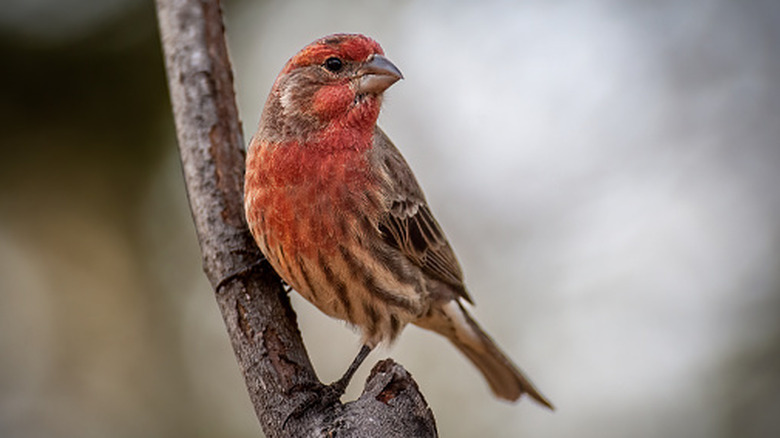
For those deciding to leave their dandelions this season, one of the first feathered visitors you may see is the house finch. House finches (Haemorhous mexicanus) are year-round residents in most states, and these little birds have quite the appetite for dandelion seeds. They'll use their bills to pluck the parachutes from the plant so they can access the seeds, which provide house finches with a solid source of nutrients. You can identify a visiting house finch by the male's bright red head and chest plumage. Females sport tawny plumage that is darker on the wingtips and tailfeathers.
American goldfinches
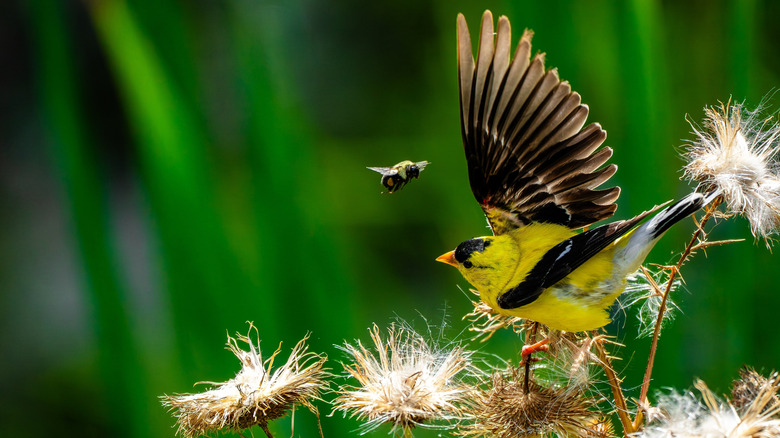
Dandelions can also be a good way to attract more goldfinches to your yard. The American goldfinch (Spinus tristis) is a striking bird with bright yellow (like a dandelion) and black markings. They're also found throughout all the continental states, with their range overlapping much of the dandelion's. As a result, it's no surprise that vibrant weeds often end up on the menu for these birds. Like house finches, American goldfinches can be observed plucking out the parachutes and devouring the seeds. As a granivore, seeds like that from the dandelion make up the bulk of a goldfinch's diet.
Black swallowtail butterflies
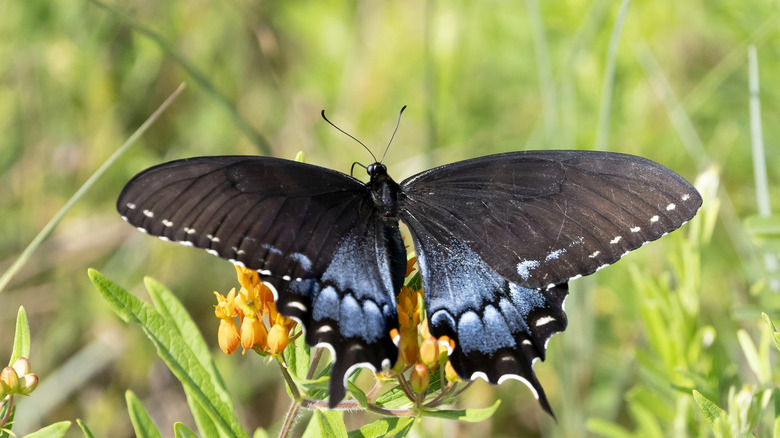
Birds aren't the only wildlife you can catch making a meal out of dandelions in your yard. Instead, you may also see butterflies like the black swallowtail (Papilio polyxenes). Unlike birds that prefer dandelions after they've gone to seed, butterflies like the black swallowtail prefer the bright yellow flowerheads, which are a rich source of nectar. This is especially true since dandelions often bloom before other flowers, providing these early-season pollinators with food. You can identify black swallowtails by their dark wings accented with blue and yellow markings, as well as the extension on their hindwings.
Sara orangetip butterflies
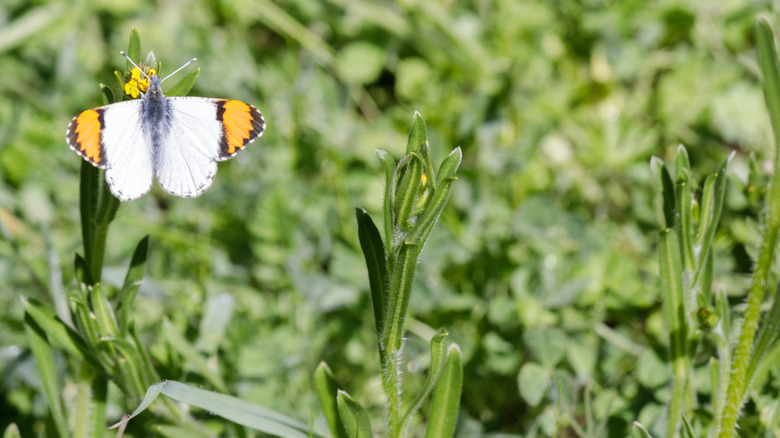
Sara orangetip butterflies (Anthocharis sara) also eat the nectar from dandelions. However, whereas black swallowtail butterflies are more common in the eastern United States, Sara orangetips light up the West Coast with their vibrant colors. As larvae (or caterpillars), Sara orangetips don't use dandelions as a host plant, but for adults, this is a prime source of nectar in the spring. You can identify these butterflies by the orange spots on the tip of their wings, which they are named for. The rest of their wings and bodies are white with dark markings highlighting their orange wingtips.
Hover flies
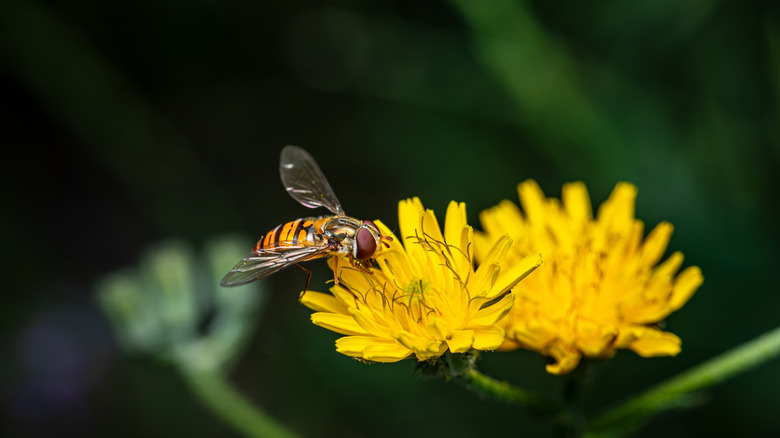
Hover flies (Syrphidae spp.) are also known as flower flies, and they're another insect that feeds on dandelions, which makes themhelpful pollinators. Their benefits in your garden go beyond pollination, as their larvae are also predators of those pesky aphids ravaging your prized plants. Like butterflies, hover flies rely on dandelions for their nectar, not their seeds, in the way birds do. Telling hover flies apart from bees can be a bit challenging, but their large eyes often give them away. Hover flies also lack a stinger.
White-crowned sparrows
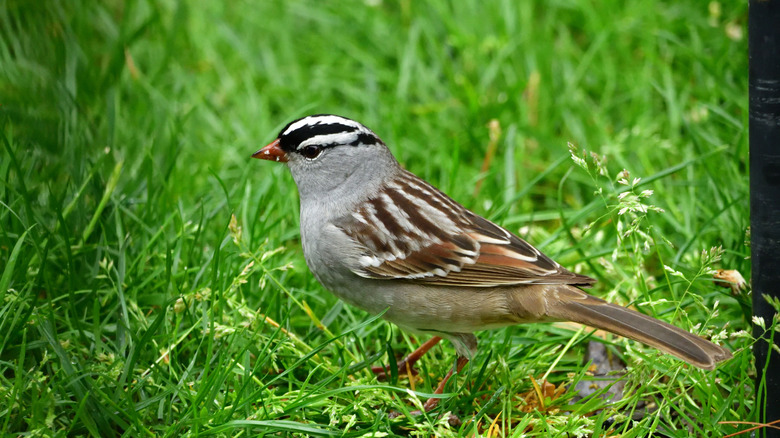
White-crowned sparrows (Zonotrichia leucophrys) can be found throughout most of the United States, save for a few coastal spots in the southeastern region. They sport brown wings and rumps, with grey chests and heads. Black and white markings above their eyes help them stand out. Like with the other small passerines on this list so far, white-crowned sparrows love the seeds that come from spent dandelions. For avid birdwatchers, you may be able to observe these sparrows plucking out a bill-full of parachutes to access the dandelion's seeds.
Indigo buntings
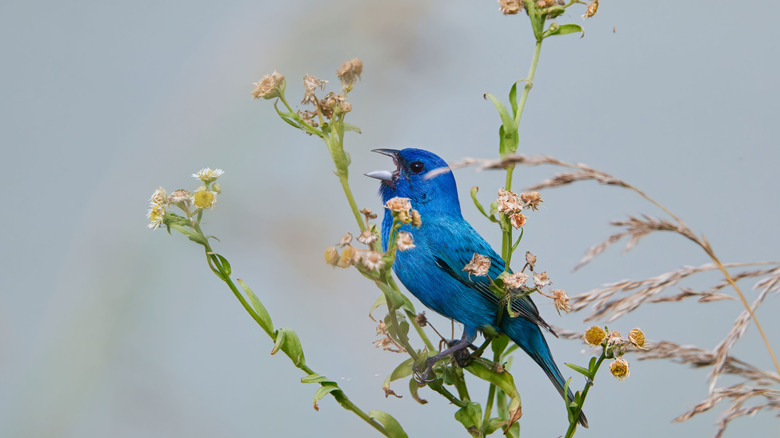
If you're on the hunt to see the vibrant blue plumage of an indigo bunting (Passerina cyanea), they can be a common sight in weed fields during the summer months. As a result, they're also one of the common backyard birds that love feeding on dandelions. The bulk of the indigo bunting's diet is made up of insects and spiders, especially during the breeding season. However, they also eat berries and seeds, including those from dandelions. Indigo buntings are found through the eastern and southwestern states during the summer, instead choosing to winter in Central America.
Painted lady butterflies
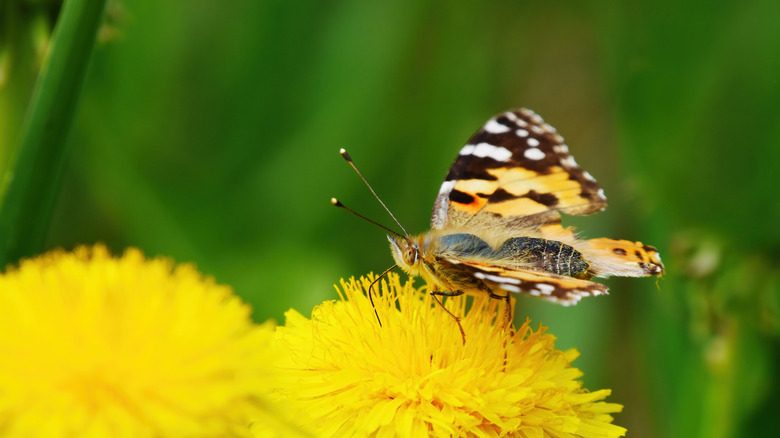
An iconic species easily recognized by its calico-style coloration, the painted lady butterfly (Vanessa cardui) feeds on the nectar from many flowers. While this includes garden favorites like asters or cosmos, they're also known to eat from dandelions. During their feeding time, they also help pollinate plants around your backyard, making them a beneficial visitor. As one of the most widespread species of butterflies globally, you can find painted lady butterflies (possibly flitting from dandelion to dandelion) in every state.
Milbert's tortoiseshell butterflies
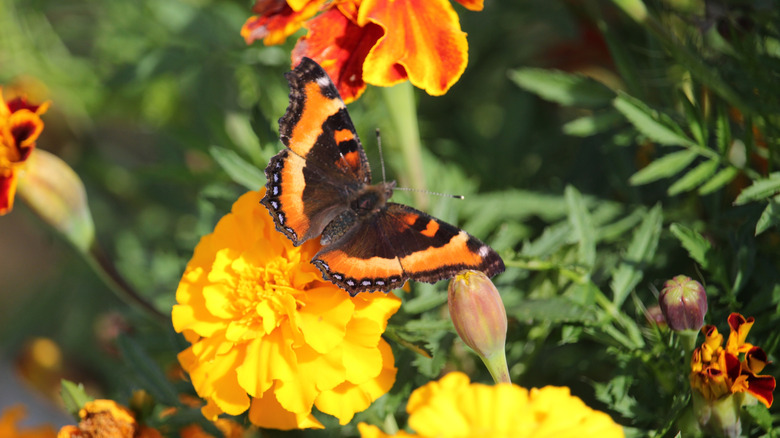
At first glance, the Milbert's tortoiseshell butterfly (Aglais milberti) looks quite similar to the painted lady, with striking orange and dark brown markings across their small wings. However, these butterflies often lack the same notable white markings, instead typically sporting small blue dots on the hindwings. While their appearances may not be identical, these two species do share a love of dandelions. Just like the aforementioned painted ladies, Milbert's tortoiseshell butterflies love the nectar from dandelions. In fact, it's one of only a few flowers they'll eat as adults.
Bumblebees
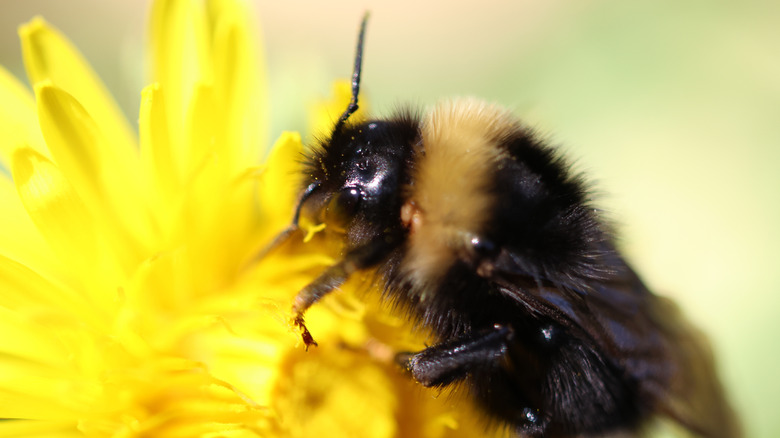
Bumblebees (Bombus spp.) are a staple in springtime gardens. However, while they're more than happy to stop by your carefully cultivated flowers for nectar and pollen, they are generalists. As a result, you'll also see them visiting flowering weeds for food, including dandelions. Dandelions are especially important for bumblebees as they are early bloomers, meaning that they're occasionally the only flowers available in the early months of spring. There isn't just one species of bumblebee that relies on dandelions either; instead, various Bombus species visit these sunny flowers, adding biodiversity to your yard.
Dark-eyed juncos
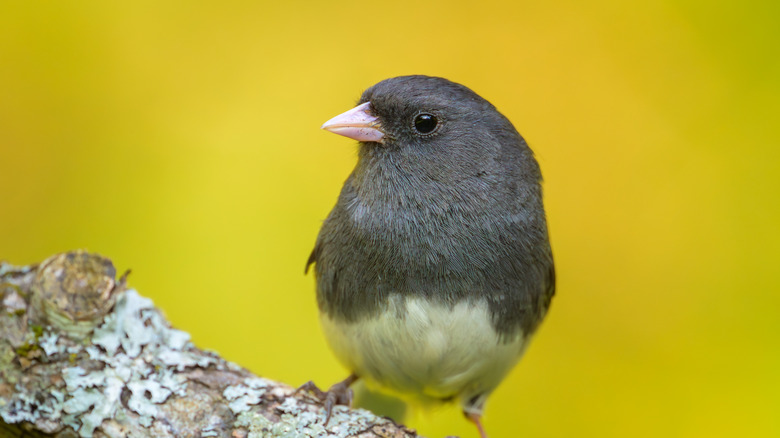
Dark-eyed juncos (Junco hyemalis) are a common sparrow to find in your backyard, especially since they're located throughout almost all of the United States. Seeds make up the bulk of their diet, and if you happen to look outside at your feeders, you may have the chance to see one of these delightful little birds hopping around. However, feeders aren't the only way you can attract a diverse variety of birds like juncos to your yard. Instead, these small sparrows also eat the seeds from dandelions growing naturally in your yard.
Eastern tiger swallowtail butterflies
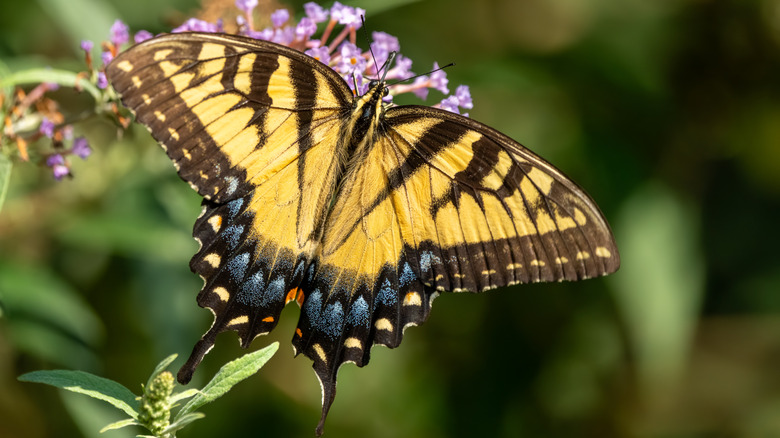
Another swallowtail species, the eastern tiger swallowtail butterfly (Papilio glaucus), is an East Coast native, just like its relative, the black swallowtail. Eastern tiger swallowtails sport similar hindwing extensions, as is characteristic of the genus, but offering much brighter colors, with striking yellow and black wings. They may also have blue markings on their hindwings. These butterflies feed from many plants, both as adults and larvae, but one of their preferred sources of nectar is the dandelion.
Cassin's finches
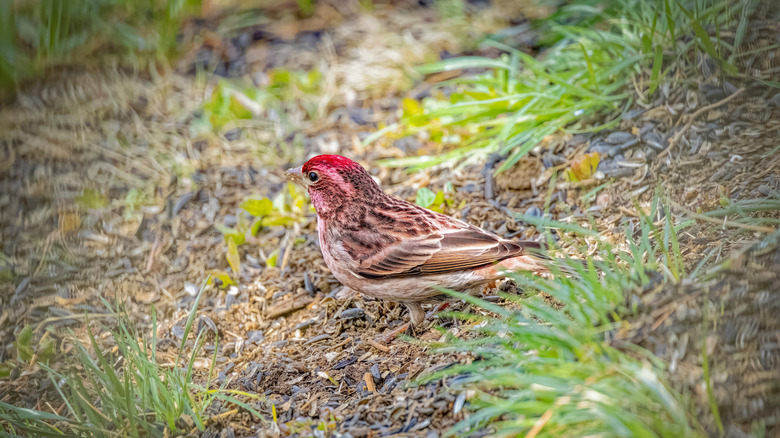
At first glance, you may think these little birds are a house finch coming to snack on your garden's dandelions. While they look quite similar, especially with the male's red facial plumage, Cassin's finch (Haemorhous cassinii) isn't the same as a house finch, although they are related. Cassin's finches are typically seen in less than a dozen states, usually toward the West Coast, but if you live within their range, you may be able to spot them eating dandelion seeds from spent flowers.
Wild turkeys
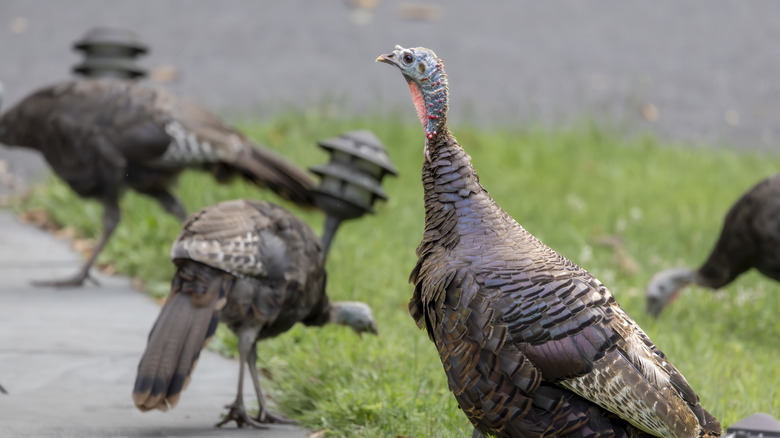
When you think of backyard birds, wild turkeys (Meleagris gallopavo) may not be the first to come to mind. However, they've become increasingly common near homes, and you may just see them wander into your yard during times of low light. Wild turkeys aren't passerines, but their omnivorous diet heavily features seeds, especially outside of the breeding season. As a result, while it may come as a surprise, dandelions often end up on the menu for these large game birds when they're available. You can identify turkeys by their large size, semi-bald heads, and males' fanned tail feathers.
Chipping sparrow
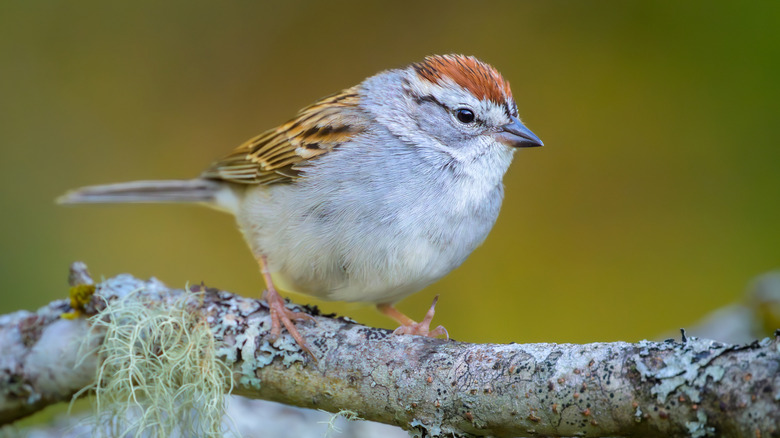
The chipping sparrow (Spizella passerina) can be found throughout all of the United States, though some areas may only catch a glimpse during migration. They can be easily confused with other native sparrow species, so keep an eye out for small markings around their eyes and feathers if you're trying to identify them out in the wild. Although they aren't much bigger than the flower itself, chipping sparrows have been observed eating the seeds from dandelions once they've grown into their fluffy white seed-heads. This aligns with their seed-heavy diet, which often includes seeds from weeds or grasses.
Ladybugs
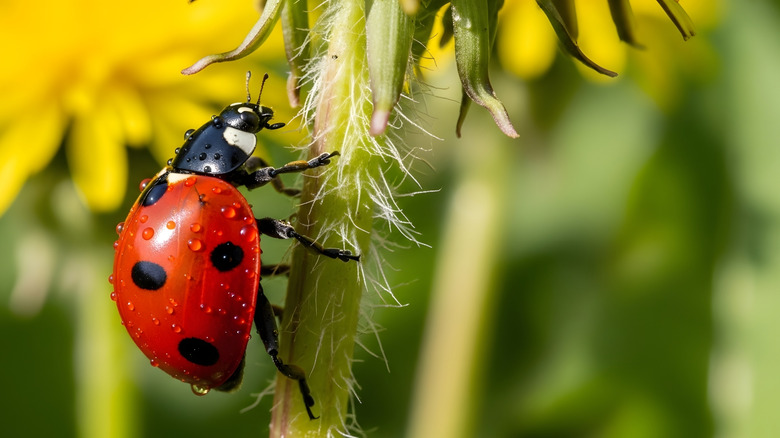
Did you know that there are approximately 500 species of ladybugs native to North America? On the surface, you may know these red polka dot beetles for their love of aphids. While it is true that ladybugs are more than willing to make a meal out of these pests, they will also eat nectar. As a result, keeping a yard full of nectar-producing dandelions can help create an inviting atmosphere for these tiny predators. However, unlike birds or even some butterflies species, catching ladybugs in the act of eating from a dandelion may be tricky given their small size.
Zebra caterpillar moths
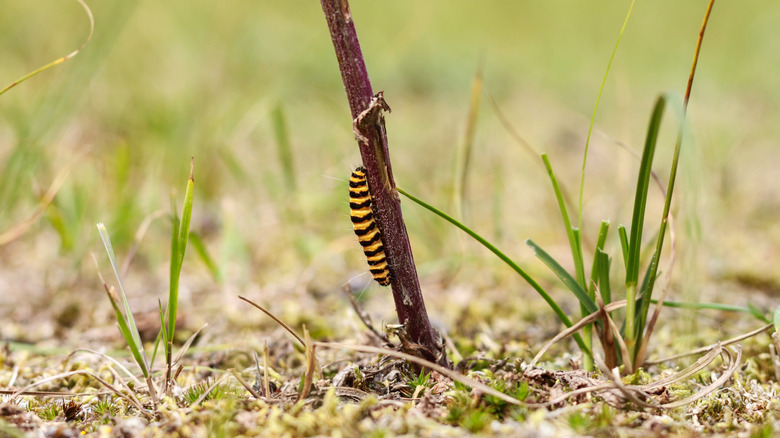
Zebra caterpillar moths (Melanchra picta) are red-brown fuzzy moths that sport white and brown wings. As a caterpillar, you may find them in your garden, munching away on your produce. However, once they reach adulthood, their diet shifts, and they can instead be spotted eating nectar from flowers. While there are many flowers they may choose to eat from, they occasionally eat from dandelions as well.