

13 Things Landlords Are Required To Provide To Their Tenants

At the federal level, landlords must comply with several key laws that protect tenants. These mainly address housing discrimination under the Fair Housing Act and health-related disclosure requirements, such as lead-based paint rules for older homes. Other protections are left to individual states to decide. While it is the landlord's responsibility to follow the law, it's important for tenants to be aware of their rights. This way, they are not taken advantage of by landlords who wish to cut corners. In fact, being responsible for providing these protections is one of the things to consider before becoming a landlord.
We will cover the federal-level protections before diving into the most common state-level protections. Many states use the Uniform Residential Landlord and Tenant Act of 1972, or URLTA, as the foundation for their landlord-tenant laws. As of 2008, 21 states had adopted URLTA into law. However, this means that 29 other states have their own laws that differ. Many of those states also have variations of URLTA in their law books. For state-level protections, we will start by focusing on URLTA because it's the most uniform state-level option. We will also mention a few non-URLTA examples, so tenants in all 50 states can have a general idea of what protections they are legally owed.
Federal: Landlords must allow equal access to housing

Landlords can't deny you access to a rental property on the basis of your race, color, national origin, sex, familial status, or disability. This right is protected by the 1968 Fair Housing Act. People in these categories are legally required to be treated equally under the same rental criteria. In 2020, the U.S. Supreme Court ruled that discrimination based on sexual orientation and gender identity qualifies as sex discrimination under federal law, and in 2021, the U.S. Department of Housing and Urban Development formally applied that interpretation to housing. This means that landlords can't refuse to rent an apartment to someone because they are Hispanic, they have a disability, or they are gay. It also means they can't only rent to men, unmarried women, or families. Families also can't be kept separate from other tenants; they must receive equal access to all listings.
Certain classes are not protected, however. Although the U.S. Department of Housing and Urban Development has issued guidelines for access to housing for individuals with felony convictions, this is not the law. It's only a recommendation. These recommendations include running background checks on all tenants, not just those who disclose criminal history. Nevertheless, landlords who do not follow these HUD guidelines can still technically be on the hook for discrimination charges, as other protected classes might still be at play in their choice not to rent.
Federal: Landlords must allow service animals, even if they have a no pets policy

Many apartment buildings and even private properties that double as rentals might have a strict "no pets" policy. However, service animals are not pets. If you have a service animal, you must still be allowed access to the rental. This is due to two laws, the 1968 Fair Housing Act and the 1990 Americans with Disabilities Act. Other than general access to the property, there are two things your landlord has to provide to you and your service animal.
It is typical to charge a pet deposit or monthly "pet rent" for other animals. However, renters with disabilities who use service animals are exempt from these. Second, the landlord can't place any restrictions on the breed or size of your service animal, like they might for pets. However, if your service animal bites another person or animal or causes considerable damage to the property, the landlord is allowed to take appropriate action consistent with lease terms and fair housing law.
A small caveat: emotional support animals fall under different rules than service animals. Namely, that landlords can deny them if the property is a home that the owner lives in, with four or fewer units. Or if it is a single-family house that the owner sells or rents out without using a real estate agent.
Federal: Landlords must provide notice of the presence of toxic substances
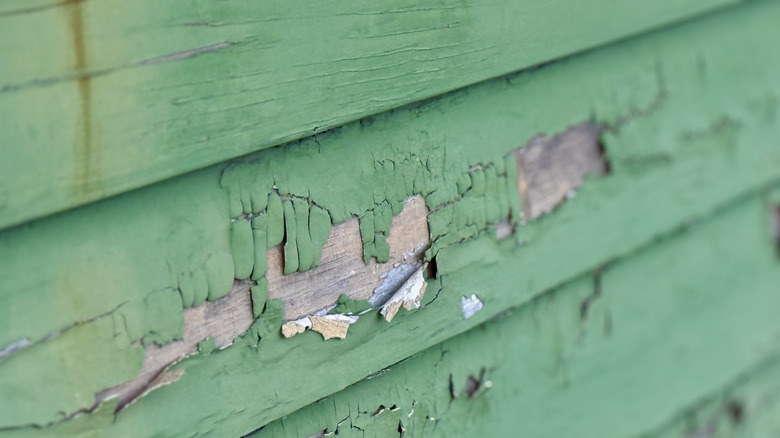
The next federal provision that landlords must give to all their tenants is notification of known lead-based paint hazards. This is because the Toxic Substances Control Act of 1976 and the Residential Lead-Based Paint Hazard Reduction Act of 1992 require that landlords tell people about the presence of lead-based paint, or any hazards associated with it, before they can rent or sell a home built before 1978. It might still be on the walls, even if it was painted over at some point. Typically, it's okay as long as it's not disturbed. But if it begins to chip due to age or you do any sort of renovation and disturb it, that's when the issues might begin. So there are protective steps to take when painting over lead paint.
Even in older homes, there are some instances where the disclosure doesn't have to be made. They are as follows: short-term rentals of 100 days or less with no renewal option; housing certified as lead-free by a qualified inspector; foreclosure sales (though disclosure is still generally required before a lease); housing built in 1978 or later; efficiency units, such as studios or dormitories, unless a child under age 6 resides or is expected to reside there; and housing designated for seniors or persons with disabilities, unless a child under age 6 resides or is expected to reside there.
Federal: Landlords must provide continued housing for a term after foreclosure
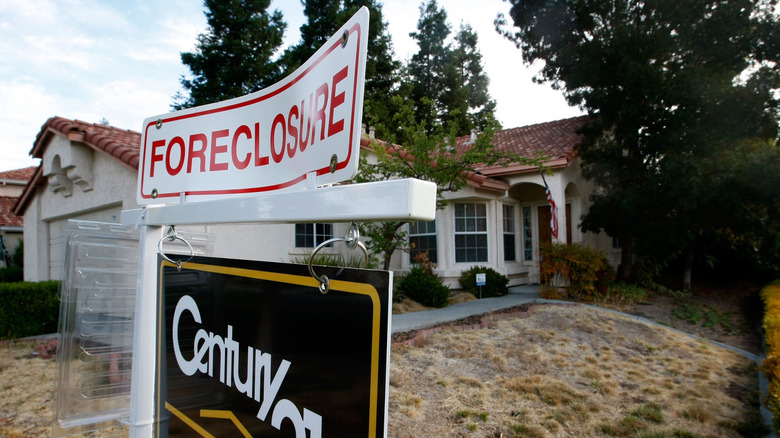
Let's say you are the perfect tenant and have never missed a payment to your landlord. However, your landlord is in some financial trouble and hasn't kept up with their mortgage. Now, the home you live in is going to be foreclosed on. For your landlord, it's a financial loss, sure. But you are losing your home. The final protection that landlords must provide to their tenants is continued occupancy rights after foreclosure. This right is provided under the 2018 Protecting Tenants at Foreclosure Act.
This law lets renters whose homes are being foreclosed on stay for at least 90 days' notice before eviction, or for the remainder of their lease term, whichever is longer, subject to certain exceptions. So even if the landlord is in trouble, the tenants have recourse. The idea behind this law is that tenants shouldn't be punished for their landlord's financial problems. The first version was passed in 2009 in response to the 2008 financial crisis and the high number of foreclosures that took place. So, in most cases, you will have at least three full months to find alternate accommodation. This ties into your rights when your landlord sells the house you are renting, in that you get to continue your lease.
URLTA: Landlords must provide a dwelling that complies with applicable building and housing codes
The first URLTA-compliant requirement is that the house must be in compliance with applicable housing and building codes and therefore be safe to live in. Remember that codes are just minimum standards for construction. Many builders go above and beyond, but many do not. It's important to be familiar with the codes that apply in your state, as they differ.
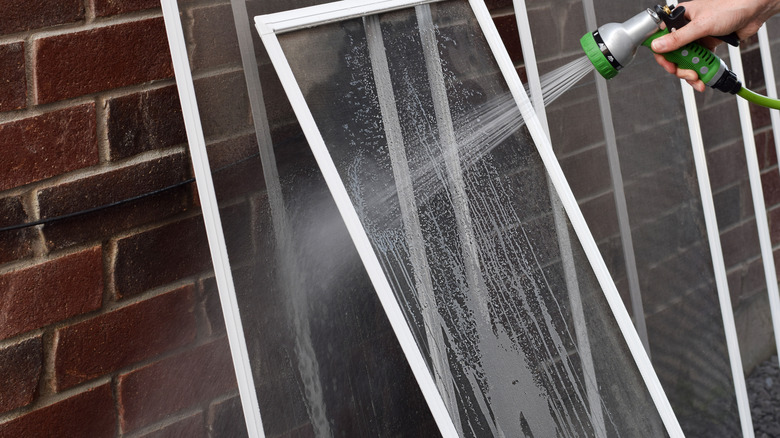
For example, in Alabama, certain habitable rooms must have window screens. Not only that, but it must be 16 mesh per inch. These screens should be present before the property is rented. If they are not, it should be noted in the inspection as something the tenant did not damage and as something to be added. In Iowa, the building codes state that accessory structures, like fences, walls, and garages, have to be in good working order. This should be the case before you sign your lease.
URLTA: Landlords must make repairs to keep the house up to code
What can you legally ask your landlord to improve or replace? According to URLTA, landlords must make repairs to keep the house you are renting up to code. If anything isn't up to code or materially affects health and safety, the landlord is required to fix it. This way, the house remains safe to be inhabited.
Using the examples above, in Alabama, if your windows don't have screens, or if you have a bug problem because the mesh is bigger than it should be, your landlord has to fix them. This would typically mean replacing the screens entirely with ones that fit the building code. In Iowa, if your fence is falling apart and your dog keeps getting out, this can be something to address with your landlord. There are essential fence-building laws every homeowner should know, like hiring a surveyor to ensure the fence runs along the correct place on the property line. If your garage door doesn't work, then they have to fix it, as the law says it must be functional. Even so, expect the runaround on getting minor repairs because the letter of the law can often be argued.
URLTA: Landlords must keep all common areas in a clean and safe condition
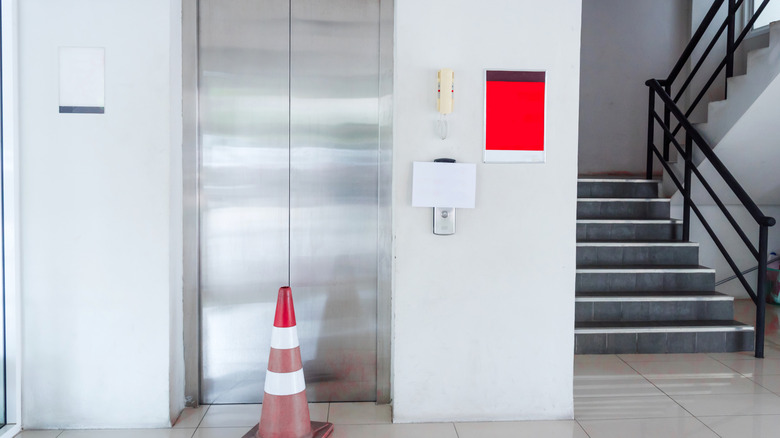
If you live in a condo or apartment building, URLTA states that it is the landlord's responsibility to keep all common areas in a clean and safe condition. Even if this is subcontracted to a property management company, it is still the law. These common areas would be the building's elevators, stairwells, lobbies, landings, pool area, or any other recreational facilities, like gyms and saunas. They need to be well-lit and free from hazards.
So if the light is out in the stairwell, the carpet is torn by the front door of the building, or the toilet in the gym is clogged up, it's the landlord's responsibility to keep everything in working order. This is especially true as common areas that have fallen into disrepair can cause injuries, and then the landlord is on the hook for even more than just the costs of a few repairs. Even in non-URLTA states like Texas, landlords can still be held liable if someone is hurt due to property negligence, like falling down the stairs in the dark or tripping over a broken tile in the lobby.
URLTA: Landlords must keep appliances and utilities in working order
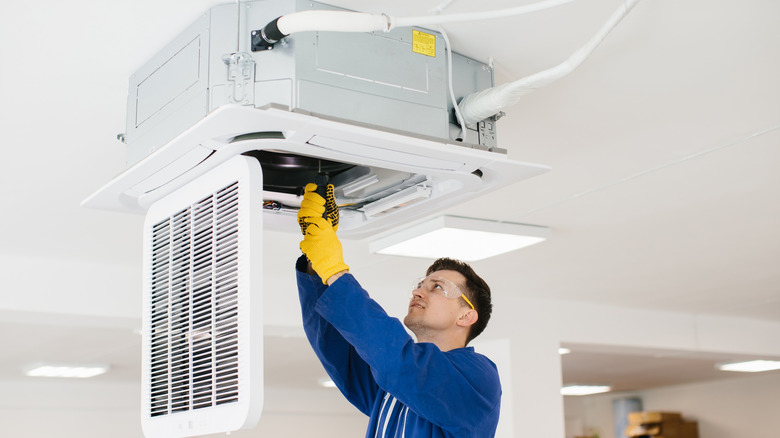
Apart from the building itself, landlords in URLTA states are legally required to maintain essential systems and services in working order for their tenants. The law generally requires landlords to maintain electrical systems, heating, plumbing, sanitation, and other facilities and appliances supplied by the landlord in a safe and working condition. Remember, HVAC stands for heating, ventilation, and air conditioning.
So if your power goes out, your oven breaks, or the house is hitting extreme temperatures in the middle of August, you may have recourse. However, URLTA also states that tenants have the responsibility to use all of these systems in a reasonable way that aligns with their intended use. That is, if the pipes in your building are defective and your landlord doesn't want to do anything about it, that's their problem. However, if you flushed a diaper down the toilet and are now having issues, there might be consequences, as you didn't keep your end of the bargain.
URLTA: Landlords must keep the property clean through garbage removal

In URLTA states, garbage removal is not the tenant's responsibility to figure out. The law says that landlords must make sure there are suitable containers for throwing away trash and other waste, and arrange for them to be picked up, too. So tenants don't have to haul away their own trash. This might look like having trash cans in the basement of the apartment building for residents to empty their home cans into, and then making sure that a company comes each week to pick them up. It also might look like paying the HOA dues for the home, so the tenant can use the neighborhood's trash and recycling services. They might, however, pass the cost for these services along in the price of the rent.
In non-URLTA states, the rules vary greatly. In Texas, for example, there aren't any specific rules around trash disposal. Some landlords might, and whether or not they do should be included in the lease that you sign. If nothing is mentioned in the initial lease, ask for clarity before you put your deposit down and move in. This way, you won't be left in the lurch later on.
URLTA: Landlords must supply running water year-round and heat in the winter
The final thing that URLTA requires landlords to provide to their tenants is running water year-round and heat in the winter. The law specifically says that in any rented home, there must be continuous access to clean running water and enough hot water most of the time. So if the water goes out, it's an emergency that your landlord needs to fix ASAP. Or, even if your hot water only lasts for two minutes, it's enough of a problem to bring it up with your landlord because there could be problems with your water heater that need addressing.
Next, the landlord has to provide reasonable heating from October 1 to May 1, unless the specific building you live in is exempt, or the tenant has a separate system for heat and hot water that they have installed themselves. The key here is the word "reasonable." For example, Alabama is an URLTA state, and the Huntsville Utilities Administration suggests that twenty degrees cooler in the heat and twenty degrees warmer in the cold is ideal. So in this instance, you might be able to argue that these temperatures are "reasonable" to have within your rented home.
Landlords must supply these things without retaliation against tenants asking for them

Many states have laws that prevent landlords from punishing tenants for speaking up or complaining about safety issues in their housing, and courts have also recognized protections through the implied warranty of habitability. The implied warranty of habitability is a U.S. legal rule requiring landlords to keep rental properties safe and livable, even if this is not stated in the lease. This precedent was set by Javins v. First National Realty Corp., a legal case in 1970. It found that a home is considered habitable if it meets local building codes or basic health and safety standards. Rent payments depend on the landlord's maintenance; if they fail to keep the property safe, tenants can demand repairs or pursue legal action (sometimes, they can even withhold rent until things are fixed).
Unfortunately, not every state has strong statutory protections that explicitly prohibit landlord retaliation, such as raising the rent at the next renewal period or refusing to renew the lease. Louisiana, Georgia, Mississippi, Missouri, West Virginia, Wyoming, and Idaho are often cited as having more limited statutory protections in this area. So, if you live in one, tread carefully as you interact with your landlord. They still must meet applicable habitability requirements, but they may have broader discretion regarding lease renewal decisions, depending on state law.
Landlords must provide the correct notice length and type for evictions
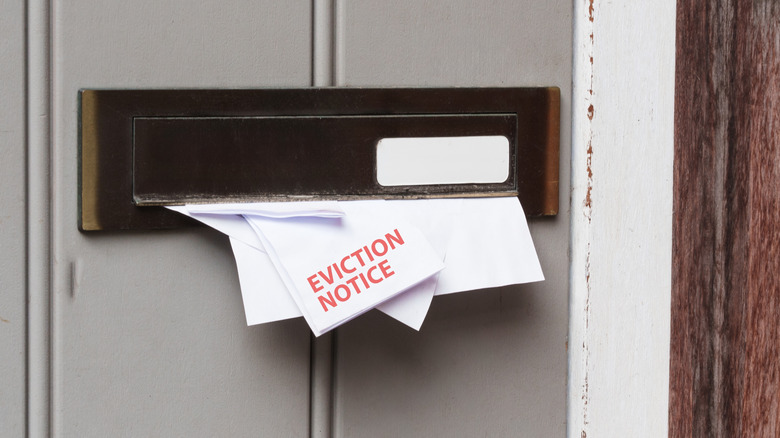
All 50 states, plus DC, regulate evictions. These laws set rules around the allowed reasons for evicting someone, such as non-payment of rent for a certain amount of time or extreme damage to the property. They also set out whether or not that particular state requires a reason at all. These are called "just cause evictions" versus "no-fault" evictions, in which the landlord doesn't really need a reason — kind of like "at will" employment. California, New Hampshire, New Jersey, Oregon, and Washington have just cause laws, as well as plenty of cities, like Baltimore, Maryland, Oakland, California, and St. Paul, Minnesota.
The eviction laws in your state will also set out what recourse tenants who are unlawfully evicted have. Finally, state laws vary on whether landlords have to tell tenants in advance before asking them to move out, how much warning a landlord must give before ending a lease because rent wasn't paid, and if there's a minimum amount of time a tenant can be late on rent before the landlord can start eviction proceedings. Sometimes, while your state might not cover your exact situation, the city or county you live in might. While city or county laws can't contradict state or federal law, they can build off it.
Landlords must provide transparency around security deposit additions and deductions
Laws dealing with transparency around security deposit additions and deductions are hyper-local and can vary greatly. Your area might not have any, or there might even be many! For example, in California, the maximum security deposit for most residential leases is one month's rent, whether the home is furnished or unfurnished (with limited exceptions for certain small landlords). It has to be returned to the tenant within 21 days of moving out. If the landlord makes deductions exceeding $125 for work performed by someone other than the landlord or their employee, they must provide an itemized statement and receipts. Sometimes, city laws add more requirements to the list. In San Francisco, landlords also must pay interest back to the tenants on their security deposit if the tenant isn't receiving rent assistance, but this doesn't apply everywhere in California.
In Colorado, there has to be a written explanation of any deductions when you get your security deposit back, typically within a month of moving out. However, there is no limit on how high the deposit can be. The landlord can decide. In Florida, there is also no limit, but you are owed your deposit back in 15 days if the landlord isn't making deductions and 30 days if they are. And if the landlord plans to make deductions, they have to give you notice within that period. As these rules vary so greatly, become familiar with the state, county, and city laws of your area — in that order.