

What Everyone Does Wrong When Pruning A Hibiscus Bush
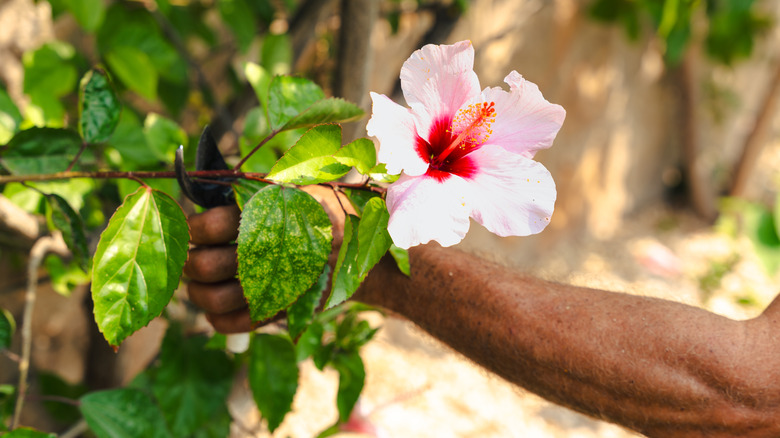
If you have a beautiful hibiscus bush in your yard, it makes sense that you want to give it some TLC in order for it to thrive year after year. Pruning is an important part of plant care and allows you to look after both the appearance and the health of your flowers. However, there are certain common mistakes people make when it comes to pruning hibiscus, and being aware of them will help you look after your garden and allow your hibiscus to flourish. These mistakes include pruning at the wrong time of the year, not cutting it back enough, and ignoring dead or crossed branches.
One common hibiscus pruning mistake is not really knowing what variety of hibiscus flowers you have and following general guidelines that may not be suitable for your plant. You can get both tropical and hardy hibiscus bushes (Hibiscus moscheutos), and these have slightly different pruning needs. Another thing to avoid when it comes to pruning hibiscus is focusing on appearance and shape over health. These plants do well when given a big prune, but amateur gardeners may focus too much on shaping the plant and forget to remove dead, crossed, or damaged branches. This can affect the plant's overall health by reducing airflow, creating wounds, or inviting insects or pests in. You may also be pruning in the fall, when these plants tend to prefer a winter or spring prune.
How to avoid the common hibiscus pruning mistakes
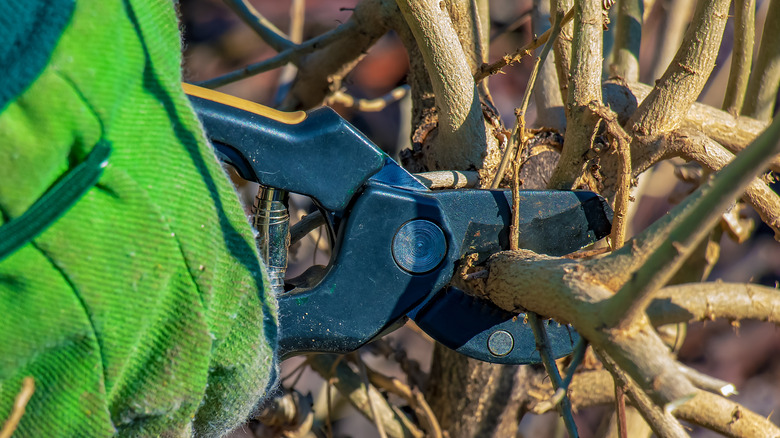
To avoid these mistakes while pruning your plants, you first need to work out what type of hibiscus you have. Hardy hibiscus bushes die back into the ground at the end of the season and then appear again in spring. Tropical hibiscus (Hibiscus rosa-sinensis), on the other hand, are usually sold as container plants and are brought indoors over the cold, winter months. Knowing which you have means that you are able to prune them correctly. Both do well when cut back hard, but you will need to prune them slightly differently. Hardy hibiscus bushes need to be cut back to a foot off the ground after the first frost, whereas tropical hibiscus bushes should be selectively trimmed to encourage a bushy, compact plant and avoid it getting leggy in early spring.
Not cutting enough off both types of hibiscus is another mistake you are looking to avoid. It can feel a bit weird to cut loads off your plants, but you aren't harming them! In fact, when it comes to hibiscus, it can be beneficial to cut them back as they bloom on new growth, and pruning promotes this. Tropical hibiscus plants can be cut back to one-half their height to keep them compact. As hardy hibiscus sends up new shoots, cutting off the dead previous season's growth allows the plant to concentrate on new growth.
Finally, when cutting back your tropical hibiscus, it is important to remember the three d rule to properly prune it. When pruning hibiscus, many people may cut back everything evenly to create a compact shape, but ignore individual branches. However, it's essential to remove dead, damaged, or diseased stems to keep your bush healthy and happy.